Preview
 Send
Send Share
Share
 Details
 Guide
Guide

 Download
 Similars
 X-Ray
X-Ray Diaporama
 Q&A
Q&A Stats
StatsHis Only Friend


 Read More
Giclée / Art Print
Museum-quality giclée or canvas print with fast production and flexible finish options. ( Buy Hand Made Painting Switch to Digital Image)




P118B $10

P118H $10

P118W $10

P438Z $10

P508JH $12

P508YH $12

P805H $10

P805Z $10

P919BZ $10

P919G $10

P919XJ $10

P959ZH $10

P968JZ $12

W106C $8

W218G $10

W218JH $8

W218Y $10

W307PJ $10

W316G $10

W316PJ $8

W316Y $10

W398PJ $8

W4111J $10

W500HY $15

W500JH $15

W692G $12

W849H $8

W940BG $15

W953PJ $8




Pick from our preset sizes that match the artwork's original proportions.

Type the width and the height you need, to fit your frame or your wall. A print can only be cut, never made bigger than the picture, so a size with a different shape loses a part of the image. We send you a digital mockup to approve before we print anything. The picture shown on this page does not show the real cut — only the mockup does.
Worldwide Delivery () in 2 weeks instead of standard 4/5 weeks. (2 November)

Free Worldwide Express Shipping

High-Quality Linen Canvas

Full Shipping Insurance

Customs Tax Refund Guarantee

True Color Matching Guarantee

100-Day Return Policy (Defects Only)

100% Money-Back Guarantee

Bulk Discount Offer
 Glass option is only available in size under 110 CM

His Only Friend
Giclée / Art Print
Reproduction Size
-


Total Price
$ 81
A Portrait of Loyalty: Exploring Briton Rivière’s “His Only Friend”
Briton Rivière’s “His Only Friend,” completed in 1871, stands as a quintessential example of Victorian animal painting and embodies the Romantic spirit's fascination with nature intertwined with psychological observation. More than simply depicting a woman and her dog—a commonplace subject for the era—Rivière elevates this tableau into a meditation on companionship, vulnerability, and the profound connection between humans and animals. The painting resides in Manchester Art Gallery’s collection, offering visitors an opportunity to experience firsthand the enduring beauty of Rivière's artistic vision.The Scene: Composition and Setting
The canvas presents a tranquil interior scene bathed in soft light—likely originating from a window—creating an atmosphere of serene repose. A woman sits gracefully on the ground, her posture conveying both comfort and contemplation. Beside her rests her canine companion, positioned close to her body, demonstrating an unmistakable gesture of affection. The artist’s meticulous attention to detail extends beyond the central figures; a bird perched atop a nearby branch adds a subtle element of naturalism, enriching the overall composition and reinforcing the painting's theme of harmonious coexistence.Rivière’s Style: Realism Infused with Romantic Emotion
Rivière skillfully blends realism with Romantic sensibilities—a hallmark of his oeuvre—resulting in an artwork that transcends mere representation. He eschews idealized forms or dramatic poses, opting instead for a naturalistic depiction that captures the subtle nuances of human emotion and animal behavior. The artist’s brushstrokes are loose yet controlled, conveying texture and luminosity while simultaneously imbuing the scene with palpable warmth. This technique—characteristic of Rivière's style—allows him to convey not only what is seen but also what is felt by those observing it.Symbolism: Beyond Appearance
“His Only Friend” resonates deeply with symbolic meaning. The woman represents resilience and inner peace, while her dog embodies unwavering loyalty and unconditional devotion. Together, they symbolize the enduring bonds of friendship—a concept central to Victorian morality and social values. Furthermore, the bird serves as a reminder of freedom and aspiration, suggesting that true happiness lies in embracing life’s joys and pursuing one's dreams with courage and optimism. Rivière’s masterful use of visual language elevates this seemingly simple scene into a powerful statement about human connection and spiritual fulfillment.Emotional Impact: A Window Into Victorian Sentiment
The painting evokes a profound emotional response—one rooted in the Victorian preoccupation with sentimentality and moral earnestness. Viewers are drawn into the quiet intimacy of the moment, experiencing firsthand the tenderness and compassion that characterize Rivière’s artistic vision. “His Only Friend” speaks to our innate desire for companionship and reminds us of the transformative power of genuine affection—themes that continue to resonate powerfully across cultures and generations. It remains a testament to Rivière's ability to capture not just what is visible but also what lies beneath—the deepest currents of human emotion and experience.Questions & Answers
What palette and what feeling does "His Only Friend" combine?
In "His Only Friend", dark colors accompany a romantic feeling.
Is "His Only Friend" one of Briton Rivière's most popular works?
"His Only Friend" is classified as recognized.
What is "His Only Friend" made with?
The medium of "His Only Friend" by Briton Rivière is acrylic on canvas. Reproductions aim to render the appearance of this technique.
Artist Biography
A Life Immersed in Nature and Narrative: The World of Briton Rivière
Briton Rivière, born in London in 1840, emerged as a pivotal figure in Victorian art, celebrated for his deeply emotive animal paintings and earlier explorations into historical and literary themes. He wasn’t simply a painter of animals; he was a storyteller who imbued his subjects with psychological depth and narrative resonance, capturing moments of vulnerability, loyalty, and the complex relationship between humanity and the natural world. Rivière's artistic journey was profoundly shaped by his family heritage – his father, William Rivière, served as an art teacher and drawing master, while his uncle, Henry Parsons Rivière, was a respected watercolourist. This familial foundation provided early encouragement and guidance, though Briton’s training remained largely within this intimate circle rather than formal academic institutions. He received his education at Cheltenham College and later Oxford University, completing his degree in 1867, an unusual path for a dedicated artist but one that perhaps fostered a unique intellectual curiosity reflected in his work.From Historical Scenes to the Animal Kingdom
Rivière’s initial artistic endeavors focused on grand historical and literary subjects, evident in early works like “The Eve of the Spanish Armada” and scenes inspired by Shakespeare's "Romeo and Juliet." However, a significant shift occurred around 1865. He began to increasingly concentrate on animal paintings, a decision that would define his career and establish him as a leading figure in this genre. This wasn’t merely a change in subject matter; it was a deepening of artistic intent. Rivière didn't simply depict animals; he sought to portray their inner lives, their emotions, and their interactions with the world around them. He possessed an exceptional ability to capture not just physical likeness but also character and feeling, often presenting his animal subjects in dramatic or poignant situations that resonated deeply with Victorian sensibilities. While largely self-taught through his father’s guidance, Rivière's work reveals a clear awareness of the Pre-Raphaelite movement’s emphasis on meticulous detail, naturalism, and narrative storytelling – influences subtly woven into his distinctive style.Themes of Companionship and Emotional Resonance
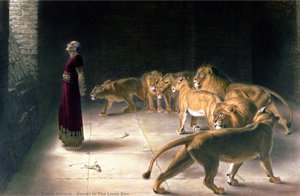
Recurring themes permeate Rivière’s oeuvre: companionship, loyalty, vulnerability, and the often-tender connection between humans and animals. His paintings are not simply representations of wildlife; they are explorations of universal emotions and experiences. Perhaps his most famous work, “His Only Friend,” exemplifies this perfectly – a touching depiction of a young boy finding solace in the unwavering affection of a dog. Other notable pieces like "Daniel in the Lions' Den", “War Time”, “The Last of the Garrison” and “An Exile of the '45” demonstrate his versatility and ability to imbue even historical or biblical scenes with a similar emotional weight. Rivière’s meticulous attention to detail, particularly in rendering animal anatomy and fur, is remarkable. He wasn’t content with superficial accuracy; he strived for a profound understanding of his subjects, allowing him to convey their essence with compelling realism. His paintings frequently evoke a sense of narrative, inviting viewers to contemplate the stories unfolding within the canvas and connect with the emotions portrayed.Recognition and Legacy
Rivière’s talent was widely recognized during his lifetime. He began exhibiting at the British Institution in 1857 and became a regular contributor to Royal Academy exhibitions from 1863 onwards, solidifying his position within the established art world. In 1878 he was elected an Associate of the Royal Academy, followed by full membership in 1881 – significant achievements that underscored his artistic merit. He even received an honorary Doctor of Civil Law degree from Oxford University in 1891, a testament to his broader intellectual contributions. A bid for the presidency of the Royal Academy in 1896, though narrowly unsuccessful, further demonstrated his standing within the art community. Today, Rivière’s paintings are held in prominent public collections worldwide, including the Tate, the Metropolitan Museum of Art, and Royal Holloway, University of London, ensuring that his work continues to inspire and captivate audiences. His contribution to elevating animal painting as a respected genre within Victorian art is undeniable, and his legacy extends beyond his own artistic achievements – his son, Hugh Goldwin Rivière, also became a portrait painter, while another son’s wife, Joan Riviere, distinguished herself as an eminent psychoanalyst and translator of Sigmund Freud. Briton Rivière remains a celebrated artist whose work continues to be admired for its technical skill, emotional depth, and evocative portrayal of the animal world – a testament to his enduring artistic vision.
Briton Rivière
1840 - 1920 , United Kingdom
Quick Facts
- Full Name: Briton Rivière
- Nationality: British
- Date Of Birth: 1840
- Date Of Death: 1920
- Place Of Birth: London, United Kingdom
- Notable Artworks:
- His Only Friend
- Daniel in the Lions' Den
- War Time
- The Last of the Garrison
- An Exile of the '45
- Artistic Movement Or Style: Pre-Raphaelite, Victorian
- Artists Who Influenced This Artist:
- William Rivière
- Henry Parsons Rivière
- Artists Or Movements Influenced By This Artist: Victorian animal painting
Related Articles
Animalia: Exploring the Enduring Presence of Animals in Art & Interior Design
Explore the rich history of animal symbolism in art, from ancient mythology to modern masterpieces. Discover how animals have inspired artists for centuries and learn how to incorporate these powerful motifs into your home décor.
Edmund Bristow: Capturing British Life with Atmospheric Realism
Explore the captivating world of Edmund Bristow (1787-1876), a master of British realism. Discover his exquisite animal portraits, serene landscapes, and intimate domestic scenes – a testament to 19th-century artistry.

William James Müller: Navigating Victorian Sentiment & Realism in British Landscape Painting
Explore the captivating landscapes of William James Müller, the leading artist of the Bristol School. Discover his Victorian masterpieces, Egyptian travels & Lycian sketches – a journey through 19th-century art and technique.
James Sant: Capturing Victorian Childhood & the Evolving Landscape of British Genre Painting
Explore the life & art of James Sant (1820-1916), renowned Victorian portraitist to Queen Victoria. Discover his captivating depictions of childhood, landscapes, and aristocratic society. Learn about his legacy & find fine art reproductions.
Walter Greaves: A Study in Victorian Realism & the Social Landscape of British Art
Explore the life & work of Walter Greaves, a key Victorian realist painter influenced by Whistler. Discover his London streetscapes, portraits, and enduring legacy. Learn about art appraisal & reproduction options at OriginalUniqueArt.