The Ancient Bond: Animals as Symbols in Early Art
From the ochre handprints alongside depictions of bison in the caves of Lascaux to the meticulously rendered creatures adorning Egyptian sarcophagi, the presence of animals in art is not merely representational; it’s a testament to an ancient and profound connection. Long before humans developed complex language, animals were imbued with spiritual significance, serving as totems, deities, and embodiments of essential qualities. The earliest artists weren't simply recording what they saw—they were translating a worldview where the animal kingdom held immense power and mystery. Consider the reverence for the horse in prehistoric art; its powerful form wasn’t just a hunting resource but a symbol of vitality, freedom, and perhaps even a conduit to other realms. This early fascination laid the groundwork for centuries of symbolic representation, establishing animals as potent visual metaphors.
In ancient Egypt, this reverence blossomed into a complex pantheon where animal heads crowned human bodies, signifying specific divine attributes. Anubis, with his jackal head, guided souls through the afterlife, embodying protection and wisdom in the face of mortality. Bastet, depicted as a cat or lioness, represented domesticity, fertility, and fierce maternal guardianship. These weren’t arbitrary choices; each animal was selected for its perceived characteristics—the jackal's nocturnal habits linked to the mysteries of death, the cat’s protective instincts mirroring those of a mother. The Egyptians didn’t simply worship animals; they saw within them reflections of the divine order itself.
Animal Allegories Across Cultures: From Egypt to Asia
The symbolic language of animals extended far beyond the Nile Valley. Journeying eastward, we encounter equally rich and nuanced interpretations in Asian art. In China, the dragon isn’t a fearsome beast but a benevolent symbol of power, good fortune, and imperial authority. Its sinuous form, often depicted amidst swirling clouds, embodies cosmic energy and transformative potential. The tiger, conversely, represents courage, strength, and protection against evil spirits—a formidable guardian frequently found in military contexts. These weren’t isolated symbols; they were deeply interwoven with philosophical concepts like Yin and Yang, representing the balance of opposing forces.
The intricate use of animal symbolism in Chinese art highlights a worldview where humans are intrinsically connected to nature. This connection is also evident in Japanese art, where cranes symbolize longevity and happiness, while koi fish represent perseverance and determination—qualities admired by samurai warriors. These representations weren’t merely decorative; they were imbued with moral lessons and spiritual aspirations, serving as constant reminders of virtuous ideals.
Renaissance & Beyond: Animal Symbolism in Western Painting
The Renaissance witnessed a revival of classical learning and a renewed interest in animal symbolism, often filtered through the lens of Christian iconography. The lamb, for instance, became synonymous with Christ—the sacrificial Lamb of God representing innocence, purity, and redemption. Birds also took on layered meanings; doves symbolized peace and the Holy Spirit, while owls, though associated with wisdom, retained a darker connotation linked to death and hidden knowledge.
Artists like Jan van Eyck masterfully integrated animal symbolism into their works. In his Arnolfini Portrait, the small dog at the couple’s feet isn't merely a charming pet; it represents fidelity, loyalty, and marital devotion—a subtle yet powerful message within the meticulously detailed scene. As art evolved through the Baroque and Rococo periods, animals continued to serve as allegorical devices, often employed to convey themes of vanity, temptation, or the fleeting nature of life.
Modern and Contemporary Interpretations: Animals Reflecting Society
The 20th and 21st centuries saw a shift in how artists approached animal representation. While traditional symbolism didn’t disappear entirely, it became more fragmented and subjective, often reflecting societal anxieties and personal narratives. Artists began to explore the complex relationship between humans and animals—challenging anthropocentric views and questioning our ethical responsibilities. Damien Hirst's preserved shark in formaldehyde, for example, isn’t a celebration of nature but a provocative confrontation with mortality and the power dynamics between species.
Other contemporary artists use animal imagery to explore themes of identity, vulnerability, and environmental concerns. The enduring presence of animals in art underscores their continued relevance as symbols that transcend time and culture. By examining these representations, we gain insight into our own values, beliefs, and the ever-evolving human condition.
Bringing the Bestiary Home: Integrating Animal Imagery into Interior Design
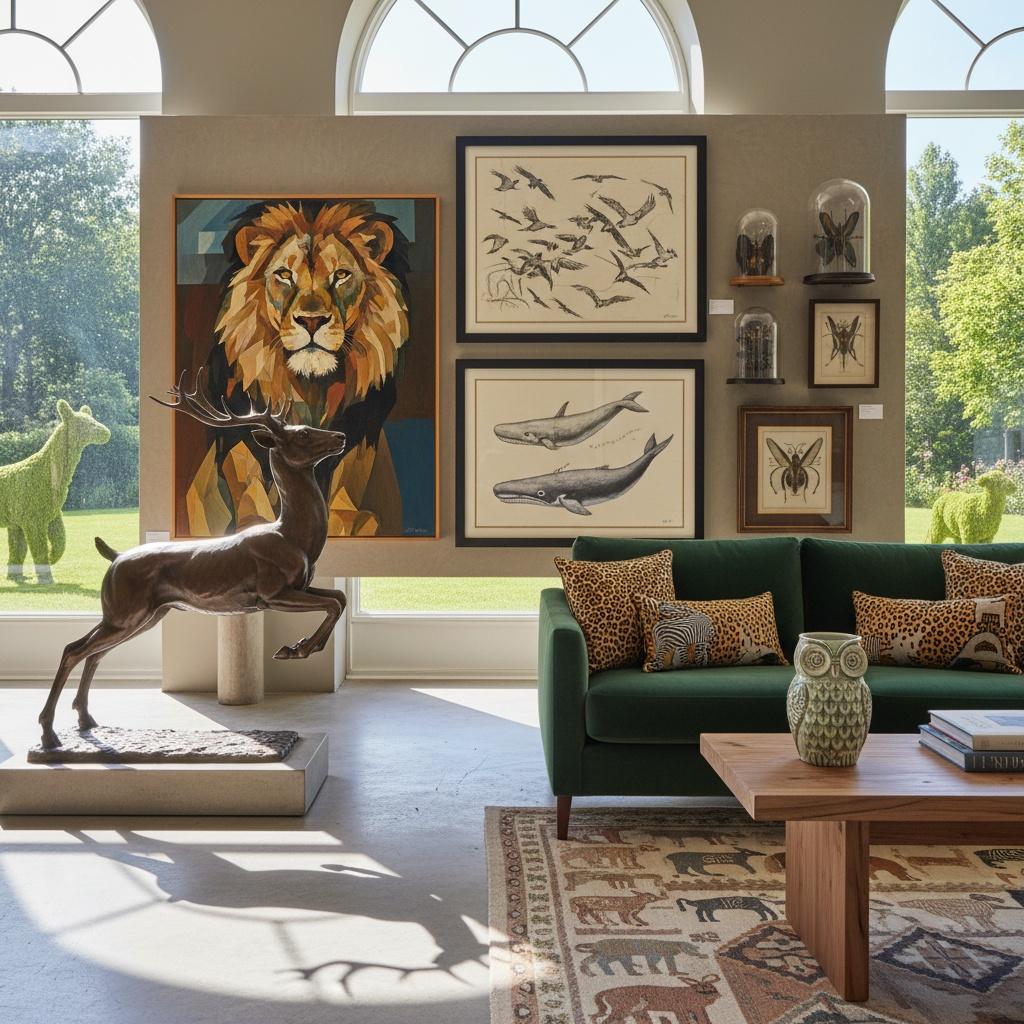
The fascination with animal symbolism extends beyond museums and galleries—it permeates our homes and personal spaces. Whether it’s a majestic lion sculpture guarding an entryway or delicate bird prints adorning a bedroom wall, incorporating animal imagery into interior design can evoke specific moods and create a sense of connection to the natural world.
Consider the psychological impact of different animals: horses suggest freedom and energy, while owls convey wisdom and tranquility. A carefully chosen piece of animal art can become a focal point in a room, sparking conversation and adding depth to the overall aesthetic.
- Bold prints featuring exotic creatures can inject vibrancy into a neutral space.
- Subtle motifs—such as embroidered birds on cushions or carved wooden animals—add a touch of whimsy and personality.
- Sculptures depicting powerful animals like lions or bears can create a sense of strength and protection.