Preview
 Send
Send Share
Share
 Details
 Guide
Guide

 Download
 Similars
 X-Ray
X-Ray Diaporama
 Stats
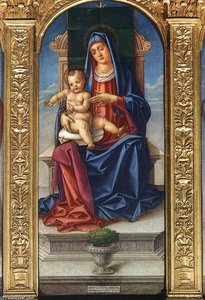
StatsSt Ambrose Polyptych
 Tempera On Panel
- Renaissance
 1477
1477- Renaissance
 125.0 x 47.0 cm
 Gallerie dell'Accademia di Venezia
 Read More
Giclée / Art Print
Museum-quality giclée or canvas print with fast production and flexible finish options. ( Buy Hand Made Painting Switch to Digital Image)




P118B $10

P118H $10

P118W $10

P438Z $10

P508JH $12

P508YH $12

P805H $10

P805Z $10

P919BZ $10

P919G $10

P919XJ $10

P959ZH $10

P968JZ $12

W106C $8

W218G $10

W218JH $8

W218Y $10

W307PJ $10

W316G $10

W316PJ $8

W316Y $10

W398PJ $8

W4111J $10

W500HY $15

W500JH $15

W692G $12

W849H $8

W940BG $15

W953PJ $8




Pick from our preset sizes that match the artwork's original proportions.

Type the width and the height you need, to fit your frame or your wall. A print can only be cut, never made bigger than the picture, so a size with a different shape loses a part of the image. We send you a digital mockup to approve before we print anything. The picture shown on this page does not show the real cut — only the mockup does.
Worldwide Delivery () in 2 weeks instead of standard 4/5 weeks. (22 October)

Free Worldwide Express Shipping

High-Quality Linen Canvas

Full Shipping Insurance

Customs Tax Refund Guarantee

True Color Matching Guarantee

100-Day Return Policy (Defects Only)

100% Money-Back Guarantee

Bulk Discount Offer
 Glass option is only available in size under 110 CM

St Ambrose Polyptych
Giclée / Art Print
Reproduction Size
-


Total Price
$ 81
A Golden Vision of Devotion: The St Ambrose Polyptych
In the heart of the Venetian Renaissance, where the light of the lagoons meets the profound piety of the era, Bartolomeo Vivarini crafted a masterpiece of spiritual splendor. The St Ambrose Polyptych, completed in 1477, stands as a breathtaking testament to the late Gothic transition into the Early Renaissance. This magnificent five-panel altarpiece is not merely a collection of portraits but a cohesive narrative of sanctity, designed to transport the viewer from the earthly realm into a celestial court. Each panel, meticulously rendered with tempera on wood, presents a figure of immense dignity, draped in robes of deep crimson, royal blue, and soft pink, all set against a backdrop of shimmering gold leaf that captures and reflects light with an almost supernatural glow.
The artistry of Vivarini is most evident in the intricate textures and the deliberate use of symbolic authority. As one traverses the panels, the eye is met with the meticulous detail of heavy fabrics, patterned borders, and the delicate weight of sacred manuscripts held by the saints. The central figure, likely representing St Ambrose himself, is distinguished by a white mitre, signaling his high ecclesiastical status, while other figures carry staves or books that serve as emblems of their wisdom and divine mission. The presence of gold leaf does more than suggest opulence; it creates a sense of eternal, unchangeable light, a hallmark of Venetian devotional art that seeks to evoke awe and reverence in the soul of the beholder.
Mastery of Technique and Venetian Splendor
To behold a reproduction of this polyptych is to experience the technical brilliance of the Vivarini workshop. The artist’s mastery over the tempera medium allows for sharp, hard outlines and vibrant, saturated colors that have remained strikingly potent since the fifteenth century. This precision, combined with the luxurious gold backgrounds, creates a rhythmic visual harmony across the five panels. For the discerning collector or interior designer, this piece offers a profound sense of historical weight and architectural grandeur. It is an artwork that commands presence, bringing the sophisticated aesthetic of 1470s Venice into a contemporary space.
Beyond its physical beauty, the St Ambrose Polyptych serves as a window into a lost world of liturgical splendor. The interplay between the realistic depiction of the figures' faces and the stylized, patterned borders creates a tension between the human and the divine. Whether placed in a curated gallery setting or used as a focal point in a classically inspired interior, this work inspires a contemplative mood. It invites anyone who views it to pause and reflect on the craftsmanship, the history, and the enduring power of sacred art to transcend time.
Questions & Answers
Why is the copyright status of "St Ambrose Polyptych" what it is?
The copyright status of "St Ambrose Polyptych" - in the public domain - its copyright has expired - follows from the artist's death in 1499.
Where does "St Ambrose Polyptych" by Bartolomeo Vivarini sit in art history?
The art-historical classification of "St Ambrose Polyptych" by Bartolomeo Vivarini is Renaissance, in the Renaissance period.
What is the dominant hue of "St Ambrose Polyptych" by Bartolomeo Vivarini?
A golden yellow range hue runs through "St Ambrose Polyptych" by Bartolomeo Vivarini.
Artist Biography
A Legacy of Venetian Light and Devotion
In the vibrant, shimmering atmosphere of the Quattrocento, Bartolomeo Vivarini emerged as a pivotal figure in the evolution of Venetian painting. Born in the storied glassmaking hub of Murano, Italy, he was part of an influential dynasty of artists that helped shape the visual identity of the Republic of Venice. As a member of the Vivarini family, his life and work were deeply intertwined with the artistic pulse of his homeland, bridging the transition from the ornate, gilded traditions of the late Gothic period to the burgeoning humanism of the early Renaissance.
The artistry of Vivarini is characterized by a profound sense of spiritual depth and technical precision. While he was a master of tempera, often utilizing gold leaf to imbue his compositions with a celestial luxury, he was also an innovator in the use of new mediums. It is noted that he learned the art of oil painting from Antonello da Messina, and he is credited with producing what is believed to be the first oil painting in Venice around 1473. This mastery allowed him to manipulate light and texture in ways that brought a new level of intimacy and serenity to his religious subjects.
Mastery of Form and Symbolism
Vivarini’s work often presents a striking balance between hard, defined outlines and a rich, emotive color palette. His figures frequently possess a dignified and devout expression, capturing the solemnity required for the altarpieces that adorned Venetian basilicas. This ability to convey human emotion through structured forms made him a sought-after painter for significant religious commissions. A notable example of his skill is found in his Madonna and Child, where he uses light entering through windows and deep red drapery to create a sense of sacred space.
Beyond the figures themselves, Vivarini’s paintings are often layered with symbolic meaning:
- The use of gold: His frequent application of gold leaf serves not only as decoration but as a medium to represent divine light.
- Natural motifs: In a charming nod to his name—as vivarino translates to goldfinch in Italian—he occasionally included the small bird as a subtle signature within his works.
- Architectural depth: His compositions, such as the Conversano Polyptych, demonstrate a sophisticated understanding of perspective and the integration of sacred figures into complex, multi-paneled structures.
Historical Significance and Artistic Influence
The historical importance of Bartolomeo Vivarini lies in his role as a bridge between eras. He stood at the crossroads of the Byzantine-influenced traditions of his predecessors and the revolutionary Renaissance styles brought by artists like Fra Angelico and Giovanni Bellini. By blending these diverse influences, he helped establish a unique Venetian visual language—one that prioritized luminous color and emotional resonance.
His influence extended through his family lineage, notably impacting the work of his nephew, Alvise Vivarini, who would become a leading artist in Venice before the rise of Bellini. Through his meticulous detail and his pioneering adoption of oil techniques, Bartolomeo Vivarini left an indelible mark on the history of Italian art, ensuring that the spiritual and aesthetic grandeur of Murano and Venice would be preserved for generations to come.

Bartolomeo Vivarini
1440 - 1499 , Italy
Quick Facts
- Artistic Movement Or Style: Venetian Renaissance
- Artists Or Movements Influenced By This Artist: ['Alvise Vivarini']
- Artists Who Influenced This Artist:
- Antonello da Messina
- Fra Angelico
- Full Name: Bartolomeo Vivarini
- Nationality: Italian
- Notable Artworks:
- Madonna and Child
- Conversano Polyptych
- Triptych (detail)
- Place Of Birth: Murano, Italy
- Date Of Birth: 1440
- Date Of Death: 1499
Related Articles
The Allure of Gold in Art History: Symbolism, Technique & Cultural Significance
Explore the rich history of gold in art! Discover symbolism, techniques & cultural significance from ancient civilizations to Klimt's masterpieces. Expert insights for collectors at OriginalUniqueArt.

Gilded Glory: The High-Impact Art of Gold Leaf and Byzantine Masterpieces
Explore the celestial brilliance of Byzantine masterpieces. Discover the sacred alchemy of gold leaf, the spiritual depth of Orthodox icons, and how this high-impact gilded glory continues to inspire awe in fine art history and modern luxury interiors.

Golden Masterpieces: 10 Paintings That Define Art History | OriginalUniqueArt
Explore 10 breathtaking paintings where gold leaf shines! From Klimt to Byzantine icons, discover art history’s most gilded masterpieces. Find museum-quality reproductions & elevate your home decor with OriginalUniqueArt. Explore the full collection online.
The Sacred Glow: Mastering Gold Leaf and Gilding in Byzantine Art
Explore the divine mastery of Byzantine gold leaf and gilding. Discover how ancient artisans used gold ground and mosaics to create celestial light, a timeless legacy of spiritual splendor and technical excellence in sacred art history.
Late Gothic Art: The Divine Transition from Medieval Symbolism to Renaissance Naturalism
Explore the profound transition of Late Gothic art from medieval symbolism to Renaissance naturalism. Discover the elegance of International Gothic, the legacy of Master Theodoric, and the evolution of European courtly masterpieces through an expert art-historical lens.