Preview
 Send
Send Share
Share
 Details
 Guide
Guide

 Download
 Similars
 X-Ray
X-Ray Diaporama
 Stats
StatsThe potato costume
 Acrylic On Canvas
- WallArt
- Contemporary Realism
 2003
2003 160.0 x 70.0 cm
 Postman Cheval's Ideal Palace
 Read More
The artwork displayed on this page is protected by copyright law, which means we cannot legally create or sell an identical reproduction. This protection is enforced under international agreements such as the Berne Convention and by national laws, including those outlined by the U.S. Copyright Law - Title 17.
As a respectful and legal alternative, we offer custom, hand-painted artworks inspired by the original. Our skilled and professional artists carefully study the original's style, mood, and artistic essence to create a new, unique piece that evokes the same feeling - while remaining an original creation in its own right.
This method fully complies with copyright regulations because it does not involve copying or duplicating the protected artwork. Instead, it is a creative reinterpretation - a new painting that is influenced by the original but not identical to it.
Hand Made Oil Reproduction
Hand-painted oil on canvas in your size and frame, made to order by our artists. ( Switch to Print Switch to Digital Image)




P118B $10

P118H $10

P118W $10

P438Z $10

P508JH $12

P508YH $12

P805H $10

P805Z $10

P919BZ $10

P919G $10

P919XJ $10

P959ZH $10

P968JZ $12

W106C $8

W218G $10

W218JH $8

W218Y $10

W307PJ $10

W316G $10

W316PJ $8

W316Y $10

W398PJ $8

W4111J $10

W500HY $15

W500JH $15

W692G $12

W849H $8

W940BG $15

W953PJ $8




Pick from our preset sizes that match the artwork's original proportions.

Type the width and the height you need, to fit your frame or your wall. This is hand-painted, so for a size with a different shape the artist can paint a bit more around the picture, or cut a bit — you choose. We send you a digital mockup to approve before the painting starts. The picture shown on this page does not show the real result — only the mockup does.
After order, OriginalUniqueArt.com team will email client for instructions and provide a mockup preview
Worldwide Delivery () in 3/4 weeks instead of standard 5 weeks. (26 October). No compromise on quality.

Free Worldwide Express Shipping

High-Quality Linen Canvas

Full Shipping Insurance

Customs Tax Refund Guarantee

True Color Matching Guarantee

100-Day Return Policy (Defects Only)

100% Money-Back Guarantee

Bulk Discount Offer
 Glass option is only available in size under 110 CM

The potato costume
Reproduction Medium
Reproduction Size
-


Total Price
$ 350
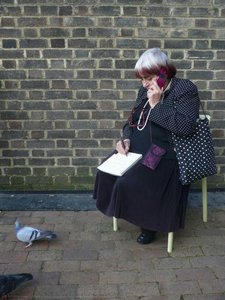
The Potato Costume – A Reflection of Resilience and Playful Observation
Arlette Varda’s “The Potato Costume,” created in 2003, transcends mere visual representation; it embodies a profound ethos of artistic engagement rooted in meticulous detail and imbued with an unmistakable spirit of humanist curiosity. Captured within the serene setting of Hauterives, France – where Varda established her Ciné-Tamaris studio – this photograph isn’t simply documenting an artwork; it's presenting it as part of a larger narrative about finding beauty and meaning in everyday life.
- Composition & Perspective: The image employs a carefully considered one-point perspective, guiding the viewer’s gaze towards a central potato costume positioned prominently on the right side. Surrounding objects—a navy coat, hat, framed portrait, clocks, and a tie—establish depth and contribute to a balanced visual composition that speaks to Varda's fascination with spatial relationships.
- Color Palette & Texture: Dominated by cool blues and beige tones, the palette reflects the quiet dignity of the interior space. The earthy browns of the potato costume contrast subtly with the golden hues of the clocks and portrait frame, highlighting Varda’s sensitivity to color harmonies. Textures vary across the scene—smooth walls juxtaposed with the rough surface of the costume—creating a tactile experience that mirrors the artist's approach to capturing reality.
- Style & Technique: Shot with natural light conditions – a deliberate choice reflecting Varda’s documentary tradition – the photograph eschews excessive retouching, prioritizing an honest portrayal of the artwork and its environment. This observational style underscores Varda’s belief that “the heart” resides in capturing authentic moments and experiences.
- Symbolism & Emotional Impact: The potato costume itself serves as a potent symbol—a humble yet transformative object representing resilience, renewal, and the artist's commitment to finding joy in unexpected places. As Varda eloquently stated, "I want the heart." This sentiment encapsulates her artistic vision: to illuminate the human condition through attentive observation and playful engagement with the world around us.
Historical Context & Influences
Born in Ixelles, Belgium, Agnès Varda emerged as a pivotal figure in French New Wave cinema—a movement characterized by its rejection of conventional filmmaking techniques and its exploration of social realities. Heavily influenced by filmmakers like René Clair and Jean Renoir, Varda championed a humanist aesthetic that prioritized spontaneity and emotional truthfulness. Her pioneering work challenged cinematic conventions while simultaneously honoring the traditions of documentary filmmaking.
The Artist’s Vision – “La Même Gestuelle Modeste”
Varda's artistic philosophy centered on "la même gestuelle modeste"—the same modest gesture—a concept she championed throughout her career. This approach involved embracing chance and serendipity, recognizing that beauty and insight could be found in seemingly insignificant details. Like Joan Retallack’s poetic wager, Varda sought to capture the essence of experience through careful observation and a willingness to engage with the world on its own terms.
A Legacy of Compassion & Playful Curiosity
“The Potato Costume” exemplifies Varda's enduring legacy—a testament to her unwavering belief in the transformative power of art and her profound empathy for humanity. Her work continues to inspire artists and audiences alike, reminding us that true creativity lies in embracing vulnerability, fostering connection, and celebrating the beauty inherent in everyday life.
Questions & Answers
What colors dominate "The potato costume" by Arlette Varda?
"The potato costume" is defined by a neutrals palette led by celadon (#acb7bc).
What print size of "The potato costume" by Arlette Varda fits the recommended room?
The recommended pairing for "The potato costume" by Arlette Varda: a large print in a living room.
How many people view "The potato costume"?
The Stats page of "The potato costume" by Arlette Varda presents public visit statistics: monthly visits of this artwork, a comparison with the artist's most viewed works, and where its visitors come from.
Artist Biography
Agnès Varda: A Pioneer of the French New Wave
Arlette Varda, later known and celebrated as Agnès Varda, was a singular figure in 20th-century cinema – a Belgian-born French filmmaker, screenwriter, and photographer whose work fundamentally reshaped how movies were made and viewed. Born on May 30, 1928, in Ixelles, Brussels, to Christiane Pasquet and Eugène Jean Varda (a Greek refugee), her early life was steeped in the cultural crossroads of Europe. This heritage – a French mother with roots in Sète and a father tracing his lineage back through Ottoman Asia Minor – profoundly influenced her artistic sensibility, informing a deep appreciation for both urban and rural landscapes, and a keen awareness of social realities. Varda’s journey into art began not with film but with photography; she honed her skills as a still photographer, capturing the everyday lives of families and documenting events before dedicating herself to the moving image. This initial experience proved invaluable, instilling in her an observational eye and a respect for authentic representation – qualities that would become hallmarks of her distinctive cinematic style.Early Years & Photographic Beginnings
Varda’s formal artistic training laid the groundwork for her future success. She studied art history at the École du Louvre and photography at the École des Beaux-Arts, developing a sophisticated understanding of composition, form, and visual storytelling. Crucially, she also attended the Lycée et Collège Victor-Duruy, earning a bachelor’s degree in literature and psychology – disciplines that would later inform her nuanced portrayals of human relationships and psychological states. Her early career as a stage photographer for the Théâtre National Populaire provided an essential apprenticeship, exposing her to theatrical performance and demanding a collaborative approach to visual creation. It was during this period that she began to develop her own unique style, moving beyond mere documentation to explore questions of meaning and form through carefully constructed images. She described her initial foray into photography as “asking questions with composition, form, and meaning,” a philosophy that would permeate her entire cinematic oeuvre.The Birth of the New Wave & Unconventional Techniques
Varda’s emergence coincided with the burgeoning French New Wave movement in the 1950s, and she quickly became one of its most vital voices. Rejecting the polished aesthetics and studio-bound productions of traditional cinema, Varda embraced a radically different approach. She championed location shooting – often in unglamorous urban environments or remote rural areas – and utilized non-professional actors, bringing a sense of realism and immediacy to her films that was unprecedented at the time. This deliberate choice challenged established conventions and reflected a desire to capture authentic experiences rather than staged performances. Her early work, such as *La Pointe Courte* (1955), demonstrated this innovative spirit, employing a documentary-like style with handheld cameras and natural lighting, creating a sense of intimacy and immediacy rarely seen in French cinema. Her films frequently explored themes of female experience, social injustice, and the complexities of human relationships, often through a feminist lens.Notable Works & Lasting Influence
Varda’s filmography is remarkably diverse, encompassing both narrative features and experimental documentaries. *Cléo from 5 to 7* (1962), a poignant portrait of a pop singer grappling with mortality, remains one of her most celebrated works, lauded for its innovative use of time and space. *Vagabond* (1985) is a powerful meditation on homelessness and the search for identity, while *Kung Fu Hooligans* (1976) offered a playful critique of consumer culture. However, it’s her later films that perhaps best exemplify her evolving artistic vision. *Les Cent et une nuits de Simon Cinéma* (1995), a loving tribute to the art of cinema, and *Visages Villages* (2017), a visually stunning exploration of rural France, cemented her legacy as a filmmaker deeply committed to capturing the beauty and complexity of everyday life. Her work was consistently praised for its honesty, empathy, and refusal to adhere to conventional cinematic norms.A Legacy of Innovation & Social Commentary
Arlette Varda’s influence extends far beyond her individual films. She helped to establish a new aesthetic vocabulary for cinema, prioritizing observation, spontaneity, and the voices of ordinary people. Her commitment to social justice is evident in many of her works, particularly those that address issues of gender inequality, poverty, and displacement. Varda's later years saw her continue to push boundaries, experimenting with new technologies and approaches while retaining a deep respect for her artistic roots. She was awarded the Academy Award for Best Documentary Feature for *Visages Villages* in 2018, a testament to her enduring impact on cinema and art. Agnès Varda died on March 29, 2019, leaving behind a rich and influential body of work that continues to inspire filmmakers and audiences alike. Her legacy is not simply one of groundbreaking technique but also of a profound commitment to seeing the world with fresh eyes and telling stories that matter.
Arlette Varda
1928 - 2019 , Belgium
Quick Facts
- Full Name: Arlette Varda (Agnès Varda)
- Nationality: Belgian-French
- Date Of Birth: 1928
- Date Of Death: 2019
- Place Of Birth: Ixelles, Belgium
- Notable Artworks:
- La Pointe Courte
- Cléo from 5 to 7
- Vagabond
- Artistic Movement Or Style: New Wave Cinema
- Artists Who Influenced This Artist:
- René Clair
- Jean Renoir
- Artists Or Movements Influenced By This Artist:
- François Truffaut
- Jean-Luc Godard
Related Articles

Albert Kretschmer: Capturing 19th-Century Costume & the Seeds of Expressionism
Explore the exquisite costume studies of Albert Kretschmer (1825-1891). Discover his detailed illustrations, influence on art history & connection to early Expressionism. Learn about collecting this remarkable artist's work.
Witnessing History Through Lens & Light: Documentary Photography's Enduring Legacy
Explore the powerful history of documentary photography – from its origins to contemporary masters like Gordon Parks & W. Eugene Smith. Discover how this art form shapes our understanding of society and witness pivotal moments in time.
Charles Le Brun: Master of French Baroque Classicism & His Enduring Legacy
Explore the life & art of Charles Le Brun, master of French Baroque Classicism. Discover his royal commissions, influence on Versailles, and enduring legacy through detailed analysis & stunning artworks.
The Lens of Truth: A Comprehensive History and Legacy of Documentary Photography
Explore the profound history of documentary photography. From early daguerreotypes to social reform movements, discover how the lens captures truth, preserves vanishing cultures, and shapes our global visual narrative through an expert art-historical lens.
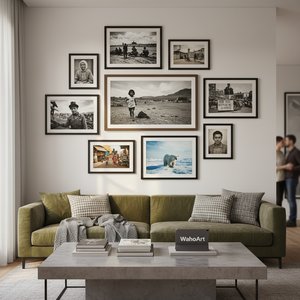
Documentary Photography's Defining Moments: 10 Masterpieces for Your Home |
Explore 10 defining documentary photography masterpieces – from Dorothea Lange to Robert Capa. Discover powerful stories, iconic images & timeless art for your home. Museum-quality prints at .