


1


Updated October 2026 · ranked by our popularity score (searches, visits and orders for each work) · 58 works by Lajos Vajda in our catalogue
In short
Frog Girl is the Lajos Vajda painting that draws the most eyes. After it, the eye goes to Rest and Two Faces. Among the 58 works of Lajos Vajda in our catalog, these 58 are the most famous, each a unique original presented with its year, its museum and the reason it endures.


 Head Of A Girl
12
 Moulding Powers On The Horizon
13
 Self Portrait With Icon
14
 Houses with Stairs1927 · Ferenczy Museum
15
 Nude woman1924
16
 Hands
17
 Churches At Szentendre
18
 Houses At Szentendre
19
 Churches, Trees, Dotted Forms
20
 Table Still-life With Armchair
21
 Church Towers With Harbour Motifs
22
 Plate Still-life Above Houses
23
 Head with Scarf
24
 Mask With Weeping Willow
25
 Girl Icon
26
 Chapel With Hand
27
 Mask With Moon
28
 Huge Landscape Mask
29
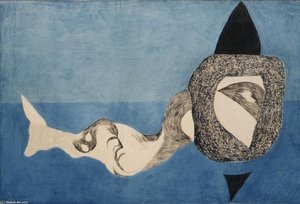 Monster In Blue Space
30
 Melon Head
31
 Still-life On A Table Of Horseshoe Form
32
 Self-portrait With Necktie
33
 Green Clown Mask
34
 Ancestral Nature
35
 Black Icon
36
 Houses With Still Life And Birds
37
 Friends
38
 Eye With Root (single-eyed)
39
 Oil-lamp With Whistle
40
 Houses At Szentendre With Crucifix
41
 Chinese Execution
42
 Tower With Still-life On A Plate
43
 Self-portrait With Lily
44
 Abstract Self-portrait
45
 Black Self Portrait
46
 Green Semicircle With Orange
47
 Winged Creature On Silvery Ground
48
 Houses In Szentendre With Blue Sky
49
 Fire-eye
50
 Head With House
51
 Sisters
52
 Self-portrait With Hold-up Icon
53
 Floating Houses
54
 Spotty HouseFerenczy Museum
55
 View From The Church-hill
56
 Leg And Hand
57
 Mask Icon
58
 Houses
The four subjects that come back most often in these originals, each with its finest example.
The museum that holds the most of the paintings on this page.
| Museum | City | Works by Lajos Vajda | Paintings from this list |
|---|---|---|---|
 Ferenczy Museum |
Szentendre | 2 | Houses with Stairs, Spotty House |
Between 1924 and 1927, 4 years in all, Lajos Vajda made every dated original shown here: a short span, followed year by year.
Pick a year to see its originals.


Frog Girl. Rest and Two Faces come next.
Frog Girl, Rest, Two Faces, Self-portrait With Architecture, Madonna Above The Gate, Crucifix Above The Houses, Self Portrat With Bars, Village Motifs With Self-portrait, Self-portrait With Hat and Self Portrait With The Tree Of Life. The ranking above gives each one's year and museum.
Our catalog holds 58 works by Lajos Vajda, dated from 1924 to 1927.
Mostly in Ferenczy Museum (Szentendre). The museum table above lists them all.
On this page, the earliest is Nude woman (1924) and the latest Houses with Stairs (1927).
Buildings (9), Portraits (7) and Hungarian art (7), across the 58 works on this page.
Cubism, judging by the originals on this page.
Houses with Stairs and Spotty House: the Ferenczy Museum, Szentendre holds 2 of the works on this page.
Lajos Vajda stands as one of Hungary’s most distinctive and haunting figures in the realm of avant-garde art, a painter whose singular style and deeply symbolic imagery continue to resonate with profound intensity. Born in 1908 in Zalaegerszeg, Hungary, into a humble Jewish family, Vajda’s early life was marked by both movement and the shadows of hardship. His artistic journey began under the rigorous tutelage of István Csók at the Hungarian Academy of Fine Arts in Budapest, a period that established his foundational mastery of composition. However, it was his time in Paris between 1930 and 1934, studying within the atelier of Fernand Léger alongside Dezső Korniss, that truly ignited his creative spirit. In the vibrant intellectual atmosphere of France, Vajda encountered the revolutionary currents of Cubism and Surrealism, forces that would irrevocably shape his visual language into a unique synthesis of geometric abstraction and dreamlike, often unsettling, imagery.
The essence of Vajda’s work lies in its extraordinary ability to bridge disparate worlds. Upon returning to Hungary, he became a dedicated collector and chronicler of folk art motifs, particularly from the regions of Szentendre and Szigetmonostor. He did not merely observe these traditions; he absorbed them, meticulously documenting symbols and patterns to serve as the bedrock of his creative process. His canvases became complex tableaux where religious iconography—drawing from Orthodox Christian, Roman Catholic, and Jewish traditions—was seamlessly woven with architectural elements and folkloric textures. This layering of meaning created a spiritual depth that felt both ancient and startlingly modern, allowing him to explore themes of identity, heritage, and the human condition through a lens of constructed reality.
Vajda’s technical evolution was characterized by an incredible versatility, moving between the structured discipline of Constructivism and the fluid, emotive depths of Surrealism. His work often functioned as a visual dialogue between the tangible and the metaphysical. In his more graphic works, one can observe a rhythmic tension inspired by the musical structures of Béla Bartók and Zoltán Kodály, where line and shape dance with a mathematical yet soulful precision. Conversely, his later drawings and sketches possess a raw, visceral quality, often utilizing charcoal and watercolor to evoke the swirling, unpredictable forces of nature and the encroaching darkness of history.
Beyond the purely aesthetic, Vajda’s art was deeply intertwined with the turbulent political landscape of the early 20th century. His fascination with the dramatic power of film and photo-montage led him to create works that addressed the great cataclysms of mankind. Through his lens, the horrors of war, hunger, and systemic violence were not merely documented but transformed into symbolic allegories. His final abstract surrealistic works are particularly poignant, as they seem to foreshadow the unimaginable atrocities of World War II, capturing a sense of dread and fragmentation that mirrored the fracturing of European civilization itself.
Though his life was tragically cut short by tuberculosis in 1941 at the age of only thirty-three, Lajos Vajda left behind an impressive and influential oeuvre that redefined the boundaries of Hungarian modernism. His greatness lies in his refusal to adhere to the rigid dogmas of the movements he inhabited; instead, he achieved a profound independence by integrating local historical materials with international avant-garde trends. He transformed the "local" into something universal, proving that folk motifs and religious symbols could speak to the global anxieties of the modern age.
Today, Vajda is remembered not just as a painter, but as a visionary who captured the soul of a disappearing world while simultaneously peering into the chaos of the future. His contributions continue to be studied for their:


