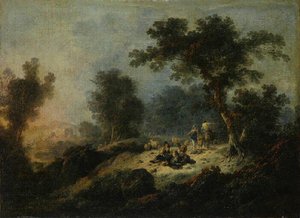
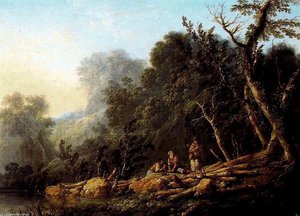
Portrait of Jean-Baptiste Pillement

Jean-Baptiste Pillement Paintings: The 53 Most Famous, Through a Gallery's Eye

Updated November 2026 · ranked by our popularity score (searches, visits and orders for each work) · 54 works by Jean-Baptiste Pillement in our catalogue

In short

To the gallery's eye, Jean-Baptiste Pillement's most famous painting is Les lavandières. Landscape with Travelers and a Ruin (1750) and Chinoiserie (1767) complete the trio every eye recognises. Of the 54 works by Jean-Baptiste Pillement in our catalog, the gallery presents the 53 most famous below, each original with its year, its museum and what makes it unique.

1728 – 1808, Lyon Rococo Most works: Petit Palais

The gallery's top 10 Jean-Baptiste Pillement paintings

1
Les lavandières by Jean-Baptiste Pillement

Les lavandières

Oil On Canvas

Les lavandières, also known as Landscape with Washerwomen, is a landscape painting by Jean-Baptiste Pillement. This oil on canvas work dates to 1792. It belongs to the genre of landscape painting, focusing on a natural setting involving rural labor.

2
Landscape with Travelers and a Ruin (1750) by Jean-Baptiste Pillement

Landscape with Travelers and a Ruin

1750 · Oil · Fine Arts Museums of San Francisco, San Francisco

The scene unfolds within Landscape with Travelers and a Ruin, a work that captures a quiet moment of passage through a rugged terrain. Jean-Baptiste Pillement invites the viewer into this pastoral setting, where the scale of nature begins to dwarf the small figures navigating the rocky path. The composition centers on the interaction between these travelers and the weathered stone remains of an ancient structure, creating a sense of stillness…

3
Chinoiserie (1767) by Jean-Baptiste Pillement

Chinoiserie

1767 · Painting · Petit Palais, Paris

In this large-scale work titled Chinoiserie, Jean-Baptiste Pillement presents a highly decorative vision that functions as a wall painting or wallpaper design. Created about 1767, the piece captures a specific moment in the eighteenth century when the French aristocracy sought an escape into idealized, exotic landscapes. The composition invites the viewer into a curated garden space, where the boundaries between the interior and the natural world feel intentionally blurred.

4
Chinoiserie (1767) by Jean-Baptiste Pillement

Chinoiserie

1767 · Oil On Canvas · Petit Palais, Paris

A curtain of flowering vines and slender trees frames a secret garden. The scene is a theatrical vignette, a stage set for a quiet afternoon of leisure. Figures dressed in the high fashion of the 18th century gather upon a raised, rocky platform. They move through a landscape of pale blues and muted greens, their clothing providing small sparks of red and yellow against the soft foliage. The air feels…

5
Fisherman pulling networks (Return from the catch). (1769) by Jean-Baptiste Pillement

Fisherman pulling networks (Return from the catch).

1769 · Oil On Canvas · National Museum in Warsaw, Warsaw

In this 1769 oil painting, we find ourselves at the edge of a rugged coast during the soft, diffused light of dawn or dusk. The scene focuses on the rhythmic, physical labor of fishermen as they pull their heavy nets from the water. A massive, towering rock formation dominates the right side of the composition, its textured surface rendered in earthy ochres and tans. This geological giant provides a sense…

6
A Shipwreck in a Storm (1782) by Jean-Baptiste Pillement

A Shipwreck in a Storm

1782 · Watercolor · Metropolitan Museum of Art, New York

A Shipwreck in a Storm by Jean-Baptiste Pillement captures a violent maritime disaster. The scene centers on a large vessel in the process of breaking apart, its structure yielding to the overwhelming power of a tempest. Amidst the churning chaos, several figures cling to the jagged rocks of a rugged coastline. Their presence emphasizes the human struggle against the relentless forces of nature. This work, created about 1782, focuses on…

7
Landscape with Washerwomen and Peasants (1790) by Jean-Baptiste Pillement

Landscape with Washerwomen and Peasants

1790 · Oil On Canvas · National Gallery of Ireland, Dublin City

In this 1790 oil on canvas, we find ourselves drawn into a rugged, mountainous scene where the rhythms of daily life unfold near a cascading river. The composition is framed by dark, craggy cliffs that act as a natural vignette, guiding the eye toward a central, atmospheric vista. An arched wooden footbridge spans the upper reaches of the frame, connecting the rocky heights, while a tall tower watches over a…

8
Rustic Landscape with Aqueduct and Figures (1794) by Jean-Baptiste Pillement

Rustic Landscape with Aqueduct and Figures

1794 · Oil On Panel · Cooper Hewitt, Smithsonian Design Museum, New York City

The scene unfolds within Rustic Landscape with Aqueduct and Figures, a work that invites the eye into a quiet, pastoral moment. Jean-Baptiste Pillement, an artist born in Lyon, France, in 1728, captures a world where nature and human presence exist in a delicate, rhythmic balance. The painting, dated about 1794, presents a vision of the countryside that feels both lived-in and dreamlike, as if the viewer has stumbled upon a…

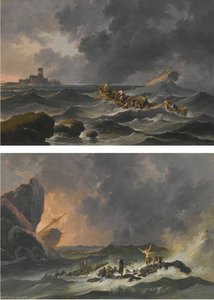
9
Landscape with Washerwomen (detail) (1792) by Jean-Baptiste Pillement

Landscape with Washerwomen (detail)

1792 · Oil On Canvas

Landscape with Washerwomen (detail) is an oil on canvas painting by Jean-Baptiste Pillement. Created in 1792, this work belongs to the genre of landscape painting. It captures a specific moment of domestic activity within a natural setting. The scene focuses on rural labor, where human presence meets the movement of the earth.

10
Waterfall Landscape in Portugal by Jean-Baptiste Pillement

Waterfall Landscape in Portugal

Oil On Canvas

Waterfall Landscape in Portugal is an oil on canvas painting by Jean-Baptiste Pillement. This work captures a serene scene set within a Portuguese landscape, where the movement of water defines the topography. The composition focuses on a waterfall that anchors the natural setting, providing a sense of depth and quietude to the environment.

Jean-Baptiste Pillement paintings, ranked 11 to 53

11PAYSAGE AVEC TROUPEAU by Jean-Baptiste PillementPAYSAGE AVEC TROUPEAUThe Louvre 12Landscape. (1750) by Jean-Baptiste PillementLandscape.1750 · National Museum of Fine Arts of Cuba 13A Wreck at the Rocky Seaside (1750) by Jean-Baptiste PillementA Wreck at the Rocky Seaside1750 · Tokyo Fuji Art Museum 14River landscape with a mill and shepherds (1748) by Jean-Baptiste PillementRiver landscape with a mill and shepherds1748 15Voyages du Roy au Chateau de Choisy (1751) by Jean-Baptiste PillementVoyages du Roy au Chateau de Choisy1751 · Château de Versailles 16Landscape with Aqua Julia in Rome. (1765) by Jean-Baptiste PillementLandscape with Aqua Julia in Rome.1765 · National Museum in Warsaw 17Market Scene in an Imaginary Oriental Port (1764) by Jean-Baptiste PillementMarket Scene in an Imaginary Oriental Port1764 · J. Paul Getty Museum 18Temple of Minerva Medica in Rome (1765) by Jean-Baptiste PillementTemple of Minerva Medica in Rome1765 · National Museum in Warsaw 19Decorative Panel with Animal Subjects (1767) by Jean-Baptiste PillementDecorative Panel with Animal Subjects1767 · Petit Palais 20Decorative Panel with Animal Subjects (1767) by Jean-Baptiste PillementDecorative Panel with Animal Subjects1767 · Petit Palais 21View of the coast with fishing boats (Trip to catch) (1769) by Jean-Baptiste PillementView of the coast with fishing boats (Trip to catch)1769 · National Museum in Warsaw 22Title page, Plate 1 from (1775) by Jean-Baptiste PillementTitle page, Plate 1 from1775 23Title page, Plate 1, from (1775) by Jean-Baptiste PillementTitle page, Plate 1, from1775 24Animated Landscape (1785) by Jean-Baptiste PillementAnimated Landscape1785 · Carnavalet Museum 25Vue des jardins de Benfica (1785) by Jean-Baptiste PillementVue des jardins de Benfica1785 26Landscape with Muleteers and Peasants (1790) by Jean-Baptiste PillementLandscape with Muleteers and Peasants1790 · National Gallery of Ireland 27Landscape with Rustic Figures (1794) by Jean-Baptiste PillementLandscape with Rustic Figures1794 · Cooper Hewitt, Smithsonian Design Museum 28Winter (1792) by Jean-Baptiste PillementWinter1792 29Autumn (1792) by Jean-Baptiste PillementAutumn1792 30Landscape with Washerwomen (1792) by Jean-Baptiste PillementLandscape with Washerwomen1792 · Musée des Beaux-Arts de Bordeaux 31Mountainous Landscape (1780) by Jean-Baptiste PillementMountainous Landscape1780 · Wallraf-Richartz-Museum 32Print, jean pillement (1755) by Jean-Baptiste PillementPrint, jean pillement (1755) 33Naufrage by Jean-Baptiste PillementNaufrage 34Paysage by Jean-Baptiste PillementPaysage 35PAYSAGE AU PONT, PECHEUR ET BERGER by Jean-Baptiste PillementPAYSAGE AU PONT, PECHEUR ET BERGER 36PAYSAGE A LA CASCADE, BERGER by Jean-Baptiste PillementPAYSAGE A LA CASCADE, BERGER 37Paysage au pont, pêcheur et lavandière by Jean-Baptiste PillementPaysage au pont, pêcheur et lavandière 38Muletiers italiens by Jean-Baptiste PillementMuletiers italiensMuseum Voor Moderne Kunst 39PAYSAGE A LA CASCADE, PECHEURS by Jean-Baptiste PillementPAYSAGE A LA CASCADE, PECHEURS 40Chinois pêchant à la ligne by Jean-Baptiste PillementChinois pêchant à la ligneMusée National Magnin 41Untitled (AQQNCU) (1794) by Jean-Baptiste PillementUntitled (AQQNCU)1794 42Exotic market-place by Jean-Baptiste PillementExotic market-place 43Paysageavec troupeau by Jean-Baptiste PillementPaysageavec troupeau 44A decorative plate, french rococo art by Jean-Baptiste PillementA decorative plate, french rococo art 45Untitled (AQQNCN) by Jean-Baptiste PillementUntitled (AQQNCN) 46Les chèvres by Jean-Baptiste PillementLes chèvres 47Two shipwreck scenes by Jean-Baptiste PillementTwo shipwreck scenes 48River Landscape by Jean-Baptiste PillementRiver Landscape 49Pastoral Landscape with Shepherds by Jean-Baptiste PillementPastoral Landscape with Shepherds 50Landscape by Jean-Baptiste PillementLandscape 51Shipwrecked Sailors Coming Ashore by Jean-Baptiste PillementShipwrecked Sailors Coming AshoreMuseo del Prado 52A River landscape with a ruined tower and fishermen with their nets in the foreground by Jean-Baptiste PillementA River landscape with a ruined tower and fishermen with their nets in the foreground 53Landscape by Jean-Baptiste PillementLandscapeMuseo del Prado

Jean-Baptiste Pillement's famous paintings, period by period

The subjects that held Jean-Baptiste Pillement's eye

The four subjects that come back most often in these originals, each with its finest example.

The museums that keep Jean-Baptiste Pillement's originals

The 8 museums that hold the most of the paintings on this page.

Museum City Works by Jean-Baptiste Pillement Paintings from this list
Petit Palais, ParisPetit Palais Paris 4 Chinoiserie, Chinoiserie, Decorative Panel with Animal Subjects
National Museum in Warsaw, WarsawNational Museum in Warsaw Warsaw 4 Fisherman pulling networks (Return from the catch)., Landscape with Aqua Julia in Rome., Temple of Minerva Medica in Rome
National Gallery of Ireland, Dublin CityNational Gallery of Ireland Dublin City 2 Landscape with Washerwomen and Peasants, Landscape with Muleteers and Peasants
Cooper Hewitt, Smithsonian Design Museum, New York CityCooper Hewitt, Smithsonian Design Museum New York City 2 Rustic Landscape with Aqueduct and Figures, Landscape with Rustic Figures
Museo del Prado, MadridMuseo del Prado Madrid 2 Shipwrecked Sailors Coming Ashore, Landscape
Fine Arts Museums of San Francisco, San FranciscoFine Arts Museums of San Francisco San Francisco 1 Landscape with Travelers and a Ruin
Metropolitan Museum of Art, New YorkMetropolitan Museum of Art New York 1 A Shipwreck in a Storm
The Louvre, ParisThe Louvre Paris 1 PAYSAGE AVEC TROUPEAU

Jean-Baptiste Pillement, one signature painting per decade

Works per decade

Pick a decade to see the original that defines it.

Jean-Baptiste Pillement's paintings: the gallery answers

Which Jean-Baptiste Pillement painting is the most famous of all?Reveal the answer

Les lavandières. Landscape with Travelers and a Ruin (1750) and Chinoiserie (1767) come next.

Which are Jean-Baptiste Pillement's top 10 paintings?Reveal the answer

Les lavandières, Landscape with Travelers and a Ruin, Chinoiserie, Chinoiserie, Fisherman pulling networks (Return from the catch)., A Shipwreck in a Storm, Landscape with Washerwomen and Peasants, Rustic Landscape with Aqueduct and Figures, Landscape with Washerwomen (detail) and Waterfall Landscape in Portugal. The ranking above gives each one's year and museum.

How many works did Jean-Baptiste Pillement create?Reveal the answer

Our catalog holds 54 works by Jean-Baptiste Pillement, dated from 1748 to 1794.

Where do Jean-Baptiste Pillement's most famous originals hang?Reveal the answer

Mostly in Petit Palais (Paris), National Museum in Warsaw (Warsaw) and National Gallery of Ireland (Dublin City). The museum table above lists them all.

When did Jean-Baptiste Pillement create the most famous paintings?Reveal the answer

In 1760s: 9 of the 53 works on this page were made then, Chinoiserie among them.

Which are Jean-Baptiste Pillement's earliest and latest famous works?Reveal the answer

On this page, the earliest is River landscape with a mill and shepherds (1748) and the latest Rustic Landscape with Aqueduct and Figures (1794).

Which subjects did Jean-Baptiste Pillement return to most?Reveal the answer

Landscape (11), Figures (6) and Rocks (5), across the 53 works on this page.

Which medium did Jean-Baptiste Pillement work in most?Reveal the answer

Oil On Canvas, for 8 of the 53 works on this page.

Which movement is Jean-Baptiste Pillement associated with?Reveal the answer

Rococo, judging by the originals on this page.

Which Jean-Baptiste Pillement originals does the Petit Palais hold?Reveal the answer

Chinoiserie, Chinoiserie and Decorative Panel with Animal Subjects: the Petit Palais, Paris holds 4 of the works on this page.

Jean-Baptiste Pillement: the artist

The Enchanted Realms of Jean-Baptiste Pillement

In the golden twilight of the 18th century, few artists possessed the ability to transport the viewer to a world as dreamlike and exotic as Jean-Baptiste Pillement. Born in Nîmes in 1728, Pillement emerged not merely as a painter, but as a master of atmosphere, weaving together the delicate elegance of the Rococo style with a profound fascination for the distant and the unknown. While his early years remain partially veiled by the mists of history, his ascent within the French artistic hierarchy was nothing short of meteoric. Through his meticulous training under the esteemed Jean-Baptiste Huet, he mastered the subtle nuances of watercolor, a medium that allowed him to capture the ephemeral light and vibrant pigments necessary to bring his fantastical visions to life.

Pillement’s work serves as a window into the Chinoiserie and Exotisme movements that captivated the French aristocracy. Unlike the traditionalists of his era who sought solace in classical Roman ruins or somber historical portraits, Pillement looked toward the horizon. His travels through Italy and his deep engagement with Persian motifs allowed him to construct landscapes that felt both lush and otherworldly. In his hands, the natural world was reimagined; towering palms, serpentine rivers, and brilliantly feathered birds became the protagonists of a silent, beautiful drama. This mastery of the exotic made him an indispensable figure in the courts of Louis XV and Marie Antoinette, as his art provided a much-needed escape into a realm of pure, unadulterated imagination.

Technique, Influence, and the Rococo Spirit

The brilliance of Pillement’s technique lies in his ability to balance precision with a soft, ethereal glow. He utilized a delicate sfumato technique—a masterful blending of tones through meticulous layering—that lent his landscapes an almost translucent quality. This approach allowed him to evoke the atmospheric depth of masters like Claude Lorrain, yet he infused these classical foundations with a uniquely whimsical energy. His compositions were never static; they pulsed with a rhythmic vitality, often characterized by:

  • Intricate Botanical Detail: A profound focus on flora that felt both scientifically inspired and mythically heightened.
  • Chromatic Vibrancy: The use of bold, saturated colors to represent the lushness of tropical and oriental environments.
  • Decorative Fluidity: An ability to bridge the gap between fine art painting and decorative design, making his work equally at home on a canvas or as part of an opulent interior mural.

His stylistic evolution was deeply shaped by the explorations of artists such as Nicolas Pocock and Gaspar Pérégrine Rigaud. By absorbing their approaches to landscape and light, Pillement was able to refine a signature aesthetic that felt both grounded in European tradition and wildly adventurous. His influence extended far beyond the canvas, as his designs permeated the very fabric of French decorative arts, informing everything from wallpaper patterns to porcelain motifs.

A Lasting Legacy in Art History

The historical significance of Jean-Baptiste Pillement cannot be overstated, particularly regarding his role in defining the visual language of late 18th-century luxury. His prestigious commissions, most notably the breathtaking murals adorning the Château de Fontainebleau and the Petit Trianon, stand as testaments to his status as a favorite of the French royalty. These works were not merely decorations; they were immersive environments that helped define the aesthetic identity of an era.

As the art world transitioned from the playful exuberance of the Rococo toward the more structured discipline of Neoclassicism, Pillement’s work remained a cherished bridge between these two worlds. He left behind a legacy of wonder, reminding future generations that art possesses the unique power to transcend geographical boundaries and transport the human spirit to lands of infinite beauty and mystery. Today, his name remains synonymous with the exquisite, the exotic, and the eternal charm of the French Rococo.