


1


Updated October 2026 · ranked by our popularity score (searches, visits and orders for each work) · 8 works by Domenico Corvi in our catalogue
In short
Of all the originals Domenico Corvi left, the most famous is The Glorification of Andrea Doria (1750), in the collection of the Minneapolis Institute of Art, Minneapolis. Close behind it come Camillus and the Schoolmaster of Falerii (1764) and Allegory of Painting (1764). Our catalog holds 8 works by Domenico Corvi; the gallery has kept the 8 the world admires most, each shown with its date, its museum and its story.


The 6 museums that hold the most of the paintings on this page.
| Museum | City | Works by Domenico Corvi | Paintings from this list |
|---|---|---|---|
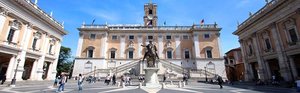 Capitoline Museums |
Rome | 2 | Camillus and the Schoolmaster of Falerii, The Vestal Tuccia |
 Minneapolis Institute of Art |
Minneapolis | 1 | The Glorification of Andrea Doria |
 Walters Art Museum |
Baltimore | 1 | Allegory of Painting |
 Scottish National Portrait Gallery |
Edinburgh | 1 | David Allan, 1744 - 1796. Artist |
 Accademia di San Luca |
Rome | 1 | Self-portrait |
 Museum of Fine Arts |
Boston | 1 | Virgin and Child |
Pick a decade to see the original that defines it.
The Glorification of Andrea Doria (1750), Minneapolis Institute of Art, Minneapolis. Camillus and the Schoolmaster of Falerii (1764) and Allegory of Painting (1764) come next.
29 years old: The Glorification of Andrea Doria dates from 1750, and Domenico Corvi was born in 1721.
Our catalog holds 8 works by Domenico Corvi, dated from 1750 to 1803.
Mostly in Capitoline Museums (Rome), Minneapolis Institute of Art (Minneapolis) and Walters Art Museum (Baltimore). The museum table above lists them all.
In 1760s: 2 of the 8 works on this page were made then, Camillus and the Schoolmaster of Falerii among them.
On this page, the earliest is The Glorification of Andrea Doria (1750) and the latest Self-portrait (1803).
Camillus and the Schoolmaster of Falerii and The Vestal Tuccia: the Capitoline Museums, Rome holds 2 of the works on this page.
Domenico Corvi was an Italian painter active during the close of the 18th century. Born in Viterbo, he moved to Rome to work under Francesco Mancini. His early career involved works in Viterbo and Palestrina, as well as the decoration of churches in and around Rome. In 1750, he won first prize at the Accademia di San Luca, later becoming a full member in 1756. During this time, he returned to his native Viterbo to participate in decorating the church of the Gonfalone, contributing roundels of the apostles Saints Simon and Jude and a scene of the Beheading of Saint John the Baptist.
Corvi's professional journey included significant commissions for various patrons. His works include:
In his later years, Corvi engaged in church decoration throughout Italy, spanning from Ravenna to Pisa, and from Venice to Spoleto. His ecclesiastical commissions included large canvases for the Cathedral of St. Ursus in Solothurn, Switzerland, featuring The Last Supper, the Coronation of the Virgin, the Incredulity of Saint Thomas, and the Pentecost.
Corvi held several official positions within the Accademia di San Luca. From 1757, he served as the director of the Scuola del Nudo at Campodoglio. His pupils included Giuseppe Cades, Francesco Alberi, and Vincenzo Camuccini. He died in Rome.