أنطوان واتو (1684–1721) is the most famous Rococo رسام, whose singular vision gave us جيل (لوحة) و جين-أنتوان واتو
1717
الإنزال إلى سيثيرا: تحفة من أناقة الروكوكو
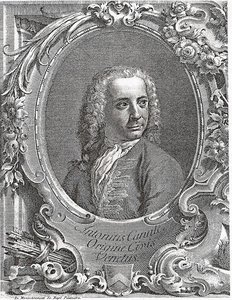
"الإنزال إلى سيثيرا" لجين-أنتوان واتو مثال نموذجي على أسلوب الروكوكو، حيث يلتقط روح المرح والرومانسية في القرن الثامن عشر الفرنسي. تدعو هذه اللوحة الساحرة، التي تم إنشاؤها عام 1717، المشاه. Next stand جوفاني أنطونيو كانال, جيوفاني باتيستا تيبولو, فرانسوا بوشيه و جان هونوري فراغونارد. These 100 رسامون, from جان فرانسوا دي تروي (born 1645) to إدوارد أونوريه أف (born 1818), came from 19 countries.
OSelected by OriginalUniqueArt.com
Our selection. Artists whose works our catalogue attaches to Rococo, in the order of our fame ranking. Artists born after 1955 with no Wikidata identifier stay out until verified. The Wikipedia figure counts our 32 languages with an article on the artist.
FrenchBorn in TournusRococo, Genre paintingWikipedia in 22/32 languages
Le Père de famille expliquant la Bible à ses enfants (1755): حجر الزاوية في نجاحه المبكر، يجسد المثل العليا للتنوير لتقوى الأسرة. La Jeune Fille qui pleure son oiseau mort (حوالي 1765): يوضح إتقان جريز للتعبير العاطفي ورواية القصص المؤثرة. Savoyard with a Dancing Doll (حوالي 1763): يلتقط روح وضعف الطفولة، ويعرض مهارته في التصوير.
The impact of Claude Lorrain is readily apparent in Vernet’s early compositions – the golden light, the carefully arranged classical architecture, and the sense of peaceful contemplation. He also drew inspiration from the Dutch masters of maritime painting, studying their techniques for rendering waves, clouds, and the effects of light on water. Beyond maritime scenes, Vernet also explored landscapes and hunting subjects, always maintaining a keen eye for detail and an understanding of animal anatomy—a skill honed in his youth.
FrenchBorn in ParisRococo to NeoclassicismWikipedia in 20/32 languages
Adélaïde Labille-Guiard (1749–1803) stands as a remarkable figure in the history of French art, not merely for her exquisite portraits but also for her courageous challenge to the restrictive conventions that governed women’s roles within the artistic world. She defied societal expectations, navigated institutional barriers, and ultimately paved the way for future generations of female painters.
Born in البندقيةLate Baroque, RococoWikipedia in 19/32 languages
Classical Mythology: His depictions of tales such as The Continence of Scipio and Bacchus and Ariadne highlight his skill in rendering the grandeur and drama of ancient legends with a distinctly Venetian flair.
The French Revolution brought upheaval to Vigée Le Brun’s world. In 1792, fearing for her safety, she fled Paris with her daughter, embarking on an exile that would last over a decade. Vigée Le Brun returned to France after the fall of Napoleon in 1804.
FrenchBorn in RivoliRococo, PortraitureWikipedia in 13/32 languages
Vanloo's artistic style was deeply rooted in the traditions of the Baroque and Roman art academies, but he also drew inspiration from the work of contemporary artists such as Nicolas Lancret and Jean-Honoré Fragonard. His compositions are often dynamic and asymmetrical, creating a sense of movement and energy.
FrenchBorn in Aix-en-ProvenceBaroque, RococoWikipedia in 15/32 languages
His father, Louis-Abraham van Loo, himself the son of Jacob van Loo, instilled in him not only technical skill but also an appreciation for the power and prestige associated with portraiture.
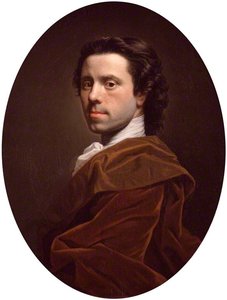
His work bears an unmistakable resemblance to the portraits of Thomas Hudson and Allan Ramsay, capturing not just the likeness of his subjects but the very essence of their social standing. His journey across the Atlantic in 1749 marked a transformative chapter for both the artist and the colonies. While later giants like Benjamin West and Gilbert Stuart would command the spotlight of American portraiture, Wollaston’s true contribution lies in his role as a pioneer, introducing the delicate elegance and shimmering sophistication of the Rococo style to North America.
SwedishBorn in RuntunaRococoWikipedia in 12/32 languages
In this composition, King Gustav III is depicted in white coronation robes that seem to radiate an ethereal light, surrounded by the intricate social hierarchy of the era—from the nobility and burghers to the priests and farmers.
GermanBorn in BerlinRococoWikipedia in 13/32 languages
Anna Dorothea Therbusch (1721-1782) stands as a remarkable figure in the annals of Rococo art history —a woman artist who defied societal expectations and achieved considerable renown during the Enlightenment. Born into a family steeped in artistic tradition, her father, Georg Lisiewski, was himself a celebrated Berlin portrait painter, establishing a lineage dedicated to visual representation. Therbusch's artistic journey took an extraordinary turn when she relocated to Paris in 1765, seeking opportunities for advancement within the vibrant artistic landscape of the French capital.
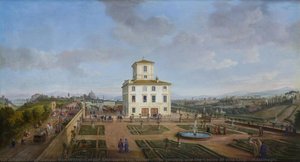
ItalianBorn in VeniceVedute VeniceWikipedia in 9/32 languages
In the golden age of the Venetian Rococo, few artists captured the ephemeral magic of the Serenissima with as much vitality as Michele Giovanni Marieschi. Scholars often point to the influence of masters such as Gaspare Diziani and the legendary Canaletto, whose works provided a blueprint for capturing the grandeur of urban environments.
Corradini’s artistic significance lies not only in his technical virtuosity but also in his role as a transitional figure between the Baroque and Rococo movements. He built upon the dramatic energy of the former while embracing the lightness, elegance, and playful sensuality of the latter. After leaving Vienna, Corradini spent his final years in Rome and Naples, continuing to refine his art until his death in 1752.
ألمانيBorn in مايسنبورسلين الصلب (Hard-paste porcelain)
"الأشكال الرمزية للفضيلة" – تُظهر قدرة المصنع على تجسيد المفاهيم المعقدة في قالب نحتي، مستعرضةً تفاصيل دقيقة ورؤية فنية رفيعة. "الفهد المستلقي" – يمثل مزيجاً بارعاً بين الواقعية والأناقة، مما يعكس تفاني مايسن في تصوير الحيوانات بدقة مذهلة ورشاقة فائقة.
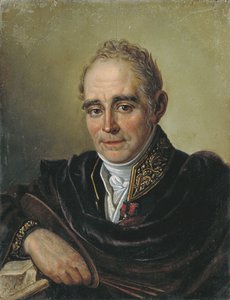
He contributed over fifty works to Les Vélins du Roi, a renowned collection of botanical watercolors commissioned by the French royal family. These pieces demonstrate his exceptional skill in capturing the nuances of floral forms. 1788: Appointed as an advisor to the Académie. 1795: Became a founding member of the Institut de France. 1804: Received the Légion d'honneur and was ennobled by Napoleon Bonaparte, acknowledging his contributions to French art and culture.
By 1690, Balestra moved to Venice, where he further honed his skills under the guidance of Antonio Bellucci for three years. Venetian Influence: His time in Venice instilled a sense of color and dramatic composition. He then traveled to Bologna and subsequently Rome, working in the workshop of the renowned Carlo Maratta.
Swedish-GermanBorn in Stockholm CityRococo, PortraitureWikipedia in 9/32 languages
His early works, heavily influenced by his uncle Meytens and the French masters, exhibited a meticulous attention to detail and a restrained elegance. However, the Venetian influence introduced a new dynamism – a play of light and shadow that imbued his portraits with greater emotional depth and visual intrigue. Other notable works include portraits of members of the Elector’s family, such as The Countess Holstein (Lenbachhaus, Munich) and The Princess Portia (Staatsgalerie, Stuttgart).
FrenchBorn in ParisNeoclassical PaintingWikipedia in 8/32 languages
In pieces such as " Fantaisie architecturale," the viewer is invited to wander through spaces where neoclassical elegance meets the untamed beauty of nature. While his name may not resonate with the same immediate thunder as contemporaries like Boucher or Watteau, Lajoue occupied a unique niche in the French canon, serving as an artist who could bridge the gap between the rigid grandeur of classical structure and the delicate, emotive spirit of the Rococo.
SwedishBorn in ArbogaRococoWikipedia in 7/32 languages
Beyond his individual achievements, Per the Elder Krafft’s historical significance is cemented by the artistic legacy he left within his own family. Ultimately, the work of Per the Elder Krafft remains a vital touchstone for understanding the cultural heartbeat of eighteenth-century Sweden. His children, Per Krafft the Younger and the miniaturist Wilhelmina Krafft, both studied at the Royal Swedish Academy of Fine Arts, carrying forward the technical excellence and emotive depth instilled by their father.
His close collaboration with architect Bernard Meretyn proved pivotal. This synergy is particularly evident in projects like the Buchach Town Hall (1750s) and the Trinitarian Church (1756-1757), where architecture and sculpture coalesce into a unified expression of Baroque grandeur. Despite his prolific output, Pinsel’s life ended relatively early, between September 16, 1761, and October 24, 1762, likely in Buchach.
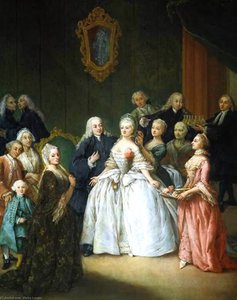
Unlike some contemporaries who focused on grand historical or mythological scenes, Longhi concentrated on portraying individuals within their social context. His portraits often feature elaborate robes and emblems of office, reflecting his subjects’ positions and power – a characteristic noted in comparison to artists like Sebastiano Bombelli. This is evident in the “tumultuous and unusual” quality of his etchings, as described by Olimpia Theodoli, showcasing a first-hand knowledge of Rembrandt's techniques.
ItalianBorn in Castellammare di StabiaRococoWikipedia in 11/32 languages
His journey was shaped by the prestigious studio of Francesco Solimena, the titan of Neapolitan painting, whose influence provided Bonito with a rigorous foundation in composition and light. While he possessed the technical mastery required for grand religious commissions—such as his ambitious altarpieces for the Caserta Royal Palace—he found his true voice in the genre scene. The historical significance of Giuseppe Bonito lies in his role as a chronicler of the Neapolitan spirit.
SpanishBorn in MadridRococoWikipedia in 8/32 languages
In the vibrant, sun-drenched tapestry of 18th-century Spain, few artists captured the delicate interplay of light and social elegance as masterfully as Luis Paret y Alcázar. Under the tutelage of Antonio González Velázquez, he absorbed the rigorous techniques of the Spanish tradition, yet his spirit yearned for something more cosmopolitan. His influence traveled across oceans, notably shaping the trajectory of Puerto Rican art through his pupil, José Campeche.
ItalianBorn in VeniceRococoWikipedia in 8/32 languages
His talent attracted the attention of powerful international patrons, most notably the German nobility residing in Venice, such as Sigismund Streit and Johann Matthias von der Schulenburg.
أيرلنديBorn in دبلنمناظر باربيزون الطبيعية وتصوير البورتريه الروكوكوWikipedia in 4/32 languages
"السيدة الموقرة كرزون" (1778): تبرز هذه اللوحة المصغرة مهارة ناثانيل هون الأكبر الاستثنائية في التقاط تفاصيل تعبيرات الوجه وحركات الجسيد الدقيقة، وهي السمة المميزة لفن البورتريه في عصر الروكوكو. وتساهم لوحة ألوان الباستيل في إضفاء جو من النبل والرقي، مما يعكس الأعراف الاجتماعية لتلك الحقبة.
FrenchBorn in MontpellierSymbolist ArtWikipedia in 7/32 languages
While not achieving the widespread renown of contemporaries like Watteau or Boucher, Raoux carved a unique niche for himself with his subtly evocative portraits and scenes imbued with a delicate, almost melancholic charm. Raoux’s works were widely disseminated through engravings by prominent artists such as Poilly, Moyreau, and Dupuis, ensuring that his style reached a broader audience.
ItalianBorn in VeniceRococoWikipedia in 6/32 languages
Within the luminous and often overwhelming splendor of eighteenth-century Venice, the name Francesco Zugno emerges as a vital, if somewhat enigmatic, thread in the tapestry of the Rococo era. His early years were shaped by the prestigious traditions of his ancestors, including the fifteenth-century painter Giambattista Zugno, and he received formal training at the Academy of Painting and Sculpture of Venice.
FrenchBorn in MartiguesPortraitureWikipedia in 7/32 languages
Notably, he survived the Reign of Terror thanks to his unwavering loyalty and diplomatic connections, demonstrating an astute awareness of political realities. The Palace of Versailles became his canvas for many years, where he created stunning depictions of royal families and dignitaries. Despite the upheavals of his time, Joseph Boze persevered, continuing to produce portraits until his death in Paris in 1826.
FrenchBorn in ValenciennesFêtes galantesWikipedia in 6/32 languages
Watteau’s formative years were marked by a privileged upbringing within the aristocratic circles of Lille, Belgium. His father, Jean Watteau, was a silk merchant and instilled in François a keen appreciation for craftsmanship and visual aesthetics. Watteau’s aesthetic ideals—characterized by elegance, grace, and a preoccupation with sensual pleasure—became synonymous with the aristocratic culture of the Enlightenment.
DutchBorn in AmsterdamRococoWikipedia in 5/32 languages
His studies under Pronk and de Wit undoubtedly shaped his understanding of color theory and composition, while Troost likely instilled in him a deeper appreciation for portraiture techniques. Buys’s ability to seamlessly blend these influences—the Dutch tradition of realism with the French Rococo's emphasis on elegance and ornamentation—is what sets him apart. The influence of earlier Dutch masters is subtly present in Buys's work, particularly in his meticulous attention to detail and the use of light and shadow reminiscent of the Golden Age painters.
SwissBorn in ChurRococoWikipedia in 5/32 languages
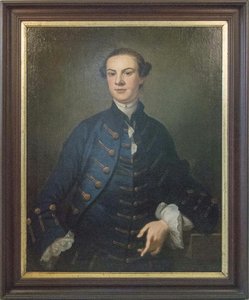
Theus’ distinctive style is characterized by its adherence to Rococo principles—a movement originating in France that prioritized grace, ornamentation, and pastel hues. Teaching & Artistic Legacy: Recognizing the importance of fostering artistic talent, Theus opened an evening drawing school in 1744—a pioneering initiative that nurtured aspiring artists within Charleston’s intellectual circles. His work serves as a compelling visual record of Charleston’s social landscape—a testament to the dynamism and sophistication of colonial America.
DanishBorn in CopenhagenRococoWikipedia in 7/32 languages
These small-scale works, which included depictions of Frederick V and Catherine the Great, showcased a different facet of his virtuosity, requiring an even more intense focus on minute detail and color gradation.
GermanBorn in BerlinRococoWikipedia in 6/32 languages
Matthieu utilizes specific elements to communicate status: The inclusion of books and maps to suggest intellectual pursuit and territorial dominion. His friendship with Jakob Philipp Hackert likely brings broader European influences into his practice, particularly through shared study trips to Italy.
He skillfully blended elements of Dutch intimacy – particularly evident in his genre scenes – with the emerging lightness and elegance that would come to define the Rococo style. His palette was noted for its delicate coloring, and he demonstrated a keen talent for capturing both pose and drapery. Tournières was deeply influenced by Dutch masters such as Godfried Schalken and Gerard Dou, dedicating considerable study to their techniques.
SpanishBorn in MadridNeoclassicalWikipedia in 7/32 languages
Religious Works: Occasional but powerful devotional pieces, such as his depiction of Saint Dominic and Saint Francis, which demonstrated his ability to handle spiritual gravity.
ItalianBorn in RomeVérité ethnographiqueWikipedia in 2/32 languages
Leaving behind the grand estates and classical landscapes of England, Brunias immersed himself in the bustling markets, verdant plantations, and diverse communities of colonial Dominica. He meticulously depicted clothing styles, social interactions, and the vibrant cultural tapestry woven from African, European, and Caribbean influences. These prints circulated widely throughout Europe, providing Europeans with their first visual glimpses of Caribbean life beyond the stereotypical depictions of sugar plantations and exotic landscapes.
ItalianBorn in TurinRococoWikipedia in 6/32 languages
To reflect upon the breadth of his contributions, one might consider the following pillars of his career: Stylistic Synthesis: The seamless blending of Roman classical training with the light, decorative elegance of French Rococo portraiture. Courtly Service: A distinguished career serving the House of Braganza in Portugal, the Stuart family in Rome, and the House of Savoy in Italy.


 جيل (لوحة)
 جين-أنتوان واتو
1717
الإنزال إلى سيثيرا: تحفة من أناقة الروكوكو
"الإنزال إلى سيثيرا" لجين-أنتوان واتو مثال نموذجي على أسلوب الروكوكو، حيث يلتقط روح المرح والرومانسية في القرن الثامن عشر الفرنسي. تدعو هذه اللوحة الساحرة، التي تم إنشاؤها عام 1717، المشاه
 Pierrot, formerly known as Gilles