Neoclassicism
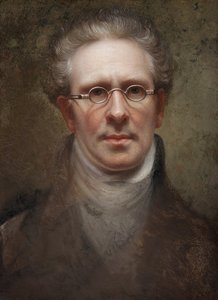
Man with a Beard (Rembrandt Peale)
Rembrandt Peale (1778–1860) made Man with a Beard. It belongs to the Neoclassicism movement. It measures 73 × 64 cm.
- 73 × 64 cm

 Preview

 Hand Made Oil Painting
 Send
 Share
 Fact sheet


 Download
 Similars
 X-Ray
 Diaporama
 Q&A

 Stats
Man with a Beard, in brief
- Title
- Man with a Beard
- Artist
- Rembrandt Peale (1778–1860)
- Artist born in
- Bucks County, United States
- Dimensions
- 73 × 64 cm
- Movement
- Neoclassicism
- Subject
- portrait, man, beard, dutch art, baroque, realism
What does Man with a Beard depict?
A Study in Baroque Realism: Rembrandt Peale’s “Man with a Beard”
This captivating portrait, *“Man with a Beard,”* by American artist Rembrandt Peale (1778-1860), offers a compelling glimpse into the artistic sensibilities of the late 18th and early 19th centuries. While initially questioned for its authenticity – some scholars once attributing it to an 18th-century imitator – modern consensus firmly establishes this work as Peale’s own, demonstrating his mastery of Baroque realism and dramatic chiaroscuro. The painting depicts a dignified gentleman in three-quarter view, rendered with meticulous detail that invites close inspection. The subject's gaze is direct yet subtly introspective, creating an immediate connection with the viewer.Technique & Style: Echoes of the Dutch Masters
Peale’s artistic lineage is evident in this work. Named after the renowned Dutch master Rembrandt van Rijn, Peale consciously emulated the techniques of the Golden Age painters, particularly in his use of light and shadow. The painting showcases a predominantly earthy palette – rich browns, ochres, and blacks – skillfully layered with oil paint to create depth and texture. Notice the rough fabric of the man’s coat, contrasted with the carefully rendered curls of his beard and hair. Chiaroscuro, the dramatic interplay between light and dark, is central to the composition, emphasizing the subject's facial features and lending a sense of gravitas to the portrait. While influenced by Dutch Baroque masters, Peale’s style also reflects elements of French Neoclassicism, acquired during his time in Paris, resulting in a unique blend of influences.Historical Context & The Peale Legacy
Rembrandt Peale was not only a talented artist but also a pioneering museum keeper. He established the first purpose-built museum in the United States – *The Peale Museum* in Baltimore – dedicated to showcasing art, natural history, and scientific curiosities. Peale is particularly celebrated for his portraits of prominent figures like George Washington and Thomas Jefferson, often creating multiple replicas to broaden access to these iconic images. “Man with a Beard” exemplifies Peale’s dedication to detailed representation and his commitment to establishing a distinctly American artistic identity. The painting's history traces back to the collection of Sir William Knighton in England before finding its way into contemporary collections, highlighting its enduring appeal across continents and generations.Symbolism & Emotional Resonance
Portraits during this period often served as statements of wealth, status, and social standing. The subject’s attire and dignified pose suggest a man of means and influence. However, the painting transcends mere representation; it invites contemplation on the inner life of the sitter. The subtle expression hints at introspection and perhaps even melancholy. The use of shadow, particularly around the eyes, adds to this sense of mystery and emotional depth. For interior designers, this artwork offers a classic focal point, lending an air of sophistication and historical significance to any space. Its rich color palette complements both traditional and contemporary settings, making it a versatile addition to diverse collections.High-resolution images of Man with a Beard

Rembrandt Peale, Man with a Beard. Public domain.
Questions on Man with a Beard, answered
What size is "Man with a Beard" by Rembrandt Peale in real life?
The recorded dimensions of "Man with a Beard" by Rembrandt Peale are 73 x 64 cm. Reproductions can be ordered in other sizes while keeping the same proportions.
What subjects appear in "Man with a Beard" by Rembrandt Peale?
"Man with a Beard" by Rembrandt Peale depicts: portrait, man, beard, dutch art, baroque, realism, 18th century, rembrandt style.
Is "Man with a Beard" free of copyright?
Regarding copyright, "Man with a Beard" is in the public domain - its copyright has expired.
Who is the artist behind "Man with a Beard"?
"Man with a Beard" is attributed to Rembrandt Peale.
Which artistic current is "Man with a Beard" by Rembrandt Peale part of?
The movement associated with "Man with a Beard" by Rembrandt Peale is Neoclassicism. This classification situates the work among related artists and artworks.
Where does "Man with a Beard" fall in Rembrandt Peale's career?
"Man with a Beard" represents the Mature Period of Rembrandt Peale.
Is "Man with a Beard" by Rembrandt Peale in the public domain, and why?
The copyright status of "Man with a Beard" - in the public domain - its copyright has expired - follows from the artist's death in 1860.
How does "Man with a Beard" fit into Rembrandt Peale's themes and style?
"Man with a Beard" belongs to Rembrandt Peale's Neoclassicism work, whose recorded themes include rembrandt's style emulation, wealth & status representation, american artistic identity, early 19th-century ideals, peale museum legacy", exploring american identity.
Is "Man with a Beard" typical of what Rembrandt Peale usually created?
Among Rembrandt Peale's recorded themes - rembrandt's style emulation, wealth & status representation, american artistic identity, early 19th-century ideals, peale museum legacy", exploring american identity - "Man with a Beard" brings its own focus on portrait, man, beard, dutch art, baroque, realism, 18th century, rembrandt style.
About the artist, Rembrandt Peale
1778–1860, United States
Rembrandt Peale
A Legacy of Likeness: The Life and Art of Rembrandt Peale Rembrandt Peale, born in Bucks County, Pennsylvania, in 1778, emerged from a family deeply entrenched in the burgeoning artistic landscape of early America. His father, Charles Willson Peale, was not merely an artist but a cultural force—a painter, museum founder, and ardent believer in the power of art to shape national identity. It was within this stimulating environment that young Rembrandt received his foundational training, alongside his siblings, learning the techniques of portraiture and landscape painting from their father’s skilled hand. The very bestowal of the name “Rembrandt,” echoing the Dutch master Harmenszoon van Rijn, signaled Charles Willson Peale's aspirations for his son—a hope that he would carry forward a tradition of artistic excellence.
Also by Rembrandt Peale
 George Washington1795
 The Court of Death1819
 General Elijah Clarke1820
 George Washington [The Gadsden-Morris-Clarke Portrait]1795

Essays around Man with a Beard
 Chiaroscuro and Character: The Enduring Depth of Dutch Golden Age ArtistryExplore the mastery of Dutch Golden Age light and Rembrandt's chiaroscuro technique. Discover the soul of 17th-century Dutch art today.
 Charles Willson Peale: Portraiture, Enlightenment Ideals & Shaping American IdentityExplore the life & art of Charles Willson Peale – Revolutionary portraitist, scientist, and founder of America’s first museum. Discover his…
 Dutch Baroque Masters: 10 Paintings That Shaped an Era | OriginalUniqueArtJourney through the Golden Age with our guide to the Top 10 Dutch Baroque masterpieces! Explore iconic paintings by Rembrandt, Vermeer & Fr…