Early Netherlandish Painting · 1446
The Last Judgment (detail) (37) (Rogier van der Weyden, 1446)
Rogier van der Weyden (1400–1464) made The Last Judgment (detail) (37). It dates from 1446. It belongs to the Early Netherlandish Painting movement. It is made in acrylic on canvas. It is kept at Musée de l'Hôtel Dieu in Bourg-en-Bresse, France.
- 1446
- Acrylic On Canvas
- Musée de l'Hôtel Dieu, Bourg-en-Bresse

 Preview

 Hand Made Oil Painting
 Send
 Share
 Fact sheet


 Download
 Similars
 X-Ray
 Diaporama
 Q&A

 Stats
The Last Judgment (detail) (37), in brief
- Title
- The Last Judgment (detail) (37)
- Artist
- Rogier van der Weyden (1400–1464)
- Artist born in
- Tournai, Belgium
- Date
- 1446
- Medium
- Acrylic On Canvas
- Where to see it
- Musée de l'Hôtel Dieu, Bourg-en-Bresse, France
- Movement
- Early Netherlandish Painting
- Period
- Late Medieval
- Subject
- last judgment, judgement day, angels, resurrection, netherlandish art, religious scene
What does The Last Judgment (detail) (37) depict?
A Descent Into Eternity: Rogier van der Weyden’s ‘The Last Judgment’ (Detail)
Rogier van der Weyden's “The Last Judgment” – specifically this arresting detail – isn’t merely a depiction of biblical narrative; it’s a visceral plunge into the heart of human mortality and divine judgment. Painted in 1446, during his time in Bruges, this fragment offers a glimpse into the artist’s masterful command of emotion and his pioneering approach to portraying religious scenes. The scale of the original polyptych is immense, but even within this detail, van der Weyden achieves an astonishing level of realism and psychological depth, drawing the viewer directly into the chaotic drama unfolding before them.
The scene itself is a whirlwind of activity – a swirling vortex of souls ascending to heaven and descending to hell. At the center, seated on a simple chair, sits what is unmistakably Jesus Christ, radiating an almost serene authority amidst the turmoil. Surrounding him are angels, not in triumphant poses of victory, but engaged in a fervent act of worship, their hands raised in supplication – a poignant reminder that even divine beings acknowledge the gravity of this event. The figures below, rendered with remarkable anatomical accuracy and attention to texture, represent humanity’s fate: some are being dragged downwards by demons, others are rising towards the light, each face etched with terror, regret, or hopeful anticipation.
The Language of Flesh and Shadow
Van der Weyden's technique is revolutionary for its time. He moved beyond the stylized representations prevalent in earlier Gothic art, embracing a naturalism that bordered on photographic realism. Observe the meticulous rendering of fabrics – the flowing robes, the coarse garments of the damned – each thread and fold painstakingly depicted. This commitment to detail extends to the faces, where subtle shifts in expression convey a profound range of emotions: anguish, despair, acceptance, and even a flicker of hope. The use of *sfumato*, a technique borrowed from Renaissance masters like Leonardo da Vinci, creates soft transitions between light and shadow, adding depth and volume to the figures and lending an almost ethereal quality to the scene.
- Oil Paint Mastery: Van der Weyden was one of the first artists to fully exploit the potential of oil paint, allowing for richer colors, smoother gradations, and greater detail than could be achieved with tempera.
- Anatomical Precision: His deep understanding of human anatomy is evident in the realistic portrayal of musculature and skeletal structure.
- Emotional Resonance: He masterfully captures the psychological impact of judgment, conveying a sense of dread and uncertainty that resonates powerfully with the viewer.
Symbolism and Context – A Window into Medieval Thought
“The Last Judgment” is deeply rooted in medieval theology and iconography. The scene draws heavily from biblical passages describing the final reckoning, emphasizing themes of sin, redemption, and divine justice. The nakedness of some figures—particularly those being condemned—is a deliberate symbolic gesture, representing their vulnerability before God and the exposure of their sins. The presence of demons is equally significant, embodying the forces of evil that oppose humanity’s salvation. It's important to note that this work was intended for private devotion within a wealthy patron’s chapel, reflecting the importance of personal piety in the medieval era.
Interestingly, van der Weyden’s style shares affinities with Hans Memling, another prominent Early Netherlandish painter working in Bruges during the same period. Both artists demonstrated an exceptional ability to imbue their works with emotional intensity and a remarkable attention to detail – qualities that cemented their reputations as masters of their craft.
Bringing ‘The Last Judgment’ Home: A Reproduction for the Soul
OriginalUniqueArt offers meticulously crafted, hand-painted reproductions of Rogier van der Weyden's “The Last Judgment” (detail), allowing you to experience the profound beauty and emotional power of this iconic masterpiece in your own space. Our artists replicate van der Weyden’s techniques with the utmost care, capturing not only the visual details but also the underlying atmosphere of drama and spirituality. Whether you are an art collector, a design enthusiast, or simply someone seeking to infuse their home with a touch of timeless elegance and profound contemplation, a OriginalUniqueArt reproduction offers a unique opportunity to connect with one of the most significant works in Western art history.
Explore the full artwork here: /en/art/rogier-van-der-weyden-the-last-judgment-detail-8Y2VYK-en/
Which museum holds The Last Judgment (detail) (37)?
Musée de l'Hôtel Dieu
Bourg-en-Bresse, France
A Journey Through Time: The Apothecary’s Legacy at the Musée de l'Hôtel Dieu Nestled within the historic heart of Bourg-en-Bresse, France, the Musée de l’Hôtel Dieu offers a remarkably intimate and profoundly moving experience—a step back into the world of 18th-century medicine, pharmacy, and the very foundations of modern healthcare. More than just a museum, it's a meticulously preserved workshop, an immersive tableau of a bygone era where the scent of herbs mingled with the meticulous precision of a pharmacist’s craft. The building itself—once a bustling hospital—adds layers of historical significance, its sturdy walls whispering tales of centuries past and the evolving understanding of human health.
High-resolution images of The Last Judgment (detail) (37)
Rogier van der Weyden, The Last Judgment (detail) (37) (1446), Musée de l'Hôtel Dieu. Public domain.
Colours matched to the original by a digital expert, the file finely retouched, faithful to the artist's brushwork.
Own the high-resolution fileQuestions on The Last Judgment (detail) (37), answered
Where is "The Last Judgment (detail) (37)" by Rogier van der Weyden on display today?
"The Last Judgment (detail) (37)" by Rogier van der Weyden is on display at the Musée de l'Hôtel Dieu, Bourg-en-Bresse, France. The museum listing refers to the original work, not to reproductions.
When was "The Last Judgment (detail) (37)" made?
The creation of "The Last Judgment (detail) (37)" by Rogier van der Weyden is dated 1446.
What is "The Last Judgment (detail) (37)" made with?
The medium of "The Last Judgment (detail) (37)" by Rogier van der Weyden is acrylic on canvas. Reproductions aim to render the appearance of this technique.
What is "The Last Judgment (detail) (37)" about?
The themes present in "The Last Judgment (detail) (37)" by Rogier van der Weyden include last judgment, judgement day, angels, resurrection, netherlandish art, religious scene, medieval art. Together they summarize the artwork's subject matter.
Is "The Last Judgment (detail) (37)" by Rogier van der Weyden in the public domain?
The copyright answer for "The Last Judgment (detail) (37)" by Rogier van der Weyden: the work is in the public domain - its copyright has expired. This determines whether reproductions of the image may be freely made.
Which artist is "The Last Judgment (detail) (37)" attributed to?
"The Last Judgment (detail) (37)" was created by Rogier van der Weyden. The information on this page describes Rogier van der Weyden's original work.
What style does "The Last Judgment (detail) (37)" belong to?
The movement associated with "The Last Judgment (detail) (37)" by Rogier van der Weyden is Early Netherlandish Painting. This classification situates the work among related artists and artworks.
Which period of Rogier van der Weyden's career does "The Last Judgment (detail) (37)" belong to?
Within Rogier van der Weyden's career, "The Last Judgment (detail) (37)" falls in the Early Netherlandish. The phase helps compare it with the artist's other works.
At what age did Rogier van der Weyden make "The Last Judgment (detail) (37)"?
Rogier van der Weyden made "The Last Judgment (detail) (37)" at the age of 46. The artist was born in 1400 and the work is dated 1446.
About the artist, Rogier van der Weyden
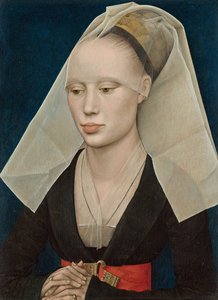
1400–1464, Belgium
Rogier van der Weyden
The Life and Identity of Rogier van der Weyden The name Rogier van der Weyden emerges from the shifting linguistic landscapes of the fifteenth century. Born in Tournai, a Bishopric that is now part of Belgium, around 1399 or 1400, he moved through a world of evolving identities. He was known as Roger de la Pasture and Rogelet de le Pasture before his name was translated to Dutch as Rogier van der Weyden. This transition reflects the complex social and regional textures of the Burgundian Netherlands during his lifetime.
About Rogier van der Weyden Notable works by Rogier van der Weyden
Also by Rogier van der Weyden
 Deposition1435
 Portrait of a Lady1455
 Seven Sacraments Altarpiece1445
 St Columba Altarpiece1455
Essays around The Last Judgment (detail) (37)
 25 Masterpieces by Rogier van der Weyden: The Pinnacle of Emotional ArtImmerse yourself in the profound emotion of Rogier van der Weyden’s greatest works. From Northern Renaissance mastery to exquisite textures…
 The Eloquent Brushstroke: A Historical & Technical Exploration of Texture, Intent & Expression in PaintingExplore the rich history & techniques of impasto painting – from Renaissance masters to Van Gogh's expressive strokes. Discover how artists…
 From Gold to Gravity: Italo-Byzantine Style vs. the Proto-RenaissanceMaster the shift from Byzantine gold to Proto-Renaissance naturalism. Learn to spot the evolution of art history today.