High Medieval: original voices
96 Famous High Medieval Художники Who Shaped the Movement
Джотто (1267–1337) is the most famous High Medieval художник, whose singular vision gave us Останній суд (деталь 3) (Капелла Скровеґні (Арена-каплиця), Падуя) та Мадонна в Маєста (Огнассантська Мадонна). Next stand Дуччо ді Буонінсенья, Чімабуе, Чжао Менфу та Чжу Сі. These 96 художники, from Xu Daoning (born 970) to Хуан Гунван (born 1269), came from 28 countries.
Our selection. Artists whose works our catalogue attaches to High Medieval, in the order of our fame ranking. Artists born after 1955 with no Wikidata identifier stay out until verified. The Wikipedia figure counts our 32 languages with an article on the artist.


In brief
High Medieval in brief
- 96Художники
- 970–1269Роки народження
- 28Країни народження
- 3Жінки
- 3Сучасні художники
- 1 427Роботи в нашому каталозі
- Музеї з найбільшою кількістю ключових творів
- Метрополітен-музей (13), Запретний палац (9), Національний палацовий музей (8), Клівлендський музей мистецтва (6)
- Жінки у цьому списку
- Герада Ландсберзька, Гуань Даошен, Hildegard von Bingen
One artist at a time
96 High Medieval Художники and their signature works


2of 96
Дуччо ді Буонінсенья 1255–1319
Італієць Born in Сієна Сієнська школа, готика Треченто Wikipedia in 31/32 languages

Rucellai Madonna (1285). Христос прощається з апостолами (1308). Christ Taking Leave of the Apostles, Museo dell'Opera del Duomo, Сієна.


3of 96
Чімабуе 1240–1302
Італійський Born in Флоренція Візантійський та Ренесанс Wikipedia in 28/32 languages

He was a child of the Florentine streets, growing up in a landscape where the heavy, golden formality of the East met a new, restless desire for something more human. While the exact details of his childhood remain veiled by the passage of centuries, his early years were clearly shaped by the rigorous discipline of the Florentine workshops.
Where to see To follow the path of his brush is to travel across the great cities of Europe and beyond.


4of 96
Чжао Менфу 1254–1322
Китайська Born in Хучжоу Живопис літерату; Пейзажний живопис Wikipedia in 18/32 languages


Signature works · The 100 signature works
6of 96
Ма Юань 1160–1225
Китайська Born in Ханчжоу Школа Ма-Ся, династія Південна Сун Wikipedia in 19/32 languages


8of 96
Імператор Хуйцзун Династії Сун 1082–1135
Китайська Born in Кайфен Династія Сун; каліграфія «Тонке золото» Wikipedia in 19/32 languages


9of 96
Го Сі 1020–1090
Китайська Born in Янчен Пейзаж живопису династії Північна Сун Wikipedia in 16/32 languages

Signature works · The 100 signature works


10of 96
Гвідо Да Сієна 1230–1290
Француз Born in Італія Середньовічна архітектура/дизайн Wikipedia in 17/32 languages


11of 96
Бонавентура Берлінг'єрі 1210–1287
Італійська Born in Лукка Візантійський стиль Wikipedia in 14/32 languages


14of 96
Мі Фу 1051–1107
Китайська Born in Цзянсу Мистецтво династії Сун Wikipedia in 17/32 languages


16of 96
Лі Гунлінь 1049–1106
Born in Тунчен Живопис династії Сун Wikipedia in 9/32 languages

«Сосна в хмарах»: цей твір є втіленням його вміння вловити саму суть природи через мінімалістичне та точне володіння пензлем. «Коні, що пасуться на пасовищі»: справжнє свідчення його прискіпливої спостережливості та глибокого розуміння анатомії коня.


17of 96
Ма Лінь 1180–1256
Китайська Born in Баодін Техніка живопису «безкостінного» стилю Wikipedia in 7/32 languages


Signature works · The 100 signature works


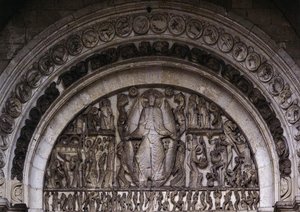


21of 96
Джунта Пізано 1190–1260
Італієць Born in Піза Ренесансний стиль Wikipedia in 10/32 languages


25of 96
Цянь Сюань 1235–1305
Китайська Born in Чжучжоу Живопис «хутра та пір'я»; реалізм династії Сун у поєднанні з архаїчним стилем династії Тан Wikipedia in 12/32 languages


27of 96
Керамічний Завод Цзінцзен народився 1004
Китайська Born in Цзінцзен Імператорський порцеляновий фарфор


30of 96
Йоанн Кулікс народився 1101
Візантійська Born in стандартизована назва міста Ілюмінація манускриптів


Signature works · The 100 signature works


34of 96
Чжан Цзедуань 1085–1145
Китайська імперія Born in Чжучен шаньшуй Wikipedia in 15/32 languages

Signature works · The 100 signature works


38of 96
Хуан Гунван 1269–1354
Династія Юань Born in Чанчжоу Літераторська живописна школа (веньженьхуа) Wikipedia in 12/32 languages


41of 96
Гуань Даошен 1262–1319
Китайка Born in Чжучжоу Живопис на бамбуку, Каліграфія Wikipedia in 15/32 languages


43of 96
Коппо Ді Марковальдо 1225–1276
Італієць Born in Флоренція Італо-візантійське мистецтво Wikipedia in 12/32 languages


Signature works · The 100 signature works

Signature works · The 100 signature works


47of 96
Мухаммад Ібн Аммар 1031–1086
Британка Born in Силвеш Ботанічна ілюстрація

(переглянути на AllPaintingsStore). для глибшого розуміння життя та творчості Ібн Аммара зверніться до його біографії на wikipedia.org. (читати далі). відвідайте Museo Hospital de la Caridad (Севілья, Іспанія), музей, що представляє вражаючу колекцію мистецтва та артефактів.


50of 96
Магнус Сігурдссон Або Сігурд Гарральдссон 1115–1155
Норвежець Born in Осло Середньовічне королівство


51of 96
Камо Но Сігеясу 1119–1191
Японець Born in Киото Поезія вака

«Sanuki Shū» є значущим твором не лише завдяки своєму змісту, а й через обставини його створення — він уособлює цілеспрямовану спробу зафіксувати та вберегти поезію його сучасників, пропонуючи нам цінний історичний зріз літературного ландшафту епохи Дзюей.

53of 96
Hemachandra 1088–1172
Born in Dhandhuka Wikipedia in 10/32 languages

Hemachandra was a prolific scholar and monk of the Śvetāmbara school of Jainism. Born in Dhandhuka, India, he was a man of immense intellect, earning the title kalikālasarvajña, meaning "the knower of all knowledge in his times." His vast contributions spanned numerous disciplines, including mathematics, history, philosophy, poetry, and grammar.
Signature works · The 100 signature works


54of 96
Bolesław Iv The Curly 1138–1173
Polish Born in Krakow Medieval Art

In the turbulent landscape of twelfth-century Poland, where the echoes of the Piast dynasty's greatness still resonated, Bolesław IV the Curly emerged not merely as a ruler, but as a transformative force. Following the untimely passing of his elder brothers, Leszek and Casimir, Bolesław ascended to the dukedom of Masovia, stepping into a political arena fraught with tension and the looming shadow of his half-brother, Władysław II the Exile.

55of 96
Fujiwara No Koreyuki 1139–1175
Japanese Born in Zama Heian calligraphy & poetry

He is best known for his exquisite calligraphy on scrolls featuring poems from the Wakan Roeishu, a renowned anthology of Japanese and Chinese verses compiled in the early eleventh century. These were not simply copies; Koreyuki imbued each character with a subtle energy, demonstrating mastery over brushstroke variation and spatial composition.


56of 96
Adelhog 1170–1190
German Born in Hildesheim Medieval Art

Cultural Connectivity: Through his education in Toulouse, he acted as a conduit for French artistic influences within the German ecclesiastical tradition. Patronage of Visual Identity: His oversight of the minting process helped establish a cohesive visual brand for the Hildesheim diocese, emphasizing themes of purity and strength. While much of his early education remains shrouded in the mists of time, historical records point toward his training at the Toulouse Cathedral in France.
57of 96
Urtu Saqaltu 1190–1244
Khitan Born in Beijing Literati painting, Confucian tradition

Chucai’s artistic style is most accurately described as “literati painting,” a genre deeply rooted in Chinese tradition. The use of gold leaf – particularly evident in works like “Landscape with Tower” – added an element of luxury and spiritual significance, elevating the paintings beyond mere representations of the world to symbolic expressions of higher ideals. Perhaps his most significant contribution was persuading Genghis Khan to adopt a strategy of incorporating Chinese administrators and artisans into the conquered territories – a decision that proved instrumental in consolidating Mongol control over vast swathes of China.
Signature works · The 100 signature works

58of 96
Fernando Martins De Bulhões 1195–1231
Portuguese Born in Lisbon Religious Art

This image symbolizes his deep love for Christ and his role as a protector of children. The artistic representations serve not only to commemorate his life but also to convey the core values he embodied: faith, humility, charity, and unwavering love for God and humanity. In 1946, Pope Pius XII bestowed upon him the title of “Doctor of the Church,” a prestigious honor reserved for saints whose writings and teachings have had a significant influence on Catholic theology.
Signature works · The 100 signature works

59of 96
Lanxi Daolong 1213–1278
Chinese Born in Lanxi Zen Buddhism, Calligraphy

Major Achievements: Founded Kenchō-ji, the first Rinzai Zen monastery in Japan.
Signature works · The 100 signature works

60of 96
Master Of Bigallo народився 1218
Italian Proto-Renaissance

Operating primarily around Florence during a period of immense artistic ferment, this anonymous artist stands as a pivotal figure bridging the late Gothic and early Renaissance, yet stubbornly resisting easy categorization. Pinpointing the exact dates of his career is challenging, though scholars generally place his activity between 1215/20 and 1265. Despite remaining anonymous, the Master of the Bigallo’s contribution to Italian art is undeniable.
61of 96
Master Of Cabestany 1130–1180
Italian Romanesque

What sets the Master of Cabestany apart is not merely the quality of his work—though that is undeniably exceptional—but also its surprisingly broad geographic distribution. Despite the distances involved, a remarkable consistency in style binds these works together—a testament to the Master’s strong artistic vision and perhaps his direct involvement in overseeing key aspects of each project. The Master of Cabestany did not emerge from a vacuum.


62of 96
Hōgen En’I 1240–1300
Japanese Born in Kyoto Yamato-e & Emakimono

His era was one of profound transition, where the rugged energy of the Kamakura period met the refined aesthetic sensibilities of the Yamato-e tradition. His ability to blend the sacred with the beautiful, and the historical with the poetic, set a standard for the emakimono tradition that few could ever hope to reach.

63of 96
Issan Ichinei 1247–1317
Chinese Born in Linhai Zen Buddhism, Gozan Bungaku

Issan Ichinei, born Hu in 1247 in Linhai, Zhejiang province, China, stands as a pivotal figure in the transmission of Zen Buddhism from its native land to Japan.
Signature works · The 100 signature works
64of 96
Xianyu Shu 1256–1301
Chinese Born in Yuyang Yuan Dynasty Poetry & Calligraphy

Xianyu Shu, also known as Boji (1256-1301), stands as a compelling figure bridging the worlds of poetry, calligraphy, connoisseurship, and official life during the Yuan Dynasty.
Signature works · The 100 signature works
65of 96
Бенедетто Антеламі 1150–1230
Born in Похлам Romanesque

The technical prowess displayed by Antelami reflects a pivotal moment in medieval art history. This evolution is evident in masterpieces such as the Deposition from the Cross, where dramatic relief carving and poignant religious scenes showcase a burgeoning Gothic influence. Whether carving the intricate Histories of the Virgin or the symbolic History of Borgo, Antelami utilized a multi-layered arrangement to guide the viewer’s eye through sacred timelines, turning architectural surfaces into epic tapestries of stone.


66of 96
Saionji Kinhira 1264–1315
Japanese Born in Kyoto Calligraphy

Family Affiliation: Saionji Family (descended from Fujiwara no Kinzane).

67of 96
Qingmao Gulin 1262–1329
Chinese Born in Leying Zen Calligraphy, Wanshi-ha Poetry

Wanshi-ha Poetry Movement: Qingmao Gulin was an integral part of the Wanshi-ha poetry movement, known for its unique writing style influenced by the Sōtō monk-poet Hongzhi Zhengjue. Elegance and Beauty: Despite the boldness of his strokes, his calligraphy is also celebrated for its elegance and beauty, serving as an inspiration to subsequent generations of artists. He not only produced stunning works of art but also contributed significantly to the intellectual and artistic landscape of his time through his involvement in the Wanshi-ha poetry movement.

68of 96
Hildegard von Bingen 1098–1179
German

Between 1158 and 1163, she composes Liber Vitae Meritorum. This preoccupation with moral struggle extends into her musical compositions, specifically the morality play Ordo Virtutum. A number of scholars consider her to be the founder of scientific natural history in Germany.


69of 96
Fachang 1210–1269
Chinese Born in Beijing Chan Buddhist Painting

The Zen monks traveling between China and Japan became the primary conduits for his vision, carrying his ink washes into the heart of Japanese aesthetic development.


70of 96
Filippo Rusuti 1255–1325
Italian Roman School

Filippo Rusuti (c. 1255 – c. 1325) stands as a cornerstone figure in the late thirteenth-century Roman school, an artistic movement that irrevocably transformed European painting and cemented Rome’s position as a center for artistic innovation. The career of Filippo Rusuti spanned nearly four decades, a period that witnessed a dramatic shift in artistic styles and techniques within Italy.
Signature works · The 100 signature works

Signature works · The 100 signature works

72of 96
Memmo di Filippuccio 1263–1326
Italian Born in Siena International Gothic

By 1303, municipal records place him actively engaged in significant civic commissions, most notably within the Town Hall of San Gimignano.

73of 96
Su Dongpo 1037–1101
Chinese Born in Meishan Song Dynasty calligraphy and poetry

Whether through the evocative power of his prose or the energetic vitality of his calligraphy, Su Dongpo captured the raw energy of an entire dynasty.


74of 96
Yi Yuanji 1000–1064
Chinese Born in Changsha Northern Song Dynasty Wikipedia in 7/32 languages

In the vibrant artistic landscape of the Northern Song Dynasty, few names resonate with as much specialized brilliance as Yi Yuanji. Born in the scenic region of Changsha, Hunan, around the year 1000, this master painter emerged from a cultural milieu deeply influenced by the contemplative depths of Buddhist philosophy and the organic aesthetics of Daoism. The Emperor Yingzong himself was so moved by Yi's prowess that he commissioned a monumental work titled The Picture of a Hundred Gibbons.

75of 96
Nicolas Of Verdun 1130–1205
Flemish [Gothic art](https://www.britannica.com/art/Gothic-art)[Romanesque art](https://www.britannica.com/art/Romanesque-art)[Mosan school](https://www.britannica.com/topic/Mosan-school)

Around 1205, Nicolas turned his attention to Cologne Cathedral, undertaking the creation of the Shrine of the Three Kings—a reliquary intended to house the bones of the biblical Magi. The figures of the prophets, with their supple drapery and individualized features, represent a significant departure from earlier Romanesque conventions. Nicolas of Verdun’s impact on medieval art extends far beyond his individual creations.


76of 96
Wuxue Zuyuan 1226–1286
Chinese Born in Hangzhou Zen Buddhist ink art and calligraphy

His works, such as the Calligraphy of a Seven-character Line About the Seven Deities of Good Fortune, demonstrate an exquisite command of East Asian calligraphy, where every stroke carries the weight of spiritual intention and Taoist influence.


78of 96
Lombard Master 1096–1160
Italian Born in Novara Late Gothic to Renaissance Art

His devotion to the saints is equally palpable in works such as Saint Anthony Abbot and the Saint Martyr Deacon Panel.


79of 96
Liu Songnian 1174–1224
Chinese Born in Hangzhou Southern Song Dynasty Wikipedia in 7/32 languages

Furthermore, Liu was influenced by other artists like Gion Nankai, a prominent Nanga painter who brought a more expressive and emotionally charged approach to landscape painting.


80of 96
Master of Taüll 1100–1199
Born in Roda de Isábena Wikipedia in 7/32 languages

The name of the person who painted the walls of Sant Climent remains lost to time, leaving only the title of the Master of Taüll to mark their presence. The focus remained on the central figure, a Christ in Majesty, seated upon a throne and surrounded by the symbols of the four Evangelists.


81of 96
Wen Tong 1018–1079
Song dynasty Born in Yanting County Scholar's painting (shi ren hua) Wikipedia in 10/32 languages

He died in Huzhou, leaving behind a tradition where the brush serves as a direct conduit for the artist's inner truth.
Signature works · The 100 signature works
82of 96
Wang Xi 1096–1119
Chinese Blue-green landscape Wikipedia in 10/32 languages

Wang Ximeng was a Chinese painter active during the Northern Song dynasty. A remarkable prodigy, he was a student at the imperial court's school of paintings. His talent was recognized by Emperor Huizong of Song, who saw his potential and personally taught him.
83of 96
Fujiwara Nobuzane 1176–1266
Japanese Born in Kyoto Nise-e, Yamato-e, Kamakura period Wikipedia in 8/32 languages

In his approach to painting, Nobuzane utilized a technique that favored clarity and psychological depth over mere decoration. These lines were often filled with dense masses of color, particularly when depicting the heavy, stiff robes of the nobility. Portrait of Emperor Go-Toba: An example of his engagement with the highest levels of Japanese leadership.


85of 96
Naumburg Master 1200–1300
French High Gothic Wikipedia in 10/32 languages

He was active in the towns of Noyon, Amiens, and Reims around 1225, absorbing the High Gothic style that defined the era. By around 1230, he was working at Mainz Cathedral. In these portraits, such as those of Margrave Eckard II of Meissen and his consort Uta von Ballenstedt, the stone takes on a human quality.
Where to see Tracing the physical remains of his hand requires traveling across several locations.
86of 96
Li Jie 1035–1110
Chinese Born in Xinzheng Tribal Art Wikipedia in 9/32 languages

Jie’s paintings are infused with Buddhist iconography—lotuses symbolizing purity and enlightenment, dragons representing imperial power and auspiciousness—reflecting the dominant religious beliefs of his era. However, these symbols transcend mere decoration; they serve as vehicles for conveying spiritual truths—a hallmark of Daoist art alongside Buddhist principles. Pulleyblank and Alexander Vovin arguing for a profound connection between Jie’s name ("jie") and Proto-Yeniseian (qeˀt/s), “stone.” This hypothesis posits that the root qeˀt/s underlies the ethnonym itself—a daring proposition that suggests Jie's art reflects an awareness of linguistic structures predating Chinese civilization.


87of 96
Dietisalvi di Speme 1201–1291
Born in Siena Wikipedia in 8/32 languages

His technique showed a movement toward a more substantial depiction of bodies and a greater attention to color. Additionally, some frescoes in the crypt of Siena Cathedral, such as the depiction of the Kiss of Judas, are considered to be his work.
Signature works · The 100 signature works
88of 96
Margaritone d'Arezzo 1240–1290
Italian Born in Arezzo Byzantine influence Wikipedia in 8/32 languages

Born around 1240 in Arezzo, Tuscany, his life is shrouded in mystery, known primarily from a single documentary mention dating back to 1262. The very fact that Giorgio Vasari dedicated space to him in The Lives of the Artists, though often colored by inaccuracies regarding chronology, underscores Margarito’s importance within the local art historical consciousness. His work was largely forgotten until its rediscovery by Giorgio Vasari in the 16th century.


89of 96
Gao Kegong 1248–1310
Chinese Landscapes Wikipedia in 9/32 languages

Gao Kegong remains a significant figure for anyone studying the shifting aesthetics of the Yuan dynasty. His technical foundation was built upon the heavy influence of Mi Fu and Mi Youren. The stylistic influence of Dong Yuan and Ju Ran.
Signature works · The 100 signature works

90of 96
Cui Bai 1000–1074
Chinese Born in Fengyang County Northern Song Dynasty painting Wikipedia in 8/32 languages

Cui Bai (崔白), a name synonymous with the delicate vitality of the Northern Song Dynasty, stands as a pivotal figure whose brushwork breathed new life into the classical traditions of China.
Signature works · The 100 signature works
91of 96
Su Hanchen 1101–1161
Song dynasty Born in Kaifeng Wikipedia in 7/32 languages

Su Hanchen lived during the Song dynasty, a period of significant change in China. Born in Kaifeng, he spent much of his life in Zhejiang. His talent was recognized early by the imperial court, where he served as a Painter-in-Attendance for Emperor Huizong.


92of 96
Xu Daoning 970–1052
Chinese Born in Xi'an Northern Song Dynasty Wikipedia in 7/32 languages

Daoning’s artistic journey was profoundly shaped by Li Cheng (李成, 919–967), one of the most celebrated landscape painters of the Mid-Song period. His early works, such as “ Snow-covered Mountains ” (雪山), demonstrate this clear influence; the composition is characterized by broad washes of ink, suggesting vast distances and an ethereal quality. Daoning deeply admired Li Cheng's masterful use of atmospheric perspective – the subtle gradations of color and tone that create a sense of depth and distance – and meticulously emulated his techniques.

93of 96
Zhao Boju 1120–1182
Chinese Blue-and-green landscape painting Wikipedia in 6/32 languages

Zhao Boju’s brushwork was defined by a meticulous precision that bridged the gap between different eras of Chinese tradition. He was a practitioner of the blue-and-green landscape style, a method that relied on the application of mineral pigments to create a sense of depth and permanence.


94of 96
Fujiwara no Takanobu 1142–1205
Japanese Born in Kyoto nise-e (likeness picture) portraits Wikipedia in 7/32 languages

The brush remains in the family long after his death in 1205.
Signature works · The 100 signature works
95of 96
Ren Renfa 1254–1327
Born in China Tang dynasty style Wikipedia in 6/32 languages

Ren Renfa was an expert of irrigation works, artist, and a government official of the Yuan dynasty. Born in Qinglong Town, Songjiang, he also served as a hydrological engineer, where his work included dredging an area in what is now Beijing to improve the water supply and leading a team to build embankments after the Yellow River burst its banks.


96of 96
Kōkei
Wikipedia in 7/32 languages

At the Nanendō, or Southern Octagonal Hall, the scale of his ambition is visible.
Signature works · The 100 signature works

Signature works
Signature High Medieval works
A timeline
High Medieval through its signature works
- 1055
- 1072
- 1085
- 1180
- 1188
- 1201
- 1205
- 1207
- 1235
- 1235
- 1250
- 1265
- 1270
- 1279
Figures
The figures
| Італія | 14 |
|---|---|
| Китай | 11 |
| China | 9 |
| Японія | 8 |
| Китайська Народна Республіка | 7 |
| Japan | 7 |
| Italy | 7 |
| People's Republic of China | 5 |
| 10th століття | 1 |
|---|---|
| 11th століття | 24 |
| 12th століття | 31 |
| 13th століття | 39 |
| Метрополітен-музей | 13 |
|---|---|
| Запретний палац | 9 |
| Національний палацовий музей | 8 |
| Клівлендський музей мистецтва | 6 |
| Yale University Art Gallery | 4 |
| Tokugawa Art Museum | 3 |
| Rhode Island School of Design Museum of Art | 3 |
| Museo dell'Opera del Duomo | 2 |
Every name
List of 96 famous High Medieval художники, every name
- 1
 Джотто1267–1337
- 2Дуччо ді БуонінсеньяІталієць · 1255–1319
- 3ЧімабуеІталійський · 1240–1302
- 4Чжао МенфуКитайська · 1254–1322
- 5
 Чжу СіКитайська · 1130–1200
- 6Ма ЮаньКитайська · 1160–1225
- 7
 МуціКитайська · 1210–1269
- 8Імператор Хуйцзун Династії СунКитайська · 1082–1135
- 9Го СіКитайська · 1020–1090
- 10Гвідо Да СієнаФранцуз · 1230–1290
- 11Бонавентура Берлінг'єріІталійська · 1210–1287
- 12
 Мастер МатеоІспанець · 1161–1217
- 13
 Джованні ПізаноІталієць · 1248–1318
- 14Мі ФуКитайська · 1051–1107
- 15
 Лоренцо МайтаніІталієць · 1255–1330
- 16Лі Гунлінь1049–1106
- 17Ма ЛіньКитайська · 1180–1256
- 18
 І Кю-БоКорейська · 1168–1241
- 19
 ЖіслебертФранцуз · 1120–1135
- 20
 Аль-ДжазаріМусульманин · 1136–1206
- 21Джунта ПізаноІталієць · 1190–1260
- 22
 Ся ГуйДинастія Сун · 1195–1224
- 23
 Нікола ПізаноІталієць · 1230–1284
- 24
 Лі ТанДинастія Сун · 1050–1130
- 25Цянь СюаньКитайська · 1235–1305
- 26
 Маттео ПарісАнглієць · 1200–1259
- 27Керамічний Завод ЦзінцзенКитайська · народився 1004
- 28
 Герада Ландсберзька1130–1196
- 29
 Фудзівара-Но ТеїкаЯпонець · 1162–1241
- 30Йоанн КуліксВізантійська · народився 1101
- 31
 Бршетислав IЧех · 1002–1055
- 32
 Вільяр Де ОннекурФранцуз · 1200–1266
- 33
 Фудзівара Но СаданагаЯпонець · 1139–1202
- 34Чжан ЦзедуаньКитайська імперія · 1085–1145
- 35
 Су ХаньченьКитайська · 1094–1172
- 36
 Сайгьо ХошіЯпонець · 1118–1190
- 37
 Гаддо ГаддіІталієць · 1240–1312
- 38Хуан ГунванДинастія Юань · 1269–1354
- 39
 Рай КунійкіЯпонський · 1219–1298
- 40
 Меліоре Ді ЯкопоІталієць · 1255–1285
- 41Гуань ДаошенКитайка · 1262–1319
- 42
 Філіп КрасивийФранцуз · 1268–1314
- 43Коппо Ді МарковальдоІталієць · 1225–1276
- 44
 Фудзівара-Но ТадаеЯпонець · 1033–1091
- 45
 Рівер КуоКитайська · 1031–1095
- 46
 Арнольфо Ді КамбіоКитайська · 1245–1310
- 47Мухаммад Ібн АммарБританка · 1031–1086
- 48
 Zheng Yuan1056–1093
- 49
 Сакьо Но Дайбу АкісукеАмериканець · 1090–1155
- 50Магнус Сігурдссон Або Сігурд ГарральдссонНорвежець · 1115–1155
- 51Камо Но СігеясуЯпонець · 1119–1191
- 52
 Fujiwara no TameyoriJapanese · 1128–1201
- 53Hemachandra1088–1172
- 54Bolesław Iv The CurlyPolish · 1138–1173
- 55Fujiwara No KoreyukiJapanese · 1139–1175
- 56AdelhogGerman · 1170–1190
- 57Urtu SaqaltuKhitan · 1190–1244
- 58Fernando Martins De BulhõesPortuguese · 1195–1231
- 59Lanxi DaolongChinese · 1213–1278
- 60Master Of BigalloItalian · народився 1218
- 61Master Of CabestanyItalian · 1130–1180
- 62Hōgen En’IJapanese · 1240–1300
- 63Issan IchineiChinese · 1247–1317
- 64Xianyu ShuChinese · 1256–1301
- 65Бенедетто Антеламі1150–1230
- 66Saionji KinhiraJapanese · 1264–1315
- 67Qingmao GulinChinese · 1262–1329
- 68Hildegard von BingenGerman · 1098–1179
- 69FachangChinese · 1210–1269
- 70Filippo RusutiItalian · 1255–1325
- 71
 КакуюФранцуз · 1053–1140
- 72Memmo di FilippuccioItalian · 1263–1326
- 73Su DongpoChinese · 1037–1101
- 74Yi YuanjiChinese · 1000–1064
- 75Nicolas Of VerdunFlemish · 1130–1205
- 76Wuxue ZuyuanChinese · 1226–1286
- 77
 Buonamico Buffalmacco1262–1340
- 78Lombard MasterItalian · 1096–1160
- 79Liu SongnianChinese · 1174–1224
- 80Master of Taüll1100–1199
- 81Wen TongSong dynasty · 1018–1079
- 82Wang XiChinese · 1096–1119
- 83Fujiwara NobuzaneJapanese · 1176–1266
- 84
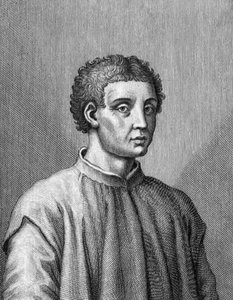 П'Єтро КаваллініІталієць · 1240–1330
- 85Naumburg MasterFrench · 1200–1300
- 86Li JieChinese · 1035–1110
- 87Dietisalvi di Speme1201–1291
- 88Margaritone d'ArezzoItalian · 1240–1290
- 89Gao KegongChinese · 1248–1310
- 90Cui BaiChinese · 1000–1074
- 91Su HanchenSong dynasty · 1101–1161
- 92Xu DaoningChinese · 970–1052
- 93Zhao BojuChinese · 1120–1182
- 94Fujiwara no TakanobuJapanese · 1142–1205
- 95Ren Renfa1254–1327
- 96Kōkei
Questions
Your questions
Який High Medieval художник є найвідомішим?
Перше місце посідає Джотто (#1); Дуччо ді Буонінсенья (#2) та Чімабуе (#3) доповнюють трійку лідерів.
Хто є 5 найвідомішими High Medieval художники?
Джотто (#1), Дуччо ді Буонінсенья (#2), Чімабуе (#3), Чжао Менфу (#4) та Чжу Сі (#5).
Хто є найвідомішими жінками-представницями High Medieval художники?
Цей список містить 3 жінок: Герада Ландсберзька (#28), Гуань Даошен (#41) та Hildegard von Bingen (#68).
Де сьогодні знаходяться видатні твори High Medieval art?
Музеями, у яких зберігається найбільша кількість ключових творів із цього списку, є Метрополітен-музей (13), Запретний палац (9) та Національний палацовий музей (8).
У який період розквітав High Medieval art?
Більшість художники у цьому списку народилися в 13th століття (39 із 96) у період між 970 та 1269.
У якому місті було представлено найбільше High Medieval художники?
Киото: 5 художники із цього списку народилися саме там.
Де народилася більшість High Medieval художники?
Італія: 14 із 96 художники у цьому списку народилися там, а Китай (11) та China (9).
Які техніки визначають High Medieval art?
“Here, he learned to command the delicate medium of egg tempera and the demanding art of mosaic design, skills that would define his long career as both a painter and a designer of mosaics.” — з біографії Чімабуе (#3).
Хто був першим High Medieval художник?
Найдавнішим художник у цьому списку є Xu Daoning (#92), народився у 970.
Хто є найвідомішими High Medieval художники з Італія?
Найвищі за рейтингом художники, народилися в Італія, — це Джотто (#1), Дуччо ді Буонінсенья (#2), Чімабуе (#3), Гвідо Да Сієна (#10) та Бонавентура Берлінг'єрі (#11).
Хто з відомих High Medieval художники сьогодні?
Найвищі за рейтингом живі художники у цьому списку — це Керамічний Завод Цзінцзен (#27), Йоанн Кулікс (#30) та Master Of Bigallo (#60).
Де я можу побачити більше робіт цих художники?
Наш каталог містить 1,427 робіт цих художники.
Other movements
Famous artists of other movements
 Знамениті художники BaroqueНічна варта · Рембрандт
 Знамениті художники Contemporary RealistЗбирачки · Жан-Франсуа Мілле
 Знамениті художники ImpressionistЗорі Ніч (Нью Йорк, MoMA) · Вінсент Ван Гог
 Знамениті художники RomanticistСатурн, що пожирає свого сина · Франсіско-Хосе де Гоя
 Знамениті художники NeoclassicistСмерть Марата · Жак-Луї Давід
 Знамениті художники RealistПоходження світу · Гюстав Курбе
 Знамениті художники Dutch Golden AgeДівчина з перловою сережкою · Ян Вермер
 Знамениті художники RenaissanceМона Ліза (Джоконда) · Леонардо Да Вінчі
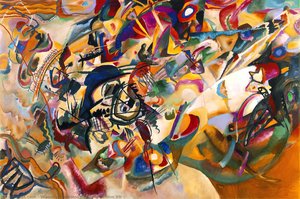 Знамениті художники ExpressionistКомпозиция VII · Кандінський Василь Васильович
 Знамениті художники RococoВідплив до Кітер · Антуан Ватто
Other periods
Famous artists across the periods
 Знамениті художники Early MedievalSnowy River · Ван Вей
 Знамениті художники Late MedievalБлаговіщення та двоє святих · Сімоне Мартіні
 Знамениті художники RenaissanceСтворення Адама · Мікеланджело Буонарроті
 Знамениті художники Early ModernПокликання святого Матвія · Мікеланджело да Караваджо
 Знамениті художники 19th CenturyВодяні лілії (або Латаття) · Клод Моне
 Знамениті художники ModernГерніка · Пабло Пікассо
 Знамениті художники ContemporaryWind Sculpture III (one in a series of nine) · Yinka Shonibare
Discover more