A Sanctuary of Time: The Eternal Echoes of Campo Santo
In the heart of Pisa’s Piazza del Duomo, nestled beside the gravity-defying Leaning Tower and the majestic Cathedral, lies a sanctuary where time itself seems to pause. The Campo Santo is not merely a cemetery; it is a profound architectural and artistic meditation on the human condition. This monumental complex, born from a blend of papal ambition and deep spiritual devotion, serves as a bridge between the earthly and the divine. As one approaches its limestone walls, the atmosphere shifts from the bustling energy of the city to a contemplative stillness, inviting visitors into a realm where history, mortality, and breathtaking artistry converge in a singular, hauntingly beautiful experience.
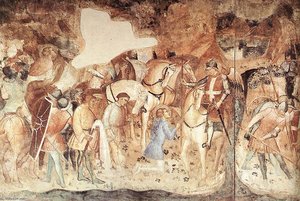
The soul of the Campo Santo resides within its vast interior, where over 2600 square meters of frescoes unfold like a sacred manuscript. These painted narratives, primarily executed during the fourteenth century, transform the walls into a celestial theater. Masters such as Francesco Traini and Bonamicro Buffalmacco utilized these surfaces to weave complex tapestries of biblical truth and human emotion. The most visceral encounter awaits those who stand before the "Triumph of Death." In this masterpiece, the artist captures the terrifying inevitability of the Black Death through a chilling depiction of skeletons claiming their dominion over the living. It is a work of profound psychological depth, using allegory and meticulous detail to remind every viewer that beauty and decay are inextricably linked.
Beyond the vibrant pigments of the frescoes, the Campo Santo preserves a tangible connection to the ancient world through its collection of eighty-four Roman sarcophagi. These intricately carved stone vessels, once scattered throughout the cathedral, were gathered here to create a silent dialogue between classical antiquity and medieval devotion. To wander among these relics is to witness the enduring legacy of Greek mythology and Roman history, where mythological figures emerge from the stone to haunt the sacred space. This juxtaposition of ancient craftsmanship against Gothic architecture creates a unique aesthetic tension, making the cemetery an unparalleled archaeological museum that celebrates the continuity of human creativity across millennia.
The architectural grandeur of the complex is defined by its striking Gothic silhouette, most notably the forty-three blind arches that form a monumental cloister wall. This limestone masterpiece, initiated in 1278, encloses a serene courtyard that offers a moment of respite for the weary soul. Within these hallowed halls, the boundaries between science and spirituality blur; it was within this very space that Galileo Galilei conducted his legendary pendulum experiments, finding inspiration in the rhythmic movement of physics amidst the stillness of faith. For the art lover and the collector of historical wonders, the Campo Santo offers more than a glimpse into the past—it provides an immersive encounter with the very essence of Tuscan heritage, where every stone and every brushstroke tells a story of eternal significance.