The Birth of Gothic: From Romanesque Roots to a New Spiritual Vision
Gothic architecture is an architectural style that was prevalent in Europe from the late 12th to the 16th century, during the High and Late Middle Ages, surviving into the 17th and 18th centuries in some areas. It evolved from Romanesque architecture...
The twelfth century witnessed a profound shift in European consciousness, one that found its most enduring expression in the soaring architecture and luminous art we now know as Gothic. Emerging from the solid, earth-bound forms of Romanesque design, Gothic wasn’t merely an evolution but a deliberate reaching for something beyond the tangible world—a visual manifestation of burgeoning theological thought. The Romanesque, with its rounded arches and thick walls, had served to convey a sense of divine power through sheer mass and permanence. But as scholastic philosophy flourished and a new emphasis on light and reason took hold, artists and architects sought ways to embody these concepts in their creations. The Basilica of Saint-Denis, under the patronage of Abbot Suger, is widely considered the birthplace of Gothic, its innovative use of pointed arches and increased window space signaling a radical departure from tradition. Suger’s ambition wasn't simply aesthetic; he believed that light itself was a divine presence, and his cathedral was designed to flood the interior with it, creating an experience akin to entering heaven.
Architectural Marvels: Pointed Arches, Flying Buttresses & the Ascent Towards Heaven
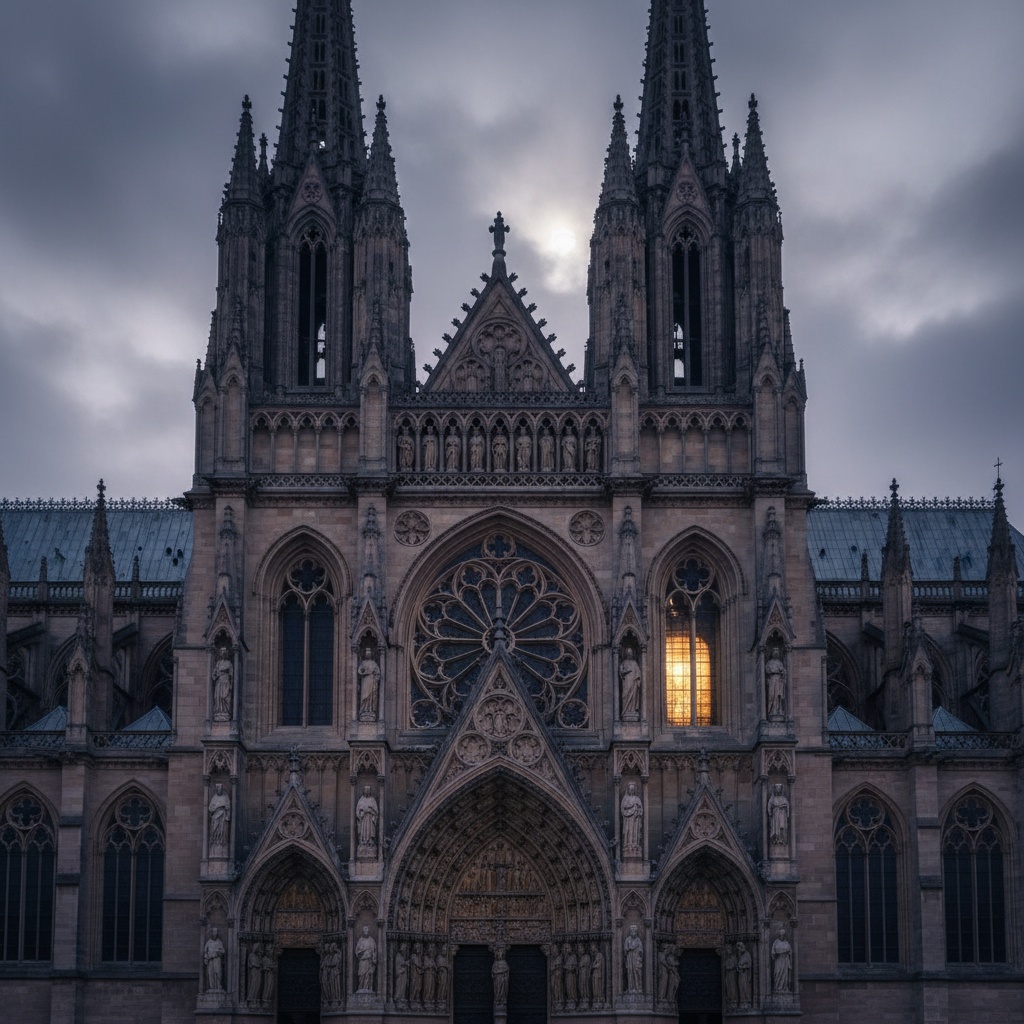
The defining characteristic of Gothic architecture—the pointed arch—was more than just a stylistic choice. It allowed for taller structures and wider spans than its Romanesque predecessor, distributing weight more efficiently and enabling builders to create increasingly ambitious spaces. This structural innovation was inextricably linked to the spiritual aspirations of the era. The verticality of Gothic cathedrals wasn’t accidental; it was intended to draw the eye—and the soul—upwards, towards God. Complementing this upward thrust were flying buttresses, external supports that counteracted the outward pressure of the vaulted ceilings. These seemingly delicate structures allowed for thinner walls and larger windows, maximizing the influx of light. The intricate rib vaulting system further contributed to the sense of lightness and complexity, creating a network of intersecting lines that echoed the celestial order. Consider the magnificent Salisbury Cathedral, a testament to this architectural ingenuity; its spire, a beacon reaching towards the heavens, embodies the era’s unwavering faith.
Light as Theology: Stained Glass and the Divine Illumination of Gothic Cathedrals
If the pointed arch defined the *structure* of Gothic architecture, stained glass illuminated its *meaning*. The vast windows of cathedrals weren't simply decorative; they were carefully crafted narratives, depicting biblical scenes, lives of saints, and allegorical stories. The vibrant colors—achieved through meticulous techniques involving metallic oxides and lead came—transformed sunlight into a mystical glow, bathing the interior in an otherworldly radiance. This wasn’t merely about aesthetics; light was understood as a metaphor for divine grace, and stained glass served to translate that theological concept into a tangible experience. The rose windows, particularly prominent features of Gothic facades, held special significance, often representing the Virgin Mary—the ‘Mystical Rose’—and symbolizing purity and spiritual perfection. The effect was transformative: worshippers were enveloped in a kaleidoscope of color and light, intended to inspire awe and facilitate contemplation.
Symbolism in Stone: Decoding Christian Iconography and Narrative Sculpture
Christian symbolism is the use of symbols, including archetypes, acts, artwork or events, by Christianity. It invests objects or actions with an inner meaning expressing Christian ideas. The symbolism of the early Church was characterized by being un...
Beyond stained glass, Gothic cathedrals were replete with symbolism embedded within their sculptural programs. Every figure, every gesture, every detail held meaning for the medieval observer. The portals—the main entrances to the cathedral—often served as ‘teaching tools,’ depicting scenes from the Bible and offering moral lessons to a largely illiterate population. The tympanum above the portal frequently featured Christ in Majesty, flanked by angels and saints, representing the ultimate judgment. Sculptural details weren’t merely decorative; they were carefully chosen to convey specific theological messages. Gargoyles, often misunderstood as purely grotesque ornaments, served both a practical function—diverting rainwater away from the walls—and a symbolic one, warding off evil spirits and protecting the sanctity of the church. The sheer abundance of iconography reflected the medieval worldview, where every aspect of life was imbued with religious significance.
Gothic Art Beyond France: Regional Variations and Lasting Legacies
While originating in France, Gothic architecture quickly spread across Europe, adapting to local traditions and materials. In England, Gothic took on a uniquely elongated form, characterized by fan vaulting and intricate tracery—exemplified in the soaring heights of Lincoln Cathedral. In Germany, Gothic cathedrals often featured imposing towers and elaborate sculptural programs. Italy, with its strong classical heritage, embraced Gothic more selectively, blending it with Romanesque elements. Despite these regional variations, certain core principles remained consistent: a focus on verticality, an emphasis on light, and a commitment to religious symbolism. The influence of Gothic extended beyond architecture; it shaped sculpture, painting, and even manuscript illumination, leaving an indelible mark on the artistic landscape of Europe.
Constable, Monet & Kempe: Artistic Responses to the Enduring Power of Gothic Architecture
The fascination with Gothic architecture didn’t wane after the medieval period. Romantic artists like John Constable were captivated by its grandeur and spiritual resonance, as evidenced in his evocative monochrome sketch of Salisbury Cathedral. His series of studies captured not only the architectural details but also the atmospheric effects surrounding the cathedral, conveying a sense of timelessness and awe. Claude Monet’s series of paintings depicting Rouen Cathedral, similarly explored the interplay of light and color on the building's facade, revealing its subtle nuances and shifting moods. Later, Victorian artists like Charles Eamer Kempe revived Gothic techniques in stained glass, creating vibrant windows that adorned churches throughout England. These artistic responses demonstrate the enduring power of Gothic architecture to inspire creativity and evoke profound emotional responses—a testament to its lasting legacy as a masterpiece of human ingenuity and spiritual expression. At OriginalUniqueArt.com, we celebrate this rich artistic heritage by offering high-quality reproductions that allow you to bring the beauty and symbolism of Gothic art into your own home.