
Rembrandt is the best-known artist with works in the Wallace Collection; next come Peter Paul Rubens, Titian and Eugène Delacroix.
Our catalogue lists 665 works of the Wallace Collection by 221 artists; the 25 best known are ranked below, each with the works the museum holds.
The masters of the originals
The 10 masters whose originals hang in the Wallace Collection
For each master: where and when they were born, their movement, how many originals the museum keeps in our catalogue, a note from their life, and the originals to see.
-
Baroque
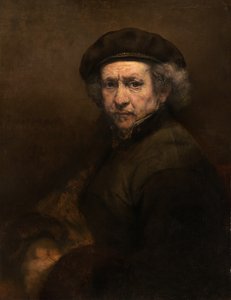
1. Rembrandt 1606–1669
1606–1669 Born in Leiden, Netherlands Baroque 7 originals at the Wallace Collection
Born on 15 July 1606 in Leiden, in the Dutch Republic, Rembrandt van Rijn entered a world of modest means. By the time he died on 4 October 1669, he had left behind a vast legacy that includes about 300 paintings, 300 etchings, and several hundred drawings. By 1625, the young artist had moved beyond his apprenticeship and opened a studio in Leiden. A significant shift occurred in 1631 when he moved to Amsterdam.
Originals at the Wallace Collection
-

Baroque
2. Peter Paul Rubens 1577–1640
1577–1640 Born in Siegen, Germany Baroque 10 originals at the Wallace Collection
Born on 28 June 1577 in Siegen, Germany, his early years were shaped by the religious instability of the era. By the time he began working with Otto van Veen between 1594 and 1598, Rubens had already acquired the technical vocabulary necessary to move beyond simple representation into the realm of sophisticated narrative art. In 1600, Rubens left the Low Countries for Italy, a move that fundamentally altered his visual language.
Originals at the Wallace Collection
-

High Renaissance
3. Titian 1490–1576
1490–1576 Born in Pieve di Cadore, Italy High Renaissance 3 originals at the Wallace Collection
In the rugged, mountainous reaches of Pieve di Cadore, a boy named Tiziano Vecellio began a life that would eventually reshape the very language of oil on canvas. Born around 1490, he was the son of Gregorio Vecellio, a man of the military, and a woman named Lucia.
Originals at the Wallace Collection
-

Romanticism
4. Eugène Delacroix 1798–1863
1798–1863 Born in Saint-Maurice, France Romanticism 2 originals at the Wallace Collection
The lineage of Eugène Delacroix is rooted in a blend of craftsmanship and diplomacy. Through him, the artist received numerous anonymous commissions, allowing his work to circulate through elite circles under a veil of discretion.
Originals at the Wallace Collection
-

Rococo
5. Jean-Antoine Watteau 1684–1721
1684–1721 Born in Valenciennes, France Rococo 14 originals at the Wallace Collection
It is also believed that he may have studied under Julien, further refining the skills that would eventually lead him away from the quiet life of Valenciennes.
Originals at the Wallace Collection
-

Dutch Golden Age
6. Frans Hals 1580–1666
1580–1666 Born in Antwerp, Belgium Dutch Golden Age 2 originals at the Wallace Collection
Frans Hals I was a Dutch painter born in Antwerp, Belgium, around 1580. Though his early life remains somewhat shrouded in mystery, he rose to become one of the most important figures of the Dutch Golden Age, celebrated for his innovative portraiture and genre scenes. Details surrounding Hals’s formative years are scarce. It is believed he received initial artistic training in Antwerp, a prominent center for painting at the time.
Originals at the Wallace Collection
-

Neoclassicism
7. Élisabeth Louise Vigée Le Brun 1755–1842
1755–1842 Born in Paris, France Neoclassicism 3 originals at the Wallace Collection
French Rococo portraitist famed for capturing the grace of Marie Antoinette and the elite nobility in soft, luminous oil and pastel tones. The household is one of art and observation.
Originals at the Wallace Collection
-
Baroque
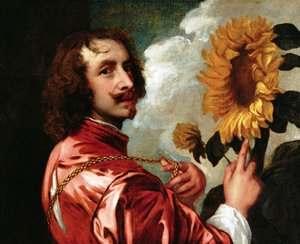
8. Anthony van Dyck 1599–1641
1599–1641 Born in Antwerp, Belgium Baroque 8 originals at the Wallace Collection
Born in Antwerp on 22 March 1599, Sir Anthony van Dyck entered a world of commerce and craft. Between 1621 and late 1627, he traveled through Italy, a period that would refine his ability to navigate the complex social hierarchies of European nobility. In 1620, he entered the service of King James I, a brief engagement that preceded his extensive travels through Italy and the Spanish Netherlands.
Originals at the Wallace Collection
-

Baroque
9. Bartolomé Esteban Murillo 1617–1682
1617–1682 Born in Seville, Spain Baroque 9 originals at the Wallace Collection
The story of Bartolomé Esteban Murillo begins in the heart of Seville, where he was born in late December 1617. Life for the young boy was marked by early loss, as he was orphaned during his childhood. Following the deaths of his parents, he was taken in by his sister, Ana, and her husband, Juan Agustín Lagares. Artistic training for Bartolomé Esteban Murillo likely began when he was between twelve and fifteen years old.
Originals at the Wallace Collection
-
Rococo
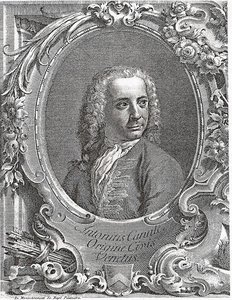
10. Canaletto 1697–1768
1697–1768 Born in Venice, Italy Rococo 11 originals at the Wallace Collection
Giovanni Antonio Canal, known to many as Canaletto, was born in Venice, Italy, on October 18, 1697. The influence of his family's trade stayed with him as he moved toward more permanent subjects. In 1718, Canaletto left Venice for Rome. Between 1746 and 1756, Canaletto made several trips to England. From 1749 to 1752, he lived in London, staying at 41 Beak Street in the Soho district.
Originals at the Wallace Collection


The masters, continued
No. 11 to No. 25: more masters of the Wallace Collection
-

11. François Boucher
Rococo
1703–1770 · born in Paris, France · 21 originals at the Wallace Collection
French Rococo painter of luminous, pastel mythological scenes and idyllic landscapes, known for his voluptuous and amorous subjects.
- The Setting of the Sun (1752)
- The Modiste (1746)
- Bacchus and Erigone (1745)
-

12. Jean-Honoré Fragonard
Rococo
1732–1806 · born in Grasse, France · 9 originals at the Wallace Collection
French Rococo painter of playful, sensual scenes rendered with luminous, rapid brushwork and a sense of exuberant, fleeting movement.
- The Swing (1767)
- The Fountain of Love (1785)
- The Souvenir (1775)
-

13. Jacob van Ruisdael
Dutch Golden Age
1628–1682 · born in Haarlem, Netherlands · 5 originals at the Wallace Collection
- Wild Duck Shooting (1655)
- Rocky Landscape (1650)
- Landscape with a Village (1652)
-

14. Jean-Léon Gérôme
Academic Art
1824–1904 · born in Vesoul, France · 2 originals at the Wallace Collection
French Academicist known for meticulous detail and dramatic Orientalist and historical scenes, from Roman gladiators to desert landscapes.
- The Guard of the Harem (1859)
- The Draught Players (1859)
-

15. Jan Steen
Baroque
1626–1679 · born in Leiden, Netherlands · 5 originals at the Wallace Collection
Dutch Golden Age genre painter of boisterous, chaotic households and humorous scenes filled with psychological depth and vibrant color.
- The Village Alchemist (1664)
- Merrymaking in a Tavern (1674)
- The Lute Player (1670)
-

16. Thomas Gainsborough
Rococo
1727–1788 · born in Sudbury, United Kingdom · 5 originals at the Wallace Collection
British Rococo painter of elegant portraits and landscapes, known for fluid brushstrokes and integrating sitters into the English countryside.
- Mrs. Perdita Robinson (1781)
- Mrs Mary Robinson (Perdita) (1781)
- Miss Elizabeth Haverfield (1780)
-
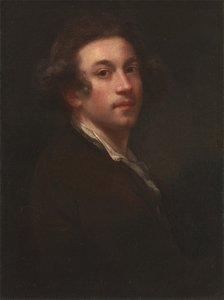
17. Joshua Reynolds
Neoclassicism
1723–1792 · born in Plympton, United Kingdom · 22 originals at the Wallace Collection
British Neoclassical portraitist and Royal Academy founder who used the Grand Style to idealize subjects with grace and dignity.
-

18. Paul Delaroche
Academic Art
1797–1856 · born in Paris, France · 9 originals at the Wallace Collection
French historical painter of dramatic scenes rendered with meticulous realism, bridging Romanticism and Academicism through theatrical storytelling.
-

19. Pieter de Hooch
Dutch Golden Age
1629–1684 · born in Rotterdam, Netherlands · 3 originals at the Wallace Collection
Dutch Golden Age painter of tranquil domestic interiors using the see-through-doorway technique to create depth through layered perspectives.
- A Woman Peeling Apples (1663)
- A Boy Bringing Bread (1663)
-

20. Jean-Baptiste Greuze
Rococo
1725–1805 · born in Tournus, France · 20 originals at the Wallace Collection
- Girl in a Blue Dress (1804)
- The Letter Writer (1803)
- Boy with a Dog (1760)
-

21. Rosa Bonheur
Realism
1822–1899 · born in Bordeaux, France · 4 originals at the Wallace Collection
French Realist painter of animals known for anatomical precision and dynamic, lifelike scenes of horses and cattle in bustling markets.
- A Waggon and a Team of Horses (1852)
- Sheep in the Highlands (1857)
- Brizo the dog (1864)
-

22. Francesco Guardi
Rococo
1712–1793 · born in Venice, Italy · 9 originals at the Wallace Collection
Venetian Rococo vedutista known for shimmering pittura di tocco brushwork and atmospheric cityscapes of Venice under dramatic, cloudy skies.
-

23. Philippe de Champaigne
Baroque
1602–1674 · born in Brussels, Belgium · 4 originals at the Wallace Collection
French Baroque painter of austere religious scenes and powerful portraits, known for capturing the psychological essence of his subjects.
- The Annunciation (1645)
- The abbé de Saint-Cyran (1649)
- The Marriage of the Virgin (1644)
-

24. Thomas Couture
Academic Art
1815–1879 · born in Senlis, France · 6 originals at the Wallace Collection
French Romantic and Realist painter of dramatic historical scenes and moral decadence, known for teaching Édouard Manet.
- The Young Drummer (1857)
- Timon of Athens (1857)
- Harlequin and Pierrot (1857)
-

25. Thomas Lawrence
Romanticism
1769–1830 · born in Bristol, United Kingdom · 6 originals at the Wallace Collection
Regency Romanticist portraitist known for virtuoso brushwork and capturing the elegant character of British aristocracy and royalty.
- The 3rd Marquess of Hertford (1823)
- George IV (1822)
- Portrait of a Lady (1800)
Famous artists in the Wallace Collection, No. 26 to 50
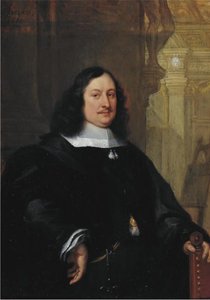 David Teniers the Younger1610–1690 · 9 originals at the Wallace Collection
 Adriaen Brouwer1605–1638 · 2 originals at the Wallace Collection
 Gabriel Metsu1629–1667 · 6 originals at the Wallace Collection
 Alonso Cano1601–1667 · 2 originals at the Wallace Collection
 Meindert Hobbema1638–1709 · 5 originals at the Wallace Collection
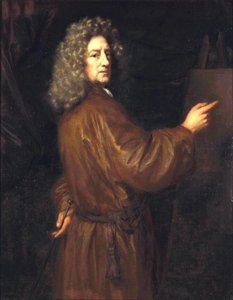 Nicolaes Maes1634–1693 · 2 originals at the Wallace Collection
 Emanuel de Witte1617–1692 · 2 originals at the Wallace Collection
 Nicolas Lancret1689–1743 · 11 originals at the Wallace Collection
 Edwin Landseer1802–1873 · 4 originals at the Wallace Collection
 Horace Vernet1789–1863 · 23 originals at the Wallace Collection
 Gerrit Dou1613–1675 · 3 originals at the Wallace Collection
 Joseph Vernet1714–1789 · 3 originals at the Wallace Collection
 Paulus Potter1625–1654 · 3 originals at the Wallace Collection
 Carlo Crivelli1435–1495 · 2 originals at the Wallace Collection
 Jean-Louis Ernest Meissonier1815–1891 · 17 originals at the Wallace Collection
 Jan van Huysum1682–1749 · 2 originals at the Wallace Collection
 Willem van de Velde the Elder1611–1693 · 8 originals at the Wallace Collection
 Jean-Marc Nattier1685–1766 · 6 originals at the Wallace Collection
 Pierre-Paul Prud'hon1758–1823 · 6 originals at the Wallace Collection
 Ludolf Bakhuizen1630–1708 · 2 originals at the Wallace Collection
 Aert van der Neer1604–1677 · 4 originals at the Wallace Collection
 Bernardino Luini1480–1532 · 5 originals at the Wallace Collection
 Aelbert Cuyp1620–1691 · 4 originals at the Wallace Collection
 Constant Troyon1810–1865 · 2 originals at the Wallace Collection
 Jan van der Heyden1637–1712 · 4 originals at the Wallace Collection
The house in figures
The masters of the Wallace Collection, in figures
The masters with the most originals at the Wallace Collection
Masters with two originals or more, by century of birth
Masters with two originals or more, by country of birth
Masters with two originals or more, by movement
Women masters
The women whose originals hang in the Wallace Collection
3 women masters, 8 originals, in our catalogue of the Wallace Collection.
-
Rosa Bonheur
1822–1899 · born in Bordeaux, France · 4 originals at the Wallace Collection
- A Waggon and a Team of Horses (1852)
- Sheep in the Highlands (1857)
- Brizo the dog (1864)
-
Élisabeth Louise Vigée Le Brun
1755–1842 · born in Paris, France · 3 originals at the Wallace Collection
- The comte d'Espagnac (1786)
- Madame Perregaux (1789)
-

Constance Mayer
1774–1821 · born in Chauny, France · 1 originals at the Wallace Collection
- The Sleep of Venus and Cupid (1806)
Two houses
The Wallace Collection or the National Gallery: whose originals are where
The Wallace Collection
- Masters in our catalogue
- 221
- Originals
- 665
- The masters to know
- Rembrandt, Peter Paul Rubens, Titian, Eugène Delacroix
- Most originals by
- Horace Vernet (23), Joshua Reynolds (22), François Boucher (21)
The National Gallery
- Masters in our catalogue
- 739
- Originals
- 2,264
- The masters to know
- Leonardo da Vinci, Rembrandt, Michelangelo, Vincent van Gogh
- Most originals by
- Titian (35), Rembrandt (31), Jean-Baptiste-Camille Corot (27)
Asked of us
Questions on the masters of the Wallace Collection
Open a question to read the answer.
Who is the most famous artist in the Wallace Collection?
Rembrandt (1606–1669): our catalogue holds 7 works by Rembrandt at the Wallace Collection, among them Portraits of Jean Pellicorne and his Son Casper, A boy in fanciful costume and Centurion Cornelius. Peter Paul Rubens and Titian follow.
What did Rembrandt paint that hangs in the Wallace Collection?
7 works by Rembrandt at the Wallace Collection are in our catalogue: Portraits of Jean Pellicorne and his Son Casper (1633), A boy in fanciful costume (1633), Centurion Cornelius (1660) and Bust of a man in a gorget and feather bonnet (1634) among them.
What did Peter Paul Rubens paint that hangs in the Wallace Collection?
10 works by Peter Paul Rubens at the Wallace Collection are in our catalogue: The Adoration of the Magi (1624), The Marriage of Henri IV of France and Marie de Médici (1630), The Birth of Henri IV of France (1630) and Christ's Charge to Peter (1616) among them.
Which Titian works are in the Wallace Collection?
3 works by Titian at the Wallace Collection are in our catalogue: Perseus and Andromeda (1554) and Venus and Cupid (1510) among them.
Which ten artists should I look for in the Wallace Collection?
The ten best-known artists with works in the Wallace Collection are Rembrandt (7), Peter Paul Rubens (10), Titian (3), Eugène Delacroix (2), Jean-Antoine Watteau (14), Frans Hals (2), Élisabeth Louise Vigée Le Brun (3), Anthony van Dyck (8), Bartolomé Esteban Murillo (9) and Canaletto (11).
Who has the most paintings in the collection of the Wallace Collection?
Horace Vernet (—), with 23 works in our catalogue of the Wallace Collection, ahead of Joshua Reynolds (22), François Boucher (21) and Jean-Baptiste Greuze (20).
Are there Leonardo da Vinci works in the Wallace Collection?
Our catalogue lists no work by Leonardo da Vinci at the Wallace Collection. For Leonardo da Vinci, see the National Gallery: 9 works there.
Is Pablo Picasso in the Wallace Collection?
Our catalogue lists no work by Pablo Picasso at the Wallace Collection.
Are there any women painters in the Wallace Collection?
3 women artists have works of the Wallace Collection in our catalogue, among them Rosa Bonheur (4), Élisabeth Louise Vigée Le Brun (3) and Constance Mayer (1).
Should I visit the Wallace Collection or the National Gallery for the painters?
For Rembrandt, Peter Paul Rubens and Titian, the Wallace Collection; for Leonardo da Vinci, Rembrandt and Michelangelo, the National Gallery. Our catalogue lists 221 artists at the Wallace Collection and 739 at the National Gallery.
Where do the artists of the Wallace Collection come from?
By country of birth, the artists with two works or more at the Wallace Collection are mostly from Netherlands (35), France (35), Belgium (9), United Kingdom (8) and Italy (6).
From which period are the artists of the Wallace Collection?
Most of the artists with two works or more at the Wallace Collection were born in the 17th century (52 artists); the earliest in this ranking is Titian (1490–1576), the latest Jean-Léon Gérôme (1824–1904).
The house
The Wallace Collection, London, in a few lines
The History of the Wallace Collection
The origins of the Wallace Collection lie in the private acquisitions of the 18th and 19th centuries. Sir Richard Wallace, alongside the Marquesses of Hertford, assembled an extensive collection that reflects the evolving tastes of European nobility. These objects were gathered over generations, forming a cohesive assembly of fine and decorative arts spanning from the 15th to the 19th centuries. The collection eventually found its permanent home in London, United Kingdom, following the death of Lady Wallace in 1897, when the holdings were bequeathed to the British nation. The establishment of the institution in 1897 ensured that these accumulated treasures remained together within the walls of Hertford House. The assembly includes a variety of media, from Old Master paintings to intricate decorative objects. The presence of these works within a former private residence allows the history of their acquisition to remain tangible.
The Architecture of Hertford House
The structure occupying Manchester Square in London possesses a layered history that predates its current identity. In the 16th century, the site served as the London townhouse of Edward Seymour, 1st Duke of Somerset. The present building, however, traces its lineage to 1776, when it was constructed for the Earl of Hertford. Over the decades, the architectural character of the house shifted to reflect the evolving tastes of its various occupants, moving from the late 18th century through the early 19th century. Rather than the sterile arrangement often found in public institutions, the rooms are organized to recreate the sensory richness of a grand salon. Furniture is positioned as if awaiting guests, and porcelain is displayed upon cabinets and shelves in a manner that suggests daily use. This deliberate arrangement allows the art to exist within its intended domestic context, where paintings hang as they would have in their original settings.
The famous originals of the Wallace CollectionThe Wallace Collection: the full page, 710 originalsThe museums of London
How the masters of the originals are ranked
The masters with two originals or more of the Wallace Collection in our catalogue are ranked by fame: the Wikipedia language editions that describe them, the visits to their OriginalUniqueArt.com page and our studio's ranking. Originals are counted in our catalogue — one entry per work, without details, studies or copies — not in the museum's inventory. Every date, birthplace and movement is the catalogue's; the notes are drawn from the master's biography.
Go on