
The most famous artists with works in the Pushkin State Museum are Pablo Picasso, Rembrandt, Vincent van Gogh and Claude Monet.
Below, the 25 best-known of the 161 artists with works of the Pushkin State Museum in our catalogue (303 works), each with what the museum holds of them.
The masters of the originals
The 10 masters whose originals hang in the Pushkin State Museum
For each master: where and when they were born, their movement, how many originals the museum keeps in our catalogue, a note from their life, and the originals to see.
-

Cubism
1. Pablo Picasso 1881–1973
1881–1973 Born in Málaga, Spain Cubism 2 originals at the Pushkin State Museum
In the city of Málaga, Spain, a boy named Pablo Picasso entered the world on October 25, 1881. The boy’s path led away from the warmth of Málaga as his family moved to A Coruña in 1891. Between 1901 and 1904, he entered what is known as the Blue Period. By 1904, the shadows began to retreat, replaced by a shift in both temperament and palette.
Originals at the Pushkin State Museum
-
Baroque
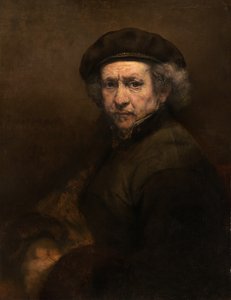
2. Rembrandt 1606–1669
1606–1669 Born in Leiden, Netherlands Baroque 7 originals at the Pushkin State Museum
Born on 15 July 1606 in Leiden, in the Dutch Republic, Rembrandt van Rijn entered a world of modest means. By the time he died on 4 October 1669, he had left behind a vast legacy that includes about 300 paintings, 300 etchings, and several hundred drawings. By 1625, the young artist had moved beyond his apprenticeship and opened a studio in Leiden. A significant shift occurred in 1631 when he moved to Amsterdam.
Originals at the Pushkin State Museum
-
Post-Impressionism
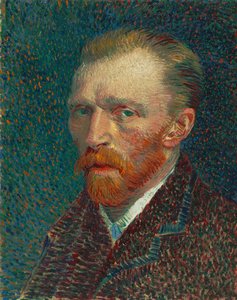
3. Vincent van Gogh 1853–1890
1853–1890 Born in Zundert, Netherlands Post-Impressionism 7 originals at the Pushkin State Museum
Vincent Willem Van Gogh was born on March 30, 1853, in Zundert, Netherlands. His brother Theo was born on 1 May 1857, and their connection would remain a constant through the many letters they exchanged over the years. The quiet village of Zundert in the Brabant region was where Vincent Willem Van Gogh was born. In 1873, he moved to the London branch of Goupil & Cie, where he remained until May 1875.
Originals at the Pushkin State Museum
-
Impressionism
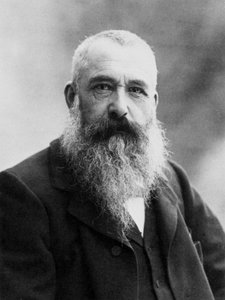
4. Claude Monet 1840–1926
1840–1926 Born in Paris, France Impressionism 9 originals at the Pushkin State Museum
Born in Paris, France, on 14 November 1840, Claude Monet entered a world of diverging expectations. Tragedy arrived in January 1857, when Monet was sixteen years old. In 1883, Monet moved to a house and property in Giverny, a village northwest of Paris. In 1892, he married Alice Hoschedé, a union that provided a sense of stability as he continued his obsessive study of light and atmosphere.
Originals at the Pushkin State Museum
-
Post-Impressionism
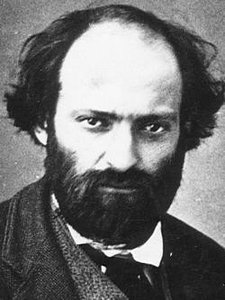
5. Paul Cézanne 1839–1906
1839–1906 Born in Aix-en-Provence, France Post-Impressionism 15 originals at the Pushkin State Museum
Born on January 19, 1839, at 28 rue de l'Opéra in Aix-en-Provence, Paul Cézanne entered a world of established order. In 1860, he made the decisive choice to abandon his law studies, turning his focus entirely toward the pursuit of painting. By 1859, his technical proficiency was evident when he earned second prize in the school's figure studies course.
Originals at the Pushkin State Museum
-
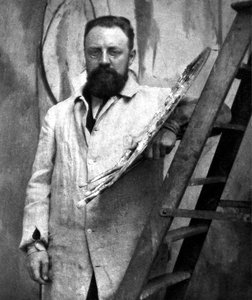
Fauvism
6. Henri Matisse 1869–1954
1869–1954 Born in Le Cateau-Cambrésis, France Fauvism 8 originals at the Pushkin State Museum
After finishing secondary school, Matisse moved to Paris to study law. In 1889, an attack of appendicitis forced a long recovery, and it was during this confinement that the act of painting first took hold. By around 1905, this approach had coalesced into the Fauvist movement.
Originals at the Pushkin State Museum
-

Expressionism
7. Wassily Kandinsky 1866–1944
1866–1944 Born in Moscow, Russia Expressionism 3 originals at the Pushkin State Museum
Wassily Wassilyevich Kandinsky was born in Moscow to Lidia Ticheeva and Vassily Silvestrovich Kandinsky. By about 1896, he had moved to Munich to begin formal studies in art. After his time in Russia, where he served as the first director of the Institute of Artistic Culture in Moscow, Kandinsky moved toward the academic circles of Germany. The era of his teaching came to an abrupt end when the Nazi regime closed the Bauhaus in 1933.
Originals at the Pushkin State Museum
-

Baroque
8. Peter Paul Rubens 1577–1640
1577–1640 Born in Siegen, Germany Baroque 3 originals at the Pushkin State Museum
Born on 28 June 1577 in Siegen, Germany, his early years were shaped by the religious instability of the era. By the time he began working with Otto van Veen between 1594 and 1598, Rubens had already acquired the technical vocabulary necessary to move beyond simple representation into the realm of sophisticated narrative art. In 1600, Rubens left the Low Countries for Italy, a move that fundamentally altered his visual language.
Originals at the Pushkin State Museum
-
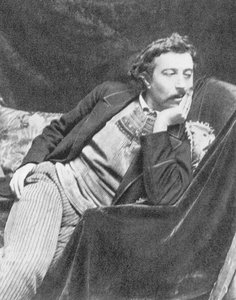
Post-Impressionism
9. Paul Gauguin 1848–1903
1848–1903 Born in Paris, France Post-Impressionism 18 originals at the Pushkin State Museum
Born in Paris in 1848, Eugène Henri Paul Gauguin entered a world of shifting social and political currents. The boy spent his childhood in Peru until the age of six, a period that left an indelible mark on his memory. Before finding his footing in the art world, Gauguin’s life took a more rugged, maritime turn. Between 1879 and 1886, he was accepted into the Paris Salon, appearing in the prestigious exhibition annually.
Originals at the Pushkin State Museum
-
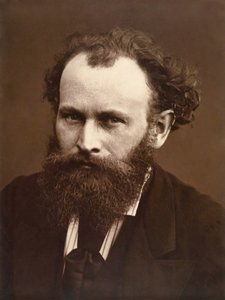
Impressionism
10. Édouard Manet 1832–1883
1832–1883 Born in former 10th arrondissement of Paris, France Impressionism 3 originals at the Pushkin State Museum
Édouard Manet was born in Paris on January 23, 1832. From 1850 to 1856, he trained in the studio of Thomas Couture. In 1863, the Salon des Refusés provided a stage for works that the official juries had rejected.
Originals at the Pushkin State Museum


The masters, continued
No. 11 to No. 25: more masters of the Pushkin State Museum
-

11. Nicolas Poussin
Baroque
1594–1665 · born in Le Havre, France · 6 originals at the Pushkin State Museum
French Classicist of geometric, rational compositions and mythological scenes, using wax figures and light boxes to plan every detail.
- The Noble Deed of Scipio (1640)
- Victory of Joshua over the Amorites (1625)
- Renaud and Armide (1625)
-

12. Caspar David Friedrich
Romanticism
1774–1840 · born in Greifswald, Germany · 5 originals at the Pushkin State Museum
-
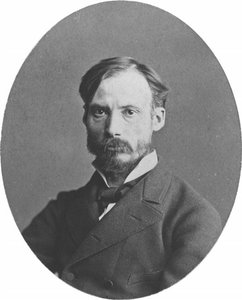
13. Pierre-Auguste Renoir
Impressionism
1841–1919 · born in Limoges, France · 8 originals at the Pushkin State Museum
French Impressionist known for luminous, broken brushstrokes that capture the warmth of social gatherings and the soft glow of outdoor light.
- Head of a Woman (1913)
- Nude Seated on a Sofa (1876)
- Bouquet of Chrysanthemums and a Japanese Fan (1880)
-

14. Jacques-Louis David
Neoclassicism
1748–1825 · born in Paris, France · 2 originals at the Pushkin State Museum
French Neoclassical painter of rigorous contours and dramatic historical scenes, from the Oath of the Horatii to the Death of Marat.
- Portrait of Ingres (1800)
- Self-Portrait (1790)
-

15. Jean-Baptiste-Camille Corot
Romanticism
1796–1875 · born in Paris, France · 8 originals at the Pushkin State Museum
French Realist of atmospheric landscapes and soft vegetation, using thin washes and loosely dabbed strokes to capture the play of light.
-

16. Claude Lorrain
Baroque
1600–1682 · born in Chamagne, France · 3 originals at the Pushkin State Museum
Baroque landscape painter of luminous sunlight and idealized scenes of classical antiquity, often featuring Roman ruins and tranquil harbors.
- The Rape of Europa (1655)
- Landscape with Apollo and Marsyas (1639)
- Battle on the Bridge (1655)
-
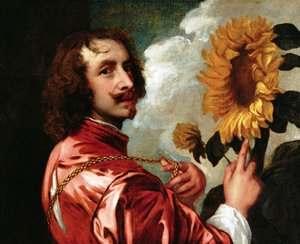
17. Anthony van Dyck
Baroque
1599–1641 · born in Antwerp, Belgium · 3 originals at the Pushkin State Museum
Flemish Baroque portraitist who defined the English court with effortless grace, capturing the dignity of royalty through refined oil and etching.
-

18. Camille Pissarro
Impressionism
1830–1903 · born in Charlotte Amalie, United States Virgin Islands · 3 originals at the Pushkin State Museum
Danish-French Impressionist who captured rural life and city streets through textured plein air landscapes and pointillist experiments.
- Avenue de l'Opera, Effect of Snow (1898)
- Ploughland (1874)
- Autumn morning at Eragny (1897)
-

19. Lucas Cranach the Elder
Northern Renaissance
1472–1553 · born in Kronach, Germany · 8 originals at the Pushkin State Museum
German Renaissance painter of elegant, elongated figures and authoritative portraits of reformers, known for his precise woodcuts and engravings.
-

20. Henri Rousseau
Naive Art
1844–1910 · born in Laval, France · 5 originals at the Pushkin State Museum
French Post-Impressionist of dreamlike jungle scenes and vibrant, imaginative compositions, inspired by botanical gardens and exotic animals.
- Walking in the Parc Montsouris (1909)
- The Muse Inspiring the Poet (1909)
- Horse Attacked by a Jaguar (1910)
-

21. Alfred Sisley
Impressionism
1839–1899 · born in former 4th arrondissement of Paris, France · 3 originals at the Pushkin State Museum
British-French Impressionist dedicated to en plein air landscapes, capturing the tranquil light of the Seine and the waters of Moret-sur-Loing.
-

22. François Boucher
Rococo
1703–1770 · born in Paris, France · 2 originals at the Pushkin State Museum
French Rococo painter of luminous, pastel mythological scenes and idyllic landscapes, known for his voluptuous and amorous subjects.
- Hercules and Omphale (1735)
- Jupiter and Callisto (1744)
-

23. Paul Signac
Neo-Impressionism
1863–1935 · born in Paris, France · 3 originals at the Pushkin State Museum
French Neo-Impressionist known for luminous seascapes and rhythmic Pointillist dots that blend color through the viewer's eye.
-

24. Jacob van Ruisdael
Dutch Golden Age
1628–1682 · born in Haarlem, Netherlands · 2 originals at the Pushkin State Museum
-

25. Jean-Baptiste-Siméon Chardin
Rococo
1699–1779 · born in Paris, France · 2 originals at the Pushkin State Museum
French painter of quiet domestic scenes and still lifes rendered with tactile, granular impasto and a soft diffusion of light.
Famous artists in the Pushkin State Museum, No. 26 to 42
 Pierre Bonnard1867–1947 · 4 originals at the Pushkin State Museum
 André Derain1880–1954 · 2 originals at the Pushkin State Museum
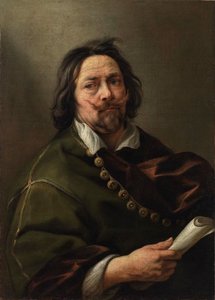 Jacob Jordaens1593–1678 · 2 originals at the Pushkin State Museum
 Ivan Shishkin1831–1898 · 2 originals at the Pushkin State Museum
 Pieter de Hooch1629–1684 · 3 originals at the Pushkin State Museum
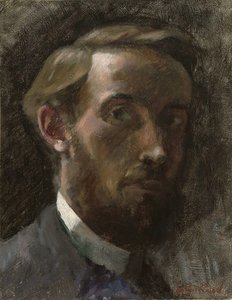 Édouard Vuillard1868–1940 · 2 originals at the Pushkin State Museum
 Adolph von Menzel1815–1905 · 2 originals at the Pushkin State Museum
 Bernardo Bellotto1722–1780 · 3 originals at the Pushkin State Museum
 Akseli Gallen-Kallela1865–1931 · 2 originals at the Pushkin State Museum
 Emanuel de Witte1617–1692 · 2 originals at the Pushkin State Museum
 Karl Bryullov1799–1852 · 6 originals at the Pushkin State Museum
 Giovanni Battista Cima da Conegliano1459–1517 · 2 originals at the Pushkin State Museum
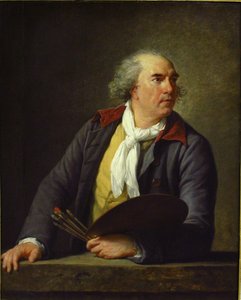 Hubert Robert1733–1808 · 2 originals at the Pushkin State Museum
 Albert Marquet1875–1947 · 6 originals at the Pushkin State Museum
 Abraham van Beijeren1620–1690 · 2 originals at the Pushkin State Museum
 François Hubert Drouais1727–1775 · 2 originals at the Pushkin State Museum
 Alexis Grimou1678–1733 · 2 originals at the Pushkin State Museum
The house in figures
The masters of the Pushkin State Museum, in figures
The masters with the most originals at the Pushkin State Museum
Masters with two originals or more, by century of birth
Masters with two originals or more, by country of birth
Masters with two originals or more, by movement
Women masters
The women whose originals hang in the Pushkin State Museum
5 women masters, 5 originals, in our catalogue of the Pushkin State Museum.
-

Élisabeth Louise Vigée Le Brun
1755–1842 · born in Paris, France · 1 originals at the Pushkin State Museum
-

Mary Cassatt
1844–1926 · born in Allegheny, United States · 1 originals at the Pushkin State Museum
- Mother and Child (1890)
-

Elisabetta Sirani
1638–1665 · born in Bologna, Italy · 1 originals at the Pushkin State Museum
-

Marguerite Gérard
1761–1837 · born in Grasse, France · 1 originals at the Pushkin State Museum
- The Triumph of Minette (1785)
-

Mademoiselle Rivière
1750–1820 · born in Paris, France · 1 originals at the Pushkin State Museum
Two houses
The Pushkin State Museum or the Tretyakov Gallery: whose originals are where
The Pushkin State Museum
- Masters in our catalogue
- 161
- Originals
- 303
- The masters to know
- Pablo Picasso, Rembrandt, Vincent van Gogh, Claude Monet
- Most originals by
- Paul Gauguin (18), Paul Cézanne (15), Claude Monet (9)
The Tretyakov Gallery
- Masters in our catalogue
- 123
- Originals
- 679
- The masters to know
- Wassily Kandinsky, Kazimir Malevich, Ilya Repin, Andrei Rublev
- Most originals by
- Ilya Repin (58), Ivan Shishkin (51), Konstantin Korovin (50)
Asked of us
Questions on the masters of the Pushkin State Museum
Open a question to read the answer.
Who is the most famous artist in the Pushkin State Museum?
Pablo Picasso, with 2 works at the Pushkin State Museum in our catalogue (Portrait of Ambroise Vollard and Sabartes); then Rembrandt and Vincent van Gogh.
How many Pablo Picasso paintings are in the Pushkin State Museum?
2 works by Pablo Picasso at the Pushkin State Museum are in our catalogue: Portrait of Ambroise Vollard (1910) and Sabartes (1901) among them.
How many Rembrandt paintings are in the Pushkin State Museum?
7 works by Rembrandt at the Pushkin State Museum are in our catalogue: The Incredulity of St. Thomas (1634), Christ Resurected (1634), Old man with a Beret (1654) and Portrait of an Old Woman (1654) among them.
What did Vincent van Gogh paint that hangs in the Pushkin State Museum?
7 works by Vincent van Gogh at the Pushkin State Museum are in our catalogue: The Red Vineyard [1888] (1888), Fishing Boats at Sea (also known as Seascape at Saintes-Maries) (1888), Portrait of Doctor Felix Rey (1889) and Landscape with Carriage and Train in the Background among them.
Which famous artists are displayed in the Pushkin State Museum?
By fame: Pablo Picasso (2), Rembrandt (7), Vincent van Gogh (7), Claude Monet (9), Paul Cézanne (15), Henri Matisse (8), Wassily Kandinsky (3), Peter Paul Rubens (3), Paul Gauguin (18) and Édouard Manet (3).
Who has the most paintings in the collection of the Pushkin State Museum?
Paul Gauguin (1848–1903), with 18 works in our catalogue of the Pushkin State Museum, ahead of Paul Cézanne (15), Claude Monet (9) and Henri Matisse (8).
Is Leonardo da Vinci in the Pushkin State Museum?
No: the Pushkin State Museum holds no work by Leonardo da Vinci in our catalogue.
Does the Pushkin State Museum have any Michelangelo paintings?
No: the Pushkin State Museum holds no work by Michelangelo in our catalogue.
Are there any women painters in the Pushkin State Museum?
5 women artists have works of the Pushkin State Museum in our catalogue, among them Élisabeth Louise Vigée Le Brun (1), Mary Cassatt (1), Elisabetta Sirani (1), Marguerite Gérard (1) and Mademoiselle Rivière (1).
Which artists are in the Tretyakov Gallery rather than the Pushkin State Museum?
For Pablo Picasso, Rembrandt and Vincent van Gogh, the Pushkin State Museum; for Wassily Kandinsky, Kazimir Malevich and Ilya Repin, the Tretyakov Gallery. Our catalogue lists 161 artists at the Pushkin State Museum and 123 at the Tretyakov Gallery.
Are the artists in the Pushkin State Museum mostly French, Italian or Dutch?
By country of birth, the artists with two works or more at the Pushkin State Museum are mostly from France (22), Netherlands (6), Russia (3), Germany (3) and Belgium (2).
From which period are the artists of the Pushkin State Museum?
The 19th century leads with 20 artists born then. In this ranking, Lucas Cranach the Elder (1472–1553) is the earliest born and Pablo Picasso (1881–1973) the latest.
The house
The Pushkin State Museum, Moscow, in a few lines
Origins and History of the Museum
The Pushkin State Museum began its existence in 1912. It was established by Professor Ivan Tsvetaev as an arm of Moscow University. At its inception, the institution held a different name, serving as the Alexander III Museum to honor Emperor Alexander III. This early period focused on providing students with access to the history of art through various means, including the study of ancient statuary. The identity of the institution underwent several transformations as the political landscape of the Russian Federation shifted. In 1932, the name was changed to the State Museum of Fine Arts. Later, in 1937, to mark the centenary of the death of Alexander Pushkin, the museum was renamed in his honor.
The Building and its Neoclassical Architecture
Located on Volkhonka street, directly opposite the Cathedral of Christ the Saviour, the structure presents a deliberate presence in the Moscow landscape. Its form resembles a classical temple, characterized by a monumental Ionic colonnade that establishes a sense of order and permanence. The design reflects a specific intent to create a space that feels both ancient and intellectually significant. The construction of this edifice began in 1898 and continued until 1912. While Klein provided the visionary architectural concept, the structural integrity of the building was bolstered by the engineering of Ivan Rerberg. This collaboration between architectural vision and structural genius resulted in a building that functions as a physical extension of the history contained within its walls. The heavy, stone-like quality of the Neoclassical facade provides a quiet, steady backdrop for the art it protects.
The famous originals of the Pushkin State MuseumThe Pushkin State Museum: the full page, 315 originalsThe museums of Moscow
How the masters of the originals are ranked
The masters with two originals or more of the Pushkin State Museum in our catalogue are ranked by fame: the Wikipedia language editions that describe them, the visits to their OriginalUniqueArt.com page and our studio's ranking. Originals are counted in our catalogue — one entry per work, without details, studies or copies — not in the museum's inventory. Every date, birthplace and movement is the catalogue's; the notes are drawn from the master's biography.
Go on