
Vincent van Gogh is the best-known artist with works in the Museum Folkwang; next come Claude Monet, Paul Cézanne and Wassily Kandinsky.
Our catalogue lists 163 works of the Museum Folkwang by 83 artists; the 25 best known are ranked below, each with the works the museum holds.
The masters of the originals
The 10 masters whose originals hang in the Museum Folkwang
For each master: where and when they were born, their movement, how many originals the museum keeps in our catalogue, a note from their life, and the originals to see.
-
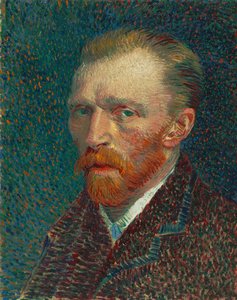
Post-Impressionism
1. Vincent van Gogh 1853–1890
1853–1890 Born in Zundert, Netherlands Post-Impressionism 11 originals at the Museum Folkwang
Vincent Willem Van Gogh was born on March 30, 1853, in Zundert, Netherlands. His brother Theo was born on 1 May 1857, and their connection would remain a constant through the many letters they exchanged over the years. The quiet village of Zundert in the Brabant region was where Vincent Willem Van Gogh was born. In 1873, he moved to the London branch of Goupil & Cie, where he remained until May 1875.
Originals at the Museum Folkwang
-
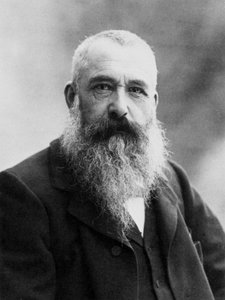
Impressionism
2. Claude Monet 1840–1926
1840–1926 Born in Paris, France Impressionism 3 originals at the Museum Folkwang
Born in Paris, France, on 14 November 1840, Claude Monet entered a world of diverging expectations. Tragedy arrived in January 1857, when Monet was sixteen years old. In 1883, Monet moved to a house and property in Giverny, a village northwest of Paris. In 1892, he married Alice Hoschedé, a union that provided a sense of stability as he continued his obsessive study of light and atmosphere.
Originals at the Museum Folkwang
-
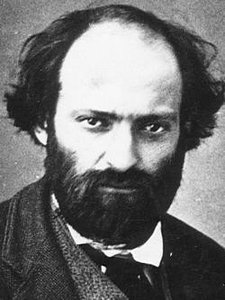
Post-Impressionism
3. Paul Cézanne 1839–1906
1839–1906 Born in Aix-en-Provence, France Post-Impressionism 2 originals at the Museum Folkwang
Born on January 19, 1839, at 28 rue de l'Opéra in Aix-en-Provence, Paul Cézanne entered a world of established order. In 1860, he made the decisive choice to abandon his law studies, turning his focus entirely toward the pursuit of painting. By 1859, his technical proficiency was evident when he earned second prize in the school's figure studies course.
Originals at the Museum Folkwang
-

Expressionism
4. Wassily Kandinsky 1866–1944
1866–1944 Born in Moscow, Russia Expressionism 2 originals at the Museum Folkwang
Wassily Wassilyevich Kandinsky was born in Moscow to Lidia Ticheeva and Vassily Silvestrovich Kandinsky. By about 1896, he had moved to Munich to begin formal studies in art. After his time in Russia, where he served as the first director of the Institute of Artistic Culture in Moscow, Kandinsky moved toward the academic circles of Germany. The era of his teaching came to an abrupt end when the Nazi regime closed the Bauhaus in 1933.
Originals at the Museum Folkwang
-

Expressionism
5. Edvard Munch 1863–1944
1863–1944 Born in Ådalsbruk, Norway Expressionism 3 originals at the Museum Folkwang
Edvard Munch was a Norwegian painter whose life was deeply tied to the landscapes and the heavy atmosphere of his homeland. Edvard Munch was born in 1863 amidst the stark landscapes of Norway. In 1868, his mother died from tuberculosis, a loss that left a heavy mark on the young boy.
Originals at the Museum Folkwang
-
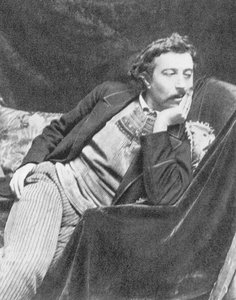
Post-Impressionism
6. Paul Gauguin 1848–1903
1848–1903 Born in Paris, France Post-Impressionism 7 originals at the Museum Folkwang
Born in Paris in 1848, Eugène Henri Paul Gauguin entered a world of shifting social and political currents. The boy spent his childhood in Peru until the age of six, a period that left an indelible mark on his memory. Before finding his footing in the art world, Gauguin’s life took a more rugged, maritime turn. Between 1879 and 1886, he was accepted into the Paris Salon, appearing in the prestigious exhibition annually.
Originals at the Museum Folkwang
-

Hague School
7. Piet Mondrian 1872–1944
1872–1944 Born in Amersfoort, Netherlands Hague School 2 originals at the Museum Folkwang
The man who would reshape the visual language of the twentieth century began his life as Pieter Cornelis Mondriaan, Jr. He was born on March 7, 1872, in Amersfoort, Netherlands. By 1892, he is already qualified as a drawing teacher. By 1909, his presence in the Dutch art scene is established through a major exhibition at the Stedelijk Museum in Amsterdam. By 1917, the deconstruction of form has moved beyond the mere fragmentation of objects.
Originals at the Museum Folkwang
-

Romanticism
8. Caspar David Friedrich 1774–1840
1774–1840 Born in Greifswald, Germany Romanticism 4 originals at the Museum Folkwang
" Evening Landscape with Two Men " (1830), a quiet scene of twilight contemplation.
Originals at the Museum Folkwang
-
Impressionism
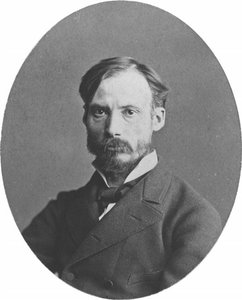
9. Pierre-Auguste Renoir 1841–1919
1841–1919 Born in Limoges, France Impressionism 2 originals at the Museum Folkwang
Born on February 25, 1841, in Limoges, France, Pierre-Auguste Renoir entered a world of practical craftsmanship. In 1845, the family moved to Paris, seeking the opportunities offered by the capital. When the family moved to Paris in 1845, the necessity of supporting his kin dictated the direction of his youth. By the third exhibition in 1877, his commitment to this new way of seeing was evident as he presented twenty-one paintings to the public.
Originals at the Museum Folkwang
-

Surrealism
10. Max Ernst 1891–1976
1891–1976 Born in Brühl, Germany Surrealism 2 originals at the Museum Folkwang
Max Ernst entered the world on April 2, 1891, in Brühl, Germany. By 1909, while he was a student at the University of Bonn, Max Ernst began to paint. In his own autobiography, he wrote of this internal death with startling clarity, stating that Max Ernst died on the 1st of August, 1914. By 1922, the restless energy that had fueled his Dadaist years found a new home when Ernst moved to France.
Originals at the Museum Folkwang


The masters, continued
No. 11 to No. 25: more masters of the Museum Folkwang
-

11. Franz Marc
Expressionism
1880–1916 · born in Kreuzstraße, Germany · 7 originals at the Museum Folkwang
German Expressionist known for symbolic animals and a spiritual use of color, using blue for masculinity and yellow for feminine joy.
-

12. Honoré Daumier
Realism
1808–1879 · born in Marseille, France · 2 originals at the Museum Folkwang
French Realist known for biting political lithographs and empathetic scenes of Parisian life, from the third-class carriage to Don Quixote.
-

13. Paul Signac
Neo-Impressionism
1863–1935 · born in Paris, France · 3 originals at the Museum Folkwang
French Neo-Impressionist known for luminous seascapes and rhythmic Pointillist dots that blend color through the viewer's eye.
-

14. Ernst Ludwig Kirchner
Expressionism
1880–1938 · born in Aschaffenburg, Germany · 13 originals at the Museum Folkwang
German Expressionist known for jagged forms, vibrant colors, and frantic urban street scenes, often rendered with bold, visible brushstrokes.
-
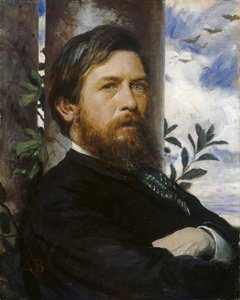
15. Arnold Böcklin
Symbolism
1827–1901 · born in Basel, Switzerland · 3 originals at the Museum Folkwang
Swiss Symbolist of haunting mythological realms and the silent, spectral Isle of the Dead, rendered with expressive impasto and deep shadows.
-

French Orphism pioneer known for vibrant geometric shapes and simultaneous color contrasts that deconstruct the Eiffel Tower into light.
-

17. Otto Dix
New Objectivity
1891–1969 · born in Untermhaus, Germany · 2 originals at the Museum Folkwang
German Neue Sachlichkeit painter of gritty urban life and brutal war scenes, rendered with surgical precision in oil and sharp etchings.
-

18. Max Beckmann
Expressionism
1884–1950 · born in Leipzig, Germany · 4 originals at the Museum Folkwang
German Expressionist known for crowded, claustrophobic compositions and heavy impasto textures that capture the tension of a changing era.
-

19. Adolph von Menzel
Realism
1815–1905 · born in Wrocław, Poland · 2 originals at the Museum Folkwang
German Realist known for meticulous detail in historical scenes and gritty industrial landscapes like the Iron Rolling Mill.
- German Treppenflur bei Nachtbeleuchtung (1848)
- Travel plans (1875)
-

20. Paula Modersohn-Becker
Expressionism
1876–1907 · born in Dresden, Germany · 2 originals at the Museum Folkwang
German Expressionist pioneer known for daring self-portraits and intimate depictions of motherhood, using bold forms and symbolic color.
-
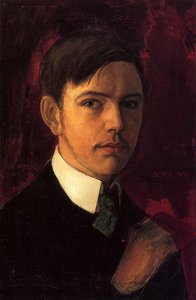
21. August Macke
Expressionism
1887–1914 · born in Meschede, Germany · 2 originals at the Museum Folkwang
-

22. Lovis Corinth
Expressionism
1858–1925 · born in Gvardeysk, Russia · 5 originals at the Museum Folkwang
German painter bridging Impressionism and Expressionism through bold portraits and raw landscapes, often characterized by vibrant, gestural brushwork.
-

23. Max Pechstein
Expressionism
1881–1955 · born in Zwickau, Germany · 2 originals at the Museum Folkwang
German Expressionist and Die Brücke member known for vibrant colors, rhythmic dancers, and bold woodcuts that capture the pulse of life.
-

24. Otto Mueller
Expressionism
1874–1930 · born in Lubawka, Poland · 4 originals at the Museum Folkwang
German Expressionist known for lyrical nudes and Romani subjects, using distemper on coarse canvas to create harmonious, simplified forms.
- Two Nudes in the Thicket (1915)
- Badende (1914)
- Family of Gypsies (1915)
-

25. Fritz von Uhde
Impressionism
1848–1911 · born in Wolkenburg, Germany · 3 originals at the Museum Folkwang
German Impressionist and realist who brought plein-air light to religious scenes and the everyday lives of peasants and fishermen.
- The lesson (1899)
Famous artists in the Museum Folkwang, No. 26 to 31
 Christian Rohlfs1849–1938 · 4 originals at the Museum Folkwang
 Otto Heinrich Steinert1915–1978 · 2 originals at the Museum Folkwang
 George Minne1866–1941 · 5 originals at the Museum Folkwang
 Wols1913–1951 · 2 originals at the Museum Folkwang
 Israel Schmuklerski1871–1956 · 2 originals at the Museum Folkwang
 Max Burchartz1887–1961 · 2 originals at the Museum Folkwang
The house in figures
The masters of the Museum Folkwang, in figures
The masters with the most originals at the Museum Folkwang
Masters with two originals or more, by century of birth
Masters with two originals or more, by country of birth
Masters with two originals or more, by movement
Women masters
The women whose originals hang in the Museum Folkwang
1 women masters, 2 originals, in our catalogue of the Museum Folkwang.
-
Paula Modersohn-Becker
1876–1907 · born in Dresden, Germany · 2 originals at the Museum Folkwang
Asked of us
Questions on the masters of the Museum Folkwang
Open a question to read the answer.
Which artist in the Museum Folkwang is the most famous?
Vincent van Gogh (1853–1890): our catalogue holds 11 works by Vincent van Gogh at the Museum Folkwang, among them Wheat Field behind Saint-Paul Hospital with a Reaper, Portrait of Armand Roulin and Portrait d. Claude Monet and Paul Cézanne follow.
Which Vincent van Gogh works are in the Museum Folkwang?
11 works by Vincent van Gogh at the Museum Folkwang are in our catalogue: Wheat Field behind Saint-Paul Hospital with a Reaper (1889), Portrait of Armand Roulin (1888), Portrait d and Sand Barges (1888) among them.
How many Claude Monet paintings are in the Museum Folkwang?
3 works by Claude Monet at the Museum Folkwang are in our catalogue: The Water-Lily Pond (1916), Le bassin aux nymphéas (The Water-Lily Pond) and Rouen Cathedral (1893) among them.
Which Paul Cézanne works are in the Museum Folkwang?
2 works by Paul Cézanne at the Museum Folkwang are in our catalogue: La carrière de Bibémus (The Quarry at Bibémus) and Maison de Bellevue et pigeonnier (House and Dovecote at Bellevue) among them.
Which famous artists are displayed in the Museum Folkwang?
The ten best-known artists with works in the Museum Folkwang are Vincent van Gogh (11), Claude Monet (3), Paul Cézanne (2), Wassily Kandinsky (2), Edvard Munch (3), Paul Gauguin (7), Piet Mondrian (2), Caspar David Friedrich (4), Pierre-Auguste Renoir (2) and Max Ernst (2).
Who has the most paintings in the collection of the Museum Folkwang?
Our catalogue holds 13 works by Ernst Ludwig Kirchner at the Museum Folkwang; next come Vincent van Gogh (11), Paul Gauguin (7) and Franz Marc (7).
Are there Leonardo da Vinci works in the Museum Folkwang?
Our catalogue lists no work by Leonardo da Vinci at the Museum Folkwang.
Are there Pablo Picasso works in the Museum Folkwang?
Our catalogue lists no work by Pablo Picasso at the Museum Folkwang.
How many women artists are in the Museum Folkwang?
1 women artists have works of the Museum Folkwang in our catalogue, among them Paula Modersohn-Becker (2).
Which countries are the painters of the Museum Folkwang from?
Counting the artists with two works or more, the Museum Folkwang holds painters born mostly in Germany (14), France (8), Netherlands (2), Russia (2) and Poland (2).
Who is the earliest artist in the Museum Folkwang?
The 19th century leads with 28 artists born then. In this ranking, Caspar David Friedrich (1774–1840) is the earliest born and Max Ernst (1891–1976) the latest.
How many artists have works in the Museum Folkwang?
Our catalogue lists 83 artists with at least one work at the Museum Folkwang, 31 of them with two or more, born between 1774 and 1915 in 7 countries.
The house
The Museum Folkwang, Essen, in a few lines
Origins and History of Museum Folkwang
The history of Museum Folkwang begins with the convergence of two distinct legacies. In 1902, Karl Ernst Osthaus established the private Folkwang Museum, a collection driven by a specific vision for modern expression. This was later joined by the Essener Kunstmuseum, which had been founded in 1906. The two entities merged in 1922, forming the institution that exists today in Essen, Germany. This union created a major collection focused on the developments of 19th-and 20th-century art. The name itself carries a weight of ancient meaning. It draws from the concept of Fólkvangr, the meadow of the dead in Norse mythology, which is presided over by the goddess Freyja. This connection to themes of life and remembrance provides a quiet backdrop to the works held within the institution. The museum has long functioned as a space where the evolution of modern art is observed through its physical presence. By bringing together the Essener Kunstmuseum and the Folkwang Museum, the site became a central point for the study of artistic shifts.
The Building and its Architecture
The architectural presence of Museum Folkwang is defined by a dialogue between eras. The original structure, constructed in 1902, provides a historical foundation for the institution. This older building has been thoughtfully expanded through a significant extension designed by David Chipperfield Architects. This addition, which opened in January 2010, added 16,000 square metres to the existing museum footprint. The extension is characterized by a translucent façade constructed from recycled glass slabs. This material choice allows the building to interact with the shifting natural light of Essen, Germany. The design creates a sense of openness, integrating the modern volume with the historic architecture. The interplay of concrete and glass ensures that the new spaces feel connected to the original site while providing the necessary scale for contemporary exhibition needs.
The famous originals of the Museum FolkwangThe Museum Folkwang: the full page, 227 originalsThe museums of Essen
How the masters of the originals are ranked
The masters with two originals or more of the Museum Folkwang in our catalogue are ranked by fame: the Wikipedia language editions that describe them, the visits to their OriginalUniqueArt.com page and our studio's ranking. Originals are counted in our catalogue — one entry per work, without details, studies or copies — not in the museum's inventory. Every date, birthplace and movement is the catalogue's; the notes are drawn from the master's biography.
Go on