
The most famous artists with works in the Museum Barberini are Claude Monet, Pierre-Auguste Renoir, Camille Pissarro and Alfred Sisley.
Our catalogue lists 93 works of the Museum Barberini by 18 artists; the 10 best known are ranked below, each with the works the museum holds.
The masters of the originals
The 10 masters whose originals hang in the Museum Barberini
For each master: where and when they were born, their movement, how many originals the museum keeps in our catalogue, a note from their life, and the originals to see.
-
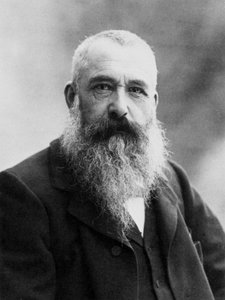
Impressionism
1. Claude Monet 1840–1926
1840–1926 Born in Paris, France Impressionism 36 originals at the Museum Barberini
Born in Paris, France, on 14 November 1840, Claude Monet entered a world of diverging expectations. Tragedy arrived in January 1857, when Monet was sixteen years old. In 1883, Monet moved to a house and property in Giverny, a village northwest of Paris. In 1892, he married Alice Hoschedé, a union that provided a sense of stability as he continued his obsessive study of light and atmosphere.
Originals at the Museum Barberini
-
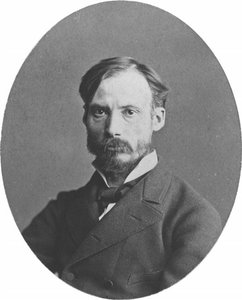
Impressionism
2. Pierre-Auguste Renoir 1841–1919
1841–1919 Born in Limoges, France Impressionism 6 originals at the Museum Barberini
Born on February 25, 1841, in Limoges, France, Pierre-Auguste Renoir entered a world of practical craftsmanship. In 1845, the family moved to Paris, seeking the opportunities offered by the capital. When the family moved to Paris in 1845, the necessity of supporting his kin dictated the direction of his youth. By the third exhibition in 1877, his commitment to this new way of seeing was evident as he presented twenty-one paintings to the public.
Originals at the Museum Barberini
-

Impressionism
3. Camille Pissarro 1830–1903
1830–1903 Born in Charlotte Amalie, United States Virgin Islands Impressionism 6 originals at the Museum Barberini
By 1861, he is a registered copyist in the Musée du Louvre, working among the shadows of the masters he seeks to emulate. The Impressionist movement is often viewed as a collection of fractured, competing egos, but Pissarro provides the glue.
Originals at the Museum Barberini
-

Impressionism
4. Alfred Sisley 1839–1899
1839–1899 Born in former 4th arrondissement of Paris, France Impressionism 12 originals at the Museum Barberini
Alfred Sisley was born in Paris on October 30, 1839. The path laid out for him was not originally one of brushes and canvas. Moret-sur-Loing became a central part of Sisley's life, a place where he spent many years finding his footing. The river was a constant presence in his work, offering a quiet subject that allowed him to study the way light moved across the surface of the water.
Originals at the Museum Barberini
-

Neo-Impressionism
5. Paul Signac 1863–1935
1863–1935 Born in Paris, France Neo-Impressionism 4 originals at the Museum Barberini
Born in Paris on 11 November 1863, Paul Signac entered a world that was beginning to shift under the weight of new visual ideas. The seeds of Signac's transformation were sown during a visit to an exhibition in 1880, where the works of Claude Monet left a lasting impression upon him. The two men found a shared language in the light of the French landscape, and by 1887, they began to frequent Asnières-sur-Seine together.
Originals at the Museum Barberini
-

Impressionism
6. Gustave Caillebotte 1848–1894
1848–1894 Born in Paris, France Impressionism 6 originals at the Museum Barberini
Gustave Caillebotte was born on 19 August 1848 in Paris, France, into an upper-class family that provided the financial stability necessary to pursue a career outside of traditional commerce. In 1873, he entered the École des Beaux-Arts, further cementing his technical grounding in the formal traditions of the era. Caillebotte acted as a significant patron to many of his fellow Impressionists, using his resources to support artists who were frequently rejected by the official Salon.
Originals at the Museum Barberini
-

Impressionism
7. Eugène Louis Boudin 1824–1898
1824–1898 Born in Honfleur, France Impressionism 6 originals at the Museum Barberini
Born on 12 July 1824 in the port town of Honfleur, Normandy, France, Eugène Louis Boudin was a child of the sea. By the age of ten, the boy was already working aboard a steamboat that traveled the waters between Le Havre and Honfleur. In 1835, the family moved to Le Havre, where his father opened a shop that sold stationery and picture frames.
Originals at the Museum Barberini
-

Fauvism
8. Raoul Dufy 1877–1953
1877–1953 Born in Le Havre, France Fauvism 3 originals at the Museum Barberini
Raoul Dufy, born in the port city of Le Havre, Normandy, in 1877, was an artist whose name became synonymous with joy, vibrancy, and a distinctly French joie de vivre. Initial explorations led him through Cubism, but it was Henri Matisse’s groundbreaking Luxe, Calme et Volupté at the 1905 Salon des Indépendants that proved truly transformative. Dufy was renowned for his use of bright, saturated colors, often applied in thin washes.
Originals at the Museum Barberini
-

Impressionism
9. Armand Guillaumin 1841–1927
1841–1927 Born in Paris, France Impressionism 2 originals at the Museum Barberini
Born Jean-Baptiste Armand Guillaumin on February 16, 1841, in Paris, the man who would become known as Ferdinand Guillaumin spent his early years balancing labor with a quiet interest in drawing. Before he could commit himself to the canvas, he worked in his uncle's lingerie shop. In 1861, he moved toward more serious study at the Académie Suisse.
Originals at the Museum Barberini
-

Neo-Impressionism
10. Henri Edmond Cross 1856–1910
1856–1910 Born in Douai, France Neo-Impressionism 4 originals at the Museum Barberini
Henri Edmond Cross, born Henri-Edmond-Joseph Delacroix in 1856 in the northern French town of Douai, was an artist whose life and work were inextricably linked to a pursuit of light, color, and a harmonious vision of existence.
Originals at the Museum Barberini


The house in figures
The masters of the Museum Barberini, in figures
The masters with the most originals at the Museum Barberini
Masters with two originals or more, by century of birth
Masters with two originals or more, by country of birth
Masters with two originals or more, by movement
Women masters
The women whose originals hang in the Museum Barberini
1 women masters, 1 originals, in our catalogue of the Museum Barberini.
-

Berthe Morisot
1841–1895 · born in Bourges, France · 1 originals at the Museum Barberini
- The Thames (1875)
Asked of us
Questions on the masters of the Museum Barberini
Open a question to read the answer.
Who is the most famous artist in the Museum Barberini?
Claude Monet (1840–1926): our catalogue holds 36 works by Claude Monet at the Museum Barberini, among them Monet's Garden at Vetheuil, Landscape on the Ile Saint-Martin and The Port at Zaandam. Pierre-Auguste Renoir and Camille Pissarro follow.
How many Claude Monet paintings are in the Museum Barberini?
36 works by Claude Monet at the Museum Barberini are in our catalogue: Monet's Garden at Vetheuil (1881), Landscape on the Ile Saint-Martin (1881), The Port at Zaandam (1871) and Water Lilies (1917) among them.
Which Pierre-Auguste Renoir works are in the Museum Barberini?
6 works by Pierre-Auguste Renoir at the Museum Barberini are in our catalogue: Path through the Woods (1874), Shaded Path (1872), Pomegranates (1913) and Road to Berneval (1880) among them.
What did Camille Pissarro paint that hangs in the Museum Barberini?
6 works by Camille Pissarro at the Museum Barberini are in our catalogue: Hoar-Frost, Peasant Girl Making a Fire (1888), Boulevard Montmartre, Sunset (1897), The Hills at Le Chou, Pontoise (1882) and Garden and Henhouse at Octave Mirbeau's, Les Damps (1892) among them.
Which famous artists are displayed in the Museum Barberini?
The ten best-known artists with works in the Museum Barberini are Claude Monet (36), Pierre-Auguste Renoir (6), Camille Pissarro (6), Alfred Sisley (12), Paul Signac (4), Gustave Caillebotte (6), Eugène Louis Boudin (6), Raoul Dufy (3), Armand Guillaumin (2) and Henri Edmond Cross (4).
Which artist has the most works in the Museum Barberini?
Our catalogue holds 36 works by Claude Monet at the Museum Barberini; next come Alfred Sisley (12), Pierre-Auguste Renoir (6) and Camille Pissarro (6).
Is Leonardo da Vinci in the Museum Barberini?
No: the Museum Barberini holds no work by Leonardo da Vinci in our catalogue.
Are there Pablo Picasso works in the Museum Barberini?
No: the Museum Barberini holds no work by Pablo Picasso in our catalogue.
Which women artists are in the Museum Barberini?
1 women artists have works of the Museum Barberini in our catalogue, among them Berthe Morisot (1).
Which countries are the painters of the Museum Barberini from?
By country of birth, the artists with two works or more at the Museum Barberini are mostly from France (9) and United States Virgin Islands (1).
Which centuries do the painters of the Museum Barberini belong to?
The 19th century leads with 10 artists born then. In this ranking, Eugène Louis Boudin (1824–1898) is the earliest born and Raoul Dufy (1877–1953) the latest.
How many painters are represented in the Museum Barberini?
18 artists have at least one work of the Museum Barberini in our catalogue; 10 have two or more. They were born between 1824 and 1877, in 2 countries.
The house
The Museum Barberini, Potsdam, in a few lines
The History and Origins of Museum Barberini
Located in the historic center of Potsdam, Germany, at the Alter Markt, Museum Barberini occupies a site with a complex lineage. The original palace was constructed between 1771 and 1772 under the direction of Frederick the Great. This structure once defined the urban fabric of the city before the devastation of the mid-twentieth century. In April 1945, an Allied air attack destroyed the building, leaving only ruins that were eventually demolished in 1948. The presence of the museum today is the result of a significant reconstruction effort. Between 2013 and 2016, the site was rebuilt, leading to the official opening of the museum in 2017. This revival was initiated by Hasso Plattner, the founder of the German software company SAP and a patron of the arts, who sought to return a cultural anchor to the Potsdam city center.
The Architecture of the Reconstructed Palace
The museum occupies the reconstructed Palais Barberini, a structure that seeks to restore the historic presence of Potsdam's Alter Markt. The original palace, designed by architects Georg Christian Unger and Carl von Gontard, was modeled after the Palazzo Barberini in Rome. This architectural lineage connects the Prussian landscape to the Italian Baroque tradition. After the building was destroyed in 1945 and subsequently demolished, the site remained vacant until the recent reconstruction. The main façade was rebuilt true to the original design, maintaining the visual continuity of the square. The reconstruction transformed the building's internal volume, turning five floors into three to create expansive, light-filled environments. The museum comprises 17 halls spread across 2,200 square metres. These spaces provide a structured setting for the works within, where the Italian grandeur of the original concept meets modern architectural precision.
The famous originals of the Museum BarberiniThe Museum Barberini: the full page, 95 originalsThe museums of Potsdam
How the masters of the originals are ranked
The masters with two originals or more of the Museum Barberini in our catalogue are ranked by fame: the Wikipedia language editions that describe them, the visits to their OriginalUniqueArt.com page and our studio's ranking. Originals are counted in our catalogue — one entry per work, without details, studies or copies — not in the museum's inventory. Every date, birthplace and movement is the catalogue's; the notes are drawn from the master's biography.
Go on