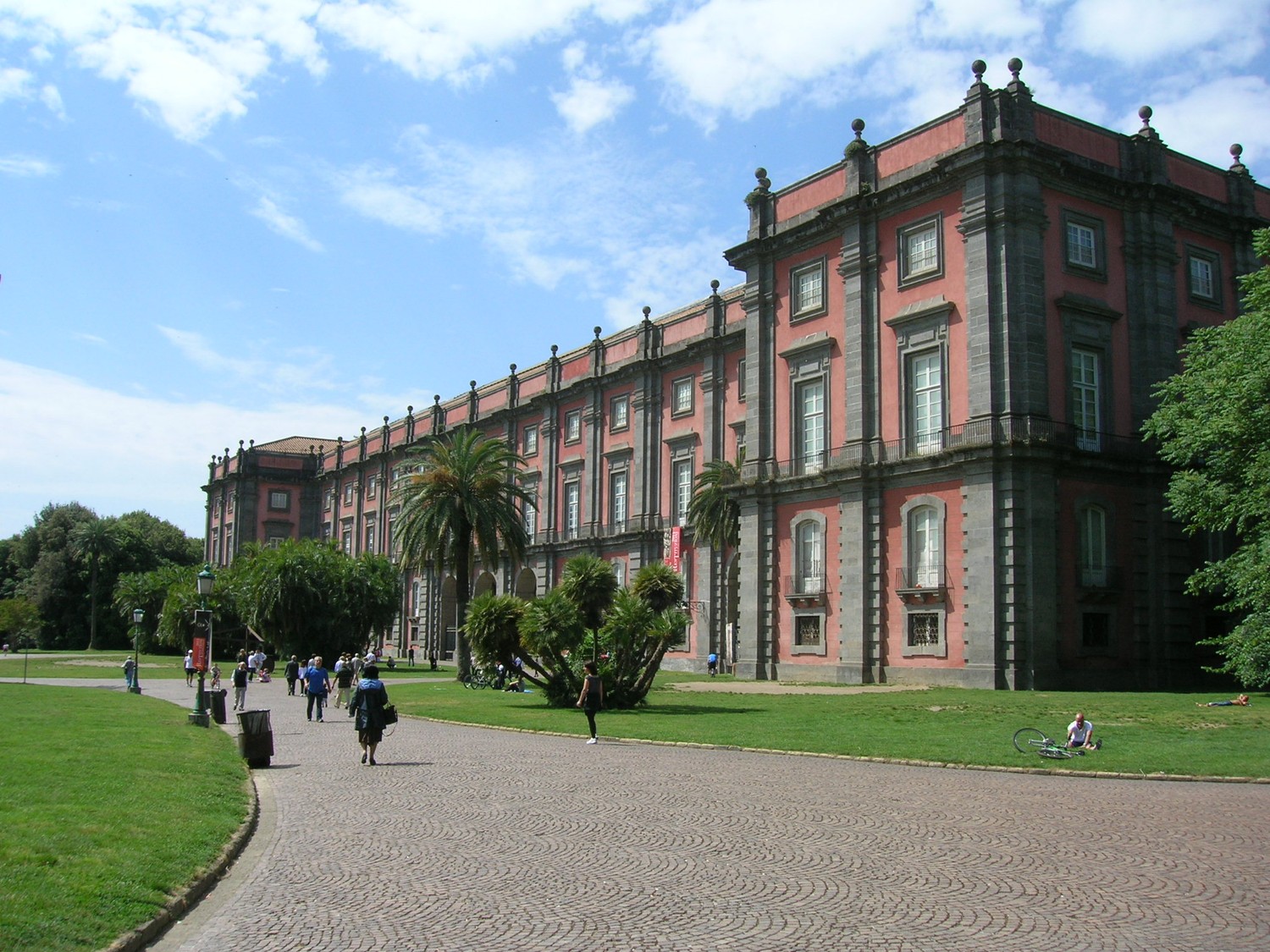
The most famous artists with works in the Museo di Capodimonte are Caravaggio, Raphael, El Greco and Titian.
Our catalogue lists 282 works of the Museo di Capodimonte by 134 artists; the 25 best known are ranked below, each with the works the museum holds.
The masters of the originals
The 10 masters whose originals hang in the Museo di Capodimonte
For each master: where and when they were born, their movement, how many originals the museum keeps in our catalogue, a note from their life, and the originals to see.
-

Baroque
1. Caravaggio 1571–1610
1571–1610 Born in Milan, Italy Baroque 4 originals at the Museo di Capodimonte
Italian Baroque painter of dramatic tenebrism, using violent light and shadow to capture the grit of laborers and outcasts in Rome. The momentum of his life is a series of frantic movements.
Originals at the Museo di Capodimonte
-

High Renaissance
2. Raphael 1483–1520
1483–1520 Born in Urbino, Italy High Renaissance 3 originals at the Museo di Capodimonte
Upon his arrival in Florence in 1504, the young painter entered a city defined by the presence of giants. Between 1504 and 1507, he produced a series of Madonnas that demonstrated a growing mastery of composition and emotional clarity. Following the death of Donato Bramante in 1514, he was appointed architect in charge of St. Peter's, a position that reflected the immense trust placed in his ability to organize and execute complex, large-scale projects.
Originals at the Museo di Capodimonte
-

Mannerism
3. El Greco 1541–1614
1541–1614 Born in Heraklion, Greece Mannerism 5 originals at the Museo di Capodimonte
Doménikos Theotokópoulos, known to history as El Greco, began his life in 1541 on the island of Crete. At that time, the island was a Venetian possession, a fact that would later allow him to bridge the gap between Eastern and Western traditions. By the age of twenty-six, he moved to Venice, seeking to expand his understanding of the natural world.
Originals at the Museo di Capodimonte
-

High Renaissance
4. Titian 1490–1576
1490–1576 Born in Pieve di Cadore, Italy High Renaissance 20 originals at the Museo di Capodimonte
In the rugged, mountainous reaches of Pieve di Cadore, a boy named Tiziano Vecellio began a life that would eventually reshape the very language of oil on canvas. Born around 1490, he was the son of Gregorio Vecellio, a man of the military, and a woman named Lucia.
Originals at the Museo di Capodimonte
-

Baroque
5. Artemisia Gentileschi 1593–1653
1593–1653 Born in Rome, Italy Baroque 7 originals at the Museo di Capodimonte
Artemisia Gentileschi arrived in Rome in 1593, born into a household where the visual arts were the primary language. In the atmosphere of her father's workshop, she received an education that was both practical and rigorous. By the age of 15, Artemisia Gentileschi was already producing professional work, demonstrating a technical maturity that surpassed many of her contemporaries.
Originals at the Museo di Capodimonte
-

Northern Renaissance
6. Pieter Brueghel the Elder 1525–1569
1525–1569 Born in Breda, Netherlands Northern Renaissance 4 originals at the Museo di Capodimonte
He was born in or near Breda, likely within the Duchy of Brabant, sometime between 1525 and 1530. By the time he completed his apprenticeship around 1550, the young man had gained the skill necessary to claim his own place among the professionals. Between 1551 and 1552, he was admitted as a free master into the Guild of Saint Luke in Antwerp.
Originals at the Museo di Capodimonte
-

Renaissance
7. Andrea Mantegna 1431–1506
1431–1506 Born in Isola Mantegna, Italy Renaissance 3 originals at the Museo di Capodimonte
Born near Padua around 1431, Andrea Mantegna entered the world of art through a complex and somewhat contentious apprenticeship. By the age of seventeen, Mantegna had established his own independent workshop in Padua, signaling a decisive shift toward professional autonomy. The young artist’s professional ascent began in earnest with his first significant commission in 1448. The trajectory of Mantegna’s life shifted permanently when he moved to Mantua in 1460.
Originals at the Museo di Capodimonte
-

Neoclassicism
8. Élisabeth Louise Vigée Le Brun 1755–1842
1755–1842 Born in Paris, France Neoclassicism 4 originals at the Museo di Capodimonte
French Rococo portraitist famed for capturing the grace of Marie Antoinette and the elite nobility in soft, luminous oil and pastel tones. The household is one of art and observation.
Originals at the Museo di Capodimonte
-

International Gothic
9. Simone Martini 1284–1344
1284–1344 Born in Siena, Italy International Gothic 4 originals at the Museo di Capodimonte
Born in Siena, Italy, around 1284, Simone Martini lived a life that mirrored the shifting tides of his era. Born in Siena, Italy, around 1284, Simone Martini grew up in a city where art was the language of both faith and civic pride. By 1315, Simone Martini was already making his mark on the civic life of Siena.
Originals at the Museo di Capodimonte
-
Renaissance
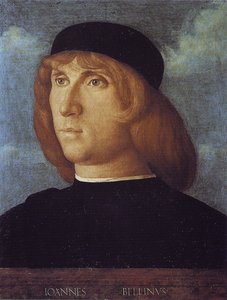
10. Giovanni Bellini 1430–1516
1430–1516 Born in Venice, Italy Renaissance 4 originals at the Museo di Capodimonte
In the winding streets of Venice, a city defined by its waters and its light, Giovanni Bellini began his life around 1430. While many know the name Bellini, it was Giovanni who likely achieved the greatest fame among his kin, carving out a presence that would define the Venetian Renaissance.
Originals at the Museo di Capodimonte


The masters, continued
No. 11 to No. 25: more masters of the Museo di Capodimonte
-

11. Sofonisba Anguissola
Renaissance
1532–1625 · born in Cremona, Italy · 2 originals at the Museo di Capodimonte
Italian Renaissance painter known for intimate family portraits and psychological depth, once serving as a lady-in-waiting to the Spanish court.
-

Italian Baroque classicist of graceful mythological scenes and luminous religious subjects, known for an idealized and serene beauty.
- The Four Seasons (1617)
- Atalanta and Hippomenes (1622)
-

13. Antonio da Correggio
High Renaissance
1489–1534 · born in Correggio, Italy · 4 originals at the Museo di Capodimonte
Italian High Renaissance painter of sensuous mythological figures and dramatic chiaroscuro, known for illusionistic foreshortening in his frescoes.
-

14. Parmigianino
Mannerism
1503–1540 · born in Parma, Italy · 5 originals at the Museo di Capodimonte
Italian Mannerist known for elegant, elongated figures and a refined, graceful sensuality, seen in his Madonna with the Long Neck.
- Lucrezia (1539)
- Portrait of a Young Lady (1535)
- Portrait of a Young Woman called ‘Antea’ (1530)
-
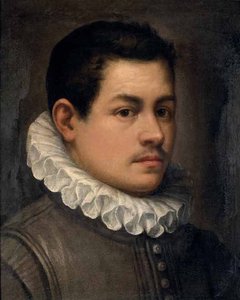
15. Annibale Carracci
Baroque
1560–1609 · born in Bologna, Italy · 15 originals at the Museo di Capodimonte
Italian Baroque painter who blended Florentine draftsmanship with Venetian color in grand mythological frescoes for the Palazzo Farnese.
- The Choice of Heracles
- Pietà (1599)
- Hercules at the Crossroads (1596)
-

16. Giorgio Vasari
Mannerism
1511–1574 · born in Arezzo, Italy · 2 originals at the Museo di Capodimonte
Italian Mannerist painter and architect known for dynamic compositions, grand frescoes, and the famous Vasari Corridor in Florence.
- Allegory of Justice (1543)
- The Resurrection (1545)
-

17. Jusepe de Ribera
Baroque
1591–1652 · born in Xàtiva, Spain · 6 originals at the Museo di Capodimonte
Spanish Baroque painter of intense tenebrism and raw realism, famed for dramatic martyrdoms and portraits of humble beggars.
- St. Jerome and the Angel (1626)
- Drunken Silenus (1626)
- Apollo and Marsyas (1637)
-

18. Lorenzo Lotto
High Renaissance
1480–1556 · born in Venice, Italy · 3 originals at the Museo di Capodimonte
Venetian Renaissance painter of psychological portraits and luminous religious scenes, known for his vibrant colors and eccentric compositions.
-
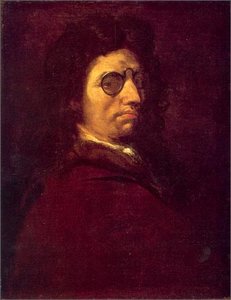
19. Luca Giordano
Baroque
1634–1705 · born in Naples, Italy · 9 originals at the Museo di Capodimonte
Italian Baroque painter known as Luca fa presto for his rapid, luminous frescoes and dynamic, colorful mythological and religious scenes.
- The Alms of St. Thomas of Villanova (1658)
- Apollo and Marsyas (1657)
- Perseus and Medusa (1660)
-

20. Sebastiano del Piombo
Mannerism
1485–1547 · born in Venice, Italy · 5 originals at the Museo di Capodimonte
Venetian-trained Renaissance painter who fused rich colorism with the monumental, sculptural forms of the Roman school in oil and fresco.
- Portrait of Clement VII with beard (1529)
- Pope Clement VII (1526)
- Portrait of Clement VII (1527)
-

21. Agostino Carracci
Baroque
1557–1602 · born in Bologna, Italy · 2 originals at the Museo di Capodimonte
Italian Baroque painter and engraver who blended classical ideals with naturalism in works like The Last Communion of St Jerome.
-

22. Giovanni Lanfranco
Baroque
1582–1647 · born in Parma, Italy · 3 originals at the Museo di Capodimonte
Italian Baroque painter known for theatrical ceiling frescoes and illusionistic perspective, including the Assumption of the Virgin in Rome.
- Christ Served by Angels (1616)
- Mary Magdalen Raised by Angels (1616)
-

23. Francesco Solimena
Baroque
1657–1747 · born in Serino, Italy · 2 originals at the Museo di Capodimonte
Neapolitan Baroque painter of dramatic chiaroscuro, sweeping diagonals, and grand mythological scenes with rich, flowing drapery.
-

24. Giovanni Paolo Panini
Baroque
1691–1765 · born in Piacenza, Italy · 2 originals at the Museo di Capodimonte
Italian Baroque vedutista of dramatic Roman ruins and architectural capriccios, known for precise perspective and the Panini Projection.
-

25. Giovanni Boldini
Impressionism
1842–1931 · born in Ferrara, Italy · 2 originals at the Museo di Capodimonte
Italian Belle Époque portraitist known for kinetic, swishing brushwork and elegant movement, capturing the essence of Parisian high society.
Famous artists in the Museo di Capodimonte, No. 26 to 48
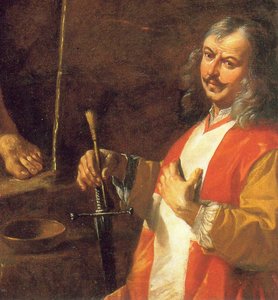 Mattia Preti1613–1699 · 7 originals at the Museo di Capodimonte
 Joos van Cleve1485–1540 · 3 originals at the Museo di Capodimonte
 Joachim Beuckelaer1533–1573 · 2 originals at the Museo di Capodimonte
 Jacopo de Barbari1460–1516 · 2 originals at the Museo di Capodimonte
 Jacob Philipp Hackert1737–1807 · 2 originals at the Museo di Capodimonte
 Vincenzo Camuccini1771–1844 · 4 originals at the Museo di Capodimonte
 Battistello Caracciolo1578–1635 · 4 originals at the Museo di Capodimonte
 Polidoro da Caravaggio1499–1543 · 5 originals at the Museo di Capodimonte
 Giuseppe Recco1634–1695 · 2 originals at the Museo di Capodimonte
 Niccolò Antonio Colantonio1420–1461 · 2 originals at the Museo di Capodimonte
 Andrea Vanni1332–1414 · 2 originals at the Museo di Capodimonte
 Antonio Joli1700–1777 · 2 originals at the Museo di Capodimonte
 Bernardo Cavallino1616–1656 · 2 originals at the Museo di Capodimonte
 Fabrizio Santafede1560–1634 · 2 originals at the Museo di Capodimonte
 Andrea Sabbatini1487–1530 · 2 originals at the Museo di Capodimonte
 Tommaso di Cristoforo Fini2 originals at the Museo di Capodimonte
 Giacinto Gigante1806–1876 · 12 originals at the Museo di Capodimonte
 Alexandre-Jean Dubois-Drahonet1790–1834 · 2 originals at the Museo di Capodimonte
 Gregorio Guglielmi1714–1773 · 2 originals at the Museo di Capodimonte
 Andrea Meldolla2 originals at the Museo di Capodimonte
 Francesco Liani1712–1770 · 3 originals at the Museo di Capodimonte
 Gennaro Maldarelli3 originals at the Museo di Capodimonte
 Consalvo Carelli1818–1900 · 4 originals at the Museo di Capodimonte
The house in figures
The masters of the Museo di Capodimonte, in figures
The masters with the most originals at the Museo di Capodimonte
Masters with two originals or more, by century of birth
Masters with two originals or more, by country of birth
Masters with two originals or more, by movement
Women masters
The women whose originals hang in the Museo di Capodimonte
5 women masters, 15 originals, in our catalogue of the Museo di Capodimonte.
-
Artemisia Gentileschi
1593–1653 · born in Rome, Italy · 7 originals at the Museo di Capodimonte
- Judith Slaying Holofernes (1613)
- Judith Beheading Holofernes (1611)
- Samson and Delilah (1638)
-
Élisabeth Louise Vigée Le Brun
1755–1842 · born in Paris, France · 4 originals at the Museo di Capodimonte
-
Sofonisba Anguissola
1532–1625 · born in Cremona, Italy · 2 originals at the Museo di Capodimonte
-

Angelica Kauffmann
1741–1807 · born in Chur, Switzerland · 1 originals at the Museo di Capodimonte
-

Lavinia Fontana
1552–1614 · born in Bologna, Italy · 1 originals at the Museo di Capodimonte
Asked of us
Questions on the masters of the Museo di Capodimonte
Open a question to read the answer.
Which artist in the Museo di Capodimonte is the most famous?
Caravaggio (1571–1610): our catalogue holds 4 works by Caravaggio at the Museo di Capodimonte, among them The Flagellation of Christ, Flagellation and Martyrdom of St. Ursula. Raphael and El Greco follow.
How many Caravaggio paintings are in the Museo di Capodimonte?
Our catalogue lists 4 works by Caravaggio at the Museo di Capodimonte, among them The Flagellation of Christ (1607), Flagellation (1607) and Martyrdom of St. Ursula (1610).
What did Raphael paint that hangs in the Museo di Capodimonte?
Our catalogue lists 3 works by Raphael at the Museo di Capodimonte, among them Portrait of Cardinal Alessandro Farnese (1509), The Madonna of the Divine Love (1516) and God the Father and the Virgin Mary (1500).
What did El Greco paint that hangs in the Museo di Capodimonte?
Our catalogue lists 5 works by El Greco at the Museo di Capodimonte, among them A Boy Blowing on an Ember to Light a Candle (Soplón) (1570), Giulio Clovio (1571), Boy Blowing an Ember (1570) and Portrait of Giulio Clovio (1571).
Who are the top 10 artists in the Museo di Capodimonte?
The ten best-known artists with works in the Museo di Capodimonte are Caravaggio (4), Raphael (3), El Greco (5), Titian (20), Artemisia Gentileschi (7), Pieter Brueghel the Elder (4), Andrea Mantegna (3), Élisabeth Louise Vigée Le Brun (4), Simone Martini (4) and Giovanni Bellini (4).
Who has the most paintings in the collection of the Museo di Capodimonte?
Our catalogue holds 20 works by Titian at the Museo di Capodimonte; next come Annibale Carracci (15), Giacinto Gigante (12) and Luca Giordano (9).
Is Leonardo da Vinci in the Museo di Capodimonte?
Our catalogue lists no work by Leonardo da Vinci at the Museo di Capodimonte.
Are there Pablo Picasso works in the Museo di Capodimonte?
Our catalogue lists no work by Pablo Picasso at the Museo di Capodimonte.
Are there any women painters in the Museo di Capodimonte?
5 women artists have works of the Museo di Capodimonte in our catalogue, among them Artemisia Gentileschi (7), Élisabeth Louise Vigée Le Brun (4), Sofonisba Anguissola (2), Angelica Kauffmann (1) and Lavinia Fontana (1).
Which countries are the painters of the Museo di Capodimonte from?
Counting the artists with two works or more, the Museo di Capodimonte holds painters born mostly in Italy (39), France (2), Germany (2), Greece (1) and Netherlands (1).
Who is the earliest artist in the Museo di Capodimonte?
Most of the artists with two works or more at the Museo di Capodimonte were born in the 16th century (15 artists); the earliest in this ranking is Simone Martini (1284–1344), the latest Giovanni Boldini (1842–1931).
How many artists have works in the Museo di Capodimonte?
Our catalogue lists 134 artists with at least one work at the Museo di Capodimonte, 48 of them with two or more, born between 1284 and 1842 in 8 countries.
The house
The Museo di Capodimonte, Naples, in a few lines
The History of Museo di Capodimonte
The origins of the Museo di Capodimonte lie in the early 18th century. In 1738, King Charles VII of Naples and Sicily commissioned the construction of a modest hunting lodge on the Capodimonte hill. As the scale of the royal residence grew, the purpose of the site shifted. the King required a grand palace capable of housing the extensive Farnese Collection, which he had inherited from his mother, Elisabetta Farnese. This necessity transformed a seasonal retreat into a permanent seat of royal presence. Throughout the following centuries, the palace served as a residence for various ruling powers. It was occupied by the Bourbon kings of the Two Sicilies and later by the French sovereigns Giuseppe Bonaparte and Joachim Murat. Following the unification of Italy, the House of Savoy also held the palace. These successive occupants contributed to the evolving character of the site, which transitioned from a private royal domain to a public institution. The museum was officially inaugurated in 1957.
The Architecture of the Royal Palace
The palace occupies a prominent position atop the volcanic Capodimonte hill in Naples. Its construction utilized piperno, a dark volcanic rock sourced from the nearby quarries in Pianura. The architectural language of the structure represents a deliberate synthesis of Neoclassical elegance and Baroque grandeur. The design of the façade is attributed to Giovanni Antonio Medrano and Antonio Canevari. While the project was initiated in the 18th century, the building underwent several stages of development and expansion. The final completion of the palace was reached in 1840. The resulting edifice reflects the evolving aesthetic requirements of the Bourbon court and the practical needs of a royal residence. The architectural program includes: The grand staircase designed with a distinctive C-shape The royal apartments featuring intricate stucco work The various salons and galleries housing the national collections
The famous originals of the Museo di CapodimonteThe Museo di Capodimonte: the full page, 290 originalsThe museums of Naples
How the masters of the originals are ranked
The masters with two originals or more of the Museo di Capodimonte in our catalogue are ranked by fame: the Wikipedia language editions that describe them, the visits to their OriginalUniqueArt.com page and our studio's ranking. Originals are counted in our catalogue — one entry per work, without details, studies or copies — not in the museum's inventory. Every date, birthplace and movement is the catalogue's; the notes are drawn from the master's biography.
Go on