Switch to Print
 Read More







































 For artworks or reproductions larger than 105 cm (approximately 41 inches) on any side, the frame will be shipped as a kit, disassembled. This method ensures safe delivery and prevents damage during transport.


A Crossroads of Virtue and Vice: Annibale Carracci’s “Hercules at the Crossroads”
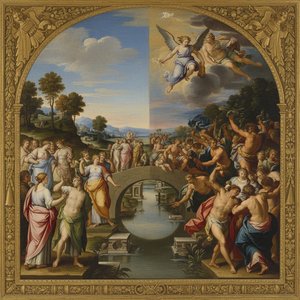
Annibale Carracci's "Hercules at the Crossroads," painted between 1596 and 1597 for the opulent Camerino room within the Farnese Palace in Rome, is more than just a depiction of a legendary hero; it’s a meticulously crafted allegory of human choice, a vibrant testament to Renaissance ideals, and a remarkably prescient foreshadowing of Baroque dynamism. This monumental oil on canvas, now housed in the Capodimonte Museum in Naples, immediately commands attention with its dramatic composition and rich palette, drawing the viewer into a pivotal moment in Hercules’s life – a moment of profound deliberation between the allure of pleasure and the demanding path of virtue.
The scene unfolds within a verdant, almost Edenic landscape, sharply divided to mirror the two opposing forces confronting the hero. To his left, a seductive vision of Pleasure beckons, an explosion of vibrant color and theatricality. Playing cards spill from hands, musical instruments overflow, and masked figures dance in a whirlwind of indulgence – a direct reference to the hedonistic pursuits that Hercules could easily abandon for immediate gratification. The terrain here is lush and inviting, a rolling meadow promising ease and fleeting joy. Conversely, on the right, Virtue stands firm and resolute, bathed in cooler tones of blue and red. She points towards a rugged, winding road leading upwards – a steep ascent toward a winged Pegasus, symbolizing divine favor and ultimate glory. This landscape is starker, drier, and more challenging, reflecting the arduous journey demanded by moral righteousness.
The Mythic Foundation and Farnese Ideology
Carracci’s painting isn't simply illustrating a Greek myth; it’s deeply rooted in the philosophical currents of his time. The story originates from Prodicus, a Sophist who presented Hercules with two paths: one leading to immediate pleasure through worldly pursuits, the other demanding hardship and dedication to virtue. Cardinal Odoardo Farnese, the palace's librarian and a key patron of the arts, recognized the potent symbolism within this parable – a visual representation of the virtues he wished to instill in his court. Fulvio Orsini, another influential figure at the Farnese Palace, further shaped the painting’s iconography, drawing inspiration from ancient Greek tales recounted by Cicero, ensuring the narrative resonated with humanist ideals.
The choice of Hercules himself is significant. He represents not just strength and heroism but also a crucial test – a demonstration that even a demigod could be tempted by earthly desires. The painting’s placement within the Camerino room, a space designed to embody moral principles, underscores its didactic purpose. It wasn't intended as mere decoration; it was a carefully orchestrated visual sermon, guiding visitors toward a life of virtue and civic responsibility – a core tenet of Renaissance humanism.
A Synthesis of Styles: High Renaissance and Baroque Foreshadowing
Carracci’s genius lies in his masterful synthesis of artistic styles. While deeply influenced by the classical ideals of the High Renaissance, particularly Michelangelo's frescoes in the Sistine Chapel, he skillfully incorporates elements that prefigure the dramatic intensity and emotional depth characteristic of the emerging Baroque style. The figures are rendered with a remarkable sense of volume and plasticity, echoing Michelangelo’s monumental forms but imbued with a greater dynamism and expressiveness. Notice how Hercules himself is not depicted as a static hero but as a figure caught in a moment of intense contemplation – his posture conveying both strength and vulnerability.
The use of color is equally striking. The vibrant hues of Pleasure contrast sharply with the cooler tones of Virtue, creating a visual tension that mirrors the internal conflict at the heart of the myth. Carracci’s brushwork is loose and expressive, abandoning the meticulous detail favored by earlier Renaissance painters in favor of a more fluid and gestural approach – a hallmark of Baroque painting. This deliberate shift signals a move towards greater emotional impact and a heightened sense of realism.
Symbolism and Emotional Resonance
Beyond its narrative content, “Hercules at the Crossroads” is rich in symbolic detail. The poet crowned with laurels at the bottom left serves as a moral guide, assuring Hercules that virtue will ultimately lead to renown. The presence of Pegasus, representing divine favor, underscores the rewards awaiting those who choose the path of righteousness. Even the landscape itself contributes to the painting’s meaning – the lush meadow symbolizing fleeting pleasure, the rugged road signifying the arduous journey toward true fulfillment.
Ultimately, “Hercules at the Crossroads” is a profoundly moving work that speaks to the universal human struggle between desire and duty. It invites viewers to contemplate their own choices, to consider the consequences of their actions, and to embrace the virtues that will lead them towards a life of purpose and meaning. Its enduring power lies not only in its masterful execution but also in its timeless message – a reminder that true glory is found not in fleeting pleasures but in unwavering commitment to moral principles.
Questions & Answers
Is "Hercules at the Crossroads" by Annibale Carracci kept in the artist's home country?
Yes - the artwork is kept in the artist's home country. The birth country of Annibale Carracci is Italy, and the museum holding the original of "Hercules at the Crossroads" is in Italy.
What other names is Annibale Carracci known by?
Annibale Carracci is also known as Agostino Carracci.
What space is suggested for "Hercules at the Crossroads" by Annibale Carracci?
A reproduction of "Hercules at the Crossroads" fits well in a living room.
More about this painting
 Preview
 Send
Send Share
Share
 Details
 Guide
Guide

 Download
 Similars
 X-Ray
X-Ray Diaporama
 Q&A
Q&A Stats
Stats