
Ask for the famous artists of Château de Chantilly and you will hear of Rembrandt, Raphael, Eugène Delacroix and Théodore Géricault.
Our catalogue lists 67 works of Château de Chantilly by 18 artists; the 9 best known are ranked below, each with the works the museum holds.
The masters of the originals
The 9 masters whose originals hang in Château de Chantilly
For each master: where and when they were born, their movement, how many originals the museum keeps in our catalogue, a note from their life, and the originals to see.
-
Baroque
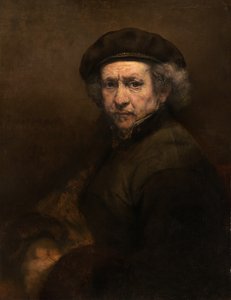
1. Rembrandt 1606–1669
1606–1669 Born in Leiden, Netherlands Baroque 4 originals at Château de Chantilly
Born on 15 July 1606 in Leiden, in the Dutch Republic, Rembrandt van Rijn entered a world of modest means. By the time he died on 4 October 1669, he had left behind a vast legacy that includes about 300 paintings, 300 etchings, and several hundred drawings. By 1625, the young artist had moved beyond his apprenticeship and opened a studio in Leiden. A significant shift occurred in 1631 when he moved to Amsterdam.
Originals at Château de Chantilly
-

High Renaissance
2. Raphael 1483–1520
1483–1520 Born in Urbino, Italy High Renaissance 6 originals at Château de Chantilly
Upon his arrival in Florence in 1504, the young painter entered a city defined by the presence of giants. Between 1504 and 1507, he produced a series of Madonnas that demonstrated a growing mastery of composition and emotional clarity. Following the death of Donato Bramante in 1514, he was appointed architect in charge of St. Peter's, a position that reflected the immense trust placed in his ability to organize and execute complex, large-scale projects.
Originals at Château de Chantilly
-

Romanticism
3. Eugène Delacroix 1798–1863
1798–1863 Born in Saint-Maurice, France Romanticism 11 originals at Château de Chantilly
The lineage of Eugène Delacroix is rooted in a blend of craftsmanship and diplomacy. Through him, the artist received numerous anonymous commissions, allowing his work to circulate through elite circles under a veil of discretion.
Originals at Château de Chantilly
-

Romanticism
4. Théodore Géricault 1791–1824
1791–1824 Born in Rouen, France Romanticism 6 originals at Château de Chantilly
From 1810 to 1815, the Louvre became Géricault's true academy. Inspired by the harrowing true story of the shipwreck of the French frigate Méduse in 1816, where negligence and incompetence led to unimaginable suffering for its passengers, the painting is a visceral portrayal of desperation, hope, and despair.
Originals at Château de Chantilly
-
Renaissance
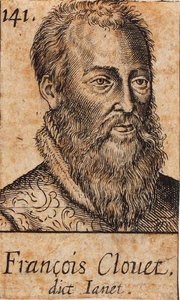
5. François Clouet 1510–1572
1510–1572 Born in Tours, France Renaissance 7 originals at Château de Chantilly
The early years of François Clouet remain somewhat veiled in historical obscurity, but his artistic trajectory was undeniably shaped by the legacy of his father. A pivotal moment arrived in 1541 when François inherited his father's estate, formally stepping into his artistic inheritance and assuming the responsibilities that came with it. Clouet’s portraits are grounded in precise anatomical rendering and skillful use of line, demonstrating a mastery of draftsmanship that underpinned his artistic vision.
Originals at Château de Chantilly
-

Renaissance Portraiture
6. Jean Clouet 1480–1541
1480–1541 Born in Brussels, Belgium Renaissance Portraiture 11 originals at Château de Chantilly
The early influences shaping Clouet’s artistic vision remain somewhat speculative, yet the hallmarks of Flemish training—a meticulous attention to detail, subtle modeling, and a refined sense of realism —are undeniably present in his work.
Originals at Château de Chantilly
-

Romanticism
7. Eugène Lami 1800–1890
1800–1890 Born in Paris, France Romanticism 4 originals at Château de Chantilly
Born in Paris in 1800, Lami emerged during a transformative epoch, a time when the Romantic movement began to intertwine with the burgeoning grandeur of the Second Empire. His precision as a draftsman is evident in his detailed sketches and drawings, such as his 1848 project for the Château de Chantilly, which showcases a remarkable command of classical design and structural accuracy.
Originals at Château de Chantilly
-

Northern Mannerism
8. Jacques Bellange 1575–1616
1575–1616 Born in Bassigny, France Northern Mannerism 2 originals at Château de Chantilly
Though much of his personal biography remains shrouded in the mists of the early 17th century, his artistic legacy is vibrantly clear through the intricate lines of his etchings. Born around 1575 in the Bâse-les-Vosges region of France, Bellange emerged from a landscape of shifting borders and intense religious fervor, eventually finding his creative home within the sophisticated courtly circles of Nancy.
Originals at Château de Chantilly
-

Baroque
9. Jean Berain the Elder 1640–1711
1640–1711 Born in Saint-Mihiel, France Baroque 7 originals at Château de Chantilly
Born in Saint-Mihiel, Meuse, in the Spanish Netherlands, he was the son of a master gunsmith, an upbringing that likely introduced him to the intricate precision of engraving from a young age. Establishing himself in Paris by 1663, Bérain became the artistic heartbeat of the Royal office of the Menus-Plaisirs du Roi.
Originals at Château de Chantilly
 Costume de la Beauté pour la septième et dernière entrée du Ballet des arts (1663)
 Costume du Soleil pour l’acte IV de Phaéton (1683)
 Costume de la Constance pour la septième et dernière entrée du Ballet des arts (1663)
 Costume de la Prudence pour la septième et dernière entrée du Ballet des arts (1663)


The house in figures
The masters of Château de Chantilly, in figures
The masters with the most originals at Château de Chantilly
Masters with two originals or more, by century of birth
Masters with two originals or more, by country of birth
Masters with two originals or more, by movement
Asked of us
Questions on the masters of Château de Chantilly
Open a question to read the answer.
Which artist in Château de Chantilly is the most famous?
Rembrandt (1606–1669): our catalogue holds 4 works by Rembrandt at Château de Chantilly, among them Portrait of Jan Six, Self-portrait of Rembrandt at the age of thirty-four and Landscape with a mill in the center (view of Dordrecht). Raphael and Eugène Delacroix follow.
Which Rembrandt works are in Château de Chantilly?
4 works by Rembrandt at Château de Chantilly are in our catalogue: Portrait of Jan Six (1647), Self-portrait of Rembrandt at the age of thirty-four, Landscape with a mill in the center (view of Dordrecht) and Philosopher in Meditation (1642) among them.
Which Raphael works are in Château de Chantilly?
6 works by Raphael at Château de Chantilly are in our catalogue: Man half draped (1517), Madonna of humility (1520), Woman (1520) and Four naked men (1521) among them.
What did Eugène Delacroix paint that hangs in Château de Chantilly?
11 works by Eugène Delacroix at Château de Chantilly are in our catalogue: Folio 11, Costume of a Jewish woman from Tangier (1832), Folio 7, Woman in the red skirt (1832), Folio 57, Two women in a house (1832) and Folio 95, Riders in the hills (1832) among them.
Which artist has the most works in Château de Chantilly?
Our catalogue holds 11 works by Eugène Delacroix at Château de Chantilly; next come Jean Clouet (11), François Clouet (7) and Jean Berain the Elder (7).
Does Château de Chantilly have any Leonardo da Vinci paintings?
No: Château de Chantilly holds no work by Leonardo da Vinci in our catalogue.
Is Pablo Picasso in Château de Chantilly?
No: Château de Chantilly holds no work by Pablo Picasso in our catalogue.
Which countries are the painters of Château de Chantilly from?
Counting the artists with two works or more, Château de Chantilly holds painters born mostly in France (6), Netherlands (1), Italy (1) and Belgium (1).
Which centuries do the painters of Château de Chantilly belong to?
The 18th century leads with 3 artists born then. In this ranking, Jean Clouet (1480–1541) is the earliest born and Eugène Lami (1800–1890) the latest.
How many painters are represented in Château de Chantilly?
Our catalogue lists 18 artists with at least one work at Château de Chantilly, 9 of them with two or more, born between 1480 and 1800 in 4 countries.
How were the artists of Château de Chantilly ranked?
By recognition — Wikipedia articles in the most languages, page visits and our manual ranking — over the artists with two works or more of Château de Chantilly in our catalogue. One entry per work; details, studies and copies are left out.
The house
Château de Chantilly, Chantilly, in a few lines
The Rich History of Château de Chantilly
The history of the Château de Chantilly is tied to the Montmorency family, whose connection to the estate began in 1484. Located in the town of Chantilly, Oise, the site has undergone significant transformations over several centuries. The original mansion, which once occupied the grounds, was destroyed during the French Revolution. This loss necessitated the later reconstruction of the estate to preserve its historical presence in the region. The current site is composed of two attached buildings: the Petit Château and the Grand Château. the Petit Château dates back to around 1560, while the Grand Château is a later development. Between 1875 and 1882, Henri d'Orléans, the Duke of Aumale, oversaw the complete rebuilding of the château. This reconstruction established the architectural framework that defines the estate today. the Duke of Aumale's specific conditions for his bequest ensured that the collections remained intact within the walls of the château. This preservation allows the site to function as a repository for various historical periods, from the Renaissance to the 19th century.
Architectural Evolution of the Princely Estate
The architectural history of the estate is defined by a duality of design. the Petit Château, built for Anne de Montmorency by Pierre Chambiges, dates back to around 1560. This wing reflects the refined proportions of the Renaissance. It offers a more intimate scale compared to the later additions to the estate. In contrast, the Grand Château represents a different era of ambition. The structure was largely rebuilt in the 1870s by the Duke of Aumale. This reconstruction reflects the more imposing and elaborate aesthetic of the 19th century. The resulting estate presents a dialogue between Renaissance and Baroque styles, where the intimate character of the earlier buildings meets the grandeur of the later reconstruction.
The famous originals of Château de ChantillyChâteau de Chantilly: the full page, 76 originalsThe museums of Chantilly
How the masters of the originals are ranked
The masters with two originals or more of Château de Chantilly in our catalogue are ranked by fame: the Wikipedia language editions that describe them, the visits to their OriginalUniqueArt.com page and our studio's ranking. Originals are counted in our catalogue — one entry per work, without details, studies or copies — not in the museum's inventory. Every date, birthplace and movement is the catalogue's; the notes are drawn from the master's biography.
Go on