
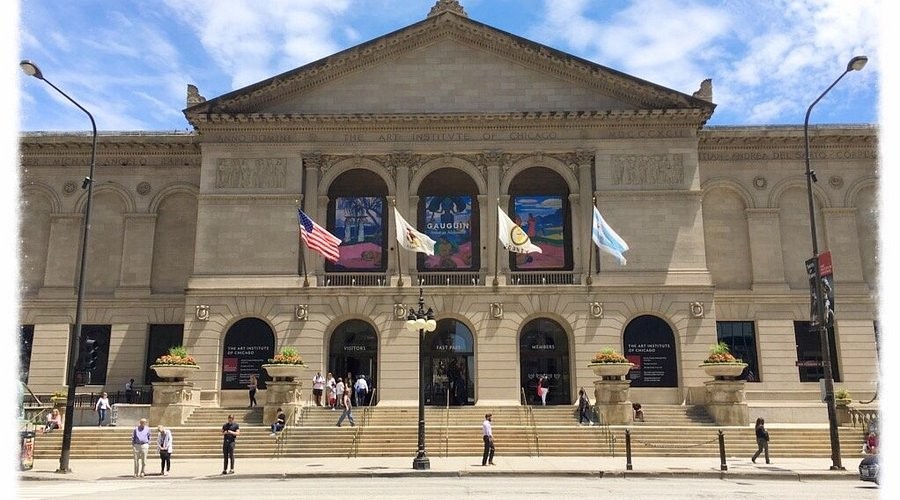
Quick Facts
- Alternate names:
- Art Institute of Chicago
- AIC
- The Art Institute
- Art Institute
- Chicago Academy of Fine Arts
- Movements:
- 18th century portraiture
- abstract expressionism
- academic realism
- aesthetic impressionism
- aestheticism and symbolism
- Location: Chicago, United States of America
- Art types:
- other
- sculpture
- wallart
- More…
- Featured artists:
- Grant Wood
- Claude Monet
- Georges Seurat
- Paul Cézanne
- René Magritte
- Historical periods:
- 19th century
- early medieval
- early modern
- modern
- renaissance
- Works on APS: 204
- Mediums:
- acrylic
- acrylic on canvas
- bronze
- charcoal
- engraving
Art Quiz
There is only one correct answer for each question.
Question 1:
When was the Art Institute of Chicago founded?
Question 2:
What architectural style characterizes the original building of the Art Institute of Chicago?
Question 3:
Which artist's work, 'Old Tree at the Confluence,' is highlighted in the description for its depiction of light and reflection?
Question 4:
What does Van Gogh's 'La Berceuse, Portrait of Madame Roulin' primarily convey?
Question 5:
Which artwork is described as a quintessential image of urban solitude?
Question 6:
What is the primary purpose of the Ryerson & Burnham Libraries within the Art Institute?
Question 7:
What was the original intention behind establishing the Chicago Academy of Design?
Question 8:
What significant event led to the initial financial difficulties of the Chicago Academy of Design?
Question 9:
Who is credited with transforming the Art Institute into a world-class museum during his presidency?
Question 10:
What was the purpose of constructing a building for the Art Institute at the 1893 World's Columbian Exposition?
Exhibited Artists
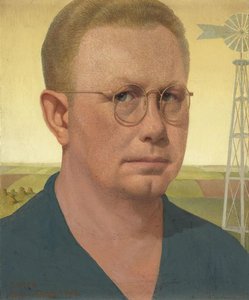
Grant Wood
Discover Grant Wood (1891-1942), the iconic American Regionalist painter of 'American Gothic.' Explore his evocative depictions of Midwest life, influenced by Flemish masters and a uniquely American vision.

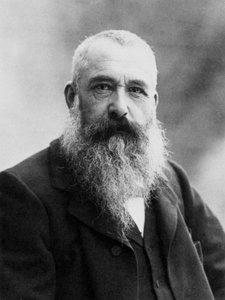
Claude Monet
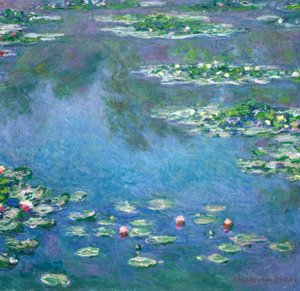
Explore the world of Claude Monet, the Impressionist master renowned for capturing fleeting light and color through iconic landscapes like Water Lilies & Haystacks.

Georges Seurat
Discover Georges Seurat (1859-1891), the pioneer of Pointillism & Neo-Impressionism! Explore 'A Sunday on La Grande Jatte' and his revolutionary color theory capturing modern life. Shop hand-painted reproductions!
Related Articles
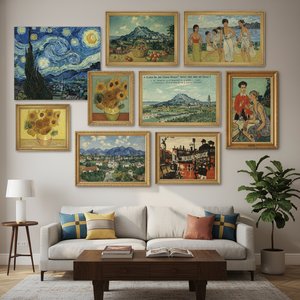
Post-Impressionism's 10 Defining Masterpieces: Art for Your Home |
Journey through Post-Impressionism's 10 defining masterpieces – Van Gogh, Monet & more. Explore iconic paintings, art history & find museum-quality reproductions for your home at . Discover all masterpieces online!
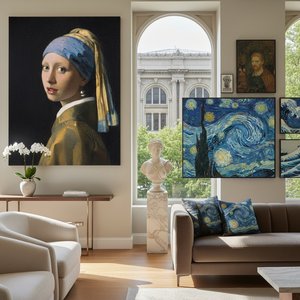
Met Museum's 25 Masterpieces: Art History & Decor Inspiration | OriginalUniqueArt
Journey through 25 iconic artworks at the Metropolitan Museum of Art! Explore Van Gogh, Monet, Rembrandt & more. Discover art history, inspiring stories, and museum-quality reproductions to elevate your home decor. Explore the full collection on OriginalUniqueArt.com.

Camille Pissarro: Pioneer of Impressionism & Father of Modern Art – A Legacy Explored
Explore the life & art of Camille Pissarro, a pivotal figure in Impressionism and Post-Impressionism. Discover his techniques, influences, and lasting legacy on modern painting. Learn more at OriginalUniqueArt.
List of Artworks




Subscribe to Our Newsletter
Stay updated with the latest art news, exclusive offers, and decoration ideas.
Get 3 Free Art Suggestions
Tell us about your project and our art experts will provide you with 3 personalized art suggestions.
Not Sure Where to Start?
Let Us Curate 3 Options Just for You - Free!