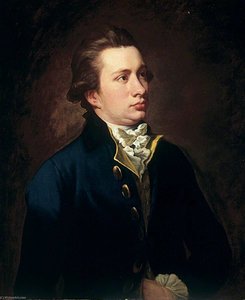
Portrait of Nathaniel Hone the Elder

The 34 Most Famous Nathaniel Hone the Elder Paintings, a Gallery Selection

Updated November 2026 · ranked by our popularity score (searches, visits and orders for each work) · 48 works by Nathaniel Hone the Elder in our catalogue

In short

Of all the originals Nathaniel Hone the Elder left, the most famous is Portrait of a Gentleman (1769), in the collection of the Yale Center for British Art, New Haven. Close behind it come Portrait of a Lady (1750) and Self-Portrait with an Easel (1747). Our catalog holds 48 works by Nathaniel Hone the Elder; the gallery has kept the 34 the world admires most, each shown with its date, its museum and its story.

1718 – 1784, Dublin Neoclassicism Most works: National Gallery of Ireland

Nathaniel Hone the Elder's top 10 paintings: the gallery's choice

1
Portrait of a Gentleman (1769) by Nathaniel Hone the Elder

Portrait of a Gentleman

1769 · Watercolor · Yale Center for British Art, New Haven

The Portrait of a Gentleman is a work by Nathaniel Hone the Elder. Created about 1769, this piece captures a formal likeness of an aristocratic or upper-class young man. The subject faces the viewer with a quiet, composed presence, held within the confines of a small, precious scale.

2
Portrait of a Lady (1750) by Nathaniel Hone the Elder

Portrait of a Lady

1750 · Watercolor · Yale Center for British Art, New Haven

This highly detailed portrait miniature, dating from 1750, presents a formal and elegant depiction of a young woman from the mid-18th century. Housed within the rectangular lid of a decorative, dark tortoiseshell box, the artwork features a central oval portrait framed by a thin gold rim. The subject is shown in a close-up, bust-length view, focusing entirely on her features and adornments.

3
Self-Portrait with an Easel (1747) by Nathaniel Hone the Elder

Self-Portrait with an Easel

1747 · Oil · National Gallery of Ireland, Dublin City

In this intimate oil painting, Self-Portrait with an Easel, the artist Nathaniel Hone the Elder captures himself in a quiet moment of reflection. The work emerges from 1747, a time when the painter is establishing his presence through the medium of portraiture. He presents himself not merely as a subject, but as a practitioner of his craft, leaning into the tools of his trade.

4
Portrait of a Young Woman with a Blue Kerchief (1759) by Nathaniel Hone the Elder

Portrait of a Young Woman with a Blue Kerchief

1759 · Watercolor · Musée Cognacq-Jay, Paris

This 1759 portrait miniature presents a young woman in profile, facing toward the right. The subject is rendered with pale skin and a soft pink flush on the cheek. Her blue eyes are directed forward, and her dark hair is pulled back away from her face. A blue kerchief, decorated with subtle gold patterns, is tied around her head. This headwrap matches a blue garment draped over her shoulders. A…

5
Self-portrait (1763) by Nathaniel Hone the Elder

Self-portrait

1763 · Watercolor · Nationalmuseum, Stockholm

This 1763 miniature presents a head-and-shoulders view of a man, captured in a delicate, oval-shaped format. The subject faces the viewer's right, though his gaze is directed back toward the observer, creating an immediate psychological connection. A dark, neutral background provides a sharp contrast to the subject, pushing the figure forward through a careful application of light. This illumination, originating from the upper left, casts soft shadows across the face…

6
Unknown woman (NMB 737) (1759) by Nathaniel Hone the Elder

Unknown woman (NMB 737)

1759 · Watercolor · Nationalmuseum, Stockholm

The portrait miniature titled Unknown woman (NMB 737) captures a young woman in a quiet, oval-shaped moment. Painted by Nathaniel Hone the Elder, the work presents the subject from the chest up. It is a small window into the mid-eighteenth century, dating to about 1759. The sitter gazes forward with a serene expression, her presence held within the delicate confines of the format.

7
Portrait of a Man (1760) by Nathaniel Hone the Elder

Portrait of a Man

1760 · Jewelry · Metropolitan Museum of Art, New York

The Portrait of a Man is a work by Nathaniel Hone the Elder, dated 1760. This portrait depicts a young man presented from the chest up. The subject is positioned with his torso facing forward, though his head is turned slightly toward the viewer's left.

9
A Piping Boy: John Camillus Hone (1759-1836), the Artist's Son (1769) by Nathaniel Hone the Elder

A Piping Boy: John Camillus Hone (1759-1836), the Artist's Son

1769 · Oil On Canvas · National Gallery of Ireland, Dublin City

The portrait depicts a young boy, John Camillus Hone, positioned in a bust-length composition against a dark, near-black background. He is captured in a moment of quiet concentration, his gaze directed toward the wooden flute held to his lips. The lighting originates from the upper left, casting a soft shadow across the right side of his face and highlighting the bridge of his nose and his hands. This directional light…

The Nathaniel Hone the Elder selection continues, 11 to 34

The subjects that held Nathaniel Hone the Elder's eye

The four subjects that come back most often in these originals, each with its finest example.

The museums that keep Nathaniel Hone the Elder's originals

The 8 museums that hold the most of the paintings on this page.

Museum City Works by Nathaniel Hone the Elder Paintings from this list
National Gallery of Ireland, Dublin CityNational Gallery of Ireland Dublin City 7 Self-Portrait with an Easel, A Piping Boy: John Camillus Hone (1759-1836), the Artist's Son, Portrait of a Boy (Horace Hone), Sketching
Yale Center for British Art, New HavenYale Center for British Art New Haven 6 Portrait of a Gentleman, Portrait of a Lady, Portrait of a Gentleman
Nationalmuseum, StockholmNationalmuseum Stockholm 2 Self-portrait, Unknown woman (NMB 737)
National Trust, DerbyNational Trust Derby 2 David Colyear (1736–1756), Viscount Milsington, Nathaniel Curzon (1726–1804), 1st Baron Scarsdale, and His Wife Lady Caroline Colyear (1733–1812), Lady Scarsdale, Walking in the Grounds at Kedleston
Fitzwilliam College, CambridgeFitzwilliam College Cambridge 2 General Lloyd, The Honourable Mrs Nathaniel Curzon
Musée Cognacq-Jay, ParisMusée Cognacq-Jay Paris 1 Portrait of a Young Woman with a Blue Kerchief
Metropolitan Museum of Art, New YorkMetropolitan Museum of Art New York 1 Portrait of a Man
Rhode Island School of Design Museum of Art, ProvidenceRhode Island School of Design Museum of Art Providence 1 Portrait of a Lady

Nathaniel Hone the Elder decade by decade: the original that defines each

Works per decade

Pick a decade to see the original that defines it.

Collectors' questions about Nathaniel Hone the Elder's paintings

Which work is Nathaniel Hone the Elder most famous for?Reveal the answer

Portrait of a Gentleman (1769), Yale Center for British Art, New Haven. Portrait of a Lady (1750) and Self-Portrait with an Easel (1747) come next.

What age was Nathaniel Hone the Elder when Portrait of a Gentleman was made?Reveal the answer

51 years old: Portrait of a Gentleman dates from 1769, and Nathaniel Hone the Elder was born in 1718.

What are the ten most famous Nathaniel Hone the Elder paintings?Reveal the answer

Portrait of a Gentleman, Portrait of a Lady, Self-Portrait with an Easel, Portrait of a Young Woman with a Blue Kerchief, Self-portrait, Unknown woman (NMB 737), Portrait of a Man, Portrait of a Gentleman, A Piping Boy: John Camillus Hone (1759-1836), the Artist's Son and Portrait of a Boy (Horace Hone), Sketching. The ranking above gives each one's year and museum.

How many paintings did Nathaniel Hone the Elder leave?Reveal the answer

Our catalog holds 48 works by Nathaniel Hone the Elder, dated from 1747 to 1784.

In which museums do Nathaniel Hone the Elder's masterpieces hang?Reveal the answer

Mostly in National Gallery of Ireland (Dublin City), Yale Center for British Art (New Haven) and Nationalmuseum (Stockholm). The museum table above lists them all.

In which years did Nathaniel Hone the Elder paint the most famous works?Reveal the answer

In 1760s: 11 of the 34 works on this page were made then, Portrait of a Gentleman among them.

What are the first and the last famous originals of Nathaniel Hone the Elder?Reveal the answer

On this page, the earliest is Self-Portrait with an Easel (1747) and the latest Portrait of a Gentleman (1784).

Which subjects did Nathaniel Hone the Elder choose most often?Reveal the answer

Man (9), Woman (7) and Dark background (7), across the 34 works on this page.

Which technique did Nathaniel Hone the Elder use most?Reveal the answer

Watercolor, for 7 of the 34 works on this page.

To which art movement does Nathaniel Hone the Elder belong?Reveal the answer

Neoclassicism and Rococo, judging by the originals on this page.

Which Nathaniel Hone the Elder works hang at the National Gallery of Ireland?Reveal the answer

Self-Portrait with an Easel, A Piping Boy: John Camillus Hone (1759-1836), the Artist's Son and Portrait of a Boy (Horace Hone), Sketching: the National Gallery of Ireland, Dublin City holds 7 of the works on this page.

Nathaniel Hone the Elder: life and work

Nathaniel Hone I (1718 – 1784): Bridging Rococo Elegance and Barbizon Landscape

Nathaniel Hone I, born in Dublin around 1718, stands as a pivotal figure in the transition between Rococo and Neoclassical art movements. His artistic journey spanned across Ireland and London, leaving behind a legacy of exquisitely detailed portraits alongside landscapes imbued with a distinctly Barbizon spirit—a stylistic blend that cemented his place within the broader context of eighteenth-century European painting.
  • Early Life & Training: Hone’s formative years were spent in Dublin, where he received instruction from Francis Bacon and Jonathan Richardson Sr., two prominent Irish portraitists who championed a dramatic, theatrical style rooted in illusionism. This influence profoundly shaped Hone's approach to depicting figures—particularly the aristocratic clientele of his time—emphasizing expressive gesture and psychological insight.
  • Parisian Period (1740 – 1768): Hone embarked on a transformative period of artistic development in Paris, immersing himself in the vibrant intellectual and artistic milieu of the Enlightenment. He studied under Jean-Simon Bailly and Jacques-Louis David, absorbing the principles of Neoclassical idealism and honing his technical skills. This Parisian experience undeniably broadened his stylistic horizons.
  • Return to London & Landscape Innovation: Returning to London in 1768, Hone continued to produce portraits but simultaneously cultivated a distinctive landscape style—a reaction against the prevailing academic tradition. Drawing inspiration from Claude Lorrain and Gaspard Roubaix, he embraced the Barbizon technique, prioritizing atmospheric perspective and tonal modulation to convey the grandeur of the Irish countryside.

Notable Works & Artistic Style

Hone’s oeuvre comprises a remarkable collection of portraits—many commissioned by members of the British aristocracy—characterized by meticulous detail and psychological nuance. His depictions of figures like ‘The Honourable Mrs Curzon,’ exemplify Rococo elegance, utilizing pastel hues and delicate ornamentation to convey aristocratic status. Simultaneously, Hone's landscapes—such as “Portrait of a Gentleman”—demonstrate his mastery of Barbizon principles, capturing the rugged beauty of Ireland with muted colors and textured brushstrokes. He skillfully blended illusionistic techniques with tonal gradations, creating images that resonate with emotional depth.
  • ‘The Honourable Mrs Curzon’ (1778): This miniature showcases Hone's exceptional skill in capturing the subtleties of facial expression and posture—a hallmark of Rococo portraiture. The pastel palette contributes to an atmosphere of refined grace, reflecting the social conventions of the era.
  • “Portrait of a Gentleman” (circa 1770): Hone’s depiction of a gentleman exemplifies Neoclassical ideals through its restrained composition and idealized portrayal. The artist skillfully employs tonal modulation to convey dignity and composure.

Influence & Legacy

Nathaniel Hone I exerted considerable influence on subsequent generations of artists, particularly those exploring the Barbizon landscape style. His pioneering approach to tonal painting—characterized by gradual transitions between light and dark—became a cornerstone of the Barbizon movement’s aesthetic sensibility. Furthermore, Hone's commitment to psychological realism—evident in his portraits—challenged prevailing artistic conventions and paved the way for more introspective representations of human subjects. Despite a relatively short career, Hone I left an indelible mark on British art history.

Death & Recognition

Nathaniel Hone I died in London in 1784, leaving behind a substantial body of work that continues to be admired for its artistic merit and technical virtuosity. His landscapes—particularly ‘The Honourable Mrs Curzon’—remain treasured examples of eighteenth-century art, demonstrating Hone's enduring contribution to the stylistic evolution of his time.