Portrait of Jacopo Ligozzi

The 20 Most Famous Jacopo Ligozzi Paintings, a Gallery Selection

Updated November 2026 · ranked by our popularity score (searches, visits and orders for each work) · 20 works by Jacopo Ligozzi in our catalogue

In short

Of all the originals Jacopo Ligozzi left, the most famous is Psittacus Ararauna (1580), in the collection of the Galleria degli Uffizi, Florence. Close behind it come Sacrifice of Isaac (1596) and Ecce Homo (1587). Our catalog holds 20 works by Jacopo Ligozzi; the gallery has kept the 20 the world admires most, each shown with its date, its museum and its story.

1547 – 1627, Verona Mannerism Most works: Galleria degli Uffizi

Jacopo Ligozzi's top 10 paintings: the gallery's choice

1
Psittacus Ararauna (1580) by Jacopo Ligozzi

Psittacus Ararauna

1580 · Oil On Canvas · Galleria degli Uffizi, Florence

Gazing upon this depiction of the Psittacus Ararauna is to be instantly transported to a sun-drenched corner of the exotic world. The artist has captured not merely a bird, but a moment of vibrant, almost startling life. Perched with an air of regal composure against a stark white backdrop, the parrot commands attention. Its plumage explodes in a breathtaking symphony of color—the brilliant yellow body contrasting dramatically with the deep…

2
Sacrifice of Isaac (1596) by Jacopo Ligozzi

Sacrifice of Isaac

1596 · Oil · Galleria degli Uffizi, Florence

Jacopo Ligozzi's “The Sacrifice of Isaac,” painted in 1596 and now residing within the hallowed halls of the Galleria degli Uffizi, is more than just a depiction of a biblical narrative; it’s a profound exploration of faith, obedience, and the agonizing weight of divine command. This oil painting transcends its religious subject matter to become a timeless meditation on human morality and the unsettling intersection between personal responsibility and the…

3
Ecce Homo (1587) by Jacopo Ligozzi

Ecce Homo

1587 · Oil On Panel · Bavarian State Painting Collections, Munich

In this work, titled Ecce Homo, Jacopo Ligozzi presents a profound moment of religious significance. Created about 1587, the painting captures the biblical scene where Jesus is presented to the crowd. Christ is positioned in the foreground, his hands bound and a crown of thorns resting upon his head. He is draped in a simple cloth that reveals his torso, appearing slightly off-center within the crowded, vertical arrangement of figures.

4
Portrait of Margherita Gonzaga by Jacopo Ligozzi (1593) by Jacopo Ligozzi

Portrait of Margherita Gonzaga by Jacopo Ligozzi

1593 · Oil On Canvas · National Museum of Ancient Art, Lisbon

The air in the room feels heavy with the weight of silk and the stillness of a formal moment. Margherita Gonzaga sits before us, her presence commanding a quiet authority that fills the space. She is positioned in a three-quarter view, her body angled slightly while her eyes meet the viewer with a steady, poised gaze. The darkness behind her offers no distractions, pushing her figure forward into the light.…

5
Half-decorated male head on book (1605) by Jacopo Ligozzi

Half-decorated male head on book

1605 · Oil On Panel · Amsterdam Museum, Amsterdam

A decaying human head rests upon a thick, red-bound book in this 1605 oil on panel painting. The composition is centered and tight, emerging from a dark, indeterminate background. The skull is partially covered by desiccated, leathery skin that clings to the bone in uneven patches. Pale, sickly yellows and browns define the flesh, contrasting with the deep crimson of the book's cover. Light enters from the upper left, casting…

6
Model for a pietre dure table top (1610) by Jacopo Ligozzi

Model for a pietre dure table top

1610 · Oil On Canvas · Museo dell'Opificio delle Pietre Dure, Florence

In this work, titled Model for a pietre dure table top, Jacopo Ligozzi presents a detailed study that functions as a full-scale model for table tops fashioned from semiprecious stones. Completed in 1610, the painting was created for the Grand Ducal Workshops founded by Ferdinando I de' Medici in 1588. It reflects the specific artistic requirements of the Florentine court during this period.

7
Gerbil (1580) by Jacopo Ligozzi

Gerbil

1580 · Oil On Canvas · Galleria degli Uffizi, Florence

To gaze upon Jacopo Ligozzi's depiction of the gerbil is to witness not merely a portrait of an animal, but a frozen moment of pure, unbridled vitality. This painting transcends simple naturalism; it captures the very essence of motion. The small creature is suspended in mid-air, its front legs splayed as if caught at the apex of a joyful leap or swift dash across an unseen plain. Ligozzi has imbued…

8
Pope Clement VIII Aldobrandini by Jacopo Ligozzi

Pope Clement VIII Aldobrandini

Painting

The portrait depicts a man positioned centrally, facing the viewer with a steady gaze. He wears a large, structured hat and a robe that covers his shoulders, featuring a hood. A gold crown rests upon his head, catching the light against the darker tones of his attire. His facial features are defined by a long, white beard that extends down his chin. The texture of the beard appears fine and…

9
Saint Francis Adoring the Cross (1596) by Jacopo Ligozzi

Saint Francis Adoring the Cross

1596 · Oil On Canvas · Toledo Museum of Art, Toledo

Saint Francis Adoring the Cross is an oil on canvas painted by Jacopo Ligozzi in 1596. The work portrays Saint Francis of Assisi, the founder of the Franciscan Order of monks, in a moment of intense religious devotion. He is depicted adoring a crucifix, a subject central to the spiritual life of the saint.

10
Agony in the Garden (1587) by Jacopo Ligozzi

Agony in the Garden

1587 · Oil

The shadows of the Gethsemane forest press inward, thick and heavy, as the moonlight struggles to pierce the dense canopy of twisted trunks. In this heavy stillness, the air feels thick with the weight of what is to come. A single, celestial light descends from the upper corner, cutting through the gloom to illuminate a scene of profound isolation. At the center of this spiritual storm, a figure kneels upon…

The Jacopo Ligozzi selection continues, 11 to 20

The subjects that held Jacopo Ligozzi's eye

The four subjects that come back most often in these originals, each with its finest example.

The museums that keep Jacopo Ligozzi's originals

The 7 museums that hold the most of the paintings on this page.

Museum City Works by Jacopo Ligozzi Paintings from this list
Galleria degli Uffizi, FlorenceGalleria degli Uffizi Florence 4 Psittacus Ararauna, Sacrifice of Isaac, Gerbil
Bavarian State Painting Collections, MunichBavarian State Painting Collections Munich 1 Ecce Homo
National Museum of Ancient Art, LisbonNational Museum of Ancient Art Lisbon 1 Portrait of Margherita Gonzaga by Jacopo Ligozzi
Amsterdam Museum, AmsterdamAmsterdam Museum Amsterdam 1 Half-decorated male head on book
Museo dell'Opificio delle Pietre Dure, FlorenceMuseo dell'Opificio delle Pietre Dure Florence 1 Model for a pietre dure table top
Toledo Museum of Art, ToledoToledo Museum of Art Toledo 1 Saint Francis Adoring the Cross
Metropolitan Museum of Art, New YorkMetropolitan Museum of Art New York 1 Allegory of Avarice

Jacopo Ligozzi decade by decade: the original that defines each

Works per decade

Pick a decade to see the original that defines it.

Collectors' questions about Jacopo Ligozzi's paintings

Which work is Jacopo Ligozzi most famous for?Reveal the answer

Psittacus Ararauna (1580), Galleria degli Uffizi, Florence. Sacrifice of Isaac (1596) and Ecce Homo (1587) come next.

What age was Jacopo Ligozzi when Psittacus Ararauna was made?Reveal the answer

33 years old: Psittacus Ararauna dates from 1580, and Jacopo Ligozzi was born in 1547.

What are the ten most famous Jacopo Ligozzi paintings?Reveal the answer

Psittacus Ararauna, Sacrifice of Isaac, Ecce Homo, Portrait of Margherita Gonzaga by Jacopo Ligozzi, Half-decorated male head on book, Model for a pietre dure table top, Gerbil, Pope Clement VIII Aldobrandini, Saint Francis Adoring the Cross and Agony in the Garden. The ranking above gives each one's year and museum.

How many paintings did Jacopo Ligozzi leave?Reveal the answer

Our catalog holds 20 works by Jacopo Ligozzi, dated from 1580 to 1610.

In which museums do Jacopo Ligozzi's masterpieces hang?Reveal the answer

Mostly in Galleria degli Uffizi (Florence), Bavarian State Painting Collections (Munich) and National Museum of Ancient Art (Lisbon). The museum table above lists them all.

In which years did Jacopo Ligozzi paint the most famous works?Reveal the answer

In 1580s: 4 of the 20 works on this page were made then, Psittacus Ararauna among them.

What are the first and the last famous originals of Jacopo Ligozzi?Reveal the answer

On this page, the earliest is Psittacus Ararauna (1580) and the latest Model for a pietre dure table top (1610).

Which subjects did Jacopo Ligozzi choose most often?Reveal the answer

Man (4), Renaissance art (3) and Wildlife art (2), across the 20 works on this page.

Which technique did Jacopo Ligozzi use most?Reveal the answer

Oil On Canvas, for 5 of the 20 works on this page.

To which art movement does Jacopo Ligozzi belong?Reveal the answer

Mannerism, judging by the originals on this page.

Which Jacopo Ligozzi works hang at the Galleria degli Uffizi?Reveal the answer

Psittacus Ararauna, Sacrifice of Isaac and Gerbil: the Galleria degli Uffizi, Florence holds 4 of the works on this page.

Jacopo Ligozzi: life and work

The Visionary Synthesis of Jacopo Ligozzi

In the vibrant, transformative era of late-Renaissance and Mannerist Italy, few figures embodied the intersection of aesthetic grace and empirical curiosity as profoundly as Jacopo Ligozzi. Born in Verona in 1547 to the respected artist Giovanni Ermano Ligozzi, Jacopo was immersed from birth in a world where craftsmanship and visual storytelling were paramount. His early life was shaped by the rigorous traditions of the artisan guilds, yet his spirit possessed an insatiable hunger for the wonders of the natural world. This dual passion—the disciplined technique of the painter and the observant eye of the naturalist—would eventually allow him to bridge the gap between art and science, earning him a legacy that transcends mere decoration.

Ligozzi’s artistic journey was significantly shaped by his time in Florence, where he studied under the legendary sculptor Giovanni Battista Buonarroti. This period of intense training within the Florentine Mannerist tradition instilled in him a mastery of form, light, and dramatic composition. However, Ligozzi was never content to remain solely within the confines of stylistic imitation. His ambitions led him toward the burgeoning scientific inquiries of his age. His invitation to the Habsburg court in Vienna served as a pivotal moment in his career; there, he presented exquisite drawings of botanical and zoological specimens that captivated the imperial gaze. These works were not merely beautiful illustrations but were early precursors to modern scientific documentation, demonstrating a level of precision that would later lead many to refer to him as the "Audubon of Florence."

A Master of the Medici Court and Natural Wonders

Upon settling in Florence, Ligozzi ascended to the highest echelons of the artistic community. Following the death of Giorgio Vasari in 1574, he assumed leadership of the Accademia e compagnia delle arti del disegno, a position that granted him immense influence over the direction of Florentine art. His career was inextricably linked to the powerful Medici dynasty, as he served successive Grand Dukes including Francesco I, Ferdinando I, and Cosimo II. This prestigious patronage allowed him to experiment with diverse media, from grand historical narratives to the delicate artistry of pietre dure design.

His body of work is characterized by a remarkable versatility that ranges from the deeply spiritual to the intensely biological:

  • Biblical Narratives: In works such as his 1596 Sacrifice of Isaac, Ligozzi utilized the dramatic tension of the Baroque style to explore profound themes of faith and divine intervention, using light and shadow to heighten the emotional stakes of the biblical drama.
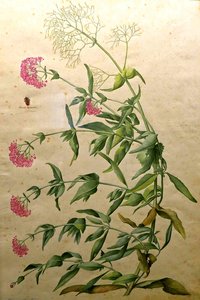
  • Botanical Precision: His illustrations, such as the meticulous depiction of Agave americana, showcase a scientific rigor that captures the intricate textures and muted tones of the natural world, serving as vital records for botanists of his era.
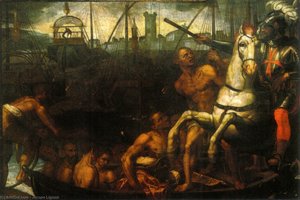
  • Historical and Naval Drama: In pieces like the Return of the Cavalier of Santo Stefano from Lepanto, he demonstrated an ability to capture large-scale historical events with a sense of movement and cultural significance that resonated with the political climate of the time.

Legacy of the Florentine Naturalist

The historical significance of Jacopo Ligozzi lies in his refusal to see art and science as separate disciplines. While many of his contemporaries focused on the idealized human form or mythological allegories, Ligozzi looked toward the earth, the flora, and the fauna with a reverence that demanded accuracy. He transformed the canvas into a laboratory of observation, where every petal and every scale was rendered with an almost tactile reality.

By integrating the meticulousness of scientific illustration with the sophisticated language of Mannerism, Ligozzi helped pave the way for the natural history movements of subsequent centuries. His life remains a testament to the power of curiosity, proving that the artist's brush can be just as potent a tool for discovery as the scientist's lens. Today, his works stand as enduring monuments to a period when the pursuit of beauty and the pursuit of truth were one and the same.