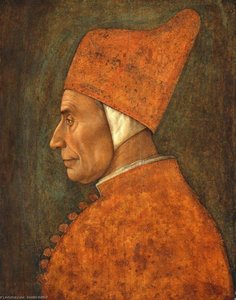
Portrait of Gentile Bellini

The 46 Most Famous Gentile Bellini Paintings, Each One of a Kind

Updated November 2026 · ranked by our popularity score (searches, visits and orders for each work) · 48 works by Gentile Bellini in our catalogue

In short

Miracle of the Cross at the Bridge of S. Lorenzo (1500) is the Gentile Bellini painting that draws the most eyes; the original belongs to the Gallerie dell'Accademia di Venezia, Venice. After it, the eye goes to Miracle of the Cross at the Bridge of San Lorenzo (1500) and Cardinal Bessarion with the Bessarion Reliquary (1472). Among the 48 works of Gentile Bellini in our catalog, these 46 are the most famous, each a unique original presented with its year, its museum and the reason it endures.

1429 – 1507, Venice Renaissance Most works: Gallerie dell'Accademia di Venezia

Top 10 paintings by Gentile Bellini, through the gallery's eye

1
Miracle of the Cross at the Bridge of S. Lorenzo (1500) by Gentile Bellini

Miracle of the Cross at the Bridge of S. Lorenzo

1500 · Oil On Canvas · Gallerie dell'Accademia di Venezia, Venice

The scene unfolds in a moment of divine interruption within the bustling life of Venice. In "Miracle of the Cross at the Bridge of S. Lorenzo," the artist Gentile Bellini captures a sudden, miraculous event that disrupts a solemn religious procession. As the faithful move through the city, the relic of the Holy Cross slips from its place and falls into the waters of the canal. This unexpected descent into…

2
Miracle of the Cross at the Bridge of San Lorenzo (1500) by Gentile Bellini

Miracle of the Cross at the Bridge of San Lorenzo

1500 · Oil On Canvas · Gallerie dell'Accademia di Venezia, Venice

Gentile Bellini's "Miracle of the Cross at the Bridge of S. Lorenzo," painted around 1500, isn’t merely a depiction of an event; it’s a vibrant snapshot of Venetian life, steeped in religious fervor and artistic innovation. Housed within the Gallerie dell’Accademia in Venice, this tempera-on-canvas work transports us to a bustling canal scene, where a miraculous recovery of the relic of the Holy Cross unfolds amidst the everyday rhythms of…

3
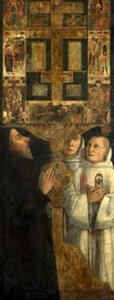
Cardinal Bessarion with the Bessarion Reliquary (1472) by Gentile Bellini

Cardinal Bessarion with the Bessarion Reliquary

1472 · Oil On Panel · National Gallery, London

To stand before Gentile Bellini's Cardinal Bessarion with the Bessarion Reliquary is to step directly into the luminous, devout atmosphere of the Italian Renaissance. This masterpiece from 1472 transcends mere portraiture; it is a profound meditation on faith, cultural exchange, and enduring piety. The scene captures Cardinal Bessarion, a distinguished Greek cleric elevated to archbishop within the Orthodox Church, kneeling in an attitude of deep reverence before a sacred object—the…

4
A Man with a Pair of Dividers (1500) by Gentile Bellini

A Man with a Pair of Dividers

1500 · Oil On Canvas · National Gallery, London

To stand before A Man with a Pair of Dividers is to encounter a moment suspended in time—a quiet meditation on knowledge itself. The portrait captures the subject not merely as an individual, but as an embodiment of scholarly pursuit. Against a background so deep it verges on absolute blackness, the figure emerges with a palpable sense of dignity. His gaze, directed outward toward the viewer, is direct and intelligent,…

5
Sultan Mehmet II (1480) by Gentile Bellini

Sultan Mehmet II

1480 · Oil On Canvas · National Gallery, London

In the quiet, hallowed halls of the National Gallery in London, there exists a window into a vanished world of diplomacy and grandeur. Gentile Bellini’s Portrait of Sultan Mehmet II is far more than a mere likeness of a monarch; it is a profound historical document that captures the precise moment when the Renaissance met the Ottoman Empire. Painted in 1480, this masterpiece emerged from a period of intense geopolitical…

7
Procession in Piazza San Marco (1496) by Gentile Bellini

Procession in Piazza San Marco

1496 · Tempera · Gallerie dell'Accademia di Venezia, Venice

To step before Gentile Bellini’s “Procession in Piazza San Marco” is to be transported across the centuries, leaving the modern world behind for the golden, sun-drenched splendor of 1496 Venice. This monumental masterpiece, a cornerstone of the Venetian Renaissance, does far more than merely document a public event; it serves as an immersive portal into a time when spiritual fervor and civic pride were inextricably woven into the very fabric…

8
Recognition of the Ambassador Domenico Trevisano at Alicatre (1479) by Gentile Bellini

Recognition of the Ambassador Domenico Trevisano at Alicatre

1479 · Oil On Canvas · The Louvre, Paris

The air in 1479 feels heavy with the scent of salt and trade. In this scene, the Venetian ambassador Domenico Trevisano arrives at Alicante, met by a crowd that carries the weight of the Ottoman court. Figures dressed in traditional Eastern attire gather, their garments patterned with intricate details that catch the light. Some sit upon a bench while others stand, caught in the middle of a quiet exchange. A…

9
Procession in Piazza San Marco (detail) (1496) by Gentile Bellini

Procession in Piazza San Marco (detail)

1496 · Oil On Canvas · Gallerie dell'Accademia di Venezia, Venice

Gentile Bellini's “Procession in Piazza San Marco” – a captivating detail from his larger work – offers a vibrant glimpse into the heart of 15th-century Venice. More than just a depiction of a public event, it’s a meticulously crafted tableau brimming with symbolism and reflecting the city’s immense power, religious fervor, and artistic prowess. The painting captures a pivotal moment: an elaborate procession winding through St. Mark's Square, a space…

10
A Turkish Woman (1480) by Gentile Bellini

A Turkish Woman

1480 · Graphite Pencil · British Museum, London

A seated woman occupies the center of this monochromatic pencil drawing. She faces the viewer directly, her gaze fixed and steady. Her hands rest in her lap, holding a small object that appears to be needlework or embroidery. She wears an elaborate headdress and layered clothing that suggests a specific cultural origin. The background remains simple and indistinct, ensuring the focus remains entirely on the figure. Light falls evenly across…

Gentile Bellini's famous paintings, numbers 11 to 46

11Portrait of Catharina Cornaro, Queen of Cyprus (1500) by Gentile BelliniPortrait of Catharina Cornaro, Queen of Cyprus1500 · Szépművészeti Múzeum 12Miracle of the Cross at the Bridge of San Lorenzo (detail) (1500) by Gentile BelliniMiracle of the Cross at the Bridge of San Lorenzo (detail)1500 · Gallerie dell'Accademia di Venezia 13Procession in Piazza San Marco (detail) (1496) by Gentile BelliniProcession in Piazza San Marco (detail)1496 · Gallerie dell'Accademia di Venezia 14Miracle of the Cross at the Bridge of San Lorenzo (detail) (1500) by Gentile BelliniMiracle of the Cross at the Bridge of San Lorenzo (detail)1500 · Gallerie dell'Accademia di Venezia 15Annunciation (1465) by Gentile BelliniAnnunciation1465 · Thyssen-Bornemisza Museum 16Portrait of Lorenzo Giustiniani (1465) by Gentile BelliniPortrait of Lorenzo Giustiniani1465 · National Museum in Warsaw 17Portrait of Sultan Mehmed II (Fatih Sultan Mehmet) (1480) by Gentile BelliniPortrait of Sultan Mehmed II (Fatih Sultan Mehmet)1480 18Doge Giovanni Mocenigo (1478) by Gentile BelliniDoge Giovanni Mocenigo1478 · The Frick Collection 19Portrait of Doge Giovanni Mocenigo (1480) by Gentile BelliniPortrait of Doge Giovanni Mocenigo1480 · Museo Correr 20Portrait of a Man (1500) by Gentile BelliniPortrait of a Man1500 21Portrait of Lorenzo Giustiniani (1465) by Gentile BelliniPortrait of Lorenzo Giustiniani1465 · National Museum in Warsaw 22Portrait of a Doge by Gentile BelliniPortrait of a DogeMuseum of Fine Arts 23Beato Lorenzo Giustiniani (1465) by Gentile BelliniBeato Lorenzo Giustiniani1465 24Pietà (1472) by Gentile BelliniPietà1472 · Doge's Palace 25Portrait of a Young Man (1480) by Gentile BelliniPortrait of a Young Man1480 26The Blessed Lorenzo Giustiniani (1465) by Gentile BelliniThe Blessed Lorenzo Giustiniani1465 · Gallerie dell'Accademia di Venezia 27The Virgin and Child Enthroned (1470) by Gentile BelliniThe Virgin and Child Enthroned1470 · National Gallery 28Tulko or Antonio Lombardo (1500) by Gentile BelliniTulko or Antonio Lombardo1500 29Procession in Piazza S. Marco (1496) by Gentile BelliniProcession in Piazza S. Marco1496 30A Turkish Janissary by Gentile BelliniA Turkish JanissaryBritish Museum 31The Doge Leonardo Loredano by Gentile BelliniThe Doge Leonardo Loredano 32Doge Niccolo Marcello by Gentile BelliniDoge Niccolo MarcelloNational Gallery 33Ritratto Di Agostino Barbarigo by Gentile BelliniRitratto Di Agostino Barbarigo 34Predicacion de San Marcos en Alejandria by Gentile BelliniPredicacion de San Marcos en Alejandria 35Portrait of a Patrician by Gentile BelliniPortrait of a Patrician 36Andrea Vendramin, Doge of Venice, His Secretary, and a Papal Nuncio by Gentile BelliniAndrea Vendramin, Doge of Venice, His Secretary, and a Papal Nuncio 37Portrait of an Old Man by Gentile BelliniPortrait of an Old Man 38The Healing of Pietro dei Ludovici (1501) by Gentile BelliniThe Healing of Pietro dei Ludovici1501 · Gallerie dell'Accademia di Venezia 39Procession in Piazza S. Marco [detail] (1496) by Gentile BelliniProcession in Piazza S. Marco [detail]1496 40Self-Portrait(?) by Gentile BelliniSelf-Portrait(?)Kupferstichkabinett 41Madonna and Child with Donors (1460) by Gentile BelliniMadonna and Child with Donors1460 · Staatliche Museen zu Berlin 42Standing Woman by Gentile BelliniStanding WomanFogg Art Museum 43Mahomet II by Gentile BelliniMahomet II 44Portrait of Doge Leonardo Loredano by Gentile BelliniPortrait of Doge Leonardo Loredano 45Portrait of Caterina Cornaro, Queen of Cyprus (1500) by Gentile BelliniPortrait of Caterina Cornaro, Queen of Cyprus1500 · Szépművészeti Múzeum 46Portrait of Doge Giovanni Mocenigo (1478) by Gentile BelliniPortrait of Doge Giovanni Mocenigo1478 · Museo Correr

Gentile Bellini's famous paintings, period by period

The subjects that held Gentile Bellini's eye

The four subjects that come back most often in these originals, each with its finest example.

The museums that keep Gentile Bellini's originals

The 8 museums that hold the most of the paintings on this page.

Museum City Works by Gentile Bellini Paintings from this list
Gallerie dell'Accademia di Venezia, VeniceGallerie dell'Accademia di Venezia Venice 10 Miracle of the Cross at the Bridge of S. Lorenzo, Miracle of the Cross at the Bridge of San Lorenzo, Procession in Piazza San Marco (detail)
National Gallery, LondonNational Gallery London 5 Cardinal Bessarion with the Bessarion Reliquary, A Man with a Pair of Dividers, Sultan Mehmet II
British Museum, LondonBritish Museum London 2 A Turkish Woman, A Turkish Janissary
Szépművészeti Múzeum, BudapestSzépművészeti Múzeum Budapest 2 Portrait of Catharina Cornaro, Queen of Cyprus, Portrait of Caterina Cornaro, Queen of Cyprus
National Museum in Warsaw, WarsawNational Museum in Warsaw Warsaw 2 Portrait of Lorenzo Giustiniani, Portrait of Lorenzo Giustiniani
Museo Correr, VeniceMuseo Correr Venice 2 Portrait of Doge Giovanni Mocenigo, Portrait of Doge Giovanni Mocenigo
The Louvre, ParisThe Louvre Paris 1 Recognition of the Ambassador Domenico Trevisano at Alicatre
Thyssen-Bornemisza Museum, MadridThyssen-Bornemisza Museum Madrid 1 Annunciation

Gentile Bellini across the decades: one unique original for each

Works per decade

Pick a decade to see the original that defines it.

Gentile Bellini's paintings: questions for the gallery

What is the single most famous work of Gentile Bellini?Reveal the answer

Miracle of the Cross at the Bridge of S. Lorenzo (1500), Gallerie dell'Accademia di Venezia, Venice. Miracle of the Cross at the Bridge of San Lorenzo (1500) and Cardinal Bessarion with the Bessarion Reliquary (1472) come next.

At what age did Gentile Bellini create Miracle of the Cross at the Bridge of S. Lorenzo?Reveal the answer

71 years old: Miracle of the Cross at the Bridge of S. Lorenzo dates from 1500, and Gentile Bellini was born in 1429.

Which ten paintings by Gentile Bellini are the most famous?Reveal the answer

Miracle of the Cross at the Bridge of S. Lorenzo, Miracle of the Cross at the Bridge of San Lorenzo, Cardinal Bessarion with the Bessarion Reliquary, A Man with a Pair of Dividers, Sultan Mehmet II, Procession in Piazza San Marco (detail), Procession in Piazza San Marco, Recognition of the Ambassador Domenico Trevisano at Alicatre, Procession in Piazza San Marco (detail) and A Turkish Woman. The ranking above gives each one's year and museum.

How many works by Gentile Bellini are known?Reveal the answer

Our catalog holds 48 works by Gentile Bellini, dated from 1460 to 1501.

Where can the most famous Gentile Bellini originals be seen?Reveal the answer

Mostly in Gallerie dell'Accademia di Venezia (Venice), National Gallery (London) and British Museum (London). The museum table above lists them all.

During which period did Gentile Bellini create the best-known paintings?Reveal the answer

In 1500s: 10 of the 46 works on this page were made then, Miracle of the Cross at the Bridge of S. Lorenzo among them.

Which famous Gentile Bellini painting is the earliest, and which the latest?Reveal the answer

On this page, the earliest is Madonna and Child with Donors (1460) and the latest The Healing of Pietro dei Ludovici (1501).

What subjects did Gentile Bellini favour?Reveal the answer

Venice (8), Portraiture (8) and Venetian art (8), across the 46 works on this page.

What materials did Gentile Bellini paint with most?Reveal the answer

Oil On Canvas, for 14 of the 46 works on this page.

Which movement does the work of Gentile Bellini belong to?Reveal the answer

Renaissance, judging by the originals on this page.

What Gentile Bellini originals can I see at the Gallerie dell'Accademia di Venezia?Reveal the answer

Miracle of the Cross at the Bridge of S. Lorenzo, Miracle of the Cross at the Bridge of San Lorenzo and Procession in Piazza San Marco (detail): the Gallerie dell'Accademia di Venezia, Venice holds 10 of the works on this page.

Gentile Bellini: a portrait of the artist

A Venetian Renaissance Master

Gentile Bellini, born in Venice in 1429, emerged from a family deeply entrenched in the artistic heart of the city. His father, Jacopo Bellini, was a pioneering figure who embraced the relatively new medium of oil paint, and his younger brother, Giovanni, would later achieve renown as one of Venice’s most celebrated masters. Gentile's initial training unfolded within his father’s workshop, where he mastered the techniques that would define his career. One of Venice’s oldest surviving oil paintings, The Blessed Lorenzo Giustinian (1445), stands as a testament to this early skill and is now housed in the Accademia Museum. From these beginnings, Gentile quickly distinguished himself, earning recognition for his remarkable talent in portraiture and securing his position as the official painter of the Doges – the rulers of Venice. This prestigious role would profoundly shape his artistic trajectory, placing him at the center of Venetian power and society.

Influences and Artistic Development

Gentile Bellini’s style was a fascinating synthesis of diverse influences. The rich traditions of the Byzantine Empire cast a long shadow over Venetian art, imbuing it with a distinctive aesthetic that resonated in Gentile's work through stylized figures and opulent color palettes. However, his artistic horizons expanded dramatically following an extraordinary journey to Constantinople in 1479. Invited by Sultan Mehmed II himself, Bellini spent time at the Ottoman court, an experience that proved pivotal in shaping his later creations. This encounter with a different culture, architecture, and way of life infused his paintings with a unique perspective. His portrait of Mehmed II, now residing in the National Gallery, London, is a striking example of this influence – a compelling depiction of power and personality informed by firsthand observation. Gentile’s compositions often feature grand scale scenes populated with numerous figures, reflecting the demands of commissions from Venice's powerful Scuole Grandi, major confraternities that played a vital role in civic life.

Masterpieces and Artistic Legacy

Among Gentile Bellini’s most celebrated works are two monumental paintings: The Procession of the True Cross in Piazza San Marco (1496) and The Miracle of the True Cross at the S. Lorenzo Bridge (c. 1500). The former is a breathtaking panorama of Venetian life, capturing the energy and spectacle of a religious procession with meticulous detail. It showcases his ability to portray large crowds and intricate architectural settings with remarkable precision. The Miracle of the True Cross at the S. Lorenzo Bridge is particularly noteworthy for its inclusion of self-portraits – both Gentile’s own likeness and that of his brother, Giovanni Bellini. This subtle artistic collaboration offers a fascinating glimpse into their relationship and creative dialogue. Beyond individual paintings, Gentile Bellini holds an important place in art history as one of the founders of Orientalist art—a movement characterized by depictions of Eastern cultures and settings.

Historical Significance

Gentile Bellini’s legacy rests on several key achievements. His pioneering use of oil paint solidified its position as the dominant medium in Venetian painting, allowing for greater detail, luminosity, and realism. Furthermore, his exposure to Ottoman culture and subsequent incorporation of Eastern motifs into his work established him as a significant figure in the development of Orientalist art—a trend that would captivate European artists for centuries. While often overshadowed by the fame of his brother Giovanni, Gentile Bellini’s contributions are now widely recognized as essential to understanding the evolution of Western painting. He skillfully blended Venetian artistic traditions with influences from both the Byzantine Empire and Ottoman culture, creating a unique and compelling style that resonated throughout Europe. His work stands as a testament not only to his exceptional skill and talent but also to the power of cultural exchange in shaping artistic innovation.