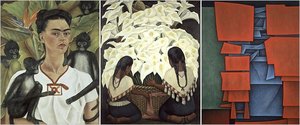
Portrait of Frida Kahlo

Frida Kahlo Paintings: The 100 Most Famous, Through a Gallery's Eye

Updated November 2026 · ranked by our popularity score (searches, visits and orders for each work) · 218 works by Frida Kahlo in our catalogue

In short

To the gallery's eye, Frida Kahlo's most famous painting is Frida Kahlo - `The Two Fridas` (1939). Self portrait with Thorn Necklace and Hummingbird and The Broken Column (1944) complete the trio every eye recognises. Of the 218 works by Frida Kahlo in our catalog, the gallery presents the 100 most famous below, each original with its year, its museum and what makes it unique.

1907 – 1954, Coyoacán Surrealism Most works: Museo Dolores Olmedo

The gallery's top 10 Frida Kahlo paintings

1
Frida Kahlo - `The Two Fridas` (1939) by Frida Kahlo

Frida Kahlo - `The Two Fridas`

1939 · Oil On Canvas

“The Two Fridas” (Las Dos Fridas) stands as a cornerstone of Frida Kahlo's oeuvre, completed in 1939 – a year profoundly marked by personal upheaval following her divorce from Diego Rivera. This double self-portrait isn’t merely a depiction of physical likeness; it is a raw and visceral exploration of identity, pain, and the enduring strength found within vulnerability.

2
Self portrait with Thorn Necklace and Hummingbird by Frida Kahlo

Self portrait with Thorn Necklace and Hummingbird

Oil On Canvas

Painted in 1940, this striking self-portrait encapsulates the raw emotionality and complex symbolism that define Frida Kahlo's oeuvre. More than a likeness, it is a profound exploration of pain, resilience, and the intricate relationship between humanity and nature – a testament to her enduring legacy as one of Mexico’s most important artists.

3
The Broken Column (1944) by Frida Kahlo

The Broken Column

1944 · Oil · Museo Dolores Olmedo, Mexico City

Painted in 1944, this profoundly moving self-portrait encapsulates Frida Kahlo's enduring spirit amidst physical and emotional turmoil. More than just a depiction of suffering, it is a powerful statement about resilience, vulnerability, and the strength found within confronting one’s deepest pain.

4
The Wounded Deer (1946) by Frida Kahlo

The Wounded Deer

1946 · Oil On Canvas

In the hauntingly beautiful masterpiece "The Wounded Deer," painted in 1946, Frida Kahlo invites the viewer into a realm where the boundaries between human suffering and the natural world dissolve. The painting presents a striking, surreal image of a stag—a creature of grace and strength—brutally pierced by numerous arrows. Set within a dense, claustrophobic woodland, the deer stands as a solitary figure of agony, its body a map of physical…

5
Self Portrait - The Frame (1938) by Frida Kahlo

Self Portrait - The Frame

1938 · Oil · Centre Pompidou, Paris

Frida Kahlo’s 1938 masterpiece, Self Portrait - The Frame, is far more than a mere visual representation; it is a profound meditation on identity, resilience, and the artist’s unflinching gaze at her own vulnerability. In this arresting work, Kahlo presents herself against a stark, minimalist background, yet her presence is anything but simple. Her gaze is direct and unwavering, conveying a complex duality of determination and sorrow that invites the…

7
Self-Portrait with Monkeys (1943) by Frida Kahlo

Self-Portrait with Monkeys

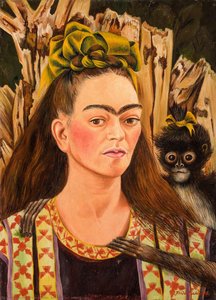
1943 · Oil On Canvas · Collection of Jacques - Natasha Gelman, Mexico City

Painted in 1943, this captivating self-portrait offers an intimate glimpse into the complex psyche of Frida Kahlo, one of Mexico's most celebrated artists. More than a mere likeness, it is a poignant exploration of companionship, solitude, and the artist’s enduring connection to the natural world – themes central to her oeuvre.

8
Frida y Diego Rivera (1931) by Frida Kahlo

Frida y Diego Rivera

1931 · Oil On Canvas

Painted in 1931, this captivating artwork by Frida Kahlo offers an intimate glimpse into her relationship with fellow artist and husband, Diego Rivera. More than a simple double portrait, it’s a poignant exploration of love, identity, and the complexities of their famously passionate – and often turbulent – bond.

10
The Broken Column by Frida Kahlo

The Broken Column

Oil On Canvas

Frida Kahlo’s “The Broken Column,” painted in 1944, is a profoundly moving self-portrait that transcends mere depiction of physical pain. It's a visceral exploration of resilience, identity, and the enduring human spirit forged in the crucible of trauma.

Frida Kahlo paintings, ranked 11 to 100

11Henry Ford Hospital by Frida KahloHenry Ford Hospital 12My Dress Hangs There (1933) by Frida KahloMy Dress Hangs There1933 · Hoover Gallery 13Tree of Hope (1946) by Frida KahloTree of Hope1946 · Collection of Daniel Filipacchi 14The Suicide of Dorothy Hale (1938) by Frida KahloThe Suicide of Dorothy Hale1938 15Self-Portrait with Cropped Hair by Frida KahloSelf-Portrait with Cropped Hair 16Viva la Vida (1954) by Frida KahloViva la Vida1954 · Frida Kahlo Museum 17Me and my Parrots by Frida KahloMe and my Parrots 18El autobús by Frida KahloEl autobús 19Two Nudes in the Forest by Frida KahloTwo Nudes in the Forest 20A Few Small Nips (Passionately in Love) (1935) by Frida KahloA Few Small Nips (Passionately in Love)1935 · Museo Dolores Olmedo 21Viva la Vida, Watermelons (1954) by Frida KahloViva la Vida, Watermelons1954 · Frida Kahlo Museum 22Self-Portrait with Bonito by Frida KahloSelf-Portrait with Bonito 23Moses by Frida KahloMoses 24Henry Ford Hospital (The Flying Bed) (1932) by Frida KahloHenry Ford Hospital (The Flying Bed)1932 · Museo Dolores Olmedo 25Self Portrait with a Portrait of Diego on the Breast and Maria Between the Eyebrows (1954) by Frida KahloSelf Portrait with a Portrait of Diego on the Breast and Maria Between the Eyebrows1954 26My Grandparents, My Parents, and I (Family Tree) (1936) by Frida KahloMy Grandparents, My Parents, and I (Family Tree)1936 · MOMA - Museum of Modern Art 27Self-Portrait on the Bordeline Between Mexico and the United States by Frida KahloSelf-Portrait on the Bordeline Between Mexico and the United States 28Still Life with Parrot by Frida KahloStill Life with Parrot 29Congress of Peoples for Peace (1952) by Frida KahloCongress of Peoples for Peace1952 30Self-Portrait with Monkey and Parrot by Frida KahloSelf-Portrait with Monkey and Parrot 31The Dream (The Bed) (1940) by Frida KahloThe Dream (The Bed)1940 32Frida and the Miscarriage (1932) by Frida KahloFrida and the Miscarriage1932 · Museo Dolores Olmedo 33Self Portrait with Stalin (1954) by Frida KahloSelf Portrait with Stalin1954 · Frida Kahlo Museum 34Letter from Frida Kahlo to Alejandro Gómez Arias, August 21, 1926 (1926) by Frida KahloLetter from Frida Kahlo to Alejandro Gómez Arias, August 21, 19261926 · Museo Dolores Olmedo 35untitled (6361) by Frida Kahlountitled (6361) 36Letter from Frida Kahlo to Alejandro Gómez Arias, July 15, 1927\n\nPage 1 of 2 (1927) by Frida KahloLetter from Frida Kahlo to Alejandro Gómez Arias, July 15, 1927\n\nPage 1 of 21927 · Museo Dolores Olmedo 37The Chick (1945) by Frida KahloThe Chick1945 38Still Life (Round) (1942) by Frida KahloStill Life (Round)1942 · Frida Kahlo Museum 39Self Portrait with a Monkey (1938) by Frida KahloSelf Portrait with a Monkey1938 · Buffalo AKG Art Museum 40My Birth by Frida KahloMy Birth 41Portrait of Luther Burbank (1931) by Frida KahloPortrait of Luther Burbank1931 · Museo Dolores Olmedo 42Girl with Death Mask (She Plays Alone) (1938) by Frida KahloGirl with Death Mask (She Plays Alone)1938 · Nagoya City Art Museum 43Self Portrait with Loose Hair (1947) by Frida KahloSelf Portrait with Loose Hair1947 · Des Moines Art Center 44Marxism Will Give Health to the Sick (1954) by Frida KahloMarxism Will Give Health to the Sick1954 · Frida Kahlo Museum 45Self-Portrait dedicated to Dr. Eloesser by Frida KahloSelf-Portrait dedicated to Dr. Eloesser 46The Suicide of Dorothy Hale (1938) by Frida KahloThe Suicide of Dorothy Hale1938 47Diego y yo by Frida KahloDiego y yo 48The Broken Column (1944) by Frida KahloThe Broken Column1944 · Museo Dolores Olmedo 49Self Portrait - Time Flies (1929) by Frida KahloSelf Portrait - Time Flies1929 50Magnolias by Frida KahloMagnolias 51Autorretrato con monos by Frida KahloAutorretrato con monos 52Autorretrato con vestido de Terciopelo by Frida KahloAutorretrato con vestido de Terciopelo 53Fulang-Chang and I (1937) by Frida KahloFulang-Chang and I1937 · MOMA - Museum of Modern Art 54Flower of Life (Flame Flower) (1943) by Frida KahloFlower of Life (Flame Flower)1943 · Museo Dolores Olmedo 55Self Portrait with Monkey and Parrot (1942) by Frida KahloSelf Portrait with Monkey and Parrot1942 56Autorretrato con mono by Frida KahloAutorretrato con mono 57Me and My Doll (1937) by Frida KahloMe and My Doll1937 58My Birth (1932) by Frida KahloMy Birth1932 59Unos cuantos piquetitos by Frida KahloUnos cuantos piquetitos 60untitled (6800) by Frida Kahlountitled (6800) 61Sun and Life (1947) by Frida KahloSun and Life1947 62Self Portrait (Dedicated to Leon Trotsky) by Frida KahloSelf Portrait (Dedicated to Leon Trotsky) 63Portrait of My Father (1951) by Frida KahloPortrait of My Father1951 · Frida Kahlo Museum 64The Bride Frightened at Seeing Life Opened by Frida KahloThe Bride Frightened at Seeing Life Opened 65Tunas (Still Life with Prickly Pear Fruit) by Frida KahloTunas (Still Life with Prickly Pear Fruit) 66Autorretrato con collar de espinas y colibrí by Frida KahloAutorretrato con collar de espinas y colibrí 67Portrait of Doña Rosita Morillo (1944) by Frida KahloPortrait of Doña Rosita Morillo1944 · Museo Dolores Olmedo 68Thinking About Death (1943) by Frida KahloThinking About Death1943 · Museo Dolores Olmedo 69The Mask (1945) by Frida KahloThe Mask1945 · Museo Dolores Olmedo 70Magnolias (1945) by Frida KahloMagnolias1945 · Frida Kahlo Museum 71Moses (1945) by Frida KahloMoses1945 72Without Hope (1945) by Frida KahloWithout Hope1945 · Museo Dolores Olmedo 73Autorretrato dedicado al Dr. Eloesser y a sus hijas by Frida KahloAutorretrato dedicado al Dr. Eloesser y a sus hijas 74Self-portrait with Monkey (1945) by Frida KahloSelf-portrait with Monkey1945 · Museo Robert Brady 75Self-Portrait 5 by Frida KahloSelf-Portrait 5 76BWDeigoOnMural by Frida KahloBWDeigoOnMural 77Self-Portrait Dedicated to Leon Trotsky (Between the Curtains) (1937) by Frida KahloSelf-Portrait Dedicated to Leon Trotsky (Between the Curtains)1937 · National Museum of Women in the Arts 78Weeping Coconuts or Coconut Tears (1951) by Frida KahloWeeping Coconuts or Coconut Tears1951 · Los Angeles County Museum of Art 79Self-Portrait 1 by Frida KahloSelf-Portrait 1 80Self Portrait Dedicated to Sigmund Firestone (1940) by Frida KahloSelf Portrait Dedicated to Sigmund Firestone1940 81Fruits of the Earth (1938) by Frida KahloFruits of the Earth1938 82Letter from Frida Kahlo to Alejandro Gómez Arias, January 1, 1925\n\nPage 1 de 1 (1925) by Frida KahloLetter from Frida Kahlo to Alejandro Gómez Arias, January 1, 1925\n\nPage 1 de 11925 · Museo Dolores Olmedo 83El Círculo by Frida KahloEl Círculo 84Roots by Frida KahloRoots 85My Grandparents, My Parents, and I (Family Tree) by Frida KahloMy Grandparents, My Parents, and I (Family Tree) 86Self-Portrait Along the Border Line Between Mexico and the United States (1932) by Frida KahloSelf-Portrait Along the Border Line Between Mexico and the United States1932 · maria rodriquez de reyero collection 87Girl with Death Mask [Niña con máscara de calavera] (1938) by Frida KahloGirl with Death Mask [Niña con máscara de calavera]1938 · Nagoya City Art Museum 88Self-Portrait with Small Monkey by Frida KahloSelf-Portrait with Small Monkey 89Autorretrato con el pelo suelto by Frida KahloAutorretrato con el pelo suelto 90Portrait of Eva Frederick by Frida KahloPortrait of Eva Frederick 91My Nurse and I (1937) by Frida KahloMy Nurse and I1937 · Museo Dolores Olmedo 92Self Portrait (1948) by Frida KahloSelf Portrait1948 93Letter from Frida Kahlo to Alejandro Gómez Arias, January 8, 1925\n\nPage 1 of 2 (1925) by Frida KahloLetter from Frida Kahlo to Alejandro Gómez Arias, January 8, 1925\n\nPage 1 of 21925 · Museo Dolores Olmedo 94Living Nature by Frida KahloLiving Nature 95Naturaleza viva by Frida KahloNaturaleza viva 96Diego en mi pensamiento (Frida de Tehuana) by Frida KahloDiego en mi pensamiento (Frida de Tehuana) 97Sef-portrait with Doctor Juan Farill by Frida KahloSef-portrait with Doctor Juan Farill 98Carta de Frida Kahlo a Alejandro Gómez Arias, 20 de septiembre de1924 (1924) by Frida KahloCarta de Frida Kahlo a Alejandro Gómez Arias, 20 de septiembre de19241924 · Museo Dolores Olmedo 99Letter from Frida Kahlo to Alejandro Gómez Arias, July 25, 1925 (1925) by Frida KahloLetter from Frida Kahlo to Alejandro Gómez Arias, July 25, 19251925 · Museo Dolores Olmedo 100Self Portrait Dedicated to Dr Eloesser (1940) by Frida KahloSelf Portrait Dedicated to Dr Eloesser1940

Frida Kahlo's famous paintings, period by period

The subjects that held Frida Kahlo's eye

The four subjects that come back most often in these originals, each with its finest example.

The museums that keep Frida Kahlo's originals

The 8 museums that hold the most of the paintings on this page.

Museum City Works by Frida Kahlo Paintings from this list
Museo Dolores Olmedo, Mexico CityMuseo Dolores Olmedo Mexico City 32 The Broken Column, A Few Small Nips (Passionately in Love), Henry Ford Hospital (The Flying Bed)
Frida Kahlo Museum, Mexico CityFrida Kahlo Museum Mexico City 9 Viva la Vida, Viva la Vida, Watermelons, Self Portrait with Stalin
MOMA - Museum of Modern Art, New York CityMOMA - Museum of Modern Art New York City 2 My Grandparents, My Parents, and I (Family Tree), Fulang-Chang and I
Nagoya City Art Museum, NagoyaNagoya City Art Museum Nagoya 2 Girl with Death Mask (She Plays Alone), Girl with Death Mask [Niña con máscara de calavera]
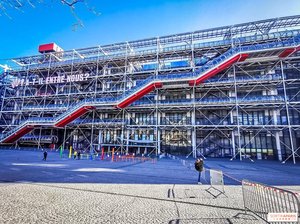
Centre Pompidou, ParisCentre Pompidou Paris 1 Self Portrait - The Frame
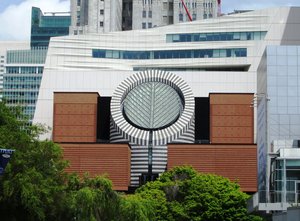
San Francisco Museum of Modern Art, San FranciscoSan Francisco Museum of Modern Art San Francisco 1 Frieda and Diego Rivera
Collection of Jacques - Natasha Gelman, Mexico CityCollection of Jacques - Natasha Gelman Mexico City 1 Self-Portrait with Monkeys
Hoover Gallery, San FranciscoHoover Gallery San Francisco 1 My Dress Hangs There

Frida Kahlo, one signature painting per decade

Works per decade

Pick a decade to see the original that defines it.

Frida Kahlo's paintings: the gallery answers

Which Frida Kahlo painting is the most famous of all?Reveal the answer

Frida Kahlo - `The Two Fridas` (1939). Self portrait with Thorn Necklace and Hummingbird and The Broken Column (1944) come next.

How old was Frida Kahlo on completing Frida Kahlo - `The Two Fridas`?Reveal the answer

32 years old: Frida Kahlo - `The Two Fridas` dates from 1939, and Frida Kahlo was born in 1907.

Which are Frida Kahlo's top 10 paintings?Reveal the answer

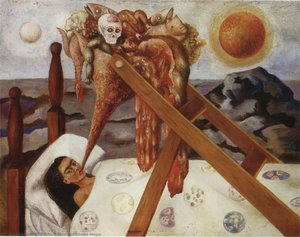
Frida Kahlo - `The Two Fridas`, Self portrait with Thorn Necklace and Hummingbird, The Broken Column, The Wounded Deer, Self Portrait - The Frame, Frieda and Diego Rivera, Self-Portrait with Monkeys, Frida y Diego Rivera, The Love Embrace of the Universe, The earth (Mexico), Myself, Diego and Señor Xó and The Broken Column. The ranking above gives each one's year and museum.

How many works did Frida Kahlo create?Reveal the answer

Our catalog holds 218 works by Frida Kahlo, dated from 1924 to 1954.

Where do Frida Kahlo's most famous originals hang?Reveal the answer

Mostly in Museo Dolores Olmedo (Mexico City), Frida Kahlo Museum (Mexico City) and MOMA - Museum of Modern Art (New York City). The museum table above lists them all.

When did Frida Kahlo create the most famous paintings?Reveal the answer

In 1940s: 23 of the 100 works on this page were made then, The Broken Column among them.

Which are Frida Kahlo's earliest and latest famous works?Reveal the answer

On this page, the earliest is Carta de Frida Kahlo a Alejandro Gómez Arias, 20 de septiembre de1924 (1924) and the latest Viva la Vida (1954).

Which subjects did Frida Kahlo return to most?Reveal the answer

Mexican art (38), Self-portrait (28) and Pain (27), across the 100 works on this page.

Which medium did Frida Kahlo work in most?Reveal the answer

Oil On Canvas, for 42 of the 100 works on this page.

Which movement is Frida Kahlo associated with?Reveal the answer

Surrealism, judging by the originals on this page.

Which Frida Kahlo originals does the Museo Dolores Olmedo hold?Reveal the answer

The Broken Column, A Few Small Nips (Passionately in Love) and Henry Ford Hospital (The Flying Bed): the Museo Dolores Olmedo, Mexico City holds 18 of the works on this page.

Frida Kahlo: the artist

Early Life and Family Background

Coyoacán, Mexico City, provides the setting for the birth of Magdalena Carmen Frieda Kahlo y Calderón on July 6, 1907. Her household is a convergence of different lineages. Her father, Guillermo Kahlo, works as a German-Mexican photographer. Her mother, Matilde, carries both Amerindian and Spanish descent. This domestic landscape shapes the early years of Frida Kahlo, a child whose physical reality begins to shift under the weight of illness.

At six years old, polio strikes. The disease leaves her with a permanent limp, a physical marker that will persist through her adulthood. She navigates a childhood defined by this vulnerability, yet her environment remains intellectually active. By 1922, she enters the National Preparatory School in Mexico City, one of only thirty-five female students in the institution. She is outspoken and brave in a space dominated by men.

A Life Defined by Physical Pain

The trajectory of Frida Kahlo's life shifts violently in 1925. A horrific bus accident shatters her reality, leaving her with catastrophic injuries including fractures to her spine, pelvis, and leg. The impact is not merely a momentary shock but a permanent state of being. She faces a lifetime of medical intervention, eventually undergoing 35 operations in total. The physical toll is relentless, a constant companion that dictates the rhythm of her existence.

Recovery begins in the stillness of confinement. Bound by plaster casts and the limitations of a broken body, she turns to a specialized easel adapted for use while lying down. This tool transforms her bed into a workspace. She begins to paint, turning her gaze inward to confront the trauma etched into her bones. Self-portraiture becomes her primary method of navigation, a way to document the reality of her own suffering. She once said, "I paint myself because I am often alone and I am the subject I know best."

Her canvas becomes a site of confrontation. She does not merely depict her likeness; she uses the medium to process the visceral experience of her own fragility. The pain is not a background element but the very substance of her visual language.

Marriage and Artistic Development

In 1929, Frida Kahlo marries the Mexican muralist Diego Rivera. The union is a volatile force, a tempestuous affair defined by intense passion and frequent infidelity. Their lives move between the studios of Mexico and the urban landscapes of San Francisco, California, and New York City. Amidst this emotional turbulence, a personal transformation occurs; around 1935, she drops the "e" from her name, transitioning from Frieda to Frida.

Her brushwork begins to coalesce into a singular visual language. She rejects simple imitation, instead blending the flattened forms and bright colors of Mexican folk art with elements of realism and surrealism. This style becomes her primary tool for navigating a life marked by separation and reconciliation. She does not merely paint her surroundings; she constructs a symbolic reality to process her existence.

Symbolic Works and Key Paintings

The canvas becomes a site of visceral confrontation. In Henry Ford Hospital (1932), the scene is raw and clinical, depicting her miscarriage through a floating arrangement of a fetus, a flower, a pelvis, and a snail, all tethered by veins. This unflinching gaze extends to her physical anatomy. In The Broken Column (1944), her torso is split open to reveal a crumbling Ionic column in place of her spine, held together by straps and pierced with nails. The pain is not merely felt; it is externalized through these heavy, structural metaphors.

Identity undergoes a violent split in her portraiture. The Two Fridas (1939) captures the duality of her selfhood following her divorce from Rivera, presenting two versions of herself linked by a shared circulatory system. This preoccupation with the self is a constant; of her 143 paintings, at least 55 are self-portraits. She uses her own image to navigate the complexities of her existence, often layering it with symbolic weight. In Self-Portrait with Thorn Necklace and Hummingbird (1940), thorns wrap around her neck to represent her enduring pain, while a hummingbird hangs suspended, a symbol of hope and resilience.

Legacy and Cultural Impact

The scale of her influence shifted dramatically after her death. While she lived in the shadow of the muralist movement, her reputation soared posthumously. By the 1980s, a surge of books focused on her life and work brought her image into the global consciousness. She became a figure who challenged traditional gender roles and societal expectations, using her own likeness to confront the viewer. Her presence moved beyond the canvas to become a symbol of resilience and strength for many.

André Breton recognized her within the Surrealist movement, describing her art as a ribbon around a bomb. This comparison captures the tension between her delicate forms and the explosive nature of her subject matter. She did not merely paint; she constructed a visual language of identity that resonated far beyond the borders of Mexico. Her life and her struggle became part of a larger cultural dialogue regarding the female experience and the politics of identity.