
 Preview
 Send
Send Share
Share
 Details
 Guide
Guide

 Download
 Similars
 X-Ray
X-Ray Diaporama
 Stats
StatsThe Broken Column
 Acrylic On Canvas
- WallArt
- Surrealism
 1944
1944- Modern
 43.0 x 33.0 cm
 Museo Dolores Olmedo
 Read More
Hand Made Oil Reproduction
Hand-painted oil on canvas in your size and frame, made to order by our artists. ( Switch to Print Switch to Digital Image)




P118B $10

P118H $10

P118W $10

P438Z $10

P508JH $12

P508YH $12

P805H $10

P805Z $10

P919BZ $10

P919G $10

P919XJ $10

P959ZH $10

P968JZ $12

W106C $8

W218G $10

W218JH $8

W218Y $10

W307PJ $10

W316G $10

W316PJ $8

W316Y $10

W398PJ $8

W4111J $10

W500HY $15

W500JH $15

W692G $12

W849H $8

W940BG $15

W953PJ $8




Pick from our preset sizes that match the artwork's original proportions.

Type the width and the height you need, to fit your frame or your wall. This is hand-painted, so for a size with a different shape the artist can paint a bit more around the picture, or cut a bit — you choose. We send you a digital mockup to approve before the painting starts. The picture shown on this page does not show the real result — only the mockup does.
After order, OriginalUniqueArt.com team will email client for instructions and provide a mockup preview
Worldwide Delivery () in 3/4 weeks instead of standard 5 weeks. (21 October). No compromise on quality.

Free Worldwide Express Shipping

High-Quality Linen Canvas

Full Shipping Insurance

Customs Tax Refund Guarantee

True Color Matching Guarantee

100-Day Return Policy (Defects Only)

100% Money-Back Guarantee

Bulk Discount Offer
 Glass option is only available in size under 110 CM

The Broken Column
Reproduction Medium
Reproduction Size
-


Total Price
$ 300
Frida Kahlo’s “The Broken Column”: Resilience Amidst Painful Beauty
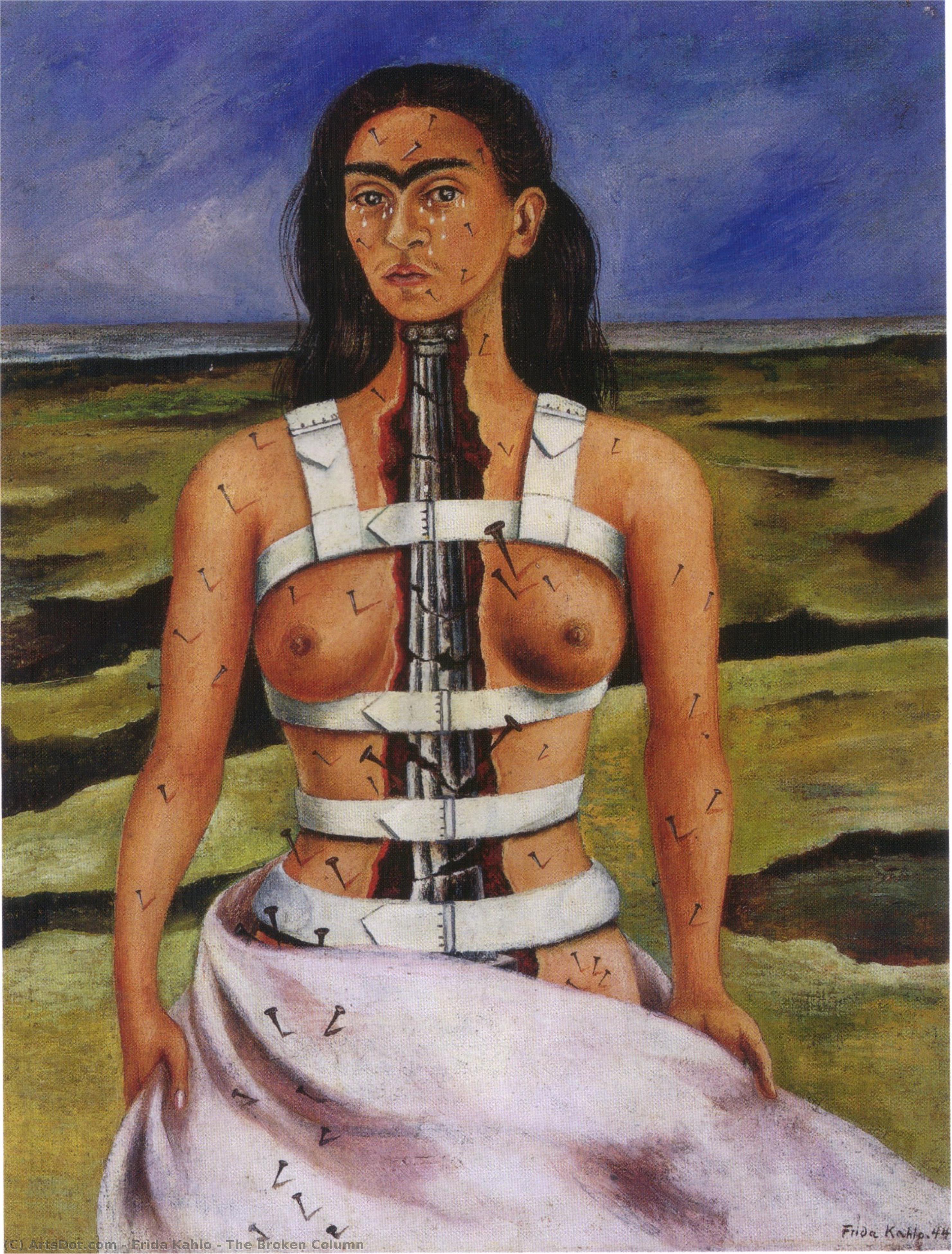
Frida Kahlo’s “The Broken Column,” painted in 1944, stands as one of her most poignant explorations of suffering and identity—a visual testament to the indelible mark that trauma leaves upon the human spirit. More than just a depiction of physical pain, it's a profound meditation on resilience, vulnerability, and the transformative power of art itself.
- Subject Matter: The painting portrays a woman in repose, positioned against a stark landscape reminiscent of the arid deserts of Mexico. Her gaze is unwavering, confronting the viewer with an unsettling serenity that belies the immense pain she embodies.
- Style & Technique: Kahlo’s signature primitivism shines through—bold colors juxtaposed with simplified forms convey raw emotion without resorting to elaborate ornamentation. The painting utilizes masonite as its substrate, lending it a textural quality that enhances the sense of immediacy and vulnerability. Thick brushstrokes dominate the composition, creating palpable physicality and emphasizing the artist's deliberate control over materiality.
- Historical Context: Created shortly after Kahlo underwent surgery to correct spinal damage sustained in her infamous bus accident—a pivotal event shaping her life’s trajectory—the artwork reflects the pervasive influence of Surrealism on Mexican art during that period. It aligns with Kahlo's broader preoccupation with themes of mortality, femininity, and psychological introspection.
Symbolism: At the heart of “The Broken Column” lies a powerful visual metaphor—a fractured column representing Kahlo’s spine, symbolizing not only her physical ailment but also the shattering impact of trauma on one's inner core. The nails piercing her torso and face serve as reminders of countless surgeries and treatments undertaken in pursuit of healing—yet they simultaneously underscore the inescapable presence of pain.
The woman’s corset symbolizes the constraints imposed by illness and societal expectations, highlighting Kahlo’s determination to maintain dignity and strength despite physical limitations. Two clocks – one on the left side and another at the bottom right corner – subtly reinforce the theme of time passing relentlessly, mirroring Kahlo's struggle against adversity and her unwavering commitment to artistic expression.
Emotional Impact: “The Broken Column” transcends mere representation; it communicates a visceral experience of anguish—a confrontation with vulnerability and an assertion of defiant beauty. Kahlo’s gaze is serene yet resolute, conveying a profound understanding of suffering while simultaneously inviting the viewer into her world of introspection. The painting's enduring power resides in its ability to evoke empathy and admiration for Kahlo’s unwavering spirit.
Location: This masterpiece resides at Museo Dolores Olmedo in Mexico City—a testament to Kahlo’s legacy as a celebrated artist and cultural icon. Visiting the museum offers an opportunity to immerse oneself in her artistic universe and contemplate the profound themes explored within “The Broken Column.”
- Further Exploration: For those interested in delving deeper into Frida Kahlo's oeuvre, reproductions of “Self-Portrait on the Borderline Between Mexico and Beyond” and “Thinking About Death” are available at Museo Dolores Olmedo.
To experience "The Broken Column" firsthand, explore The Broken Column and Portrait of Lady Cristina Hasting on OriginalUniqueArt. Additionally, the museum’s collection can be found at Museo Dolores Olmedo.
Questions & Answers
Toward which tone does "The Broken Column" lean?
"The Broken Column" leans toward an amber to saffron tone.
How can "The Broken Column" by Frida Kahlo be used in home decor?
"The Broken Column" by Frida Kahlo is recommended for accent, ideally in a living room. Use and space together guide where a reproduction fits.
Can I see an X-ray view of "The Broken Column" by Frida Kahlo?
The X-Ray page of "The Broken Column" by Frida Kahlo is an interactive viewer that lets you slide through eleven optical layers of the artwork's image, including an X-ray style view.
Artist Biography
A Life Forged in Pain and Passion
Magdalena Carmen Frida Kahlo y Calderón, known to the world simply as Frida Kahlo, was more than an artist; she was a force of nature, a defiant spirit whose life became inextricably woven into her art. Born on July 6, 1907, in Coyoacán, Mexico City, her existence was marked by physical suffering and emotional turbulence, experiences that would ultimately fuel the intensely personal and symbolic imagery for which she is celebrated. Her father, Guillermo Kahlo, a German-Mexican photographer, fostered her intellectual curiosity and artistic inclinations from an early age. However, Frida’s childhood was shadowed by illness; at six years old, she contracted polio, leaving her with a permanent limp and impacting her physical development. This early encounter with vulnerability and limitation would become a recurring theme in her work, shaping her perspective on the body, pain, and resilience. Even before the devastating accident that defined much of her artistic trajectory, Frida possessed a keen awareness of her own physicality and its inherent fragility.
The Shattered Body, The Blossoming Art
In 1925, at the tender age of eighteen, Frida’s life irrevocably changed. A horrific bus accident left her with catastrophic injuries – fractures to her spine, pelvis, and leg, among others. Confined to a lengthy period of recovery, often bedridden and encased in plaster casts, she turned inward, finding solace and expression through painting. Her mother provided an easel adapted for use while lying down, transforming the confines of her physical limitations into a space for artistic exploration. It was during this time that Frida began to explore self-portraiture with relentless intensity. Unable to venture out into the world, she turned her gaze inward, meticulously documenting her own image as a means of understanding and confronting her pain, both physical and emotional. These early works were not merely representations of her likeness; they were visceral explorations of identity, vulnerability, and the enduring power of the human spirit. The accident wasn’t simply a tragedy; it was a catalyst that unlocked her artistic potential, forcing her to confront her own mortality and find meaning in suffering.
A Tumultuous Union and Artistic Flourishing
Frida's life took another pivotal turn in 1929 when she married the renowned Mexican muralist Diego Rivera. Their relationship was a passionate but tempestuous affair, marked by intense love, infidelity, artistic rivalry, and periods of separation and reconciliation. Despite the emotional turmoil, Rivera proved to be a significant influence on Frida’s artistic development. He encouraged her unique vision, offering constructive criticism while recognizing the raw power and originality of her work. Under his guidance, and through her own relentless experimentation, Frida's style began to coalesce, blending elements of Mexican folk art, realism, and surrealism into a distinctive visual language. Her paintings became increasingly symbolic, exploring themes of identity, the human body, pain, death, and the complexities of female experience. She didn’t shy away from depicting her own suffering; instead, she embraced it as a central theme in her work, transforming personal trauma into universal statements about the human condition.
Symbols of Suffering, Resilience, and Identity
Frida Kahlo is perhaps best known for her self-portraits, which are characterized by their unflinching honesty and symbolic depth. Works like The Two Fridas (1939), a powerful depiction of her dual identity following her divorce from Rivera, showcase her ability to externalize internal conflict through striking visual metaphors. Self-Portrait with Thorn Necklace and Hummingbird (1940) is laden with symbolism – the thorns representing pain, the hummingbird symbolizing hope and resilience, and the black cat a harbinger of bad luck. The Broken Column (1944), a harrowing portrayal of her physical suffering, depicts Frida’s torso split open to reveal a crumbling Ionic column in place of her spine, held together by straps and pierced with nails. Even Henry Ford Hospital (1932), a raw and deeply personal depiction of her miscarriage, demonstrates her willingness to confront taboo subjects with unflinching honesty. These paintings are not simply representations of pain; they are acts of defiance, assertions of selfhood in the face of adversity.
A Lasting Legacy
Frida Kahlo’s influence extends far beyond the realm of art. She was a cultural icon who challenged traditional gender roles and societal expectations through her life and work. Her embrace of Mexican culture and identity helped to elevate its profile on the international stage, and her unflinching portrayal of pain resonated with audiences worldwide, making her a symbol of resilience and strength. She became an important figure for Chicanos in the United States, representing their cultural heritage and struggles. Though she resisted being categorized as a Surrealist, her work shares affinities with the movement’s exploration of the subconscious and dreamlike imagery. Today, Frida Kahlo is celebrated as one of the most important artists of the 20th century, whose legacy continues to inspire generations to embrace their identities, confront adversity, and express themselves authentically. Her art remains a testament to the enduring power of the human spirit to find beauty and meaning even in the darkest of times.
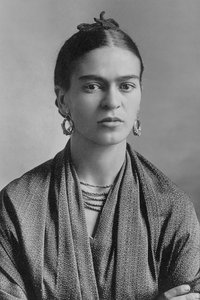
Frida Kahlo
1907 - 1954 , Mexico
Quick Facts
- Artistic Movement Or Style: Surrealism, Mexican folk art, Realism
- Artists Or Movements Influenced By This Artist:
- Chicano movement
- Feminist art
- Artists Who Influenced This Artist: ['Diego Rivera']
- Full Name: Magdalena Carmen Frieda Kahlo y Calderón
- Nationality: Mexican
- Notable Artworks:
- The Two Fridas
- The Broken Column
- Henry Ford Hospital
- Self-Portrait with Thorn Necklace
- Place Of Birth: Coyoacán, Mexico
- Date Of Birth: 1907
- Date Of Death: 1954
Related Articles
Unveiling Frida Kahlo: A Journey Through Her Most Iconic Masterpieces and the Soul of Mexican Surrealism
Embark on a profound journey through Frida Kahlo's most iconic masterpieces. Discover the deep symbolism, Mexican heritage, and resilient spirit behind her legendary works in this expert art-historical exploration designed for true art enthusiasts.
Frida Kahlo: A Life Painted – Surrealism, Identity & Autobiographical Narrative
Explore the life & art of Frida Kahlo – a journey through surrealism, identity, pain, and resilience. Discover her autobiographical masterpieces & lasting feminist legacy with OriginalUniqueArt.

Surrealism's Greatest Hits: 10 Masterpieces for Your Home |
Journey into the dreamlike world of Surrealism! Explore 10 masterpieces by Dali, Magritte & Miró. Discover the stories behind these iconic paintings and find museum-quality art reproductions for your home at .
Revolution on Canvas: Exploring the Socio-Political Power & Artistic Legacy of Mexican Muralism
Explore the powerful world of Mexican muralism! Discover Diego Rivera, Frida Kahlo & Orozco's revolutionary art, social impact & lasting legacy. Expert insights & high-quality reproductions at OriginalUniqueArt.
Vibrant Colors & Deep Soul: A Journey Through the Emotional Landscapes of Iconic Mexican Art
Embark on a visual journey through the vibrant colors and profound symbolism of iconic Mexican art. Explore the emotional depth of Frida Kahlo and other masters through our expert cultural analysis and premium hand-painted reproductions.


