Portrait of Diego Velázquez

Diego Velázquez Paintings: The 100 Most Famous, Through a Gallery's Eye

Updated October 2026 · ranked by our popularity score (searches, visits and orders for each work) · 468 works by Diego Velázquez in our catalogue

In short

To the gallery's eye, Diego Velázquez's most famous painting is Las Meninas (The Maids of Honor) or the Royal Family (1656), whose original hangs in the Museo del Prado, Madrid. The Rokeby Venus (1648) and The Surrender of Breda (Las Lanzas) (1634) complete the trio every eye recognises. Of the 468 works by Diego Velázquez in our catalog, the gallery presents the 100 most famous below, each original with its year, its museum and what makes it unique.

1599 – 1660, Seville Baroque Most works: Museo del Prado

The gallery's top 10 Diego Velázquez paintings

1
Las Meninas (The Maids of Honor) or the Royal Family (1656) by Diego Velázquez

Las Meninas (The Maids of Honor) or the Royal Family

1656 · Oil On Canvas · Museo del Prado, Madrid

Immerse yourself in the captivating world of Diego Velázquez's masterpiece, "Las Meninas" (1656). This iconic painting is a cornerstone of Spanish Baroque art and a testament to Velázquez's unparalleled skill. As you explore this extraordinary work, you'll uncover layers of meaning, historical significance, and artistic brilliance that continue to inspire art lovers, collectors, and interior designers alike.

3
The Surrender of Breda (Las Lanzas) (1634) by Diego Velázquez

The Surrender of Breda (Las Lanzas)

1634 · Oil On Canvas · Museo del Prado, Madrid

A Moment Frozen in Time: Dignity Amidst Defeat Diego Velázquez’s monumental “The Surrender of Breda” (1634) is more than a depiction of military victory; it's a profound meditation on honor, grace, and the human cost of conflict. This iconic Baroque masterpiece captures the pivotal moment in 1625 when the Dutch city of Breda yielded to Spanish forces during the Eighty Years’ War, but transcends simple historical documentation to become a…

4
Portrait of Pope Innocent X (1650) by Diego Velázquez

Portrait of Pope Innocent X

1650 · Oil On Canvas · Galleria Doria Pamphilj, Rome

Before embarking on my second voyage to Italy in 1649, I was plagued by an unsettling indifference toward Diego Velázquez’s oeuvre. It wasn't dislike—rather, a profound lack of comprehension. The Spanish Baroque master seemed impenetrable, his canvases stubbornly refusing to yield their secrets. Then came Rome, and with it, the Galleria Doria Pamphilj, where Velázquez’s *Portrait of Pope Innocent X* resided. Standing before it was like encountering a revelation; the…

5
The Fable of Arachne (Las Hilanderas) (1657) by Diego Velázquez

The Fable of Arachne (Las Hilanderas)

1657 · Oil On Canvas · Museo del Prado, Madrid

Diego Velázquez's "The Fable of Arachne" (Las Hilanderas) is a captivating masterpiece that encapsulates the essence of Spanish Baroque art. This intricate painting, created in 1657, tells the mythological story of Arachne, a mortal weaver who challenged the goddess Athena to a weaving competition. Velázquez's depiction of this legendary contest is not only a testament to his artistic prowess but also a profound exploration of creativity, skill, and divine intervention.

6
Christ Crucified by Diego Velázquez

Christ Crucified

Oil On Canvas

Diego Velázquez's Christ Crucified is a powerful and emotive painting that captures the intensity of the crucifixion scene. Created in 1632, this oil-on-canvas work is now housed at the Museo del Prado in Madrid, Spain. The Artistic Context During his stay in Rome, Velázquez made various nude studies that he later incorporated into his paintings. The nude study for Christ Crucified is particularly noteworthy for its fusion of serenity, dignity,…

7
The Forge of Vulcan (1630) by Diego Velázquez

The Forge of Vulcan

1630 · Oil On Canvas · Museo del Prado, Madrid

Diego Velázquez’s “The Forge of Vulcan,” painted in 1630, is more than just a depiction of a blacksmith's workshop; it’s a meticulously crafted tableau brimming with mythological allusion, psychological tension, and the hallmarks of Velázquez’s revolutionary approach to painting. This Baroque masterpiece, currently residing within the hallowed halls of the Museo del Prado, offers a captivating glimpse into the world of Apollo, Vulcan, and Venus, rendered with an astonishing level…

8
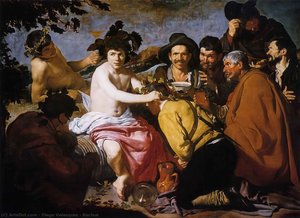
Bachus by Diego Velázquez

Bachus

Oil On Canvas · Museo del Prado, Madrid

A Revel in Baroque Excess: Decoding Velázquez’s *Bachus* Diego Velázquez's *Bachus*, painted in 1629, is far more than a depiction of the Roman god of wine; it’s a vibrant snapshot of early 17th-century Spanish life infused with mythological allegory. Currently residing in the esteemed Museo del Prado, Madrid, this painting – also known as *Los Borrachos* (The Drunks) – offers a captivating glimpse into Velázquez's evolving style and his masterful…

9
An Old Woman Cooking Eggs (1618) by Diego Velázquez

An Old Woman Cooking Eggs

1618 · Oil On Canvas · Scottish National Gallery, Edinburgh

Diego Rodríguez de Silva y Velázquez's "An Old Woman Cooking Eggs," painted around 1618 during his formative years in Seville, is far more than a simple depiction of a kitchen scene. It’s a remarkably astute observation of everyday life, imbued with an almost unsettling realism and a profound understanding of human psychology—a hallmark that would define the artist's entire career. This unassuming painting, now residing in the Scottish National Gallery,…

10
Juan de Pareja (1650) by Diego Velázquez

Juan de Pareja

1650 · Acrylic On Canvas · Metropolitan Museum of Art, New York

Diego Rodríguez de Silva y Velázquez: A Window into Baroque Dignity Diego Rodríguez de Silva y Velázquez, born in Seville in 1599, stands as a towering figure in the history of Spanish art and indeed, Western painting. His life coincided with the Golden Age of Spain, a period of immense political power and cultural flourishing, and his artistry became inextricably linked to the grandeur and complexity of the Habsburg court.…

Diego Velázquez paintings, ranked 11 to 100

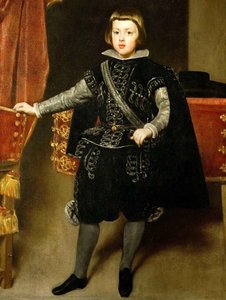
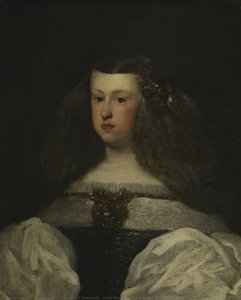
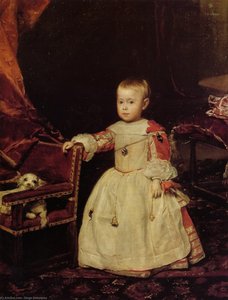
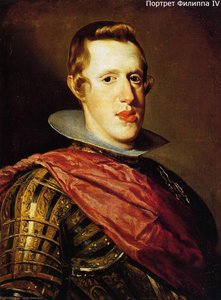
11The Waterseller of Seville (1623) by Diego VelázquezThe Waterseller of Seville1623 · Wellington Museum 12Infanta Margarita Teresa in a Blue Dress (1659) by Diego VelázquezInfanta Margarita Teresa in a Blue Dress1659 · Kunsthistorisches Museum 13A Dwarf Sitting on the Floor (Sebastian de Morra) by Diego VelázquezA Dwarf Sitting on the Floor (Sebastian de Morra)Museo del Prado 14Luncheon (1617) by Diego VelázquezLuncheon1617 · Hermitage Museum 15The Coronation of the Virgin (1645) by Diego VelázquezThe Coronation of the Virgin1645 · Museo del Prado 16Christ in the House of Mary and Martha (1620) by Diego VelázquezChrist in the House of Mary and Martha1620 · National Gallery 17Adoration of the Kings (1619) by Diego VelázquezAdoration of the Kings1619 · Museo del Prado 18Prince Balthasar Carlos (1639) by Diego VelázquezPrince Balthasar Carlos1639 19Las Meninas or The Family of Philip IV (1656) by Diego VelázquezLas Meninas or The Family of Philip IV1656 · Museo del Prado 20Las Meninas (detail) (1656) by Diego VelázquezLas Meninas (detail)1656 · Museo del Prado 21Tavern Scene with Two Men and a Girl (1619) by Diego VelázquezTavern Scene with Two Men and a Girl1619 · Szépművészeti Múzeum 22La toilette di venere by Diego VelázquezLa toilette di venereNational Gallery 23The Coronation of the Virgin (detail) (1645) by Diego VelázquezThe Coronation of the Virgin (detail)1645 · Museo del Prado 24The Fable of Arachne (detail) (1657) by Diego VelázquezThe Fable of Arachne (detail)1657 · Museo del Prado 25Infanta Margarita (1654) by Diego VelázquezInfanta Margarita1654 · The Louvre 26Las Meninas (detail) (1656) by Diego VelázquezLas Meninas (detail)1656 · Museo del Prado 27Philip IV on Horseback (1634) by Diego VelázquezPhilip IV on Horseback1634 · Museo del Prado 28Pope Innocent X (1650) by Diego VelázquezPope Innocent X1650 · National Gallery of Art 29Head of a Girl (1624) by Diego VelázquezHead of a Girl1624 30Queen Doña Mariana of Austria (1652) by Diego VelázquezQueen Doña Mariana of Austria1652 · Museo del Prado 31The Surrender of Breda (detail) (9) (1634) by Diego VelázquezThe Surrender of Breda (detail) (9)1634 · Museo del Prado 32Las Hilanderas (The Spinners) by Diego VelázquezLas Hilanderas (The Spinners)Museo del Prado 33Las Meninas (detail) (11) (1656) by Diego VelázquezLas Meninas (detail) (11)1656 · Museo del Prado 34Self-portrait (1645) by Diego VelázquezSelf-portrait1645 35The crucifixion by Diego VelázquezThe crucifixionMuseum of Fine Arts Ghent (MSK) 36Venus at her Mirror (The Rokeby Venus) (1649) by Diego VelázquezVenus at her Mirror (The Rokeby Venus)1649 · National Gallery 37Saint Paul (1620) by Diego VelázquezSaint Paul1620 38Dona Mariana of Austria, Queen of Spain (1649) by Diego VelázquezDona Mariana of Austria, Queen of Spain1649 · Legion of Honor 39Las Meninas (detail) (12) (1656) by Diego VelázquezLas Meninas (detail) (12)1656 · Museo del Prado 40The Surrender of Breda (detail) (1634) by Diego VelázquezThe Surrender of Breda (detail)1634 · Museo del Prado 41Portrait of Philip IV, King of Spain (1640) by Diego VelázquezPortrait of Philip IV, King of Spain1640 · Hermitage Museum 42The Fable of Arachne (detail) (1657) by Diego VelázquezThe Fable of Arachne (detail)1657 · Museo del Prado 43Las Meninas (detail) (1656) by Diego VelázquezLas Meninas (detail)1656 · Museo del Prado 44Coronation of the Virgin (1644) by Diego VelázquezCoronation of the Virgin1644 45Philip IV, King of Spain (1655) by Diego VelázquezPhilip IV, King of Spain1655 · Cincinnati Art Museum 46The Fountain of the Tritons in the Island Garden, Aranjuez (1657) by Diego VelázquezThe Fountain of the Tritons in the Island Garden, Aranjuez1657 · Museo del Prado 47Don Cristobal Suarez de Ribera (1620) by Diego VelázquezDon Cristobal Suarez de Ribera1620 48The Infanta Doña Margarita de Austria (1660) by Diego VelázquezThe Infanta Doña Margarita de Austria1660 · Museo del Prado 49Philip III on Horseback (detail) (1634) by Diego VelázquezPhilip III on Horseback (detail)1634 · Museo del Prado 50King Philip IV as a Huntsman (1634) by Diego VelázquezKing Philip IV as a Huntsman1634 · Museo del Prado 51A Buffoon (incorrectly called Antonio The Englishman) (1640) by Diego VelázquezA Buffoon (incorrectly called Antonio The Englishman)1640 · Museo del Prado 52Infanta Margarita (1654) by Diego VelázquezInfanta Margarita1654 · Kunsthistorisches Museum 53The Coronation of the Virgin (1645) by Diego VelázquezThe Coronation of the Virgin1645 · Museo del Prado 54Arachne (1644) by Diego VelázquezArachne1644 · Meadows Museum 55Portrait of the Infanta Margarita Aged Five (1656) by Diego VelázquezPortrait of the Infanta Margarita Aged Five1656 56Portrait of the Infanta Marguerite in Bust (formerly Marie-Anne d'Autriche) (1660) by Diego VelázquezPortrait of the Infanta Marguerite in Bust (formerly Marie-Anne d'Autriche)1660 · Musée des Beaux-Arts de Pau 57Prince Philip Prosper, Son of Philip IV (1659) by Diego VelázquezPrince Philip Prosper, Son of Philip IV1659 58St Anthony Abbot and St Paul the Hermit (detail) (1635) by Diego VelázquezSt Anthony Abbot and St Paul the Hermit (detail)1635 · Museo del Prado 59St John the Evangelist at Patmos (1618) by Diego VelázquezSt John the Evangelist at Patmos1618 · National Gallery 60An Old Woman Cooking Eggs (1618) by Diego VelázquezAn Old Woman Cooking Eggs1618 · The Scottish National Gallery 61Pope Innocent X (1655) by Diego VelázquezPope Innocent X1655 · Isabella Stewart Gardner Museum 62Pope Innocent X (1650) by Diego VelázquezPope Innocent X1650 63King Philip IV of Spain (1629) by Diego VelázquezKing Philip IV of Spain1629 · Bavarian State Painting Collections 64The Fable of Arachne (detail) (1657) by Diego VelázquezThe Fable of Arachne (detail)1657 · Museo del Prado 65Count-Duke of Olivares on Horseback by Diego VelázquezCount-Duke of Olivares on Horseback 66Isabella of Bourbon (1625) by Diego VelázquezIsabella of Bourbon1625 67Prince Baltasar Carlos as a Hunter (1635) by Diego VelázquezPrince Baltasar Carlos as a Hunter1635 · Museo del Prado 68Philip IV in Armour (1628) by Diego VelázquezPhilip IV in Armour1628 · Museo del Prado 69Prince Felipe Próspero, oil on canvas, Art H (1659) by Diego VelázquezPrince Felipe Próspero, oil on canvas, Art H1659 70Philip IV (1624) by Diego VelázquezPhilip IV1624 71A Young Man (detail) (1623) by Diego VelázquezA Young Man (detail)1623 · Museo del Prado 72María Teresa (1652) by Diego VelázquezMaría Teresa1652 · Kunsthistorisches Museum 73Christ in the House of Mary and Martha (detail) (1620) by Diego VelázquezChrist in the House of Mary and Martha (detail)1620 · National Gallery 74La reina Margarita de Austria, a caballo by Diego VelázquezLa reina Margarita de Austria, a caballo 75The Surrender of Breda (detail) (1634) by Diego VelázquezThe Surrender of Breda (detail)1634 · Museo del Prado 76Portrait of a Man (1652) by Diego VelázquezPortrait of a Man1652 · Chrysler Museum of Art 77Don Gaspde Guzman, Count of Olivares and Duke of San Lucla Mayor (1627) by Diego VelázquezDon Gaspde Guzman, Count of Olivares and Duke of San Lucla Mayor1627 · Hispanic Society Museum - Library 78The Toilet of Venus (The Rokeby Venus) (1651) by Diego VelázquezThe Toilet of Venus (The Rokeby Venus)1651 79Prince Baltasar Carlos as Hunter (detail) (1635) by Diego VelázquezPrince Baltasar Carlos as Hunter (detail)1635 · Museo del Prado 80St. Anthony Abbot (1638) by Diego VelázquezSt. Anthony Abbot1638 81Juan Mateos (1634) by Diego VelázquezJuan Mateos1634 82Luis Gongora y Argote, oil on canvas, Museum (1622) by Diego VelázquezLuis Gongora y Argote, oil on canvas, Museum1622 83María Teresa, Infanta of Spain (601) by Diego VelázquezMaría Teresa, Infanta of Spain601 · Metropolitan Museum of Art 84The white horse by Diego VelázquezThe white horse 85Venus at Her Mirror by Diego VelázquezVenus at Her Mirror 86The Immaculate Conception (1619) by Diego VelázquezThe Immaculate Conception1619 87The Dwarf Sebastian de Morra (1645) by Diego VelázquezThe Dwarf Sebastian de Morra1645 · Museo del Prado 88Le favola di Aracne by Diego VelázquezLe favola di Aracne 89Portrait of Don Pedro de Barberana (1631) by Diego VelázquezPortrait of Don Pedro de Barberana1631 · Kimbell Art Museum 90Philip IV in Brown and Silver (1631) by Diego VelázquezPhilip IV in Brown and Silver1631 · National Gallery 91Philip IV (1624) by Diego VelázquezPhilip IV1624 · Museo del Prado 92A Knight of the Order of Santiago (1650) by Diego VelázquezA Knight of the Order of Santiago1650 · Staatliche Kunstsammlungen Dresden 93The Fable of Arachne (detail) (1657) by Diego VelázquezThe Fable of Arachne (detail)1657 · Museo del Prado 94Philip IV in Armor (1628) by Diego VelázquezPhilip IV in Armor1628 95The Fable of Arachne (Las Hilanderas) (1657) by Diego VelázquezThe Fable of Arachne (Las Hilanderas)1657 · Museo del Prado 96Man with a Wine Glass (1630) by Diego VelázquezMan with a Wine Glass1630 · Toledo Museum of Art 97Christ on the Cross (1632) by Diego VelázquezChrist on the Cross1632 · Museo del Prado 98Philip IV in Brown and Silver, oil on can (1632) by Diego VelázquezPhilip IV in Brown and Silver, oil on can1632 99Queen Mariana (1657) by Diego VelázquezQueen Mariana1657 · Pennsylvania Academy of Fine Arts 100The Farmers' Lunch by Diego VelázquezThe Farmers' Lunch

Diego Velázquez's famous paintings, period by period

The subjects that held Diego Velázquez's eye

The four subjects that come back most often in these originals, each with its finest example.

The museums that keep Diego Velázquez's originals

The 8 museums that hold the most of the paintings on this page.

Museum City Works by Diego Velázquez Paintings from this list
Museo del Prado, MadridMuseo del Prado Madrid 94 Las Meninas (The Maids of Honor) or the Royal Family, The Surrender of Breda (Las Lanzas), The Fable of Arachne (Las Hilanderas)
National Gallery, LondonNational Gallery London 14 The Rokeby Venus, Christ in the House of Mary and Martha, La toilette di venere
Kunsthistorisches Museum, ViennaKunsthistorisches Museum Vienna 16 Infanta Margarita Teresa in a Blue Dress, Infanta Margarita, María Teresa
Metropolitan Museum of Art, New YorkMetropolitan Museum of Art New York 5 Juan de Pareja, María Teresa, Infanta of Spain
Hermitage Museum, Saint PetersburgHermitage Museum Saint Petersburg 4 Luncheon, Portrait of Philip IV, King of Spain
Meadows Museum, DallasMeadows Museum Dallas 4 Arachne
Hispanic Society Museum - Library, New YorkHispanic Society Museum - Library New York 4 Don Gaspde Guzman, Count of Olivares and Duke of San Lucla Mayor
Wellington Museum, LondonWellington Museum London 3 The Waterseller of Seville

Diego Velázquez, one signature painting per decade

Works per decade

Pick a decade to see the original that defines it.

Diego Velázquez's paintings: the gallery answers

Which Diego Velázquez painting is the most famous of all?Reveal the answer

Las Meninas (The Maids of Honor) or the Royal Family (1656), Museo del Prado, Madrid. The Rokeby Venus (1648) and The Surrender of Breda (Las Lanzas) (1634) come next.

How old was Diego Velázquez on completing Las Meninas (The Maids of Honor) or the Royal Family?Reveal the answer

57 years old: Las Meninas (The Maids of Honor) or the Royal Family dates from 1656, and Diego Velázquez was born in 1599.

Which are Diego Velázquez's top 10 paintings?Reveal the answer

Las Meninas (The Maids of Honor) or the Royal Family, The Rokeby Venus, The Surrender of Breda (Las Lanzas), Portrait of Pope Innocent X, The Fable of Arachne (Las Hilanderas), Christ Crucified, The Forge of Vulcan, Bachus, An Old Woman Cooking Eggs and Juan de Pareja. The ranking above gives each one's year and museum.

How many works did Diego Velázquez create?Reveal the answer

Our catalog holds 468 works by Diego Velázquez, dated from 1617 to 1660.

Where do Diego Velázquez's most famous originals hang?Reveal the answer

Mostly in Museo del Prado (Madrid), National Gallery (London) and Kunsthistorisches Museum (Vienna). The museum table above lists them all.

When did Diego Velázquez create the most famous paintings?Reveal the answer

In 1650s: 32 of the 100 works on this page were made then, Las Meninas (The Maids of Honor) or the Royal Family among them.

Which are Diego Velázquez's earliest and latest famous works?Reveal the answer

On this page, the earliest is Luncheon (1617) and the latest The Infanta Doña Margarita de Austria (1660).

Which subjects did Diego Velázquez return to most?Reveal the answer

Portraiture (23), Portrait (20) and Spanish art (19), across the 100 works on this page.

Which medium did Diego Velázquez work in most?Reveal the answer

Oil On Canvas, for 81 of the 100 works on this page.

Which movement is Diego Velázquez associated with?Reveal the answer

Baroque, judging by the originals on this page.

Which Diego Velázquez originals does the Museo del Prado hold?Reveal the answer

Las Meninas (The Maids of Honor) or the Royal Family, The Surrender of Breda (Las Lanzas) and The Fable of Arachne (Las Hilanderas): the Museo del Prado, Madrid holds 40 of the works on this page.

Can I have a Diego Velázquez painting reproduced by hand?Reveal the answer

Yes, as a reproduction: the original stays in its museum, but any painting on this page can be painted by hand for you, made to order one at a time, from the painting's own page.

Diego Velázquez: the artist

Early Life, Family and Training in Seville

Diego Velázquez was born in Seville, Spain, in 1599. He was the first child of Juan Rodríguez de Silva, a notary or lawyer, and Jerónima Velázquez. His arrival in the world was marked by his baptism at the Church of St. Peter in Seville on Sunday, 6 June 1599.

The boy's path toward painting began early. At the age of eleven, he was apprenticed to Francisco Pacheco, a man who would become a significant influence on his technical foundation. This apprenticeship lasted six years, starting in 1611. Through this training, he learned the essential skills of drawing, painting, and the study of proportion. His life in Seville was deeply connected to his teacher; in 1618, he married Juana Pacheco, the daughter of his mentor. Together, they had two daughters, Francisca and Ignacia.

During these formative years in Seville, his work often focused on the quiet details of everyday life and religious subjects. Some of his early output from this period includes:

The Rise to the Spanish Royal Court

By the early 1620s, the young man from Seville was ready for more than the quiet life of a provincial painter. In April 1622, he traveled to Madrid, a move that would change the course of his life. The connections of his father-in-law helped open doors that few others could enter. By 1623, he was already being asked to paint a portrait of the young King Philip IV. This was a significant responsibility for someone so young, yet it marked the beginning of a lifelong bond with the Spanish crown.

He eventually secured a formal place in the royal service. The arrangement was practical: he received a salary of 20 ducats per month, lodgings, and payment for the specific pictures he produced. This stability allowed him to become the official court painter to King Philip IV of Spain and Portugal. He remained in this position for the rest of his life, moving through the halls of power as a constant presence in the lives of the nobility. His status was not merely professional; it was a climb through the social layers of a highly structured society. In 1658, this ascent reached a personal peak when he was offered knighthood in the Order of Santiago.

Artistic Technique and Evolving Style

In his early years, Velázquez worked within the boundaries of an idealizing style, one rooted in the strictures of Catholic propriety. His training under Francisco Pacheco provided a foundation in these traditional methods, but the young painter soon felt a pull toward something more direct. He began to move away from his teacher's more old-fashioned approach, choosing instead to paint directly from life. This shift allowed him to embrace a naturalism similar to that of Caravaggio, where figures were rendered with a sense of weight and presence that felt immediate and real.

As his hand grew more confident, his method underwent a profound transformation. He moved away from the sharp, photographic realism of his youth toward a style defined by loose brushwork and subtle gradations of tone. He developed a way of handling paint that seemed to capture the very essence of a subject through the careful rendering of volumes and textures. This technique gave his work a miraculous gift for conveying a sense of truth, making the surfaces of fabric, skin, and stone feel tangible to anyone standing before them.

Key Works and Masterpieces

In his early years in Seville, Velázquez focused on the quiet, everyday moments of life. In 1618, he completed Old Woman Frying Eggs, a work that captured a simple kitchen scene with a sense of dignity. This was followed by The Waterseller of Seville, which he painted between 1618 and 1622. These early pieces showed a growing ability to handle light and texture in the most common settings.

As his career moved toward the royal court, his subjects changed from tavern scenes to the complex figures of the Spanish monarchy. The Surrender of Breda, painted between 1634 and 1635, offered a human perspective on military victory. His later years saw him experimenting with how a viewer perceives space and reality. His 1656 work, Las Meninas, remains a profound puzzle of perspective, placing the Infanta Margarita Teresa and her attendants in a room where the lines between the painted world and the real world blur. Shortly after, in 1657, he produced The Fable of Arachne (Las Hilanderas).

Legacy and Enduring Influence

The ripples from his brush reached far beyond the Spanish court, altering the direction of Western art. His ability to capture the essence of a person or a moment through light and shadow provided a blueprint for those who followed. In the 19th century, French Realist painters like Gustave Courbet looked to his work as a model for their own commitment to depicting life without idealization. They found in his paintings a way to approach the world as it truly appeared, rather than how it was traditionally imagined.

His influence became even more direct in the hands of later innovators. Édouard Manet found deep inspiration in the composition of Las Meninas, a work that continues to challenge how we perceive the relationship between the viewer and the painted scene. This fascination with his methods prompted Pablo Picasso to create a series of variations on the same subject, deconstructing and reassembling the figures to explore new perspectives. Even the intense, visceral works of Francis Bacon engaged with his paintings through various reinterpretations and homages, proving that his visual language remained potent across centuries.

Where to See the Works Today

To stand before a Velázquez is to encounter the quiet weight of history. Many of his most significant paintings remain in Madrid, housed within the Museo del Prado. This collection offers a deep look into the life he led at the heart of the Spanish court. If you find yourself traveling through Europe, you might also find his hand in the National Gallery in London or the Kunsthistorisches Museum in Vienna. These spaces hold pieces that reflect his ability to capture a person's presence through light and shadow.

His influence reaches far beyond the borders of Spain. In Saint Petersburg, the Hermitage Museum preserves works that show his technical skill. Across the Atlantic, the Metropolitan Museum of Art in New York holds several of his paintings, allowing viewers in the Americas to experience his brushwork firsthand. Even in Edinburgh, the National Gallery of Scotland keeps his work, ensuring his vision remains accessible to those wandering through the city.

All 468 works by Diego Velázquez →