Portrait of Benvenuto Cellini

The 80 Most Famous Benvenuto Cellini Paintings, a Gallery Selection

Updated November 2026 · ranked by our popularity score (searches, visits and orders for each work) · 80 works by Benvenuto Cellini in our catalogue

In short

Of all the originals Benvenuto Cellini left, the most famous is Salt Cellar (1540), in the collection of the Kunsthistorisches Museum, Vienna. Close behind it come Jupiter (1545) and Crucifix (detail) (1562). Our catalog holds 80 works by Benvenuto Cellini; the gallery has kept the 80 the world admires most, each shown with its date, its museum and its story.

1500 – 1571, Florence Mannerism Most works: Museo Nazionale del Bargello

Benvenuto Cellini's top 10 paintings: the gallery's choice

1
Salt Cellar (1540) by Benvenuto Cellini

Salt Cellar

1540 · Gold · Kunsthistorisches Museum, Vienna

The Salt Cellar, also known as the Saliera, is a sumptuous gold, enamel, and ebony sculpture created by Benvenuto Cellini. Completed between 1540 and 1543, this work was commissioned by Francis I of France. The piece is characterized by its intricate detail and dynamic figures, serving as a premier example of Mannerist style. The sculpture is composed of hand-hammered gold, meticulous enamel application, and ebony inlay.

2
Jupiter (1545) by Benvenuto Cellini

Jupiter

1545 · Bronze · Museo Nazionale del Bargello, Florence

To stand before this magnificent depiction of Jupiter is to confront raw, untamed power rendered in the enduring majesty of bronze. This sculpture does not merely represent a god; it embodies the very force of nature—the thunderous authority that commands the skies. The figure dominates the space with an undeniable gravitas, his musculature meticulously articulated as if carved by the passing winds themselves. Observe the dynamic tension captured in his…

3
Crucifix (detail) (1562) by Benvenuto Cellini

Crucifix (detail)

1562 · Marble · Monasterio de San Lorenzo, Escorial

Benvenuto Cellini’s 1562 marble sculpture, “Crucifix (detail),” is not merely a depiction of Christ’s suffering; it’s an immersive experience. Within the dimly lit confines of El Escorial, this intimate piece draws you into a world of profound emotion and technical mastery – a testament to Cellini's genius as both goldsmith and sculptor. The sculpture immediately commands attention with its stark realism and the palpable sense of agony radiating from the…

4
Morion for Francesco I de' Medici (1570) by Benvenuto Cellini

Morion for Francesco I de' Medici

1570 · Metalwork · Staatliche Kunstsammlungen, Dresden

In the grand tapestry of the Italian Renaissance, few objects capture the intersection of martial prestige and artistic virtuosity as profoundly as the Morion for Francesco I de' Medici. Created in 1570 by the legendary polymath Benvenuto Cellini, this is far more than a mere piece of protective headgear; it is a sculptural triumph rendered in metal. As a quintessential example of Mannerism, the Morion rejects the tranquil equilibrium of…

5
Danae and her Son Perseus (1545) by Benvenuto Cellini

Danae and her Son Perseus

1545 · Bronze · Museo Nazionale del Bargello, Florence

The bronze sculpture Danae and her Son Perseus by Benvenuto Cellini captures a moment of divine intersection. Created between 1545 and 1553 for Cosimo I de' Medici, the work depicts the mythological event where Zeus visits Danae in the form of golden rain. This Renaissance Mannerist piece resides within the Museo Nazionale del Bargello in Florence, Italy.

6
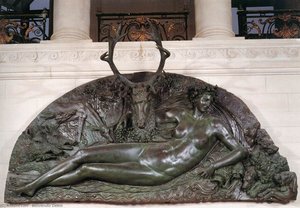
Nymph of Fontainebleau (1542) by Benvenuto Cellini

Nymph of Fontainebleau

1542 · Bronze · The Louvre, Paris

To stand before the Nymph of Fontainebleau is to step directly into the languid, sun-dappled world of the Italian Renaissance. This magnificent bronze sculpture by Benvenuto Cellini does more than merely depict a figure; it captures an ephemeral moment—a breath held between slumber and awakening. The central subject, the reclining nymph, embodies a timeless confluence of nature’s grace and mythological mystery. Her pose is one of exquisite repose, her body…

7
Perseus (1540) by Benvenuto Cellini

Perseus

1540 · Bronze · Museo Nazionale del Bargello, Florence

In the heart of Florence’s Piazza della Signoria, amidst the architectural grandeur of the Loggia dei Lanzi, stands a masterpiece that captures the very essence of Mannerist tension and heroic triumph. Benvenuto Cellini’s Perseus is not merely a sculpture; it is a dramatic performance frozen in bronze. Created between 1545 and 1554, this monumental work depicts the legendary hero Perseus at the climactic moment of his mythic journey. He stands…

8
Bust of Cosimo I (detail) (1546) by Benvenuto Cellini

Bust of Cosimo I (detail)

1546 · Bronze · Museo Nazionale del Bargello, Florence

In the heart of the Italian Renaissance, where the pursuit of beauty met the raw ambition of political power, Benvenuto Cellini forged a masterpiece that transcends mere portraiture. The Bust of Cosimo I is not simply a likeness of the Grand Duke of Tuscany; it is a profound meditation on authority, captured in the enduring medium of bronze. To gaze upon this work is to step into the vibrant, often…

9
Bust of Bindo Altoviti (1549) by Benvenuto Cellini

Bust of Bindo Altoviti

Benvenuto Cellini's “Bust of Bindo Altoviti,” crafted in 1549, isn’t merely a sculpted likeness; it’s a meticulously constructed window into the heart of Renaissance Florence. This bronze masterpiece, now residing within the Isabella Stewart Gardner Museum in Boston, transcends simple portraiture to become a profound meditation on wealth, power, and the very essence of human representation. The subject, Bindo Altoviti, a prominent Florentine banker and astute political player, is rendered…

10
Perseus (1540) by Benvenuto Cellini

Perseus

1540 · Bronze · Museo Nazionale del Bargello, Florence

In the heart of Florence, amidst the architectural grandeur of the Loggia dei Lanzi, stands a masterpiece that captures the very essence of human struggle and divine victory. Benvenuto Cellini’s Perseus is not merely a sculpture; it is a breathtaking moment frozen in bronze, a dramatic climax of Greek mythology brought to life through the virtuosity of the Mannerist style. As the light dances across its aged patina, the figure…

The Benvenuto Cellini selection continues, 11 to 80

11Crucifix (1562) by Benvenuto CelliniCrucifix1562 · Monasterio de San Lorenzo 12Nymph of Fontainebleau (detail) (1542) by Benvenuto CelliniNymph of Fontainebleau (detail)1542 · The Louvre 13Minerva (1545) by Benvenuto CelliniMinerva1545 · Museo Nazionale del Bargello 14Mercury (1545) by Benvenuto CelliniMercury1545 · Museo Nazionale del Bargello 15Nymph of Fontainebleau (detail) (1542) by Benvenuto CelliniNymph of Fontainebleau (detail)1542 · The Louvre 16Perseus (15) (1545) by Benvenuto CelliniPerseus (15)1545 · Loggia dei Lanzi 17Salt Cellar (1540) by Benvenuto CelliniSalt Cellar1540 · Kunsthistorisches Museum 18Salt Cellar (detail) (1540) by Benvenuto CelliniSalt Cellar (detail)1540 · Kunsthistorisches Museum 19Ganymede (1548) by Benvenuto CelliniGanymede1548 · Museo Nazionale del Bargello 20Salt Cellar (detail) (1540) by Benvenuto CelliniSalt Cellar (detail)1540 · Kunsthistorisches Museum 21Bust of Cosimo I (detail) (1546) by Benvenuto CelliniBust of Cosimo I (detail)1546 · Museo Nazionale del Bargello 22Juno (1540) by Benvenuto CelliniJuno1540 · The Louvre 23Salt Cellar (1540) by Benvenuto CelliniSalt Cellar1540 · Kunsthistorisches Museum 24Perseus (1545) by Benvenuto CelliniPerseus1545 · Loggia dei Lanzi 25Medallion with Leda and the Swan (1520) by Benvenuto CelliniMedallion with Leda and the Swan1520 · Museo Nazionale del Bargello 26Cope pin (front and back) (1520) by Benvenuto CelliniCope pin (front and back)1520 · British Museum 27Perseus (1545) by Benvenuto CelliniPerseus1545 · Loggia dei Lanzi 28Salt Cellar (8) (1540) by Benvenuto CelliniSalt Cellar (8)1540 · Kunsthistorisches Museum 29Salt Cellar (detail) (16) (1540) by Benvenuto CelliniSalt Cellar (detail) (16)1540 · Kunsthistorisches Museum 30Apollo and Hyacinth (detail) (1540) by Benvenuto CelliniApollo and Hyacinth (detail)1540 · Museo Nazionale del Bargello 31Perseus (detail) (12) (1545) by Benvenuto CelliniPerseus (detail) (12)1545 · Loggia dei Lanzi 32Perseus (detail) (1545) by Benvenuto CelliniPerseus (detail)1545 · Loggia dei Lanzi 33Perseus (detail) (1545) by Benvenuto CelliniPerseus (detail)1545 · Loggia dei Lanzi 34Shield (1572) by Benvenuto CelliniShield1572 · The Louvre 35Perseus (1540) by Benvenuto CelliniPerseus1540 · Museo Nazionale del Bargello 36Seal of Cardinal Ippolito d'Este (1540) by Benvenuto CelliniSeal of Cardinal Ippolito d'Este1540 · Musée Des Beaux 37Cope pin (profile) (1520) by Benvenuto CelliniCope pin (profile)1520 · British Museum 38Gunpowder case (1570) by Benvenuto CelliniGunpowder case1570 · Royal Armouries 39Portrait Bust of Cosimo I de by Benvenuto CelliniPortrait Bust of Cosimo I deLegion of Honor 40Shield for Francesco I de' Medici (detail) (11) (1570) by Benvenuto CelliniShield for Francesco I de' Medici (detail) (11)1570 · Staatliche Kunstsammlungen 41'Two Carlini' of Clemens VII (1520) by Benvenuto Cellini'Two Carlini' of Clemens VII1520 · Gabinetti Numismatici 42'Testone' of Alessandro de' Medici (1535) by Benvenuto Cellini'Testone' of Alessandro de' Medici1535 · Museo Nazionale del Bargello 43Benvenuto Cellini, Self-Portrait (1562) by Benvenuto CelliniBenvenuto Cellini, Self-Portrait1562 44Shield for Francesco I de' Medici (detail) (1570) by Benvenuto CelliniShield for Francesco I de' Medici (detail)1570 · Staatliche Kunstsammlungen 45Ganymede (8) (1548) by Benvenuto CelliniGanymede (8)1548 · Museo Nazionale del Bargello 46Project for a seal (1563) by Benvenuto CelliniProject for a seal1563 · British Museum 47Shield for Francesco I de' Medici (1570) by Benvenuto CelliniShield for Francesco I de' Medici1570 · Staatliche Kunstsammlungen 48Bust of Cosimo I (1546) by Benvenuto CelliniBust of Cosimo I1546 · Museo Nazionale del Bargello 49Medal of Alessandro de' Medici (1530) by Benvenuto CelliniMedal of Alessandro de' Medici1530 · Museo Nazionale del Bargello 50The Rescue of Andromeda (detail) (1550) by Benvenuto CelliniThe Rescue of Andromeda (detail)1550 · Museo Nazionale del Bargello 51'Giulio' of Alessandro de' Medici (1530) by Benvenuto Cellini'Giulio' of Alessandro de' Medici1530 · Museo Nazionale del Bargello 52Salt Cellar (detail) (1540) by Benvenuto CelliniSalt Cellar (detail)1540 · Kunsthistorisches Museum 53Francis I, King of France (1537) by Benvenuto CelliniFrancis I, King of France1537 · Fitzwilliam College 54Medal of Clement VII (obverse) (1534) by Benvenuto CelliniMedal of Clement VII (obverse)1534 · Museo Nazionale del Bargello 55Perseus (detail) (1545) by Benvenuto CelliniPerseus (detail)1545 · Loggia dei Lanzi 56Medal of Clement VII (two versions of the verso) (1534) by Benvenuto CelliniMedal of Clement VII (two versions of the verso)1534 · Museo Nazionale del Bargello 57Apollo (1560) by Benvenuto CelliniApollo1560 58Shield for Francesco I de' Medici (detail) (1570) by Benvenuto CelliniShield for Francesco I de' Medici (detail)1570 · Staatliche Kunstsammlungen 59Bust of Cosimo I (detail) (1546) by Benvenuto CelliniBust of Cosimo I (detail)1546 · Museo Nazionale del Bargello 60Shield for Francesco I de' Medici (detail) (10) (1570) by Benvenuto CelliniShield for Francesco I de' Medici (detail) (10)1570 · Staatliche Kunstsammlungen 61Salt Cellar (detail) (1540) by Benvenuto CelliniSalt Cellar (detail)1540 · Kunsthistorisches Museum 62Apollo and Hyacinth (1540) by Benvenuto CelliniApollo and Hyacinth1540 · Museo Nazionale del Bargello 63Salt Cellar (detail) (1540) by Benvenuto CelliniSalt Cellar (detail)1540 · Kunsthistorisches Museum 64Study for a seal (1560) by Benvenuto CelliniStudy for a seal1560 · The Louvre 65Nude of Fear by Benvenuto CelliniNude of FearMuseo Nazionale del Bargello 66The Rescue of Andromeda (detail) (1550) by Benvenuto CelliniThe Rescue of Andromeda (detail)1550 · Museo Nazionale del Bargello 67Helmet (1570) by Benvenuto CelliniHelmet1570 · The Louvre 68Perseus (13) (1540) by Benvenuto CelliniPerseus (13)1540 · Museo Nazionale del Bargello 69The Rescue of Andromeda (1550) by Benvenuto CelliniThe Rescue of Andromeda1550 · Museo Nazionale del Bargello 70Gold and amethyst parure donated by Maria Luigia to one of her palace ladies by Benvenuto CelliniGold and amethyst parure donated by Maria Luigia to one of her palace ladiesMuseo Glauco Lombardi 71Ganymede (1540) by Benvenuto CelliniGanymede1540 · Museo Nazionale del Bargello 72Medal of François I (1540) by Benvenuto CelliniMedal of François I1540 · Museo Nazionale del Bargello 73Narcissus (1540) by Benvenuto CelliniNarcissus1540 · Museo Nazionale del Bargello 74Detail of the gold and amethyst parure donated by Maria Luigia to one of her palace ladies by Benvenuto CelliniDetail of the gold and amethyst parure donated by Maria Luigia to one of her palace ladiesMuseo Glauco Lombardi 75Crucifixion by Benvenuto CelliniCrucifixion 76Gold and amethyst parure donated by Maria Luigia to one of her palace ladies by Benvenuto CelliniGold and amethyst parure donated by Maria Luigia to one of her palace ladiesMuseo Glauco Lombardi 77Detail of the gold and amethyst parure donated by Maria Luigia to one of her palace ladies by Benvenuto CelliniDetail of the gold and amethyst parure donated by Maria Luigia to one of her palace ladiesMuseo Glauco Lombardi 78Detail of the gold and amethyst parure donated by Maria Luigia to one of her palace ladies by Benvenuto CelliniDetail of the gold and amethyst parure donated by Maria Luigia to one of her palace ladiesMuseo Glauco Lombardi 79Sakuki Greyhound by Benvenuto CelliniSakuki GreyhoundMuseo Nazionale del Bargello 80Satyr by Benvenuto CelliniSatyrNational Gallery of Art

Benvenuto Cellini's famous paintings, period by period

The subjects that held Benvenuto Cellini's eye

The four subjects that come back most often in these originals, each with its finest example.

The museums that keep Benvenuto Cellini's originals

The 8 museums that hold the most of the paintings on this page.

Museum City Works by Benvenuto Cellini Paintings from this list
Museo Nazionale del Bargello, FlorenceMuseo Nazionale del Bargello Florence 30 Jupiter, Danae and her Son Perseus, Perseus
Kunsthistorisches Museum, ViennaKunsthistorisches Museum Vienna 10 Salt Cellar, Salt Cellar, Salt Cellar (detail)
The Louvre, ParisThe Louvre Paris 7 Nymph of Fontainebleau, Nymph of Fontainebleau (detail), Nymph of Fontainebleau (detail)
Loggia dei Lanzi, FlorenceLoggia dei Lanzi Florence 7 Perseus (15), Perseus, Perseus
Staatliche Kunstsammlungen, DresdenStaatliche Kunstsammlungen Dresden 6 Morion for Francesco I de' Medici, Shield for Francesco I de' Medici (detail) (11), Shield for Francesco I de' Medici (detail)
Museo Glauco Lombardi, ParmaMuseo Glauco Lombardi Parma 5 Gold and amethyst parure donated by Maria Luigia to one of her palace ladies, Detail of the gold and amethyst parure donated by Maria Luigia to one of her palace ladies, Gold and amethyst parure donated by Maria Luigia to one of her palace ladies
British Museum, LondonBritish Museum London 3 Cope pin (front and back), Cope pin (profile), Project for a seal
Monasterio de San Lorenzo, EscorialMonasterio de San Lorenzo Escorial 2 Crucifix (detail), Crucifix

Benvenuto Cellini decade by decade: the original that defines each

Works per decade

Pick a decade to see the original that defines it.

Collectors' questions about Benvenuto Cellini's paintings

Which work is Benvenuto Cellini most famous for?Reveal the answer

Salt Cellar (1540), Kunsthistorisches Museum, Vienna. Jupiter (1545) and Crucifix (detail) (1562) come next.

What age was Benvenuto Cellini when Salt Cellar was made?Reveal the answer

40 years old: Salt Cellar dates from 1540, and Benvenuto Cellini was born in 1500.

What are the ten most famous Benvenuto Cellini paintings?Reveal the answer

Salt Cellar, Jupiter, Crucifix (detail), Morion for Francesco I de' Medici, Danae and her Son Perseus, Nymph of Fontainebleau, Perseus, Bust of Cosimo I (detail), Bust of Bindo Altoviti and Perseus. The ranking above gives each one's year and museum.

How many paintings did Benvenuto Cellini leave?Reveal the answer

Our catalog holds 80 works by Benvenuto Cellini, dated from 1520 to 1570.

In which museums do Benvenuto Cellini's masterpieces hang?Reveal the answer

Mostly in Museo Nazionale del Bargello (Florence), Kunsthistorisches Museum (Vienna) and The Louvre (Paris). The museum table above lists them all.

In which years did Benvenuto Cellini paint the most famous works?Reveal the answer

In 1540s: 42 of the 80 works on this page were made then, Salt Cellar among them.

What are the first and the last famous originals of Benvenuto Cellini?Reveal the answer

On this page, the earliest is Medallion with Leda and the Swan (1520) and the latest Morion for Francesco I de' Medici (1570).

Which subjects did Benvenuto Cellini choose most often?Reveal the answer

Renaissance (37), Mythology (35) and Sculpture (23), across the 80 works on this page.

Which technique did Benvenuto Cellini use most?Reveal the answer

Bronze, for 30 of the 80 works on this page.

To which art movement does Benvenuto Cellini belong?Reveal the answer

Mannerism, judging by the originals on this page.

Which Benvenuto Cellini works hang at the Museo Nazionale del Bargello?Reveal the answer

Jupiter, Danae and her Son Perseus and Perseus: the Museo Nazionale del Bargello, Florence holds 30 of the works on this page.

Benvenuto Cellini: life and work

Benvenuto Cellini: A Renaissance Polymath

  • Born: Florence, Italy (November 1, 1500)
  • Died: February 13, 1571

Benvenuto Cellini was a remarkable figure of the Italian Renaissance, renowned as an accomplished goldsmith, sculptor, draftsman, soldier, musician, and writer. His multifaceted talents and flamboyant personality are vividly captured in his celebrated autobiography, considered a significant literary work alongside his artistic achievements. He embodies the spirit of Mannerism, a period following the High Renaissance characterized by dramatic flair and stylistic complexity.

Early Life and Artistic Training

Born into a family with musical inclinations – his father was a musician and instrument maker – Cellini initially showed promise in music. However, at fifteen, he passionately pursued a career as a goldsmith, convincing his reluctant father to apprentice him to Antonio di Sandro (known as Marcone). This marked the beginning of his formal artistic training. His early years were not without incident; at sixteen, he became embroiled in an affray with companions, leading to banishment from Florence and a period working in Siena under goldsmith Fracastoro.

Major Artistic Works and Style

  • Salt Cellar: This elaborate silver masterpiece, commissioned by King Francis I of France, is arguably his most famous work. It showcases intricate detail and dynamic figures, now housed at the Kunsthistorisches Museum in Vienna.
  • Perseus with the Head of Medusa: A bronze sculpture depicting Perseus triumphantly holding the severed head of Medusa, this piece exemplifies Cellini’s mastery of form and dramatic composition. It stands as a testament to his skill in capturing movement and emotion in metal.
  • Gold Medallion of Leda and the Swan: Created for Gonfaloniere Gabriello Cesarino, this medallion demonstrates Cellini's ability to blend classical mythology with exquisite craftsmanship.
  • Project for a Seal: A drawing held at the British Museum, showcasing his design skills.

Cellini’s style is characterized by its dynamism, realism, and attention to detail. He drew inspiration from classical antiquity and Michelangelo's powerful figures, but infused his work with a distinctly Mannerist sensibility – elongated forms, exaggerated poses, and a sense of theatricality.

Life Beyond Art: Soldier, Musician, and Autobiographer

Cellini’s life extended far beyond the workshop. He served as a soldier during sieges, claiming to have played a crucial role in defending Rome against imperial forces. He was also an accomplished musician, playing the cornett and flute at papal court. However, it is his autobiography that truly sets him apart.

  • The Life of Benvenuto Cellini: This candid and often boastful account provides invaluable insights into Renaissance art, culture, and society. It’s a compelling narrative filled with anecdotes about patrons, rivals, and personal adventures, offering a unique perspective on the era.

His autobiography is not merely a recounting of events; it's a carefully constructed self-portrait designed to showcase his talents and justify his actions. While sometimes unreliable due to Cellini’s own biases, it remains an essential primary source for understanding Renaissance life.

Legacy and Historical Significance

Benvenuto Cellini died in Florence in 1571, leaving behind a legacy as one of the most important artists of Mannerism. His technical skill, artistic innovation, and captivating autobiography continue to inspire artists and art enthusiasts alike. He represents the quintessential Renaissance ideal – a polymath skilled in multiple disciplines, driven by ambition, and unafraid to express his individuality. His works are celebrated for their beauty, craftsmanship, and dramatic power, solidifying his place as a pivotal figure in Western art history.