Portrait of Antonio Canova

The 81 Most Famous Antonio Canova Paintings, a Gallery Selection

Updated November 2026 · ranked by our popularity score (searches, visits and orders for each work) · 86 works by Antonio Canova in our catalogue

In short

Of all the originals Antonio Canova left, the most famous is Perseus with the Head of Medusa (1804), in the collection of the Metropolitan Museum of Art, New York. Close behind it come Cupid and Psyche (1793) and Hercules and Lichas (1795). Our catalog holds 86 works by Antonio Canova; the gallery has kept the 81 the world admires most, each shown with its date, its museum and its story.

1757 – 1822, Possagno Neoclassicism Most works: Museo Correr

Antonio Canova's top 10 paintings: the gallery's choice

1
Perseus with the Head of Medusa (1804) by Antonio Canova

Perseus with the Head of Medusa

1804 · Marble · Metropolitan Museum of Art, New York

To stand before Antonio Canova's "Perseus with the Head of Medusa" is to encounter not merely a sculpture, but a frozen moment of mythic apotheosis. Carved from luminous marble, this work captures the very essence of classical heroism—the perilous intersection where divine destiny meets mortal courage. The narrative power emanating from the piece is palpable; one can almost hear the echoes of battle and the breathless tension preceding ultimate victory.…

2
Cupid and Psyche (1793) by Antonio Canova

Cupid and Psyche

1793 · Marble · The Louvre, Paris

The Divine Union of Love and Soul In the quiet stillness of white marble, Antonio Canova captures a moment that transcends time itself. Cupid and Psyche is not merely a sculpture; it is a breathtaking manifestation of the eternal struggle and ultimate triumph of love over adversity. As the viewer approaches this Neoclassical masterpiece, they are immediately drawn into the intimate orbit of the two figures. The god of desire,…

3
Hercules and Lichas (1795) by Antonio Canova

Hercules and Lichas

1795 · Marble · Gipsoteca, Possagno

To stand before Antonio Canova's "Hercules and Lichas" is to confront a moment ripped from the very fabric of myth—a tableau vivant rendered in cool, eternal marble. This sculpture does not merely depict a scene; it captures the explosive apex of conflict. The composition itself pulses with kinetic energy, freezing Hercules mid-struggle against the formidable figure of Lichas. One can almost hear the strain in the air, feel the tension…

5
Tomb of Duchess Maria Christina of Saxony-Teschen (1798) by Antonio Canova

Tomb of Duchess Maria Christina of Saxony-Teschen

1798 · Marble · Augustinian Church, Vienna

Within the hallowed, quiet air of the Augustinian Church in Vienna, the Tomb of Duchess Maria Christina of Saxony-Teschen waits in silent repose. This marble monument, sculpted by Antonio Canova, honors the memory of Maria Christina of Austria, who lived from 1742 to 1798. As the daughter of Empress Maria Theresia, her presence lingers through the stone, a tribute commissioned by her husband, Albert of Saxe-Teschen, to ensure her legacy…

6
Tomb of Pope Clement XIII (1792) by Antonio Canova

Tomb of Pope Clement XIII

1792 · Marble · St. Peter's Basilica, Vatican City

Within the hallowed, echoing expanse of St. Peter’s Basilica, there exists a profound dialogue between the mortal and the divine, captured most exquisitely in Antonio Canova’s Tomb of Pope Clement XIII. Completed in 1792, this monumental masterpiece serves as much more than a mere funerary marker; it is a breathtaking testament to the Neoclassical ideal, where the weight of history meets the lightness of spiritual transcendence. As one approaches this…

7
Napoleon as Mars the Peacemaker (1803) by Antonio Canova

Napoleon as Mars the Peacemaker

1803 · Marble · Pinacoteca di Brera, Milan

Antonio Canova's “Napoleon as Mars the Peacemaker” isn’t merely a sculpture; it’s a carefully constructed declaration, a potent blend of Roman grandeur and Napoleonic ambition. Completed in 1806, this colossal marble figure transcends its physical form to embody an ideal of power – not through brute force or military conquest, but through a reimagining of leadership as a symbol of enduring peace. The sheer scale of the work—standing over three…

8
Orpheus and Eurydice (1775) by Antonio Canova

Orpheus and Eurydice

1775 · Marble · Museo Correr, Venice

To stand before Antonio Canova's "Orpheus and Eurydice" is to encounter not merely a sculpture, but a profound meditation on the fragile boundaries between life and oblivion. This masterpiece, rendered in exquisite white marble, captures the very essence of human longing—the desperate reach for what we love, even when that love resides just beyond our grasp. The composition itself seems suspended in an eternal moment: Orpheus, the legendary musician whose…

9
Monument to Archduchess Maria Christina (detail) (1798) by Antonio Canova

Monument to Archduchess Maria Christina (detail)

1798 · Marble · Augustinian Church, Vienna

In the quiet, hallowed halls of Neoclassical mastery, few works resonate with as much profound tenderness as Antonio Canova’s Monument to Archduchess Maria Christina. This exquisite detail captures a moment suspended in eternal grief, where the cold rigidity of marble is transformed into a breathing, weeping testament to lost love. As we gaze upon the reclining figure, we are not merely looking at stone, but witnessing the delicate intersection of…

10
Daedalus and Icarus (1777) by Antonio Canova

Daedalus and Icarus

1777 · Marble · Museo Correr, Venice

To stand before this magnificent depiction of Daedalus and Icarus is to confront not merely a sculpture, but the very breath of human ambition. Antonio Canova’s masterful rendering captures that exquisite, terrifying moment suspended between genius and hubris. The marble itself seems imbued with the memory of sunlight and wind; it possesses a polished luminescence that speaks volumes about both the artist's skill and the enduring power of the myth…

The Antonio Canova selection continues, 11 to 81

11Cupid and Psyche (1796) by Antonio CanovaCupid and Psyche1796 · The Louvre 12Tomb of Pope Clement XIII (1792) by Antonio CanovaTomb of Pope Clement XIII1792 · St. Peter's Basilica 13Orpheus (1776) by Antonio CanovaOrpheus1776 · Museo Correr 14Bust of Hebe by Antonio CanovaBust of HebeThe Art Museum RIGA BOURSE 15The Penitent Magdalene (1796) by Antonio CanovaThe Penitent Magdalene1796 · Palazzo Bianco 16Feed the Hungry (1795) by Antonio CanovaFeed the Hungry1795 · Museo Correr 17Venus and Mars (1816) by Antonio CanovaVenus and Mars1816 · Courtauld Gallery 18Paris (1816) by Antonio CanovaParis1816 · Neue Pinakothek 19Paolina Borghese as Venus Victrix (1804) by Antonio CanovaPaolina Borghese as Venus Victrix1804 · Galleria Borghese 20Monumento funerario a Clemente XIII 1783-1792 by Antonio CanovaMonumento funerario a Clemente XIII 1783-1792 21Ercole e Lica 1795-1815 by Antonio CanovaErcole e Lica 1795-1815 22Paolina Borghese 1804-1808 by Antonio CanovaPaolina Borghese 1804-1808 23Apollo 1782-1783 by Antonio CanovaApollo 1782-1783 24Psyche Revived by Cupid's Kiss (1793) by Antonio CanovaPsyche Revived by Cupid's Kiss1793 25Tomb of Pope Clement XIII (detail) (1792) by Antonio CanovaTomb of Pope Clement XIII (detail)1792 · St. Peter's Basilica 26Tomb of Duchess Maria Christina of Saxony-Teschen (1799) by Antonio CanovaTomb of Duchess Maria Christina of Saxony-Teschen1799 27Hebe (1799) by Antonio CanovaHebe1799 28Eurydice (1799) by Antonio CanovaEurydice1799 29Napoleon I (1800) by Antonio CanovaNapoleon I1800 30Theseus and the Centaur (1800) by Antonio CanovaTheseus and the Centaur1800 31Head of a Vestal Virgin (1822) by Antonio CanovaHead of a Vestal Virgin1822 32Venus Italica (1819) by Antonio CanovaVenus Italica1819 33Venus Italica (1823) by Antonio CanovaVenus Italica1823 · Metropolitan Museum of Art 34Reclining Naiad (1824) by Antonio CanovaReclining Naiad1824 · Metropolitan Museum of Art 35Theseus and the Minotaur (1781) by Antonio CanovaTheseus and the Minotaur1781 · Victoria and Albert Museum 36Teseo sul Minotauro (bozzetto) 1781-1783 by Antonio CanovaTeseo sul Minotauro (bozzetto) 1781-1783 37Self-Portrait (1790) by Antonio CanovaSelf-Portrait1790 · Galleria degli Uffizi 38Napoleon as Mars the Peacemaker (1800) by Antonio CanovaNapoleon as Mars the Peacemaker1800 39The Three Graces Dancing (1799) by Antonio CanovaThe Three Graces Dancing1799 40Paolina Borghese as Venus Victrix (detail) (1800) by Antonio CanovaPaolina Borghese as Venus Victrix (detail)1800 41Daedalus and Icarus (1799) by Antonio CanovaDaedalus and Icarus1799 42Amor and Psyche (detail) (1799) by Antonio CanovaAmor and Psyche (detail)1799 43Theseus and the Centaur (detail) (1800) by Antonio CanovaTheseus and the Centaur (detail)1800 44Teach the Ignorant (1799) by Antonio CanovaTeach the Ignorant1799 45Letizia Ramolino Bonaparte (1800) by Antonio CanovaLetizia Ramolino Bonaparte1800 46Danzatrice con dito al mento 1809-1814 by Antonio CanovaDanzatrice con dito al mento 1809-1814 47Monumento funerario a Clemente XIV 1783-1787 by Antonio CanovaMonumento funerario a Clemente XIV 1783-1787 48Danzatrice con mani sui fianchi 1811-1812 by Antonio CanovaDanzatrice con mani sui fianchi 1811-1812 49Untitled (DAQNX9) by Antonio CanovaUntitled (DAQNX9) 50Venere vincitrice dettaglio 1801-1807 by Antonio CanovaVenere vincitrice dettaglio 1801-1807 51Amore e Pische (particolare) by Antonio CanovaAmore e Pische (particolare) 52Caino 1846 by Antonio CanovaCaino 1846 53Ninfa dormiente 1820-1824 by Antonio CanovaNinfa dormiente 1820-1824 54Athena 1821 by Antonio CanovaAthena 1821 55Napoleone Bonaparte come Marte pacificatore 1803-1806 by Antonio CanovaNapoleone Bonaparte come Marte pacificatore 1803-1806 56Amore e Psiche 1809 by Antonio CanovaAmore e Psiche 1809 57Bust of Napoleon by Antonio CanovaBust of NapoleonMuseo Glauco Lombardi 58Amore e Psiche (particolare) by Antonio CanovaAmore e Psiche (particolare) 59La morte del mito by Antonio CanovaLa morte del mito 60Danzatrice 1812 by Antonio CanovaDanzatrice 1812 61Busto del Cardinale Joseph Fesh by Antonio CanovaBusto del Cardinale Joseph Fesh 62Amore e Psiche 1798 by Antonio CanovaAmore e Psiche 1798 63Amore e Psiche 1787-1793 by Antonio CanovaAmore e Psiche 1787-1793 64La musa Polyhymnia 1812-1816 by Antonio CanovaLa musa Polyhymnia 1812-1816 65Teseo e il Centauro 1805-1819 by Antonio CanovaTeseo e il Centauro 1805-1819 66Le Tre Grazie 1812-1816 by Antonio CanovaLe Tre Grazie 1812-1816 67Ebe 1816-1817 by Antonio CanovaEbe 1816-1817 68La morte di Priamo 1757-1822 by Antonio CanovaLa morte di Priamo 1757-1822 69Elena 1757-1822 by Antonio CanovaElena 1757-1822 70Monumento a Clemente XIII dettaglio - l'angelo della morte 1792 by Antonio CanovaMonumento a Clemente XIII dettaglio - l'angelo della morte 1792 71Amore e Psiche (bozzetto) by Antonio CanovaAmore e Psiche (bozzetto) 72Maddalena penitente 1809 by Antonio CanovaMaddalena penitente 1809 73Monumento a Maria Cristina d'Austria 1798-1805 by Antonio CanovaMonumento a Maria Cristina d'Austria 1798-1805 74Cupido by Antonio CanovaCupido 75Venere Italica 1804-1811 by Antonio CanovaVenere Italica 1804-1811 76Bozetto di due figure femminili 1806 by Antonio CanovaBozetto di due figure femminili 1806 77Monumento a Maria Cristina d'Austria (particolare) genio alato by Antonio CanovaMonumento a Maria Cristina d'Austria (particolare) genio alato 78Venere Italica 1804-1811 (dettaglio) by Antonio CanovaVenere Italica 1804-1811 (dettaglio) 79Endimione 1757-1822 by Antonio CanovaEndimione 1757-1822 80Perseo con testa di medusa 1804-1806 by Antonio CanovaPerseo con testa di medusa 1804-1806 81Portrait of Amadeo Svajer by Antonio CanovaPortrait of Amadeo SvajerMuseo Correr

Antonio Canova's famous paintings, period by period

The subjects that held Antonio Canova's eye

The four subjects that come back most often in these originals, each with its finest example.

The museums that keep Antonio Canova's originals

The 8 museums that hold the most of the paintings on this page.

Museum City Works by Antonio Canova Paintings from this list
Museo Correr, VeniceMuseo Correr Venice 5 Orpheus and Eurydice, Daedalus and Icarus, Orpheus
Metropolitan Museum of Art, New YorkMetropolitan Museum of Art New York 3 Perseus with the Head of Medusa, Venus Italica, Reclining Naiad
St. Peter's Basilica, Vatican CitySt. Peter's Basilica Vatican City 3 Tomb of Pope Clement XIII, Tomb of Pope Clement XIII, Tomb of Pope Clement XIII (detail)
The Louvre, ParisThe Louvre Paris 2 Cupid and Psyche, Cupid and Psyche
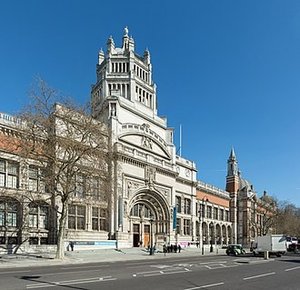
Victoria and Albert Museum, LondonVictoria and Albert Museum London 2 Theseus and the Minotaur, Theseus and the Minotaur
Augustinian Church, ViennaAugustinian Church Vienna 2 Tomb of Duchess Maria Christina of Saxony-Teschen, Monument to Archduchess Maria Christina (detail)
Gipsoteca, PossagnoGipsoteca Possagno 1 Hercules and Lichas
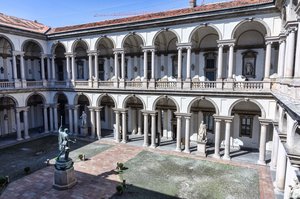
Pinacoteca di Brera, MilanPinacoteca di Brera Milan 1 Napoleon as Mars the Peacemaker

Antonio Canova decade by decade: the original that defines each

Works per decade

Pick a decade to see the original that defines it.

Collectors' questions about Antonio Canova's paintings

Which work is Antonio Canova most famous for?Reveal the answer

Perseus with the Head of Medusa (1804), Metropolitan Museum of Art, New York. Cupid and Psyche (1793) and Hercules and Lichas (1795) come next.

What age was Antonio Canova when Perseus with the Head of Medusa was made?Reveal the answer

47 years old: Perseus with the Head of Medusa dates from 1804, and Antonio Canova was born in 1757.

What are the ten most famous Antonio Canova paintings?Reveal the answer

Perseus with the Head of Medusa, Cupid and Psyche, Hercules and Lichas, Theseus and the Minotaur, Tomb of Duchess Maria Christina of Saxony-Teschen, Tomb of Pope Clement XIII, Napoleon as Mars the Peacemaker, Orpheus and Eurydice, Monument to Archduchess Maria Christina (detail) and Daedalus and Icarus. The ranking above gives each one's year and museum.

How many paintings did Antonio Canova leave?Reveal the answer

Our catalog holds 86 works by Antonio Canova, dated from 1775 to 1822.

In which museums do Antonio Canova's masterpieces hang?Reveal the answer

Mostly in Museo Correr (Venice), Metropolitan Museum of Art (New York) and St. Peter's Basilica (Vatican City). The museum table above lists them all.

In which years did Antonio Canova paint the most famous works?Reveal the answer

In 1790s: 19 of the 81 works on this page were made then, Cupid and Psyche among them.

What are the first and the last famous originals of Antonio Canova?Reveal the answer

On this page, the earliest is Orpheus and Eurydice (1775) and the latest Head of a Vestal Virgin (1822).

Which subjects did Antonio Canova choose most often?Reveal the answer

Sculpture (24), Marble (20) and Mythology (12), across the 81 works on this page.

Which technique did Antonio Canova use most?Reveal the answer

Marble, for 32 of the 81 works on this page.

To which art movement does Antonio Canova belong?Reveal the answer

Neoclassicism, judging by the originals on this page.

Which Antonio Canova works hang at the Museo Correr?Reveal the answer

Orpheus and Eurydice, Daedalus and Icarus and Orpheus: the Museo Correr, Venice holds 5 of the works on this page.

Antonio Canova: life and work

Antonio Canova: A Life in Marble

  • Born: Possagno, Italy (1757)
  • Died: 1822

Antonio Canova stands as a towering figure in the history of Western art, widely regarded as the preeminent Neoclassical sculptor. His mastery of marble carving and his ability to infuse classical forms with profound emotion secured his place among the greatest artists of all time. Born in Possagno, Italy, to Pietro Canova, a stonemason, Canova’s early life was shaped by the artistic environment surrounding him.

Early Life and Training

  • Family Background: His father's profession provided an initial exposure to stone carving, and his grandfather, Pasino Canova, a sculptor specializing in altars and low reliefs, played a crucial role in nurturing his talent.
  • Early Artistic Development: Even before the age of ten, Canova demonstrated remarkable skill, creating small marble shrines that showcased his innate ability. He apprenticed under Giuseppe Bernardi ('Torretto') and Giovanni Ferrari, further honing his skills.
  • Academy Studies: His studies at the Accademia di Belle Arti di Venezia yielded numerous prizes, solidifying his reputation as a promising young artist. A workshop within a monastery provided him with space to develop his craft.
  • Early Commissions: Early commissions like the statues of Orpheus and Eurydice for Senator Giovanni Falier (1775-1777) demonstrated an emerging Rococo style, foreshadowing his later Neoclassical refinement.

The Rise to Prominence and Neoclassical Style

  • Defining Neoclassicism: Canova’s work is characterized by its elegant forms, idealized figures, and a return to the aesthetic principles of ancient Greece and Rome. He skillfully avoided the melodrama of Baroque art while resisting the coldness often associated with earlier attempts at classical revival.
  • Key Works & Recognition: Sculptures like Cupid and Psyche (c. 1787-1793), Penitent Magdalene, and Hercules and Lichas established his reputation throughout Europe. His work was highly sought after by royalty and nobility.
  • Promoting His Reputation: Canova strategically promoted his career through the publication of engravings of his works and the creation of marble versions of plaster casts, ensuring widespread dissemination of his art.
  • International Acclaim: Commissions from across Europe, including a statue of Theseus and the Minotaur for Girolamo Zulian (Venetian ambassador to Rome), cemented his status as one of the most celebrated artists in Europe.

Major Works and Legacy

  • Notable Sculptures: Beyond those already mentioned, Canova’s significant works include Venus Italica, La Musa Polyhymnia, The Three Graces Dancing, and his poignant depiction of Eurydice.
  • Monumental Commissions: He received prestigious commissions for tombs, most notably the elaborate Tomb of Pope Clement XIII in St. Peter's Basilica, Rome – a testament to his skill in both sculpture and architectural design.
  • Gipsoteca Antonio Canova: The Gipsoteca Antonio Canova museum houses the most significant collection of his works, providing invaluable insight into his creative process and artistic evolution.
  • Influence on Subsequent Generations: Canova’s influence extended far beyond his lifetime, shaping the course of Neoclassical sculpture and inspiring generations of artists with his technical mastery and expressive power.

Historical Significance

  • Embodiment of Neoclassicism: Antonio Canova became synonymous with the Neoclassical movement, embodying its ideals of order, clarity, and a return to classical antiquity.
  • Court Sculptor & Diplomat: His position as court sculptor to numerous European rulers gave him considerable political influence and allowed him to shape artistic tastes across the continent.
  • Technical Innovation: Canova’s unparalleled skill in carving marble pushed the boundaries of what was considered possible, setting a new standard for sculptural excellence.
  • Enduring Artistic Legacy: His sculptures continue to captivate audiences worldwide, solidifying his place as one of the most important and influential artists in history.