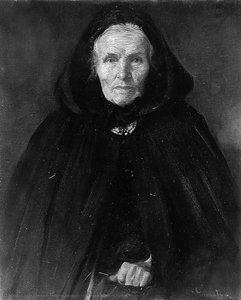
Portrait of Robert Vonnoh

The 49 Most Famous Robert Vonnoh Paintings, a Gallery Selection

Updated November 2026 · ranked by our popularity score (searches, visits and orders for each work) · 56 works by Robert Vonnoh in our catalogue

In short

Of all the originals Robert Vonnoh left, the most famous is The Ring (1892). Close behind it come La Mere Adele (Cordon Bleu) (1911) and November (1890). Our catalog holds 56 works by Robert Vonnoh; the gallery has kept the 49 the world admires most, each shown with its date, its museum and its story.

1858 – 1933, Hartford Impressionism Most works: Pennsylvania Academy of Fine Arts

Robert Vonnoh's top 10 paintings: the gallery's choice

1
The Ring (1892) by Robert Vonnoh

The Ring

1892 · Oil On Canvas

The Ring by Robert Vonnoh depicts a group of women situated within a field. In the background, several trees rise above the landscape. The scene contains four primary female figures engaged in distinct activities. One woman sits on the ground holding a basket, while another woman stands in close proximity to her. A third woman is positioned under a tree, appearing to rest or observe her surroundings. A fourth woman…

2
La Mere Adele (Cordon Bleu) (1911) by Robert Vonnoh

La Mere Adele (Cordon Bleu)

1911 · Oil On Canvas · Metropolitan Museum of Art, New York

An elderly woman sits before us, her presence heavy with the weight of years. She is shrouded in a dark cloak that spills over her shoulders, its deep folds creating a sense of quiet seclusion. The light falls softly upon her face, catching the delicate, weathered textures of her skin and the gentle lines that map a lifetime of experience. There is a profound stillness in her gaze, a contemplative…

3
November (1890) by Robert Vonnoh

November

1890 · Oil On Canvas · Pennsylvania Academy of Fine Arts, Philadelphia

In November by Robert Vonnoh, the landscape settles into a quiet, autumnal stillness. The scene captures a garden or orchard setting where the air feels heavy with the cool, overcast light of the season. A solitary figure, likely a gardener, moves within a fenced area, tending to the earth. This presence introduces a sense of quietude and the cyclical rhythm of the seasons. The composition is structured by the verticality…

4
Edward H. Coates (1893) by Robert Vonnoh

Edward H. Coates

1893 · Oil · Pennsylvania Academy of Fine Arts, Philadelphia

In this portrait of Edward H. Coates, Robert Vonnoh captures a man of significant presence and quiet gravity. Created about 1893, the work presents the subject in a moment of stillness. Edward H. Coates, a prominent American businessman and financier, sits before us with a composed and serious expression. His gaze and posture suggest a life defined by responsibility and the weight of decision-making. The artist focuses on the man…

5
Bessie Potter Vonnoh at Her Dressing Table (1912) by Robert Vonnoh

Bessie Potter Vonnoh at Her Dressing Table

1912 · Oil On Canvas

The oil on canvas painting titled Bessie Potter Vonnoh at Her Dressing Table features Bessie Potter Vonnoh as the subject. Created in 1912, this work depicts the woman in a private, domestic setting. The portrait captures her seated at a dressing table, positioned in profile toward the left side of the frame.

The Robert Vonnoh selection continues, 11 to 49

The subjects that held Robert Vonnoh's eye

The four subjects that come back most often in these originals, each with its finest example.

The museums that keep Robert Vonnoh's originals

The 7 museums that hold the most of the paintings on this page.

Museum City Works by Robert Vonnoh Paintings from this list
Pennsylvania Academy of Fine Arts, PhiladelphiaPennsylvania Academy of Fine Arts Philadelphia 3 November, Edward H. Coates, Companion of the Studio
Metropolitan Museum of Art, New YorkMetropolitan Museum of Art New York 2 La Mere Adele (Cordon Bleu), The Bridge at Grez
Indianapolis Museum of Art, IndianapolisIndianapolis Museum of Art Indianapolis 2 Poppies, Poppies
Museum of Fine Arts, BostonMuseum of Fine Arts Boston 1 Springtime in France
Art Institute of Chicago, ChicagoArt Institute of Chicago Chicago 1 Spring in France
Minneapolis Institute of Art, MinneapolisMinneapolis Institute of Art Minneapolis 1 Apple Bloom
Butler Institute of American Art, Mahoning CountyButler Institute of American Art Mahoning County 1 In Flanders Field-Where Soldiers Sleep and Poppies Grow, Poppies

Robert Vonnoh decade by decade: the original that defines each

Works per decade

Pick a decade to see the original that defines it.

Collectors' questions about Robert Vonnoh's paintings

Which work is Robert Vonnoh most famous for?Reveal the answer

The Ring (1892). La Mere Adele (Cordon Bleu) (1911) and November (1890) come next.

What age was Robert Vonnoh when The Ring was made?Reveal the answer

34 years old: The Ring dates from 1892, and Robert Vonnoh was born in 1858.

What are the ten most famous Robert Vonnoh paintings?Reveal the answer

The Ring, La Mere Adele (Cordon Bleu), November, Edward H. Coates, Bessie Potter Vonnoh at Her Dressing Table, The Bridge at Grez, The Mill, Poppies, Springtime in France and Spring in France. The ranking above gives each one's year and museum.

How many paintings did Robert Vonnoh leave?Reveal the answer

Our catalog holds 56 works by Robert Vonnoh, dated from 1884 to 1923.

In which museums do Robert Vonnoh's masterpieces hang?Reveal the answer

Mostly in Pennsylvania Academy of Fine Arts (Philadelphia), Metropolitan Museum of Art (New York) and Indianapolis Museum of Art (Indianapolis). The museum table above lists them all.

In which years did Robert Vonnoh paint the most famous works?Reveal the answer

In 1890s: 9 of the 49 works on this page were made then, The Ring among them.

What are the first and the last famous originals of Robert Vonnoh?Reveal the answer

On this page, the earliest is The Mill (1884) and the latest Leah (1923).

Which subjects did Robert Vonnoh choose most often?Reveal the answer

France (4), Flowers (4) and Autumn (4), across the 49 works on this page.

Which technique did Robert Vonnoh use most?Reveal the answer

Oil On Canvas, for 5 of the 49 works on this page.

To which art movement does Robert Vonnoh belong?Reveal the answer

Impressionism, judging by the originals on this page.

Which Robert Vonnoh works hang at the Pennsylvania Academy of Fine Arts?Reveal the answer

November, Edward H. Coates and Companion of the Studio: the Pennsylvania Academy of Fine Arts, Philadelphia holds 3 of the works on this page.

Robert Vonnoh: life and work

Robert William Vonnoh: Bridging Impressionism and American Realism

Born in Hartford, Connecticut, in 1858, Robert William Vonnoh’s artistic journey was a testament to the evolving landscape of American art at the turn of the century. His early life, marked by a family upheaval following his father's legal troubles, instilled within him a keen observation of human nature and a desire to capture authentic emotion – qualities that would profoundly shape his distinctive style. Initially trained in Boston at the Massachusetts Normal Art School, Vonnoh’s artistic sensibilities were further refined during a pivotal period in Paris, where he immersed himself in the vibrant Impressionist movement. This exposure wasn't merely an aesthetic adoption; it represented a conscious rejection of the rigid academic traditions that still dominated the American art scene.

Vonnoh’s Parisian sojourn proved transformative. He found kinship with artists who prioritized capturing fleeting moments and atmospheric effects, embracing broken brushstrokes and vibrant color palettes – techniques he would later integrate into his own work. Crucially, however, Vonnoh never fully abandoned the more traditional elements of portraiture and landscape painting that had characterized his earlier training. This synthesis—a willingness to experiment with Impressionistic principles while retaining a grounding in classical composition and subject matter—became a hallmark of his artistic identity.

The Grez-sur-Loing Influence

In 1887, Vonnoh embarked on what would become a defining chapter of his career: relocating to Grez-sur-Loing, a small village in the Loire Valley of France. This idyllic setting, already renowned as an artists’ colony, provided Vonnoh with unparalleled opportunities for plein air painting and fostered a deep connection with fellow creatives. The atmosphere of Grez—characterized by its relaxed pace, vibrant social life, and abundance of natural beauty—proved profoundly influential on his artistic development. It was here that he began to loosen the constraints of academic formality, embracing looser brushwork, brighter colors, and a more direct approach to depicting the world around him.

The most iconic testament to this period is undoubtedly *In Flanders Field* (1890), a monumental canvas depicting a vast field of poppies bathed in the golden light of late afternoon. The painting’s dramatic use of cadmium red, combined with Vonnoh's expressive brushstrokes and dynamic composition, immediately garnered critical acclaim. Yet, despite its success at exhibitions and within prominent collections, *In Flanders Field* remained unsold for decades, a poignant reflection of the challenges faced by American artists attempting to gain recognition in the European art world.

A Portraitist and Landscape Painter

While *In Flanders Field* stands as his most celebrated work, Vonnoh’s artistic output encompassed a diverse range of subjects. He excelled equally as a portrait painter and a landscape artist, demonstrating a remarkable versatility in his technique and approach. His portraits—often characterized by their psychological depth and subtle nuances of expression—captured the essence of his sitters with remarkable sensitivity. Simultaneously, his landscapes—ranging from serene rural scenes to dramatic depictions of the French countryside—exhibited a masterful command of light, color, and atmosphere.
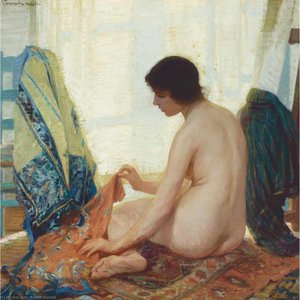
His work in the American East Coast was equally notable. He taught at various institutions including the Massachusetts Normal Art School, Cowles Art School, and the Museum of Fine Arts, Boston, imparting his artistic knowledge to generations of aspiring artists. His influence extended beyond the classroom, as he actively participated in the art community through exhibitions and collaborations.

Legacy and Historical Significance

Robert William Vonnoh’s legacy is one of quiet significance. He wasn't a flamboyant revolutionary or a figurehead of any particular movement, but rather a skilled and observant artist who quietly bridged the gap between Impressionism and American realism. His work reflects the evolving artistic sensibilities of his time—a willingness to embrace new techniques while retaining a deep respect for tradition.

His retrospective exhibitions in Chicago and Youngstown, Ohio, in 2010, brought renewed attention to his oeuvre, revealing the depth and complexity of his artistic vision. Today, Vonnoh’s paintings are housed in prestigious collections across North America and Europe, serving as a testament to his enduring contribution to American art history. *In Flanders Field*, finally finding its permanent home at the Butler Institute of American Art, stands as a powerful symbol of his artistic journey—a vibrant reminder of the beauty and emotional resonance that can be found in the simplest of subjects.