Portrait of Kenneth Hall

The 7 Most Famous Kenneth Hall Paintings, Each One of a Kind

Updated November 2026 · ranked by our popularity score (searches, visits and orders for each work) · 7 works by Kenneth Hall in our catalogue

In short

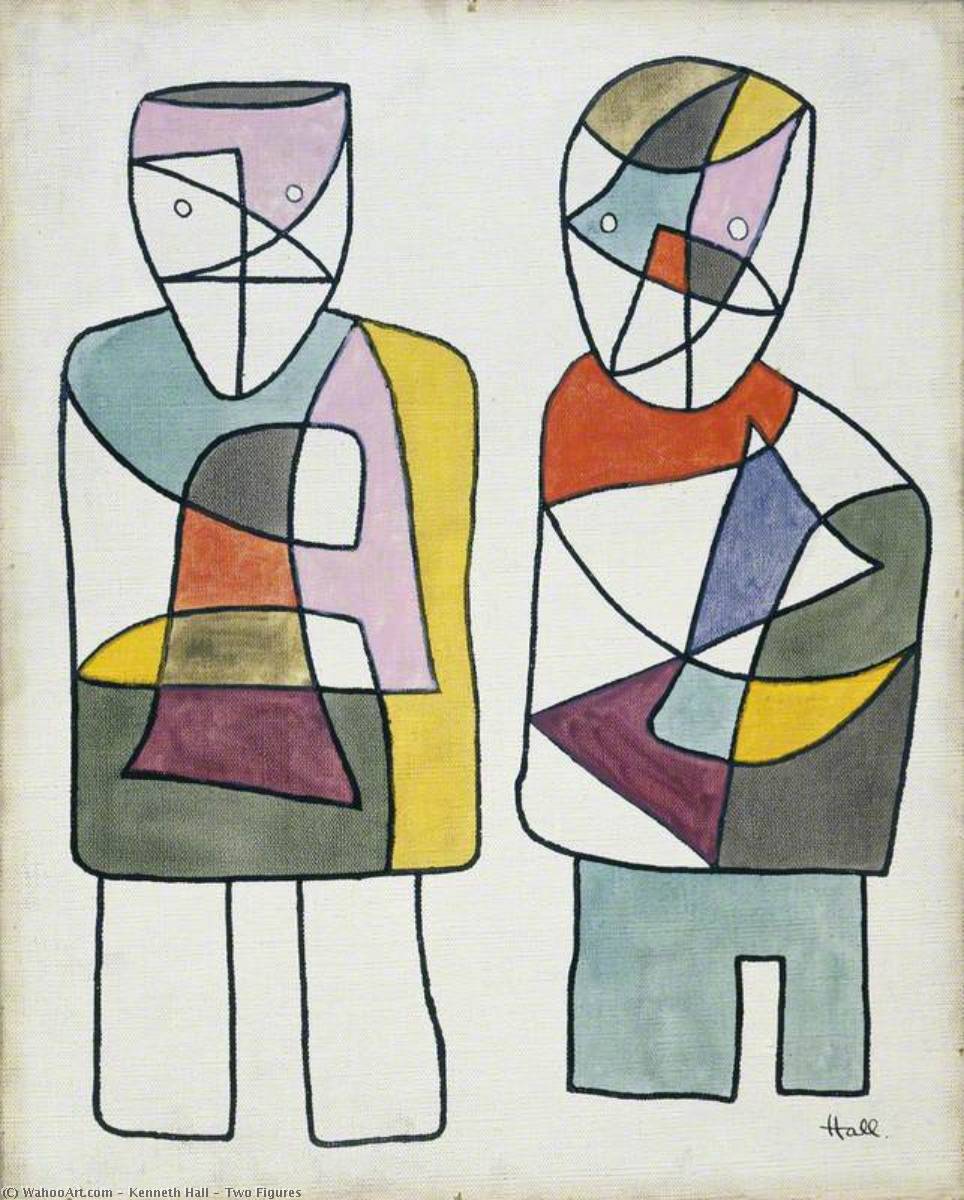
Bird Nesting (1944) is the Kenneth Hall painting that draws the most eyes; the original belongs to the National Gallery of Ireland, Dublin City. After it, the eye goes to Two Figures and Haystacks (1938). Among the 7 works of Kenneth Hall in our catalog, these 7 are the most famous, each a unique original presented with its year, its museum and the reason it endures.
1913 – 1946 Most works: Towner

Top 10 paintings by Kenneth Hall, through the gallery's eye

4
Trafalgar Square IV – October 8th 1937 (1937) by Kenneth Hall

Trafalgar Square IV – October 8th 1937

1937

The Kenneth Hall painting, Trafalgar Square IV – October 8th 1937, is a stunning representation of city life in the 20th century. Measuring 76 x 102 cm, this oil on canvas piece is a masterpiece that showcases the artist's attention to detail and ability to capture the essence of urban landscapes. Currently housed at the Ulster Museum in Ireland, this painting is a must-see for art enthusiasts. Artistic Style and…

The museums that keep Kenneth Hall's originals

The 4 museums that hold the most of the paintings on this page.

Museum City Works by Kenneth Hall Paintings from this list
Towner, EastbourneTowner Eastbourne 2 Buckingham Palace from the Mall, Cap d'Ail, France
National Gallery of Ireland, Dublin CityNational Gallery of Ireland Dublin City 1 Bird Nesting
Queen's University, BelfastQueen's University Belfast 1 Haystacks
Salford Museum - Art Gallery, Greater ManchesterSalford Museum - Art Gallery Greater Manchester 1 Bungalows, Isle of Arran

Kenneth Hall across the years: the unique originals of each

Kenneth Hall's dated originals shown here fit into about ten years, 1937 to 1944: the eye follows them year by year.

Works per year

Pick a year to see its originals.

Kenneth Hall's paintings: questions for the gallery

What is the single most famous work of Kenneth Hall?Reveal the answer

Bird Nesting (1944), National Gallery of Ireland, Dublin City. Two Figures and Haystacks (1938) come next.

At what age did Kenneth Hall create Bird Nesting?Reveal the answer

31 years old: Bird Nesting dates from 1944, and Kenneth Hall was born in 1913.

How many works by Kenneth Hall are known?Reveal the answer

Our catalog holds 7 works by Kenneth Hall, dated from 1937 to 1944.

Where can the most famous Kenneth Hall originals be seen?Reveal the answer

Mostly in Towner (Eastbourne), National Gallery of Ireland (Dublin City) and Queen's University (Belfast). The museum table above lists them all.

Which famous Kenneth Hall painting is the earliest, and which the latest?Reveal the answer

On this page, the earliest is Trafalgar Square IV – October 8th 1937 (1937) and the latest Bird Nesting (1944).

What Kenneth Hall originals can I see at the Towner?Reveal the answer

Buckingham Palace from the Mall and Cap d'Ail, France: the Towner, Eastbourne holds 2 of the works on this page.

Kenneth Hall: a portrait of the artist

Kenneth Hall (1913–1946): A Visionary Landscape Painter

Kenneth Hall (1913–1946) was a British painter whose artistic journey intertwined with the burgeoning Surrealist movement and found its most profound expression in capturing the ethereal beauty of Irish landscapes. Born in Farnham, Surrey, he honed his craft at Lancing College before embarking on a career as a furniture designer—a formative experience that instilled an appreciation for meticulous detail and spatial harmony – qualities which would later permeate his paintings. His collaboration with fellow artist Basil Rakoczi established The White Stag Group, propelling them to prominence in Dublin’s artistic circles during the Second World War.
  • Early Influences: Rakoczi's unwavering belief in abstraction and Wertheim’s astute guidance shaped Hall’s aesthetic sensibilities. Their discussions centered on exploring the expressive potential of color and form, rejecting representational conventions in favor of conveying emotion and atmosphere.
  • The Surrealist Embrace: Inspired by artists like Giorgio Morandi and Yves Tanguy, Hall incorporated elements of Surrealism into his work—juxtaposition, dreamlike imagery, and a deliberate disregard for perspective—reflecting the anxieties and aspirations of the era.

Landscapes of Ireland: A Painter’s Obsession

Hall's artistic focus swiftly gravitated toward Irish landscapes, particularly the rugged coastline of Galway Bay and Donegal. He meticulously documented these vistas with watercolor and oil paints, prioritizing tonal harmony and capturing the subtle nuances of light and shadow. His canvases pulsated with color—deep blues mirroring the turbulent sea, ochres conveying the warmth of sun-drenched cliffs—creating immersive experiences for viewers. Recurring motifs included solitary trees silhouetted against dramatic skies, symbolizing resilience and contemplation amidst natural grandeur.
  • Technique: Hall favored a layering technique, applying thin washes of color over thicker impasto strokes to build up texture and depth. This approach allowed him to convey both the immediacy of observation and the contemplative spirit of artistic exploration.

Notable Achievements & Recognition

Hall’s paintings gained recognition through exhibitions at Redfern Gallery in London and subsequently, at universities across Ireland and America. His work was featured prominently in “A Celebration of Irish Art and Modernism” (2012), showcasing his contribution to the artistic landscape of his time. Furthermore, he secured a residency at GlogauAIR in Berlin, Germany, fostering connections with fellow artists and enriching his creative vision.
  • Catalogues & Publications: His paintings appeared in several catalogues documenting Irish art history and contemporary painting trends.

Legacy & Artistic Significance

Kenneth Hall’s oeuvre stands as a testament to the transformative power of artistic exploration during a period marked by profound social and intellectual upheaval. He championed abstraction as a means of conveying emotion and capturing the sublime beauty of nature—a legacy that continues to inspire artists today. His unwavering dedication to his craft, coupled with his collaborative spirit and engagement with influential movements like Surrealism, cemented his place as one of Ireland’s foremost landscape painters of the mid-20th century.