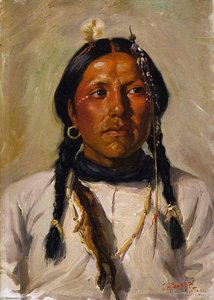
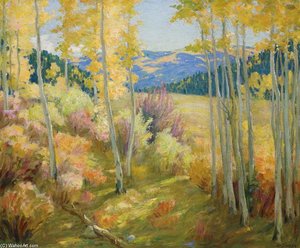
Portrait of Joseph Henry Sharp

The 92 Most Famous Joseph Henry Sharp Paintings, Each One of a Kind

Updated October 2026 · ranked by our popularity score (searches, visits and orders for each work) · 106 works by Joseph Henry Sharp in our catalogue

In short

Wolf Ear, (painting) (1900) is the Joseph Henry Sharp painting that draws the most eyes. After it, the eye goes to Comming Elk, Cheyenne (1898) and The Harvest Dance of the Pueblo Indians (1893). Among the 106 works of Joseph Henry Sharp in our catalog, these 92 are the most famous, each a unique original presented with its year, its museum and the reason it endures.

1859 – 1953, Bridgeport Contemporary realism Most works: Smithsonian American Art Museum

Top 10 paintings by Joseph Henry Sharp, through the gallery's eye

1
Wolf Ear, (painting) (1900) by Joseph Henry Sharp

Wolf Ear, (painting)

1900 · Oil On Canvas

Wolf Ear, (painting) is a portrait created by the artist Joseph Henry Sharp. This work, dated 1900, depicts a Native American man. The subject is shown with long hair and a beard. A single feather is placed in his hair, and a necklace rests around his neck.

Joseph Henry Sharp's famous paintings, numbers 11 to 92

11Blackfoot Girl (1905) by Joseph Henry SharpBlackfoot Girl1905 · Smithsonian American Art Museum 12The Voice of the Great Spirit, (painting) (1906) by Joseph Henry SharpThe Voice of the Great Spirit, (painting)1906 13Apache Camp in Hondo Cañon, New Mexico (1920) by Joseph Henry SharpApache Camp in Hondo Cañon, New Mexico1920 14Portrait Of Louise Zaring by Joseph Henry SharpPortrait Of Louise Zaring 15Godiva Disrobing to Ride through Coventry (1887) by Joseph Henry SharpGodiva Disrobing to Ride through Coventry1887 · Herbert Art Gallery - Museum 16Fountain Square Pantomime (1892) by Joseph Henry SharpFountain Square Pantomime1892 17Running Horse, (painting) (1897) by Joseph Henry SharpRunning Horse, (painting)1897 18Running Horse (1897) by Joseph Henry SharpRunning Horse1897 · Smithsonian American Art Museum 19Twilight (Hopi Girl) (1896) by Joseph Henry SharpTwilight (Hopi Girl)1896 · Smithsonian American Art Museum 20Wolf Ear, Sioux (1900) by Joseph Henry SharpWolf Ear, Sioux1900 · Metropolitan Museum of Art 21Hand, (painting) (1900) by Joseph Henry SharpHand, (painting)1900 22Blackfoot Indian Girl, (painting) (1905) by Joseph Henry SharpBlackfoot Indian Girl, (painting)1905 23Spotted Elk, Chief (1900) by Joseph Henry SharpSpotted Elk, Chief1900 24Hand (1900) by Joseph Henry SharpHand1900 · Smithsonian American Art Museum 25Strong Left Hand (1900) by Joseph Henry SharpStrong Left Hand1900 · Smithsonian American Art Museum 26Two Dogs (1900) by Joseph Henry SharpTwo Dogs1900 · Smithsonian American Art Museum 27Fireside (1900) by Joseph Henry SharpFireside1900 · Museum of Art 28Yellow Wings (1900) by Joseph Henry SharpYellow Wings1900 · Smithsonian American Art Museum 29Do Ree Tah (1900) by Joseph Henry SharpDo Ree Tah1900 · Smithsonian American Art Museum 30White Swan (1900) by Joseph Henry SharpWhite Swan1900 · Smithsonian American Art Museum 31Chief Flat Iron (1905) by Joseph Henry SharpChief Flat Iron1905 · Smithsonian American Art Museum 32Blackfoot Indian Girl (1905) by Joseph Henry SharpBlackfoot Indian Girl1905 · Smithsonian American Art Museum 33PORTRAIT OF AN INDIAN by Joseph Henry SharpPORTRAIT OF AN INDIANCincinnati Art Museum 34Rio Hondo Canyon, Taos County, New Mexico by Joseph Henry SharpRio Hondo Canyon, Taos County, New MexicoCincinnati Art Museum 35BILL JONES by Joseph Henry SharpBILL JONESCincinnati Art Museum 36A Group Of Approximately 430 Works Published By The Limited Editions Club by Joseph Henry SharpA Group Of Approximately 430 Works Published By The Limited Editions Club 37Eagle Feather by Joseph Henry SharpEagle Feather 38Crucita by Joseph Henry SharpCrucita 39The Tribal Meeting by Joseph Henry SharpThe Tribal Meeting 40Wife Of Chief Little Wolf by Joseph Henry SharpWife Of Chief Little Wolf 41Indian Tepees, (painting) by Joseph Henry SharpIndian Tepees, (painting) 42Bear nose-sioux by Joseph Henry SharpBear nose-sioux 43At A Pueblo Window by Joseph Henry SharpAt A Pueblo Window 44White Paint Mountain - Taos Indian by Joseph Henry SharpWhite Paint Mountain - Taos Indian 45Missal, In Latin, Illuminated Manuscript On Vellum by Joseph Henry SharpMissal, In Latin, Illuminated Manuscript On Vellum 46Chief Of The Taos Pueblo by Joseph Henry SharpChief Of The Taos Pueblo 47Book Of Hours, Use Of Sarum, In Latin And English, Illuminated Manuscript On Vellum by Joseph Henry SharpBook Of Hours, Use Of Sarum, In Latin And English, Illuminated Manuscript On Vellum 48The Voice of the Great Spirit (1906) by Joseph Henry SharpThe Voice of the Great Spirit1906 · Smithsonian American Art Museum 49Medicine Shield, Crow Squaw (1906) by Joseph Henry SharpMedicine Shield, Crow Squaw1906 · Smithsonian American Art Museum 50Encampment of Crow Indians (1908) by Joseph Henry SharpEncampment of Crow Indians1908 · Smithsonian American Art Museum 51Clearing After Storm, Taos (1913) by Joseph Henry SharpClearing After Storm, Taos1913 · Dallas Museum of Art 52Making Sweet Grass Medicine, Blackfoot Ceremony (1920) by Joseph Henry SharpMaking Sweet Grass Medicine, Blackfoot Ceremony1920 53Sunset Dance Ceremony to the Evening Sun (1924) by Joseph Henry SharpSunset Dance Ceremony to the Evening Sun1924 54Little Wolf (1900) by Joseph Henry SharpLittle Wolf1900 · Smithsonian American Art Museum 55Indian Hunters in the Aspen Forest by Joseph Henry SharpIndian Hunters in the Aspen ForestCincinnati Art Museum 56INDIAN VILLAGE by Joseph Henry SharpINDIAN VILLAGECincinnati Art Museum 57Western Landscape by Joseph Henry SharpWestern Landscape 58Indian encampment by Joseph Henry SharpIndian encampment 59Blackfeet Water Hole, Glacier Park by Joseph Henry SharpBlackfeet Water Hole, Glacier Park 60The Medicine Teepee by Joseph Henry SharpThe Medicine Teepee 61Roberto by Joseph Henry SharpRoberto 62Teepee Reflection by Joseph Henry SharpTeepee Reflection 63Early Winter On Crow Reservation, Montana by Joseph Henry SharpEarly Winter On Crow Reservation, Montana 64Chief Deaf Bull, Crow by Joseph Henry SharpChief Deaf Bull, Crow 65The Drum Beat by Joseph Henry SharpThe Drum Beat 66Taos Studio by Joseph Henry SharpTaos Studio 67White Irises by Joseph Henry SharpWhite Irises 68Apple Blossoms by Joseph Henry SharpApple Blossoms 69Aspens At Twining by Joseph Henry SharpAspens At Twining 70Palo Flechado by Joseph Henry SharpPalo Flechado 71Autumn In West Virginia by Joseph Henry SharpAutumn In West Virginia 72The War Bonnet Maker by Joseph Henry SharpThe War Bonnet Maker 73Saint Paul Imprisoned At Philippi by Joseph Henry SharpSaint Paul Imprisoned At Philippi 74Landscape by Joseph Henry SharpLandscape 75Bawling Deer ^ Son, Black Deer-taos by Joseph Henry SharpBawling Deer ^ Son, Black Deer-taos 76Taos Forest - by Joseph Henry SharpTaos Forest - 77Portrait of an indian by Joseph Henry SharpPortrait of an indian 78Making Sweet Grass Medicine, Blackfoot Ceremony by Joseph Henry SharpMaking Sweet Grass Medicine, Blackfoot Ceremony 79Taos Forest - by Joseph Henry SharpTaos Forest - 80Chief duck man by Joseph Henry SharpChief duck man 81Rabbit hunt, taos valley by Joseph Henry SharpRabbit hunt, taos valley 82Late Summer Flowers by Joseph Henry SharpLate Summer Flowers 83Rolling Hills by Joseph Henry SharpRolling Hills 84Chief Two Leggins by Joseph Henry SharpChief Two Leggins 85Winter Landscape by Joseph Henry SharpWinter Landscape 86Fireside by Joseph Henry SharpFireside 87The War Bonnet by Joseph Henry SharpThe War Bonnet 88Wolf Ear (1900) by Joseph Henry SharpWolf Ear1900 · Smithsonian American Art Museum 89Hunting song by Joseph Henry SharpHunting song 90Y yut mat (1900) by Joseph Henry SharpY yut mat1900 91The Harvest Dance (1894) by Joseph Henry SharpThe Harvest Dance1894 · Cincinnati Art Museum 92Chief American Horse by Joseph Henry SharpChief American Horse

Joseph Henry Sharp's famous paintings, period by period

The subjects that held Joseph Henry Sharp's eye

The four subjects that come back most often in these originals, each with its finest example.

The museums that keep Joseph Henry Sharp's originals

The 7 museums that hold the most of the paintings on this page.

Museum City Works by Joseph Henry Sharp Paintings from this list
Smithsonian American Art Museum, Washington, D.C.Smithsonian American Art Museum Washington, D.C. 20 White Swan, Chief Flat Iron, Two Leggins, Crow Chief
Cincinnati Art Museum, CincinnatiCincinnati Art Museum Cincinnati 6 PORTRAIT OF AN INDIAN, Rio Hondo Canyon, Taos County, New Mexico, BILL JONES
New Britain Museum of American Art, New BritainNew Britain Museum of American Art New Britain 1 Comming Elk, Cheyenne
Herbert Art Gallery - Museum, CoventryHerbert Art Gallery - Museum Coventry 1 Godiva Disrobing to Ride through Coventry
Metropolitan Museum of Art, New YorkMetropolitan Museum of Art New York 1 Wolf Ear, Sioux
Museum of Art, San DiegoMuseum of Art San Diego 1 Fireside
Dallas Museum of Art, DallasDallas Museum of Art Dallas 1 Clearing After Storm, Taos

Joseph Henry Sharp across the decades: one unique original for each

Works per decade

Pick a decade to see the original that defines it.

Joseph Henry Sharp's paintings: questions for the gallery

What is the single most famous work of Joseph Henry Sharp?Reveal the answer

Wolf Ear, (painting) (1900). Comming Elk, Cheyenne (1898) and The Harvest Dance of the Pueblo Indians (1893) come next.

At what age did Joseph Henry Sharp create Wolf Ear, (painting)?Reveal the answer

41 years old: Wolf Ear, (painting) dates from 1900, and Joseph Henry Sharp was born in 1859.

Which ten paintings by Joseph Henry Sharp are the most famous?Reveal the answer

Wolf Ear, (painting), Comming Elk, Cheyenne, The Harvest Dance of the Pueblo Indians, White Swan, Chief Flat Iron, Quinnah, (painting), Do Ree Tah, (painting), Two Leggins, Crow Chief, Quinnah and Chief Spotted Elk. The ranking above gives each one's year and museum.

How many works by Joseph Henry Sharp are known?Reveal the answer

Our catalog holds 106 works by Joseph Henry Sharp, dated from 1887 to 1924.

Where can the most famous Joseph Henry Sharp originals be seen?Reveal the answer

Mostly in Smithsonian American Art Museum (Washington, D.C.), Cincinnati Art Museum (Cincinnati) and New Britain Museum of American Art (New Britain). The museum table above lists them all.

During which period did Joseph Henry Sharp create the best-known paintings?Reveal the answer

In 1900s: 29 of the 92 works on this page were made then, Wolf Ear, (painting) among them.

Which famous Joseph Henry Sharp painting is the earliest, and which the latest?Reveal the answer

On this page, the earliest is Godiva Disrobing to Ride through Coventry (1887) and the latest Sunset Dance Ceremony to the Evening Sun (1924).

What subjects did Joseph Henry Sharp favour?Reveal the answer

Native american (9), Portrait (8) and Native american portrait (5), across the 92 works on this page.

Which movement does the work of Joseph Henry Sharp belong to?Reveal the answer

Contemporary realism, judging by the originals on this page.

What Joseph Henry Sharp originals can I see at the Smithsonian American Art Museum?Reveal the answer

White Swan, Chief Flat Iron and Two Leggins, Crow Chief: the Smithsonian American Art Museum, Washington, D.C. holds 20 of the works on this page.

Joseph Henry Sharp: a portrait of the artist

Early Life and Background

  • Born: September 27, 1859, Bridgeport, Ohio
  • Died: August 29, 1953
  • Parents: Irish immigrant parents; father was a merchant.
  • Early Fascination: Developed a strong interest in American Indians from a young age.
  • Hearing Loss: Nearly drowned as a boy, resulting in permanent hearing loss which significantly impacted his education and communication. He learned to read lips and carried a writing pad.
  • Early Work: Worked in a nail factory at the age of 12 to support his family after his father's death.

Education and Artistic Training

  • McMicken School of Design, Cincinnati: Briefly attended before financial constraints forced him to leave school.
  • European Studies (1881-1886): Traveled to Europe where he studied at the Royal Academy of Fine Arts in Antwerp, Belgium.
  • Return to Cincinnati & Mentorship: Returned to Cincinnati and worked alongside Henry Farny, though Farny discouraged painting Native Americans.
  • Royal Academy of Munich: Studied at the Royal Academy of Fine Arts (Munich) and later with Frank Duveneck in Italy.
  • Académie Julian, Paris: Furthered his studies at the Académie Julian in Paris, influenced by Barbizon painters and Impressionists.

Artistic Style and Subject Matter

  • Realism & Portraiture: Known for realistic portrayals of American Indians, focusing on their cultural life and individual characteristics.
  • Influences: Influenced by the Barbizon school and Impressionism, evident in his use of light and shadow and broad brushstrokes.
  • Key Subjects: Primarily painted portraits of Native American warriors, chiefs, and everyday people, as well as Western landscapes.
  • Commissioned Work: Received a significant commission from President Theodore Roosevelt to paint 200 portraits of Native American warriors who survived the Battle of Little Bighorn.
  • Absarokee Hut: Built a cabin (Absarokee Hut) on Crow Agency land in Montana, allowing him extended time to study and depict Native American life.

Major Achievements and Recognition

  • Taos Society of Artists Founding Member: A founding member of the Taos Society of Artists, considered its "spiritual father."
  • Smithsonian Institution Acquisition: The Smithsonian Institution purchased eleven of his portraits in 1901.
  • Phoebe Hearst Patronage: Received significant support from Phoebe Hearst, who acquired over 150 of his works.
  • Thomas Gilcrease Collection: A large portion of his work and personal collection were purchased by Thomas Gilcrease, now housed at the Gilcrease Institute.
  • Recognition for Ethnographic Value: Recognized by curator W.H. Holmes for the accuracy with which he portrayed Native American physiognomy and costumes.

Historical Significance

  • Documenting Native American Culture: Sharp's work provides valuable documentation of Native American life during a period of significant cultural change and displacement.
  • Early Western Artist in Taos: One of the earliest European-American artists to establish a presence in Taos, New Mexico, contributing to its artistic development.
  • Influence on Southwestern Art: His focus on Native American subjects helped shape the direction of Southwestern art and influenced subsequent generations of artists.
  • Preservation of Portraiture: Created a significant body of portraiture that captures the likenesses and dignity of individuals from various Native American tribes, preserving their memory for posterity.