Portrait of John Jackson

The 100 Most Famous John Jackson Paintings, a Gallery Selection

Updated November 2026 · ranked by our popularity score (searches, visits and orders for each work) · 105 works by John Jackson in our catalogue

In short

Of all the originals John Jackson left, the most famous is Portrait of a Man (1822), in the collection of the Harvard Art Museums, Cambridge. Close behind it come Reverend William Holwell Carr (1827) and Portrait of a Gentleman (1810). Our catalog holds 105 works by John Jackson; the gallery has kept the 100 the world admires most, each shown with its date, its museum and its story.

1778 – 1831, Lastingham Neoclassicism Most works: National Portrait Gallery

John Jackson's top 10 paintings: the gallery's choice

1
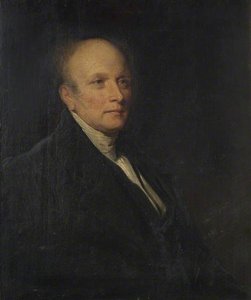
Portrait of a Man (1822) by John Jackson

Portrait of a Man

1822 · Oil · Harvard Art Museums, Cambridge

The man emerges from a void of deep shadow, his presence defined by a sudden, sharp strike of light. This chiaroscuro effect carves the contours of his face, pulling the ridge of his nose and the texture of his skin from the darkness. He sits in a quiet, bust-length pose, turned slightly away as if caught in a moment of sudden, heavy thought. His gaze meets the viewer directly, steady…

2
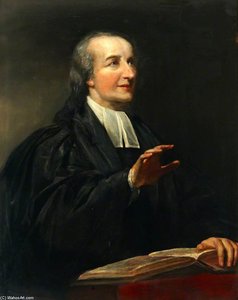
Reverend William Holwell Carr (1827) by John Jackson

Reverend William Holwell Carr

1827 · Oil On Canvas · National Gallery, London

This formal and somber oil portrait, executed in 1827, presents a three-quarter length depiction of an elderly man. The subject is positioned slightly off-center, facing towards the viewer's left while looking forward. The composition is set against a background of dark, indistinct drapery that lends a sense of weight and gravity to the scene.

3
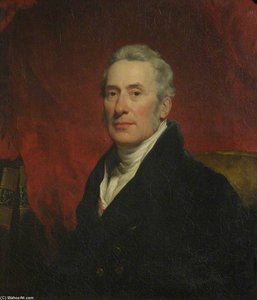
Portrait of a Gentleman (1810) by John Jackson

Portrait of a Gentleman

1810 · Oil · Art Institute of Chicago, Chicago

This oil portrait, executed in 1810, presents a single male figure in a three-quarter view. The subject is an elderly gentleman positioned against a dark, atmospheric background that lacks specific architectural or landscape detail. The lighting is directional, originating from the upper left, which casts shadows across the right side of the subject's face and creates a sense of three-dimensional volume. This light emphasizes the white of his hair and…

4
Portrait of a Man (1804) by John Jackson

Portrait of a Man

1804 · Oil On Canvas · Smithsonian American Art Museum, Washington, D.C.

The oil painting titled Portrait of a Man was executed by the artist John Jackson. This work dates to 1830. It captures a single figure in a quiet, three-quarter view, emerging from a dark, indeterminate space. The subject's presence is defined by the sharp contrast between the pale skin of the face and the deep shadows of the background.

5
James Abercrombie, 1st Baron Dunfermline (1776–1858) (1815) by John Jackson

James Abercrombie, 1st Baron Dunfermline (1776–1858)

1815 · Oil On Canvas · Hardwick Hall

In this 1815 oil portrait, we encounter James Abercrombie, 1st Baron Dunfermline, captured in a moment of quiet, scholarly contemplation. The subject is presented in a bust-length composition, his gaze directed slightly away from the viewer toward the right, suggesting a mind occupied by matters of state or law rather than the immediate presence of the observer. There is a profound sense of stillness here. The lighting is handled with…

6
Frederick, Duke of York (1763-1827) (1822) by John Jackson

Frederick, Duke of York (1763-1827)

1822 · Oil On Canvas · Royal Collection, London

The light catches a high white collar, a sharp line of brightness against the deep, somber tones of a dark military coat. Frederick, Duke of York, sits in a space defined by gravity. His gaze is directed toward the right, away from the viewer, fixed on something beyond the frame. The skin of his face is rendered with warm, fleshy tones that emerge from a background of nebulous, atmospheric sky.…

7
Henry William Greville (1801-1872) (1830) by John Jackson

Henry William Greville (1801-1872)

1830 · Oil On Canvas · Hardwick Hall

This bust-length oil portrait, executed in 1830, depicts a young man positioned slightly off-center against a dark, flat background. The subject is turned toward the right of the frame, his gaze directed away from the viewer. He wears a dark, heavy wool jacket and a crisp white shirt, accented by a silk cravat. The lighting is directional, casting one side of the face into light while leaving the other in…

8
Sir David Wilkie (1810) by John Jackson

Sir David Wilkie

1810 · Oil On Canvas · Yale Center for British Art, New Haven

This oil on canvas portrait presents Sir David Wilkie, RA, as the subject. Created by the artist John Jackson, the work captures the likeness of the Scottish painter during a significant period of his career. The portrait was executed about 1810, a time when Jackson and Wilkie were navigating the competitive London art scene as close companions and fellow students.

9
John Jackson (1823) by John Jackson

John Jackson

1823 · Oil · National Portrait Gallery, London

This oil on canvas presents a self-portrait of the artist, John Jackson. Executed about 1823, the work functions as an introspective study of the painter himself. It is held within the National Portrait Gallery collection and is identified by the accession number NPG 443.

The John Jackson selection continues, 11 to 100

11W. Naylor by John JacksonW. Naylor 12Mary Taft by John JacksonMary Taft 13Samuel Sebastian Wesley by John JacksonSamuel Sebastian Wesley 14Flaxman by John JacksonFlaxman 15Fitzgibbon, 2nd Earl Of Clare, Kp, Gch, Pc by John JacksonFitzgibbon, 2nd Earl Of Clare, Kp, Gch, PcHardwick Hall 16Henry Bone by John JacksonHenry Bone 17George Hay Dawkins-pennant by John JacksonGeorge Hay Dawkins-pennant 18Self Portrait - by John JacksonSelf Portrait - 19David Williams, Minister And Man Of Letters by John JacksonDavid Williams, Minister And Man Of Letters 20Constantine Henry Phipps, 1st Marquess Of Normanby by John JacksonConstantine Henry Phipps, 1st Marquess Of NormanbyHardwick Hall 21Flaxman - by John JacksonFlaxman - 22Benjamin Edmonstone by John JacksonBenjamin Edmonstone 23Reginald Macdonald by John JacksonReginald Macdonald 24Thomas Stothard by John JacksonThomas Stothard 25Wesley by John JacksonWesley 26Portrait Of A Lady (mrs Parry, The Mother Of Sir W. E. Parry, Rn) by John JacksonPortrait Of A Lady (mrs Parry, The Mother Of Sir W. E. Parry, Rn) 27Vice-admiral Sir Richard Goodwin Keats by John JacksonVice-admiral Sir Richard Goodwin KeatsNational Maritime Museum 28Portrait Of The Artist's Daughter by John JacksonPortrait Of The Artist's Daughter 29Reverend George Morley by John JacksonReverend George Morley 30Admiral Lord Amelius Beauclerk by John JacksonAdmiral Lord Amelius BeauclerkNational Maritime Museum 31Reverend Richard Watson by John JacksonReverend Richard Watson 32Reverend Joseph Taylor by John JacksonReverend Joseph Taylor 33Field Marshal Hrh Frederick by John JacksonField Marshal Hrh Frederick 34James Carrick Moore by John JacksonJames Carrick Moore 35Sir Henry Webb by John JacksonSir Henry Webb 36William Seguier by John JacksonWilliam SeguierNational Gallery 37Thomas Sydenham by John JacksonThomas Sydenham 38Self Portrait - by John JacksonSelf Portrait - 39William Hyde Wollaston by John JacksonWilliam Hyde Wollaston 40Portrait Of A Lady by John JacksonPortrait Of A Lady 41George Iii by John JacksonGeorge Iii 42Self Portrait - by John JacksonSelf Portrait - 43Reverend John Fletcher by John JacksonReverend John Fletcher 44Reverend John Wesley by John JacksonReverend John Wesley 45Miss Chester by John JacksonMiss Chester 46Mr John Deffett by John JacksonMr John Deffett 47Grace Murray by John JacksonGrace Murray 48Mr Hopper by John JacksonMr Hopper 49Thomas Stothard, Ra by John JacksonThomas Stothard, RaFitzwilliam Museum 50Charles James Stewart by John JacksonCharles James Stewart 51Sir Joshua Reynolds by John JacksonSir Joshua Reynolds 52James Wood, Master, Mathematician, Dean Of Ely by John JacksonJames Wood, Master, Mathematician, Dean Of Ely 53A Jewish Rabbi by John JacksonA Jewish Rabbi 54Sir William Beechey by John JacksonSir William BeecheyBavarian State Painting Collections 55Mary Somerville by John JacksonMary Somerville 56Lady Caroline Edgcumbe by John JacksonLady Caroline Edgcumbe 57Portrait Of George Nugent-temple-grenville by John JacksonPortrait Of George Nugent-temple-grenville 58Robert Tindal Of Coval Hall by John JacksonRobert Tindal Of Coval Hall 59Lady Caroline Edgcumbe - by John JacksonLady Caroline Edgcumbe - 60Latham by John JacksonLatham 61Robert Grosvenor by John JacksonRobert Grosvenor 62Yelloly by John JacksonYelloly 63Bartholomew Johnson by John JacksonBartholomew Johnson 64Latham, Md, Frs, President Of The Royal College Of Physicians by John JacksonLatham, Md, Frs, President Of The Royal College Of Physicians 65The Right Honourable William Windham Iii by John JacksonThe Right Honourable William Windham IiiFelbrigg Hall 66George Dance by John JacksonGeorge Dance 67Henry John, Viscount Ingestre by John JacksonHenry John, Viscount Ingestre 68Corbet Hue, The Very Reverend Dean Of Jersey by John JacksonCorbet Hue, The Very Reverend Dean Of Jersey 69The Right Honourable William Saunders Sebright Lascelles by John JacksonThe Right Honourable William Saunders Sebright LascellesHardwick Hall 70The Late Lord Mulgrave by John JacksonThe Late Lord Mulgrave 71Sir Hew Whiteford Dalrymple by John JacksonSir Hew Whiteford Dalrymple 72Richard Clement Headington by John JacksonRichard Clement Headington 73St Peter by John JacksonSt Peter 74Reverend David Mcnicoll by John JacksonReverend David Mcnicoll 75Henry Cowper, Clerk Assistant In The Parliament Office by John JacksonHenry Cowper, Clerk Assistant In The Parliament Office 76An Unfinished Portrait Of Mrs Soane, Painted From A Pencil Sketch By J. Flaxman, Ra And A Miniature by John JacksonAn Unfinished Portrait Of Mrs Soane, Painted From A Pencil Sketch By J. Flaxman, Ra And A Miniature 77Wesley - by John JacksonWesley - 78Samuel Prout by John JacksonSamuel ProutNational Portrait Gallery 79Samuel Wesley - by John JacksonSamuel Wesley - 80Study For 'bartholomew Johnson' by John JacksonStudy For 'bartholomew Johnson' 81Self Portrait by John JacksonSelf Portrait 82James Abercromby, 1st Baron Dunfermline, Speaker by John JacksonJames Abercromby, 1st Baron Dunfermline, Speaker 83Charles Grey by John JacksonCharles Grey 84Sir John Soane by John JacksonSir John SoaneNational Portrait Gallery 85William ('gentleman') Smith by John JacksonWilliam ('gentleman') SmithNational Portrait Gallery 86Richard James Lane by John JacksonRichard James Lane 87The Right Honourable Lawrence, Lord Dundas, As Lord Mayor Of York by John JacksonThe Right Honourable Lawrence, Lord Dundas, As Lord Mayor Of York 88Caroline Frankland, When A Child by John JacksonCaroline Frankland, When A Child 89Sir John Barrow, 1st Bt by John JacksonSir John Barrow, 1st Bt 90Samuel Wesley by John JacksonSamuel WesleyNational Portrait Gallery 91Portrait sketch of Richard James Lane , lithographer by John JacksonPortrait sketch of Richard James Lane , lithographer 92Reverend Robert Newton by John JacksonReverend Robert Newton 93Portrait Of A Woman In A Black Dress With A Gold Necklace by John JacksonPortrait Of A Woman In A Black Dress With A Gold Necklace 94Frederick, Duke Of York And Albany by John JacksonFrederick, Duke Of York And Albany 95William Charles Macready - by John JacksonWilliam Charles Macready - 96Arthur Wellesley, 1st Duke Of Wellington by John JacksonArthur Wellesley, 1st Duke Of WellingtonNational Portrait Gallery 97Catherine Capel-coningsby, Nee Stephens, Countess Of Essex by John JacksonCatherine Capel-coningsby, Nee Stephens, Countess Of EssexNational Portrait Gallery 98Portrait Of A Young Man by John JacksonPortrait Of A Young Man 99William Seguier - by John JacksonWilliam Seguier - 100William Murray, 1st Earl Of Mansfield by John JacksonWilliam Murray, 1st Earl Of Mansfield

John Jackson's famous paintings, period by period

The subjects that held John Jackson's eye

The four subjects that come back most often in these originals, each with its finest example.

The museums that keep John Jackson's originals

The 8 museums that hold the most of the paintings on this page.

Museum City Works by John Jackson Paintings from this list
National Portrait Gallery, LondonNational Portrait Gallery London 8 John Jackson, Samuel Prout, Sir John Soane
Hardwick HallHardwick Hall 5 James Abercrombie, 1st Baron Dunfermline (1776–1858), Henry William Greville (1801-1872), Fitzgibbon, 2nd Earl Of Clare, Kp, Gch, Pc
National Gallery, LondonNational Gallery London 2 Reverend William Holwell Carr, William Seguier
National Maritime Museum, LondonNational Maritime Museum London 2 Vice-admiral Sir Richard Goodwin Keats, Admiral Lord Amelius Beauclerk
Yale Center for British Art, New HavenYale Center for British Art New Haven 2 Sir David Wilkie
Harvard Art Museums, CambridgeHarvard Art Museums Cambridge 1 Portrait of a Man
Art Institute of Chicago, ChicagoArt Institute of Chicago Chicago 1 Portrait of a Gentleman
Smithsonian American Art Museum, Washington, D.C.Smithsonian American Art Museum Washington, D.C. 1 Portrait of a Man

John Jackson decade by decade: the original that defines each

Works per decade

Pick a decade to see the original that defines it.

Collectors' questions about John Jackson's paintings

Which work is John Jackson most famous for?Reveal the answer

Portrait of a Man (1822), Harvard Art Museums, Cambridge. Reverend William Holwell Carr (1827) and Portrait of a Gentleman (1810) come next.

What age was John Jackson when Portrait of a Man was made?Reveal the answer

44 years old: Portrait of a Man dates from 1822, and John Jackson was born in 1778.

What are the ten most famous John Jackson paintings?Reveal the answer

Portrait of a Man, Reverend William Holwell Carr, Portrait of a Gentleman, Portrait of a Man, James Abercrombie, 1st Baron Dunfermline (1776–1858), Frederick, Duke of York (1763-1827), Henry William Greville (1801-1872), Sir David Wilkie, John Jackson and Untitled (920). The ranking above gives each one's year and museum.

How many paintings did John Jackson leave?Reveal the answer

Our catalog holds 105 works by John Jackson, dated from 1804 to 1830.

In which museums do John Jackson's masterpieces hang?Reveal the answer

Mostly in National Portrait Gallery (London), Hardwick Hall and National Gallery (London). The museum table above lists them all.

In which years did John Jackson paint the most famous works?Reveal the answer

In 1820s: 4 of the 100 works on this page were made then, Portrait of a Man among them.

What are the first and the last famous originals of John Jackson?Reveal the answer

On this page, the earliest is Portrait of a Man (1804) and the latest Henry William Greville (1801-1872) (1830).

Which subjects did John Jackson choose most often?Reveal the answer

Portrait (21), Men (11) and Portraits (10), across the 100 works on this page.

Which technique did John Jackson use most?Reveal the answer

Oil On Canvas, for 6 of the 100 works on this page.

To which art movement does John Jackson belong?Reveal the answer

Neoclassicism, judging by the originals on this page.

Which John Jackson works hang at the National Portrait Gallery?Reveal the answer

John Jackson, Samuel Prout and Sir John Soane: the National Portrait Gallery, London holds 7 of the works on this page.

John Jackson: life and work

Early Life and Apprenticeship: A Reluctant Beginning

John Jackson, born in the quaint Yorkshire village of Lastingham on May 31st, 1778, embarked upon a path far removed from his initial destiny. His father, a practical tailor, envisioned a similar trade for his son, and young John was apprenticed accordingly. However, even amidst the fabrics and seams, an undeniable artistic inclination blossomed within him. He secretly sketched portraits of friends and acquaintances, a quiet rebellion against familial expectations. These early attempts, though rudimentary, revealed a natural talent and a burgeoning passion that could not be suppressed.

Jackson’s fortunes began to shift with a journey to Whitby in 1797, where he tentatively offered his services as a miniature painter. It was during this period that a pivotal encounter occurred – an introduction, likely through Lord Mulgrave, to the Earl of Carlisle. This connection proved transformative, opening doors to Castle Howard and its magnificent art collection. Simultaneously, Sir George Beaumont, 7th Baronet, extended patronage, offering Jackson not only financial support—a modest £50 per year—but also a place at his table and access to invaluable artistic resources. These early benefactors recognized a spark of genius and provided the crucial foundation for Jackson’s formal training.

Formal Training and Early Influences

In 1804, armed with encouragement and financial stability, Jackson arrived in London and enrolled as a student at the Royal Academy Schools. This marked a turning point in his artistic development. He quickly befriended two fellow students who would become lifelong companions: David Wilkie and Benjamin Robert Haydon. The camaraderie between these three artists was profound; they shared critiques, supported each other’s endeavors, and navigated the competitive London art scene together. Jackson's generosity is particularly noted for introducing both Wilkie and Haydon to Lord Mulgrave, a gesture that significantly boosted their careers.

The influence of Sir George Beaumont proved especially significant during these formative years. Beaumont encouraged Jackson to study Old Masters, fostering an appreciation for classical techniques and compositional principles. The collections at Castle Howard provided firsthand exposure to works by renowned artists, shaping Jackson’s aesthetic sensibilities. While initially working in pencil with delicate watercolor washes, he gradually transitioned to oils, a process that proved challenging yet ultimately rewarding. His early portraits reflected the smooth, refined manner favored by artists like Lawrence, but Jackson soon began to develop his own distinctive style.

Establishing a Reputation and Artistic Style

By 1807, John Jackson had established himself as a portrait painter of considerable merit. He secured commissions from prominent figures, steadily building a reputation for detailed likenesses and skillful execution. However, he wasn’t merely a replicator of appearances; Jackson possessed an innate ability to capture the *essence* of his sitters—their character, intellect, and inner life. His portraits were not simply visual representations but psychological studies imbued with sensitivity and nuance.

Jackson's technique was characterized by bold effects of color and chiaroscuro, a deliberate departure from the prevailing smooth finish favored by many contemporaries. He masterfully manipulated light and shadow to create dramatic contrasts and emphasize form. His watercolours were particularly lauded for their uncommon quality, demonstrating a remarkable level of precision and delicacy. While he continued to produce smaller pencil portraits, his oil paintings increasingly showcased his growing confidence and artistic vision.

Major Achievements and Notable Works

Throughout his career, Jackson painted numerous portraits of distinguished individuals, including Sir John Soane, the renowned architect, and Reverend John Wesley, the founder of Methodism. These works stand as testaments to his ability to portray both physical resemblance and intellectual depth. His portrait of William Hyde Wollaston, a chemist and physicist, exemplifies his skill in capturing the subject’s contemplative nature.

Beyond commissioned portraits, Jackson also created self-portraits that offer intimate glimpses into his own life and artistry. One notable example, painted around 1823, reveals a serious and introspective artist keenly aware of his craft. He also produced compelling studies like ‘Flaxman,’ showcasing rich oil textures and directional lighting. His portraits of Mr Hopper demonstrate the way he contrasted light over the face with deep shadow for modelling and shifting background tones.

Historical Significance and Legacy

John Jackson’s contribution to British portraiture lies in his ability to blend technical skill with psychological insight. He navigated a period of stylistic transition, moving beyond the superficial elegance of earlier traditions towards a more nuanced and expressive approach. While he may not have achieved the widespread fame of Lawrence or Reynolds, his work is admired for its integrity, sensitivity, and enduring quality.

Jackson’s influence extended beyond his immediate circle of friends and patrons. He helped to pave the way for a new generation of portraitists who prioritized characterization over mere representation. His dedication to capturing the inner lives of his sitters—combined with his mastery of technique—solidified his place as a pivotal figure in late Georgian art, leaving behind a legacy of compelling portraits that continue to captivate and inspire.