Portrait of Jacob van Es

Jacob van Es Paintings: The 44 Most Famous, Through a Gallery's Eye

Updated November 2026 · ranked by our popularity score (searches, visits and orders for each work) · 46 works by Jacob van Es in our catalogue

In short

To the gallery's eye, Jacob van Es's most famous painting is Still-Life with Fruit, whose original hangs in the Groeninge Museum, Brugge. Nature morte au pichet and Still Life with Oysters, Fruit and Pastry (1619) complete the trio every eye recognises. Of the 46 works by Jacob van Es in our catalog, the gallery presents the 44 most famous below, each original with its year, its museum and what makes it unique.

1596 – 1666, Antwerp Baroque Most works: Groeninge Museum

The gallery's top 10 Jacob van Es paintings

1
Still-Life with Fruit by Jacob van Es

Still-Life with Fruit

Oil On Panel · Groeninge Museum, Brugge

Jacob van Es presents Still-Life with Fruit, an oil on panel that captures a quiet arrangement of nature. The work measures 224 x 34 cm. It resides within the Groeninge Museum in Brugge, Belgium. The surface holds the weight of the fruit in a steady, silent presence.

2
Nature morte au pichet by Jacob van Es

Nature morte au pichet

Oil On Canvas

A single lemon rests upon a dark velvet surface, its peel curling away in a waxy spiral. Beside it, a silver pitcher catches a soft, unseen light, casting a gentle glow across the scene. The composition is a study in stillness, where the heavy weight of the metal meets the delicate, organic curves of a rose. Shadows pool deeply in the folds of the fabric, creating a sense of immediate,…

3
Still Life with Oysters, Fruit and Pastry (1619) by Jacob van Es

Still Life with Oysters, Fruit and Pastry

1619 · Oil On Canvas · Museum of Fine Arts Ghent (MSK), Ghent

In Still Life with Oysters, Fruit and Pastry, Jacob van Es organizes a dense, horizontal arrangement of luxury items across a wooden tabletop. The composition utilizes a pyramidal structure to guide the eye through a collection of oysters, grapes, peaches, plums, pastries, and ornate metal vessels. This arrangement creates a sense of immediate presence through a direct, eye-level view. Depth is achieved through the strategic overlapping of objects and a…

4
stillife (1621) by Jacob van Es

stillife

1621 · Oil

Shadows stretch across a draped tabletop, claiming the spaces between objects in a dance of light and dark. In this monochrome world, the air feels heavy with the scent of salt and citrus. An open oyster shell rests in the foreground, its pearlescent interior catching a sharp, directional light that seems to emerge from the upper left. Nearby, a lemon lies partially peeled, its curling rind frozen in a moment…

5
Floral still life of three roses in a glass vase surrounded by three butterflies, a beetle and a caterpillar (1621) by Jacob van Es

Floral still life of three roses in a glass vase surrounded by three butterflies, a beetle and a caterpillar

1621 · Oil On Panel · Musée Des Beaux, Strasbourg

A glass vase containing three large roses occupies the center of this 1621 oil on panel painting. The blooms appear in shades of white, pink, and deep red, positioned against a dark, near-black background. Light enters from the upper left, casting soft highlights on the petals and creating depth through shadows within the layers of the flowers. The vase sits upon a surface where a small caterpillar crawls along the…

6
Still Life (1631) by Jacob van Es

Still Life

1631 · Oil On Panel · Bavarian State Painting Collections, Munich

A horizontal arrangement of food items rests upon a dark, flat surface, emerging from a deep, shadowy background. The composition centers on a loaf of bread, a peeled citrus fruit, and a whole citrus fruit, accompanied by a small round fruit and a plate containing shrimp and a piece of broken fruit. In the background, a glass containing liquid catches the light. Directional lighting from the upper left defines the…

7
Still Life with Fruit and Ham (1627) by Jacob van Es

Still Life with Fruit and Ham

1627 · Oil On Panel

A heavy piece of ham rests upon a platter, its surface catching a sharp, singular light. Around it, the table is crowded with the weight of a harvest. Grapes hang in clusters, their skins taut and translucent, while peaches and melons sit in a pyramidal arrangement. The scene is set against a dark, atmospheric background that pushes the objects forward into the viewer's space. Every texture is a tactile encounter,…

8
Breakfast Piece with Cheese and Goblet (1634) by Jacob van Es

Breakfast Piece with Cheese and Goblet

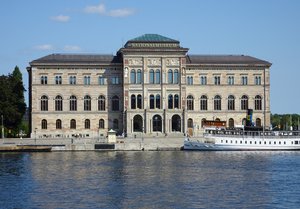
1634 · Oil On Canvas · Nationalmuseum, Stockholm

A heavy wooden tabletop anchors this 1634 composition, supporting a collection of breakfast items that emerge from a dark, indeterminate background. The arrangement is defined by a sharp chiaroscuro, where light enters from the upper left to sculpt the volume of each object. A large wedge of cheese, characterized by its porous texture, sits near a ceramic jug and ornate silver vessels. Sliced meat and citrus fruit provide deep reds…

9
Still Life with Fish on a Vending Counter (1637) by Jacob van Es

Still Life with Fish on a Vending Counter

1637 · Oil On Canvas · Städel Museum, Frankfurt

Still Life with Fish on a Vending Counter is a work by Jacob van Es, a prominent figure in the first generation of Flemish still-life painters. Born in Antwerp, Belgium, in 1596, Van Es established himself within the city's competitive artistic ecosystem. By 1617, he had achieved the status of master within the Antwerp Guild of Saint Luke. This professional standing allowed him to contribute to the development of the…

10
Still Life (1640) by Jacob van Es

Still Life

1640 · Oil On Canvas · Royal Museum of Fine Arts Antwerp, Antwerp

The painting titled Still Life is a work by Jacob van Es. It emerged from the artist's brush around 1640. This composition captures a quiet abundance of food, arranged with a focus on the tactile reality of the objects. A lobster, oysters, and fruit rest upon a dark surface, their forms defined by a sharp, directional light.

Jacob van Es paintings, ranked 11 to 44

11Still life with fish, kitchenware, crabs and onions (1641) by Jacob van EsStill life with fish, kitchenware, crabs and onions1641 · Staatliches Museum Schwerin 12Flower Stilllife (1640) by Jacob van EsFlower Stilllife1640 · Niedersächsisches Landesmuseum 13Still life of bread, plate with olives, lemon and glassware (1640) by Jacob van EsStill life of bread, plate with olives, lemon and glassware1640 · Staatliche Kunsthalle Karlsruhe 14Still life with a basket of fruit and a squirrel, glasses, and a cut melon on a tabletop (1650) by Jacob van EsStill life with a basket of fruit and a squirrel, glasses, and a cut melon on a tabletop1650 15Still life with oysters, a jug and a wine glass (1650) by Jacob van EsStill life with oysters, a jug and a wine glass1650 16Still life with fruit, artichokes, and a columbine cup (1650) by Jacob van EsStill life with fruit, artichokes, and a columbine cup1650 17Plums in a Chinese dish (1650) by Jacob van EsPlums in a Chinese dish1650 18Plums in a Chinese dish (1650) by Jacob van EsPlums in a Chinese dish1650 · Thyssen-Bornemisza Museum 19Breakfast with Oysters (1645) by Jacob van EsBreakfast with Oysters1645 · Hermitage Museum 20APPRETS D'UN REPAS by Jacob van EsAPPRETS D'UN REPASThe Louvre 21Oysters and lemons by Jacob van EsOysters and lemonsMuseo del Prado 22Still life with pitcher by Jacob van EsStill life with pitcher 23HUITRES ET FRUITS by Jacob van EsHUITRES ET FRUITS 24Still life of blue and white grapes, together with wild strawberries, all in a basked on a wooden ledge by Jacob van EsStill life of blue and white grapes, together with wild strawberries, all in a basked on a wooden ledge 25Untitled (767) by Jacob van EsUntitled (767) 26Still life with bacon by Jacob van EsStill life with baconMusée des Beaux-Arts de Valenciennes 27Still life with squirrel by Jacob van EsStill life with squirrel 28Peaches, pears, nuts and a vase of carnations on a table top by Jacob van EsPeaches, pears, nuts and a vase of carnations on a table top 29Nancy lunch by Jacob van EsNancy lunchМузей витончених мистецтв Нансі 30Still Life with lobster and oysters by Jacob van EsStill Life with lobster and oysters 31Still-Life by Jacob van EsStill-Life 32Nature morte au jambon by Jacob van EsNature morte au jambon 33Le Déjeuner de hareng Nature morte au hareng by Jacob van EsLe Déjeuner de hareng Nature morte au hareng 34Nature morte aux fruits dans des porcelaines by Jacob van EsNature morte aux fruits dans des porcelaines 35Still Life with Meat Pies, a Roast Fowl, Olives, Capers and Strawberries by Jacob van EsStill Life with Meat Pies, a Roast Fowl, Olives, Capers and Strawberries 36Still life with peaches, grapes and nuts on an entablature by Jacob van EsStill life with peaches, grapes and nuts on an entablature 37Grapes with a Half Walnut by Jacob van EsGrapes with a Half Walnut 38Still life with a salt cellar. by Jacob van EsStill life with a salt cellar. 39Nature morte à l'écureuil by Jacob van EsNature morte à l'écureuilMusée des Beaux-Arts 40Still-Life of Grapes, Plums and Apples by Jacob van EsStill-Life of Grapes, Plums and Apples 41Grape with Walnut by Jacob van EsGrape with WalnutNárodní Galerie 42An Iris and Three Roses in an Earthenware Pot by Jacob van EsAn Iris and Three Roses in an Earthenware PotFondation Custodia 43Still life with a squirrel and a parrot (detail) by Jacob van EsStill life with a squirrel and a parrot (detail) 44Still life with a fish on a terracotta plate, bunches of asparagus, artichokes and cherries in a scalloped dish, together with half a cheese in a basket, bread rolls, fraises de bois, lemons, oranges and crabs all arranged on a table top by Jacob van EsStill life with a fish on a terracotta plate, bunches of asparagus, artichokes and cherries in a scalloped dish, together with half a cheese in a basket, bread rolls, fraises de bois, lemons, oranges and crabs all arranged on a table top

Jacob van Es's famous paintings, period by period

The subjects that held Jacob van Es's eye

The four subjects that come back most often in these originals, each with its finest example.

The museums that keep Jacob van Es's originals

The 8 museums that hold the most of the paintings on this page.

Museum City Works by Jacob van Es Paintings from this list
Groeninge Museum, BruggeGroeninge Museum Brugge 1 Still-Life with Fruit
Museum of Fine Arts Ghent (MSK), GhentMuseum of Fine Arts Ghent (MSK) Ghent 1 Still Life with Oysters, Fruit and Pastry
Musée Des Beaux, StrasbourgMusée Des Beaux Strasbourg 1 Floral still life of three roses in a glass vase surrounded by three butterflies, a beetle and a caterpillar
Bavarian State Painting Collections, MunichBavarian State Painting Collections Munich 1 Still Life
Nationalmuseum, StockholmNationalmuseum Stockholm 1 Breakfast Piece with Cheese and Goblet
Städel Museum, FrankfurtStädel Museum Frankfurt 1 Still Life with Fish on a Vending Counter
Royal Museum of Fine Arts Antwerp, AntwerpRoyal Museum of Fine Arts Antwerp Antwerp 1 Still Life
Staatliches Museum Schwerin, SchwerinStaatliches Museum Schwerin Schwerin 1 Still life with fish, kitchenware, crabs and onions

Jacob van Es, one signature painting per decade

Works per decade

Pick a decade to see the original that defines it.

Jacob van Es's paintings: the gallery answers

Which Jacob van Es painting is the most famous of all?Reveal the answer

Still-Life with Fruit, Groeninge Museum, Brugge. Nature morte au pichet and Still Life with Oysters, Fruit and Pastry (1619) come next.

Which are Jacob van Es's top 10 paintings?Reveal the answer

Still-Life with Fruit, Nature morte au pichet, Still Life with Oysters, Fruit and Pastry, stillife, Floral still life of three roses in a glass vase surrounded by three butterflies, a beetle and a caterpillar, Still Life, Still Life with Fruit and Ham, Breakfast Piece with Cheese and Goblet, Still Life with Fish on a Vending Counter and Still Life. The ranking above gives each one's year and museum.

How many works did Jacob van Es create?Reveal the answer

Our catalog holds 46 works by Jacob van Es, dated from 1619 to 1650.

Where do Jacob van Es's most famous originals hang?Reveal the answer

Mostly in Groeninge Museum (Brugge), Museum of Fine Arts Ghent (MSK) (Ghent) and Musée Des Beaux (Strasbourg). The museum table above lists them all.

When did Jacob van Es create the most famous paintings?Reveal the answer

In 1640s: 5 of the 44 works on this page were made then, Still Life among them.

Which are Jacob van Es's earliest and latest famous works?Reveal the answer

On this page, the earliest is Still Life with Oysters, Fruit and Pastry (1619) and the latest Still life with a basket of fruit and a squirrel, glasses, and a cut melon on a tabletop (1650).

Which subjects did Jacob van Es return to most?Reveal the answer

Fruit (12), Bread (9) and Grapes (8), across the 44 works on this page.

Which medium did Jacob van Es work in most?Reveal the answer

Oil On Panel, for 15 of the 44 works on this page.

Which movement is Jacob van Es associated with?Reveal the answer

Baroque, judging by the originals on this page.

Jacob van Es: the artist

The Quiet Splendor of Jacob Foppens van Es

In the golden age of Flemish Baroque painting, few artists captured the ephemeral beauty of the material world with as much understated grace as Jacob Foppens van Es. A master of the still life, Van Es occupied a pivotal position in the first generation of Flemish painters who elevated the depiction of food, flora, and everyday objects into a profound sensory experience. While his contemporaries often leaned toward the dramatic or the overtly opulent, Van Es cultivated an aesthetic of refined elegance. His works, characterized by a meticulous devotion to texture and light, do not merely present objects; they invite the viewer into a silent, contemplative dialogue with nature’s bounty.

Though the biographical details of his early life remain somewhat shrouded in the mists of the seventeenth century, we know that Van Es was deeply rooted in the vibrant artistic ecosystem of Antwerp. Estimates suggest he was born around 1596, likely into a prosperous merchant family. This background of stability may have provided the foundation for his disciplined approach to art. By 1617, he had achieved the prestigious status of master within the Antwerp Guild of Saint Luke. Interestingly, the lack of records showing him as a pupil within the guild suggests that his formative training might have taken place elsewhere, perhaps absorbing the stylistic nuances of masters like Adam van Noort or Maerten de Vos before returning to establish his legacy in his home city.

A Symphony of Texture and Light

The true genius of Van Es lies in his ability to breathe life into the inanimate. His compositions are masterclasses in the chiaroscuro technique, where subtle shifts in light and shadow create a palpable sense of volume and presence. When observing one of his fruit pieces, such as his celebrated depictions of peaches, grapes, and nuts, one is struck by the way the light clings to the velvety skin of a peach or glints off the translucent surface of a grape. He possessed an uncanny ability to render the tactile—the ruggedness of an oyster shell, the crispness of a leaf, or the heavy weight of an entablature.

His technical repertoire extended beyond simple food studies into the delicate realm of floral arrangements and even collaborative garland paintings. In these works, he worked alongside other masters to create intricate wreaths of blossoms that framed central religious or portrait subjects. This collaborative spirit highlights his integration into the broader Flemish tradition, standing alongside luminaries such as Osias Beert and Clara Peeters. His brushwork was never ostentatious; instead, it served a higher purpose: to honor the intricate details of the natural world, ensuring that every crumb, droplet, and petal felt anchored in reality.

Legacy and Historical Significance

The success of Jacob Foppens van Es was not merely a local phenomenon but a recognized standard of excellence throughout the seventeenth-century art market. The enduring value of his work is evidenced by its presence in the most esteemed collections of his era. Most notably, the legendary Peter Paul Rubens included two of Van Es’s works in his personal inventory, a testament to the respect even the giants of the Baroque era held for his skill. His social standing was equally significant; the fact that prominent artists like Jacob Jordaens served as godfathers to his children suggests he moved within the highest circles of Antwerp's intellectual and artistic elite.

As we look back upon his oeuvre, we see more than just historical artifacts; we see a bridge between the Renaissance focus on observation and the Baroque passion for drama. Van Es’s contribution to the Dutch and Flemish still-life tradition remains foundational. He helped define a genre that celebrated the beauty of the mundane, turning a simple breakfast or a bowl of fruit into a meditation on abundance, mortality, and the fleeting nature of time. His legacy lives on in every painting that seeks to find the extraordinary within the ordinary.