The Soul of Scotland: The Life and Legacy of Sir George Harvey
In the heart of nineteenth-century Scotland, a period defined by profound religious conviction and shifting social landscapes, the brush of Sir George Harvey captured more than mere scenery; it captured the very spirit of a nation. Born on February 1st, 1806, in Saint Ninians, Stirling, Harvey emerged from the rugged beauty of his homeland to become one of the most distinguished figures of the Victorian era. His early years were shaped by the meticulous traditions of Scottish Romanticism, having studied under the guidance of William Laidlaw. This foundational training instilled in him a reverence for light and a precision in detail that would later allow him to breathe life into the historical dramas of the Covenanters—the devout Protestants who stood as symbols of resistance against religious imposition during Scotland's turbulent Restoration.
Harvey’s artistic trajectory was marked by an extraordinary precocity. By the age of twenty, his talent had already garnered such distinction that he was invited to become an associate of the Royal Scottish Academy, a testament to his technical mastery and burgeoning reputation. While his roots lay in the landscape traditions of his mentors, Harvey’s true passion resided in the narrative power of history painting. He possessed a unique ability to transform historical chronicles into visceral, emotional experiences. His canvases did not merely document the past; they resurrected it, using dramatic lighting and carefully orchestrated perspectives to place the viewer directly within the solemnity of a religious gathering or the quiet tension of a historical turning point.
Mastery of Genre and the Poetics of Realism
The breadth of Harvey’s oeuvre reveals an artist deeply enamored with the nuances of human existence, ranging from the epic to the intimate. His work often oscillated between the grand scale of historical commemoration and the tender observation of daily life. In his celebrated studies for religious scenes, such as Two Women And A Boy, one finds a serene yet powerful atmosphere that mirrors the spiritual fervor of the era. Yet, Harvey was equally adept at capturing the quiet dignity of the individual. His portraits, including the evocative Portrait Of A Woman, demonstrate an astute command of anatomy and the delicate textures of drapery, conveying grace through subtle shifts in expression.
Beyond the heavy themes of religious history, Harvey explored the softer edges of Scottish life through genre painting and landscape. His ability to manipulate medium—moving from the robust realism of oil to the fluid, atmospheric qualities of watercolor—allowed him to explore different emotional registers:
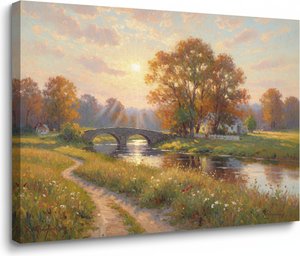
- The Romantic Landscape: In works like Invermark Castle, Forfarshire, he utilized balanced compositions and atmospheric perspective to evoke the timeless beauty of the Scottish countryside.
- Intimate Genre Scenes: Pieces such as A Nurse Warming A Garment showcase a poignant focus on age, reflection, and the quiet rhythms of domesticity.
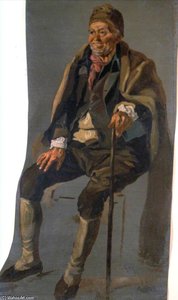
- Character Studies: His portraits of common folk, like The Thoughtful Callant, reveal an impressionistic sensitivity to character and the subtle play of light upon the human form.
Historical Significance and Artistic Endurance
As the nineteenth century progressed, Harvey’s influence continued to resonate through the halls of the Royal Scottish Academy and beyond. His work served as a vital bridge between the rigid traditions of classical history painting and the more emotive, light-focused approaches that would eventually pave the way for later movements. Even as art moved toward the impressionistic, Harvey’s commitment to realism and narrative truth ensured his place in the canon of Scottish masters. He did not merely paint what he saw; he painted what was felt, embedding the religious and social struggles of the Covenanters into the visual fabric of Scottish identity.
Sir George Harvey passed away in Edinburgh in 1876, leaving behind a legacy that remains a cornerstone of Scottish art history. His ability to blend technical prowess with deep spiritual and historical resonance allows his works to remain profoundly moving even centuries later. To look upon a Harvey painting is to witness the intersection of history and art, where every brushstroke serves as an echo of a nation's enduring strength and its complex, beautiful heritage.