Portrait of Filippo Lauri

Filippo Lauri Paintings: The 38 Most Famous, Through a Gallery's Eye

Updated November 2026 · ranked by our popularity score (searches, visits and orders for each work) · 38 works by Filippo Lauri in our catalogue

In short

To the gallery's eye, Filippo Lauri's most famous painting is The Vision of Saint Anthony of Padua (1678), whose original hangs in the Isabella Stewart Gardner Museum, Boston. Decorative Panel ''Trophies and Cupids" (1650) and Circe and Ulysses (1640) complete the trio every eye recognises. Of the 38 works by Filippo Lauri in our catalog, the gallery presents the 38 most famous below, each original with its year, its museum and what makes it unique.

1623 – 1694, Rome Baroque Most works: Statens Museum For Kunst

The gallery's top 10 Filippo Lauri paintings

1
The Vision of Saint Anthony of Padua (1678) by Filippo Lauri

The Vision of Saint Anthony of Padua

1678 · Oil On Copper · Isabella Stewart Gardner Museum, Boston

In this intimate oil on copper, we find ourselves witnessing a quiet, profound intersection between the earthly and the celestial. Saint Anthony of Padua is depicted in a moment of deep spiritual communion, kneeling with hands crossed over his chest in a gesture of humble reception. He wears a simple brown habit, his reddish-brown hair and short beard catching the soft light that seems to emanate from the figures themselves.…

2
Decorative Panel ''Trophies and Cupids" (1650) by Filippo Lauri

Decorative Panel ''Trophies and Cupids"

1650 · Oil On Panel · Hermitage Museum, Saint Petersburg

The Decorative Panel ''Trophies and Cupids'' emerges from the shadows of the Roman Baroque, a work that carries the unmistakable touch of Filippo Lauri. This piece, which dates to about 1650, captures a moment of celestial play amidst ornamental grandeur. The artist, Filippo Lauri, brings a specific sense of light to this scene, a skill he refined throughout his life in Italy. Born in Rome, Italy, Lauri lived from 1623…

3
Circe and Ulysses (1640) by Filippo Lauri

Circe and Ulysses

1640 · Oil On Canvas · Statens Museum For Kunst, Copenhagen

The air in the stone chamber feels heavy, thick with the scent of ancient magic and the weight of an impending transformation. Circe sits poised, her presence commanding the space from the left, her gaze locked upon the man who has dared to enter her domain. Ulysses stands at the center, a figure of muscular tension and resolve, his staff or spear cutting a sharp diagonal through the composition. Around…

4
Ulysses and Circe (1640) by Filippo Lauri

Ulysses and Circe

1640 · Oil · Statens Museum For Kunst, Copenhagen

The air in the courtyard feels heavy with the weight of ancient magic. Shadows stretch long across the stone floor, cast by imposing classical columns that reach toward a sky we cannot see. At the center of this theatrical stage, a woman leans toward a man, her presence commanding the space between them. They sit at a table draped in a white cloth, a focal point of tension amidst the…

6
Ideal Landscape of Italian Character with the Abduction of a Nymph (1658) by Filippo Lauri

Ideal Landscape of Italian Character with the Abduction of a Nymph

Ideal Landscape of Italian Character with the Abduction of a Nymph is a work by the Roman Baroque painter Filippo Lauri. Created about 1658, the composition integrates mythological narrative within a structured, classical environment. The scene focuses on a central group of figures, including a male figure holding a staff and a female figure being lifted into a boat, set against a backdrop of rugged terrain and distant mountains.

7
Jason Pulls the Teeth from the Dragon (1658) by Filippo Lauri

Jason Pulls the Teeth from the Dragon

A single, lunging figure dominates the frame. He is a warrior caught in a moment of violent exertion, his body a diagonal line of tension against a dark, textured void. He wears the armor of a classical Roman, a cuirass that catches a sharp, singular light, and a plumed helmet that marks his status. His hands are locked in a desperate, physical contest with a serpentine creature. The dragon's form…

8
Jason Lulls the Dragon to Sleep (1658) by Filippo Lauri

Jason Lulls the Dragon to Sleep

In this 1658 oil painting, we find ourselves witnessing a singular, suspended moment from classical mythology. The scene focuses on Jason, the hero of the Argonauts, as he engages in a delicate, almost tender struggle with a serpentine dragon. Rather than a violent clash of steel, the composition emphasizes a sense of lullaby-like stillness. Jason is positioned in a dynamic, lunging stance, his body draped in a flowing white cloak…

9
St. Francis in Extasy (1650) by Filippo Lauri

St. Francis in Extasy

1650 · Oil On Panel

The air in the painting feels heavy, thick with the scent of damp earth and the sudden, sharp presence of the divine. St. Francis sits in the lower corner, his body anchored to the ground by heavy, dark robes of ochre and deep green. He is a solid weight against the swirling movement above. His face is turned upward, catching a sudden, celestial light that carves his features out of…

10
Apollo Flaying Marsyas (1650) by Filippo Lauri

Apollo Flaying Marsyas

1650 · Oil

The oil painting Apollo Flaying Marsyas captures a moment of divine retribution. Filippo Lauri, an artist born in Rome, Italy, rendered this scene with a focus on the tension between the celestial and the earthly. The work dates to about 1650, a period when the dramatic weight of the Baroque style defined the Roman landscape. Here, the myth is stripped of its abstraction and reduced to the physical reality of…

Filippo Lauri paintings, ranked 11 to 38

The subjects that held Filippo Lauri's eye

The four subjects that come back most often in these originals, each with its finest example.

The museums that keep Filippo Lauri's originals

The 8 museums that hold the most of the paintings on this page.

Museum City Works by Filippo Lauri Paintings from this list
Statens Museum For Kunst, CopenhagenStatens Museum For Kunst Copenhagen 6 Circe and Ulysses, Ulysses and Circe, The Baptism of Christ
Bavarian State Painting Collections, MunichBavarian State Painting Collections Munich 4 Venus and Adonis in Ideal Landscape, Ideal Landscape of Italian Character with the Abduction of a Nymph, Jason Pulls the Teeth from the Dragon
Hermitage Museum, Saint PetersburgHermitage Museum Saint Petersburg 3 Decorative Panel ''Trophies and Cupids", Appearance of Christ to Mary Magdalene, Diana and Her Nymphs Surprised by Actaeon
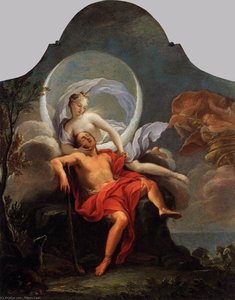
Academy of Fine Arts Vienna, ViennaAcademy of Fine Arts Vienna Vienna 2 Venus and Adonis, Endymion and Selene
Isabella Stewart Gardner Museum, BostonIsabella Stewart Gardner Museum Boston 1 The Vision of Saint Anthony of Padua
Royal Collection, LondonRoyal Collection London 1 The Rest on the Flight into Egypt
Buckingham Palace, LondonBuckingham Palace London 1 Jacob Fleeing from Laban
Fitzwilliam MuseumFitzwilliam Museum 1 The Agony in the Garden

Filippo Lauri, one signature painting per decade

Works per decade

Pick a decade to see the original that defines it.

Filippo Lauri's paintings: the gallery answers

Which Filippo Lauri painting is the most famous of all?Reveal the answer

The Vision of Saint Anthony of Padua (1678), Isabella Stewart Gardner Museum, Boston. Decorative Panel ''Trophies and Cupids" (1650) and Circe and Ulysses (1640) come next.

How old was Filippo Lauri on completing The Vision of Saint Anthony of Padua?Reveal the answer

55 years old: The Vision of Saint Anthony of Padua dates from 1678, and Filippo Lauri was born in 1623.

Which are Filippo Lauri's top 10 paintings?Reveal the answer

The Vision of Saint Anthony of Padua, Decorative Panel ''Trophies and Cupids", Circe and Ulysses, Ulysses and Circe, Venus and Adonis in Ideal Landscape, Ideal Landscape of Italian Character with the Abduction of a Nymph, Jason Pulls the Teeth from the Dragon, Jason Lulls the Dragon to Sleep, St. Francis in Extasy and Apollo Flaying Marsyas. The ranking above gives each one's year and museum.

How many works did Filippo Lauri create?Reveal the answer

Our catalog holds 38 works by Filippo Lauri, dated from 1640 to 1686.

Where do Filippo Lauri's most famous originals hang?Reveal the answer

Mostly in Statens Museum For Kunst (Copenhagen), Bavarian State Painting Collections (Munich) and Hermitage Museum (Saint Petersburg). The museum table above lists them all.

When did Filippo Lauri create the most famous paintings?Reveal the answer

In 1650s: 10 of the 38 works on this page were made then, Decorative Panel ''Trophies and Cupids" among them.

Which are Filippo Lauri's earliest and latest famous works?Reveal the answer

On this page, the earliest is Circe and Ulysses (1640) and the latest Jacob Fleeing from Laban (1686).

Which subjects did Filippo Lauri return to most?Reveal the answer

Man (10), Clouds (7) and Woman (7), across the 38 works on this page.

Which medium did Filippo Lauri work in most?Reveal the answer

Oil, for 11 of the 38 works on this page.

Which movement is Filippo Lauri associated with?Reveal the answer

Baroque, judging by the originals on this page.

Which Filippo Lauri originals does the Statens Museum For Kunst hold?Reveal the answer

Circe and Ulysses, Ulysses and Circe and The Baptism of Christ: the Statens Museum For Kunst, Copenhagen holds 6 of the works on this page.

Filippo Lauri: the artist

Filippo Lauri (1623–1694): Painter of Light and Landscape

Filippo Lauri (August 25, 1623 – December 12, 1694) stands as a prominent figure within the Roman Baroque artistic landscape. Though largely overshadowed by contemporaries like Caravaggio and Bernini, Lauri’s distinctive style—characterized by luminous color palettes and masterful depictions of serene landscapes interwoven with mythological narratives—earned him recognition and enduring admiration.

Born in Rome to Balthasar Lauwers, a Flemish landscape painter who had emigrated from Antwerp under the patronage of Paul Bril, Lauri’s artistic lineage instilled in him an early appreciation for atmospheric perspective and tonal modulation. His formative years were spent studying under his father and subsequently with Francesco Lauri, whose own brother, Andrea Sacchi—a celebrated artist himself—served as a crucial mentor.

Joining the Accademia di San Luca in 1654 marked a pivotal moment in Lauri’s career. This prestigious institution fostered intellectual discourse and artistic experimentation, propelling him to positions of leadership where he championed innovation and oversaw the training of future generations of painters. Notably, Lauri collaborated closely with Filippo Gagliardi on “Celebrations for Christine of Sweden at Palazzo Barberini,” a monumental canvas that vividly captures the grandeur and theatricality of Baroque court celebrations.

Lauri’s artistic output spanned numerous genres, including religious paintings—particularly depictions of saints and biblical scenes—and landscapes imbued with classical ideals. He possessed an exceptional talent for capturing the subtle nuances of light and shadow, a technique honed through his collaborations with Claude Lorraine, whose influence is evident in Lauri's tranquil compositions.

His prolific output included numerous engravings, demonstrating his understanding of printmaking techniques and expanding the reach of his artistic vision. Lauri’s legacy resides not only in his individual masterpieces but also in his role as a catalyst for artistic development within Rome—a testament to his enduring contribution to the Baroque aesthetic.

Notable Works

  • "Venus & Adonis": An oil painting showcasing Lauri's masterful use of chiaroscuro and classical beauty, capturing the mythological tale with dramatic lighting. Located at Palazzo Braschi (formerly Barberini Palace).
  • "Sleeping Venus": Another captivating landscape scene featuring Diana and Endymion, demonstrating Lauri’s ability to convey emotion through serene imagery.
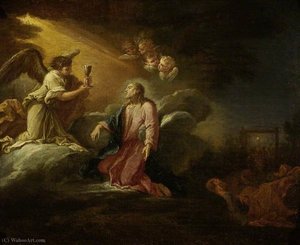
  • "The Agony in the Garden": A powerful depiction of Christ's Passion, reflecting Lauri’s artistic sensitivity and technical prowess.

Influence & Artistic Style

Lauri’s style distinguishes itself through its emphasis on luminous color palettes—particularly blues and golds—and a meticulous attention to detail in landscape compositions. He skillfully employed atmospheric perspective, creating depth and realism that mirrored the artistic conventions of his time. His works embody the ideals of Renaissance Italy blended with Baroque dynamism.

Historical Significance

Filippo Lauri’s contribution to Roman art history is significant as he represents a crucial link between Flemish landscape painting traditions and the burgeoning Baroque aesthetic in Rome. He upheld the Accademia di San Luca's role as a center for artistic excellence, shaping the future of Roman painting.