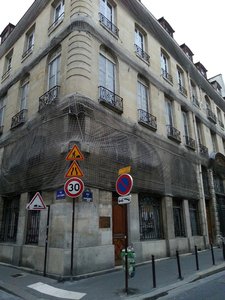
Portrait of Ernest Hébert

Ernest Hébert Paintings: The 100 Most Famous, Through a Gallery's Eye

Updated November 2026 · ranked by our popularity score (searches, visits and orders for each work) · 131 works by Ernest Hébert in our catalogue

In short

To the gallery's eye, Ernest Hébert's most famous painting is LA LAVANDARA OU JEUNE LAVANDIERE SONGEUSE, whose original hangs in the Musée National Ernest Hébert, Paris. ROMA SDEGNATA and Peasants at the fountain complete the trio every eye recognises. Of the 131 works by Ernest Hébert in our catalog, the gallery presents the 100 most famous below, each original with its year, its museum and what makes it unique.

1817 – 1908, Grenoble Romanticism Most works: Musée National Ernest Hébert

The gallery's top 10 Ernest Hébert paintings

1
LA LAVANDARA OU JEUNE LAVANDIERE SONGEUSE by Ernest Hébert

LA LAVANDARA OU JEUNE LAVANDIERE SONGEUSE

Oil On Canvas · Musée National Ernest Hébert, Paris

In this oil on canvas, we find ourselves drawn into a private, silent interval of a young woman's day. She sits upon a stone bench, her form draped in a white blouse and a blue skirt, her presence anchored by the subtle weight of her contemplation. A red headscarf provides the only sharp note of color against the muted, natural tones of the surrounding greenery. Her gaze is cast downward,…

2
ROMA SDEGNATA by Ernest Hébert

ROMA SDEGNATA

Oil On Canvas · Musée National Ernest Hébert, Paris

ROMA SDEGNATA is an oil painting executed by the French academic painter Ernest Hébert. The artist produced this work between about 1886 and 1896. This specific piece is currently held in a collection in Rome at the museo di Roma. Two related sketches of the composition are preserved at the Musée Hébert in Paris.

3
Peasants at the fountain by Ernest Hébert

Peasants at the fountain

Peasants at the fountain is a genre painting by the French artist Ernest Hébert. The work is categorized as a genre painting, focusing on scenes of everyday life. This specific piece is centered on the theme of life in Italy. The composition captures a group of individuals gathered around a water source, a subject matter that aligns with the artist's interest in rural customs and social settings.

4
Self-portrait at 17 when he arrived in Paris (1833) by Ernest Hébert

Self-portrait at 17 when he arrived in Paris

1833 · Oil · Musée d'Orsay, Paris

The Subject and Composition A young man occupies the center of this oil portrait, presented in a bust-length view. He is positioned slightly off-center, his torso turned partially away while his gaze meets the viewer directly. The subject possesses dark eyes, well-defined eyebrows, and full lips. His hair is rendered with fine, dark, textured strokes that suggest volume and curls. He wears dark clothing, primarily deep blacks, which merge into…

5
The Virgin of Deliverance (1872) by Ernest Hébert

The Virgin of Deliverance

1872 · Musée d'Orsay, Paris

The Virgin of Deliverance is a religious oil on wood executed by Ernest Hébert in 1872. This specific work functions as a variant of a larger-scale altarpiece produced by the artist. The original composition was created for the Salon of 1872 and was subsequently installed in the church of La Tronche the following year.

6
On Guard (1865) by Ernest Hébert

On Guard

1865 · Oil On Canvas · Art Institute of Chicago, Chicago

A somber monochrome scene unfolds within a dark, cavernous setting, defined by deep blacks and sharp highlights. A central female figure stands in the foreground, her face and shoulder caught in a dramatic light that suggests an unseen source above. At her feet lies a recumbent figure, creating a composition of tension and mourning. The environment is composed of textured, organic shapes, suggesting the earthen walls of a cave or…

7
PETITE EVE AU PAVOT by Ernest Hébert

PETITE EVE AU PAVOT

Oil On Canvas · Musée National Ernest Hébert, Paris

In the quietude of PETITE EVE AU PAVOT, the French artist Ernest Hébert presents us with a delicate encounter. We find ourselves facing a portrait of a young woman, her presence filling the space with a soft, contemplative energy. The title suggests she is Eve, a figure whose very name carries the weight of ancient stories, yet here she appears caught in a moment of pure, unblemished grace. There is…

8
LA SULAMITE, DIT AUSSI LA FILLE DU LIBAN OU LA FLEUR DU LIBAN by Ernest Hébert

LA SULAMITE, DIT AUSSI LA FILLE DU LIBAN OU LA FLEUR DU LIBAN

Oil On Canvas · Musée National Ernest Hébert, Paris

The composition centers on a bust-length portrait of a young woman, positioned within an oval frame. Her gaze is directed toward the viewer, characterized by a steady and slightly melancholic expression. She is draped in a headscarf featuring intricate patterns of red, blue, and green. The fabric folds are rendered with soft, flowing lines that define the contours of her face and the weight of the textile. Her skin tones…

9
LA MALARIA by Ernest Hébert

LA MALARIA

Oil On Canvas · Condé Museum, Chantilly

In the quiet, heavy atmosphere of the 19th century, Ernest Hébert captures a moment of profound human struggle in his work titled LA MALARIA. The scene unfolds upon a small boat, or barque, drifting through a landscape that feels thick with tension. A family of Italian peasants occupies the vessel, their lives suspended in the precarious space between the water and the shore. They are not merely traveling; they are…

10
Oriental dance (1846) by Ernest Hébert

Oriental dance

1846 · Oil On Canvas · Musée d'Orsay, Paris

is an oil on canvas painting by the French academic artist Ernest Hébert. Executed in 1846, the work belongs to the genre art classification. It represents a mid-19th-century approach to the Orientalist style, focusing on a specific scene of movement and music.

Ernest Hébert paintings, ranked 11 to 100

11Music (1850) by Ernest HébertMusic1850 12Going to the Well (1850) by Ernest HébertGoing to the Well1850 · Walters Art Museum 13The hay harvesters of San Germano (1857) by Ernest HébertThe hay harvesters of San Germano1857 · Musée d'Orsay 14Adela (1859) by Ernest HébertAdela1859 15Pensive young Neapolitan (1857) by Ernest HébertPensive young Neapolitan1857 16Self-Portrait With Red Tie (1870) by Ernest HébertSelf-Portrait With Red Tie1870 · Musée Hébert 17La lavandière à Capri (1874) by Ernest HébertLa lavandière à Capri1874 18The music (Agathe Calmel) (1882) by Ernest HébertThe music (Agathe Calmel)1882 · Petit Palais 19At the well (1879) by Ernest HébertAt the well1879 · Walters Art Museum 20Ophelia (1887) by Ernest HébertOphelia1887 · Royal Collection 21Marie-Thérèse de Ségur, countess of Guerne (1859-1933) (1898) by Ernest HébertMarie-Thérèse de Ségur, countess of Guerne (1859-1933)1898 · Carnavalet Museum 22Lily Schneider, Countess of Ganay (1905) by Ernest HébertLily Schneider, Countess of Ganay1905 · Musée d'Orsay 23Morning star (1900) by Ernest HébertMorning star1900 24Souvenir d'Italie (1908) by Ernest HébertSouvenir d'Italie1908 · Musée Des Beaux Arts 25Virgin And Child by Ernest HébertVirgin And Child 26VILLA MEDICIS, BASSIN A BALUSTRADE by Ernest HébertVILLA MEDICIS, BASSIN A BALUSTRADEMusée National Ernest Hébert 27The Mal'aria (1848) by Ernest HébertThe Mal'aria1848 · Musée d'Orsay 28The Kiss of Judas (1853) by Ernest HébertThe Kiss of Judas1853 · Musée d'Orsay 29Study for 'Les Filles d'Alvito' (1855) by Ernest HébertStudy for 'Les Filles d'Alvito'1855 · British Museum 30Returning from the well (1860) by Ernest HébertReturning from the well1860 · Walters Art Museum 31Young girls of Ischia by Ernest HébertYoung girls of IschiaMusée d'Orsay 32PORTRAIT DE MADAME JANVIER D'ATTAINVILLE by Ernest HébertPORTRAIT DE MADAME JANVIER D'ATTAINVILLEThe Louvre 33Portrait of Catherine du Bouchage by Ernest HébertPortrait of Catherine du Bouchage 34Marie-clotilde Therese Louise by Ernest HébertMarie-clotilde Therese Louise 35Addolorata by Ernest HébertAddolorata 36The Virgin In Paradise by Ernest HébertThe Virgin In Paradise 37Bibiana (Ne m'oubliez pas) by Ernest HébertBibiana (Ne m'oubliez pas) 38Sainte Geneviève by Ernest HébertSainte Geneviève 39Le Christ by Ernest HébertLe Christ 40Tête du Christ by Ernest HébertTête du ChristMuseum Catharijneconvent 41Portrait du Général de Beylié by Ernest HébertPortrait du Général de BeyliéMusée de Grenoble 42PORTRAIT DE MARIA PUCCI by Ernest HébertPORTRAIT DE MARIA PUCCIMusée National Ernest Hébert 43LA VIERGE AU PARADIS by Ernest HébertLA VIERGE AU PARADISMusée National Ernest Hébert 44Bibiana by Ernest HébertBibianaMusée National Ernest Hébert 45Sainte Marguerite by Ernest HébertSainte MargueriteMusée National Ernest Hébert 46ROME, LE BOTTEGHE OSCURE by Ernest HébertROME, LE BOTTEGHE OSCUREMusée National Ernest Hébert 47PORTRAIT DE GABRIELLE D'UCKERMANN, MME ERNEST HEBERT by Ernest HébertPORTRAIT DE GABRIELLE D'UCKERMANN, MME ERNEST HEBERTMusée National Ernest Hébert 48LES FILLES D'ALVITO by Ernest HébertLES FILLES D'ALVITOMusée National Ernest Hébert 49Tête de Jeanne d'Arc by Ernest HébertTête de Jeanne d'Arc 50PORTRAIT DE MME HOLLANDER NEE VICTORINE WERTHEIM by Ernest HébertPORTRAIT DE MME HOLLANDER NEE VICTORINE WERTHEIMMusée National Ernest Hébert 51Le Tasse en prison visité par Expilly by Ernest HébertLe Tasse en prison visité par Expilly 52TETE D'ITALIENNE DE PROFIL by Ernest HébertTETE D'ITALIENNE DE PROFILMusée National Ernest Hébert 53Tête de Vierge by Ernest HébertTête de Vierge 54JOUEUSE DE HARPE by Ernest HébertJOUEUSE DE HARPEMusée National Ernest Hébert 55SAINTE AGNES by Ernest HébertSAINTE AGNESMusée National Ernest Hébert 56PAYSANNE PENSIVE by Ernest HébertPAYSANNE PENSIVEMusée National Ernest Hébert 57TERRACINA by Ernest HébertTERRACINAMusée National Ernest Hébert 58PORTRAIT DE ROSEMONDE GERARD, MME EDMOND ROSTAND by Ernest HébertPORTRAIT DE ROSEMONDE GERARD, MME EDMOND ROSTANDMusée National Ernest Hébert 59LES CERVAROLLES (ETATS ROMAINS) by Ernest HébertLES CERVAROLLES (ETATS ROMAINS) 60MUSE EN DALMATIQUE JOUANT DE LA HARPE by Ernest HébertMUSE EN DALMATIQUE JOUANT DE LA HARPEMusée National Ernest Hébert 61OPHELIE by Ernest HébertOPHELIEMusée National Ernest Hébert 62LE PETIT BRIGAND by Ernest HébertLE PETIT BRIGANDMusée National Ernest Hébert 63LE MARCHAND D'IMAGES by Ernest HébertLE MARCHAND D'IMAGESMusée National Ernest Hébert 64Marcelle Née by Ernest HébertMarcelle NéeMusée National Ernest Hébert 65FEMME SONGEUSE DANS UN SOUS BOIS by Ernest HébertFEMME SONGEUSE DANS UN SOUS BOISMusée National Ernest Hébert 66MADAME HEBERT, MERE DE L'ARTISTE by Ernest HébertMADAME HEBERT, MERE DE L'ARTISTEMusée Hébert 67Madame de Villegruy Baronne de Villegruy by Ernest HébertMadame de Villegruy Baronne de VillegruyMusée National Ernest Hébert 68ADELAIDE SONGEUSE by Ernest HébertADELAIDE SONGEUSEMusée National Ernest Hébert 69PAYSANNE ASSISE SONGEUSE by Ernest HébertPAYSANNE ASSISE SONGEUSEMusée National Ernest Hébert 70INTERIEUR DU COLISEE by Ernest HébertINTERIEUR DU COLISEEMusée National Ernest Hébert 71ANTONIETTA by Ernest HébertANTONIETTAMusée National Ernest Hébert 72PORTRAIT D'AGNES DE POURTALES, MARQUISE DE LOYS CHANDIEU by Ernest HébertPORTRAIT D'AGNES DE POURTALES, MARQUISE DE LOYS CHANDIEUMusée National Ernest Hébert 73PORTRAIT DE LA COMTESSE EUGENE PASTRE, NEE CELINE DE BEAULAINCOURT by Ernest HébertPORTRAIT DE LA COMTESSE EUGENE PASTRE, NEE CELINE DE BEAULAINCOURTMusée National Ernest Hébert 74CRESCENZA A LA FENETRE DE LA PRISON by Ernest HébertCRESCENZA A LA FENETRE DE LA PRISONMusée National Ernest Hébert 75PASTORELLA by Ernest HébertPASTORELLAMusée National Ernest Hébert 76PORTRAIT D'ISABELLE PUCCI by Ernest HébertPORTRAIT D'ISABELLE PUCCIMusée National Ernest Hébert 77LA MARQUISE DE MODENE , NEE JEANNE MARIE CLEMENTINE THOMAS DE BOJANO (1862 1937) by Ernest HébertLA MARQUISE DE MODENE , NEE JEANNE MARIE CLEMENTINE THOMAS DE BOJANO (1862 1937) 78PAYSAN DE SARACINESCO by Ernest HébertPAYSAN DE SARACINESCOMusée National Ernest Hébert 79Sainte Agnès by Ernest HébertSainte AgnèsMusée National Magnin 80Madame Maximilien Wey by Ernest HébertMadame Maximilien Wey 81SAINTE AMELIE by Ernest HébertSAINTE AMELIEMusée National Ernest Hébert 82REVERIE AU CREPUSCULE by Ernest HébertREVERIE AU CREPUSCULEMusée National Ernest Hébert 83Pasqua Maria by Ernest HébertPasqua MariaMusée National Ernest Hébert 84JOUEUSE DE MANDOLINE by Ernest HébertJOUEUSE DE MANDOLINEMusée National Ernest Hébert 85ROSA NERA A LA FONTAINE by Ernest HébertROSA NERA A LA FONTAINEMusée National Ernest Hébert 86JOSEPH CHARLES PAUL, PRINCE NAPOLEON (1822 1891) by Ernest HébertJOSEPH CHARLES PAUL, PRINCE NAPOLEON (1822 1891) 87MONA LUCCIA by Ernest HébertMONA LUCCIAMusée Hébert 88BARONNE ELEONORE D'UCKERMANN, BELLE SOUR DE L'ARTISTE by Ernest HébertBARONNE ELEONORE D'UCKERMANN, BELLE SOUR DE L'ARTISTEMusée National Ernest Hébert 89FAMILLE PAYSANNE by Ernest HébertFAMILLE PAYSANNEMusée National Ernest Hébert 90PORTRAIT DE CATHERINE DU BOUCHAGE, PLUS TARD MME DANIEL OLLIVIER by Ernest HébertPORTRAIT DE CATHERINE DU BOUCHAGE, PLUS TARD MME DANIEL OLLIVIERMusée National Ernest Hébert 91ANGE A L'EPEE by Ernest HébertANGE A L'EPEEMusée National Ernest Hébert 92Comtesse de Pourtalès, née Mélanie Renouard de Bussières by Ernest HébertComtesse de Pourtalès, née Mélanie Renouard de BussièresMusée National Ernest Hébert 93JEUNE CHASSERESSE by Ernest HébertJEUNE CHASSERESSEMusée National Ernest Hébert 94PETIT SAVOYARD MONTREUR DE MARMOTTE APPELE ACTUELLEMENT PETIT SAVOYARD ET SON SINGE by Ernest HébertPETIT SAVOYARD MONTREUR DE MARMOTTE APPELE ACTUELLEMENT PETIT SAVOYARD ET SON SINGEMusée National Ernest Hébert 95Madame Hochon (née Louise Lefuel) by Ernest HébertMadame Hochon (née Louise Lefuel) 96Female bathers by Ernest HébertFemale bathers 97Et Toujours! Et Jamais! (1863) by Ernest HébertEt Toujours! Et Jamais!1863 98PORTO D'ANZIO by Ernest HébertPORTO D'ANZIOMusée National Ernest Hébert 99Italian market scene by Ernest HébertItalian market scene 100The Washerwoman by Ernest HébertThe Washerwoman

Ernest Hébert's famous paintings, period by period

The subjects that held Ernest Hébert's eye

The four subjects that come back most often in these originals, each with its finest example.

The museums that keep Ernest Hébert's originals

The 8 museums that hold the most of the paintings on this page.

Museum City Works by Ernest Hébert Paintings from this list
Musée National Ernest Hébert, ParisMusée National Ernest Hébert Paris 69 LA LAVANDARA OU JEUNE LAVANDIERE SONGEUSE, ROMA SDEGNATA, Peasants at the fountain
Musée d'Orsay, ParisMusée d'Orsay Paris 11 Self-portrait at 17 when he arrived in Paris, The Virgin of Deliverance, Oriental dance
Walters Art Museum, BaltimoreWalters Art Museum Baltimore 3 Going to the Well, At the well, Returning from the well
Musée Hébert, ParisMusée Hébert Paris 3 Self-Portrait With Red Tie, MADAME HEBERT, MERE DE L'ARTISTE, MONA LUCCIA
Art Institute of Chicago, ChicagoArt Institute of Chicago Chicago 1 On Guard
Condé Museum, ChantillyCondé Museum Chantilly 1 LA MALARIA
Petit Palais, ParisPetit Palais Paris 1 The music (Agathe Calmel)
Royal Collection, LondonRoyal Collection London 1 Ophelia

Ernest Hébert, one signature painting per decade

Works per decade

Pick a decade to see the original that defines it.

Ernest Hébert's paintings: the gallery answers

Which Ernest Hébert painting is the most famous of all?Reveal the answer

LA LAVANDARA OU JEUNE LAVANDIERE SONGEUSE, Musée National Ernest Hébert, Paris. ROMA SDEGNATA and Peasants at the fountain come next.

Which are Ernest Hébert's top 10 paintings?Reveal the answer

LA LAVANDARA OU JEUNE LAVANDIERE SONGEUSE, ROMA SDEGNATA, Peasants at the fountain, Self-portrait at 17 when he arrived in Paris, The Virgin of Deliverance, On Guard, PETITE EVE AU PAVOT, LA SULAMITE, DIT AUSSI LA FILLE DU LIBAN OU LA FLEUR DU LIBAN, LA MALARIA and Oriental dance. The ranking above gives each one's year and museum.

How many works did Ernest Hébert create?Reveal the answer

Our catalog holds 131 works by Ernest Hébert, dated from 1833 to 1908.

Where do Ernest Hébert's most famous originals hang?Reveal the answer

Mostly in Musée National Ernest Hébert (Paris), Musée d'Orsay (Paris) and Walters Art Museum (Baltimore). The museum table above lists them all.

When did Ernest Hébert create the most famous paintings?Reveal the answer

In 1850s: 7 of the 100 works on this page were made then, Music among them.

Which are Ernest Hébert's earliest and latest famous works?Reveal the answer

On this page, the earliest is Self-portrait at 17 when he arrived in Paris (1833) and the latest Souvenir d'Italie (1908).

Which subjects did Ernest Hébert return to most?Reveal the answer

Woman (17), Portrait (15) and 19th century (7), across the 100 works on this page.

Which medium did Ernest Hébert work in most?Reveal the answer

Oil On Canvas, for 14 of the 100 works on this page.

Which movement is Ernest Hébert associated with?Reveal the answer

Romanticism, judging by the originals on this page.

Which Ernest Hébert originals does the Musée National Ernest Hébert hold?Reveal the answer

LA LAVANDARA OU JEUNE LAVANDIERE SONGEUSE, ROMA SDEGNATA and Peasants at the fountain: the Musée National Ernest Hébert, Paris holds 50 of the works on this page.

Ernest Hébert: the artist

Ernest Hébert: A Parisian Romantic Capturing the Essence of Italy

Antoine Auguste Ernest Hébert (1817-1908), a name perhaps less familiar than many of his 19th-century contemporaries, nevertheless represents a significant figure in French academic painting. Born in Grenoble and nurtured by a family steeped in legal tradition, Hébert’s artistic journey began not through formal training alone, but with a self-directed passion ignited by the tutelage of sculptors and history painters. This unconventional start shaped his distinctive style – one characterized by meticulous detail, a profound understanding of light and shadow, and an undeniable romantic sensibility.

Hébert’s early life in Grenoble instilled a deep appreciation for the natural world, a theme that would become central to his artistic output. Moving to Paris at the age of eighteen, he immersed himself in the vibrant art scene, studying under both David d'Angers and Paul Delaroche – masters who exposed him to classical techniques and historical narrative. However, it was his time in Rome, awarded through the prestigious Prix de Rome in 1839, that truly crystallized his artistic vision. The scholarship afforded him a lengthy period of study at the Villa Medici, allowing him to absorb the grandeur of Italian landscapes and culture, experiences which would profoundly influence his later works.

The Influence of Italy and Academic Tradition

Hébert’s most celebrated work, “La Mal'aria” (1848-49), now housed in the Musée d’Orsay, exemplifies this Italian influence. The painting depicts a poignant scene of a peasant family fleeing an outbreak of malaria along the canals of Venice – a subject that resonated deeply with the Romantic movement’s fascination with suffering and the sublime. Yet, Hébert doesn't simply portray a dramatic event; he meticulously renders every detail—the worn clothing, the weathered faces, the shimmering water—with astonishing realism. This commitment to academic precision, honed during his Roman studies, is evident throughout his oeuvre.

His Italian series, however, extended beyond mere picturesque landscapes. Hébert sought to capture the essence of Italian life – its people, its customs, and its atmosphere. He painted scenes of shepherds tending their flocks, fishermen casting their nets, and families gathering in sun-drenched piazzas. These works are not merely depictions of scenery; they’re imbued with a sense of melancholy and nostalgia, reflecting Hébert's own observations of the fading traditions of rural Italy.

A Parisian Salon Star

Despite his time abroad, Hébert remained firmly rooted in Paris, becoming a prominent figure at the prestigious Salon exhibitions. His paintings consistently garnered critical acclaim, securing him numerous commissions and establishing him as one of the leading academic painters of his era. He was even appointed director of the French Academy in Rome twice, a testament to his standing within the artistic community.

Beyond landscapes, Hébert excelled at portraiture, capturing the likenesses of prominent figures from Parisian society. His portraits are notable for their elegance and psychological depth, revealing not only the outward appearance but also the inner character of his subjects. These works demonstrate a remarkable ability to convey personality through subtle gestures and expressions.

Legacy and Musée Hébert

Ernest Hébert’s legacy extends beyond his individual paintings. He established the Musée Hébert in Paris, now known as the National Ernest Hébert Museum, which houses an extensive collection of his works alongside a remarkable ensemble of historic rooms that offer a glimpse into 19th-century Parisian life. The museum serves as a vital resource for scholars and art enthusiasts alike, ensuring that Hébert’s artistic contributions are preserved and celebrated.

His work continues to be studied and appreciated for its technical mastery, its evocative imagery, and its poignant portrayal of the human condition. Ernest Hébert remains a compelling example of an artist who successfully blended academic rigor with Romantic sensibility, leaving behind a rich and enduring body of art that reflects both the beauty and the melancholy of 19th-century France.