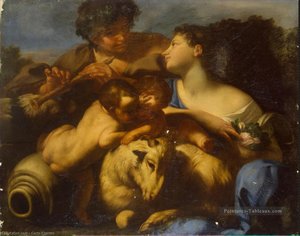
Portrait of Carlo Cignani

Carlo Cignani Paintings: The 55 Most Famous, Through a Gallery's Eye

Updated November 2026 · ranked by our popularity score (searches, visits and orders for each work) · 56 works by Carlo Cignani in our catalogue

In short

To the gallery's eye, Carlo Cignani's most famous painting is The Judgment of Paris (1653). Isaac Blesses Jacob (1673) and Jupiter as a Child, Nursed by the Goat Amalthea (1673) complete the trio every eye recognises. Of the 56 works by Carlo Cignani in our catalog, the gallery presents the 55 most famous below, each original with its year, its museum and what makes it unique.

1628 – 1719, Bologna Baroque Most works: Bavarian State Painting Collections

The gallery's top 10 Carlo Cignani paintings

1
The Judgment of Paris (1653) by Carlo Cignani

The Judgment of Paris

1653 · Oil

The Judgment of Paris is a mythological painting by Carlo Cignani. Created about 1653, the work depicts a specific episode from classical antiquity. The scene features a group of figures positioned within a landscape. On the left side of the composition, three female figures are arranged in various states of undress. One figure is shown in profile, while another faces forward with draped fabric, and a third figure is seen…

2
Isaac Blesses Jacob (1673) by Carlo Cignani

Isaac Blesses Jacob

1673 · Oil On Canvas · Bavarian State Painting Collections, Munich

In this eighteenth-century copy of a work by Carlo Cignani, we encounter the profound tension of a pivotal biblical moment. The scene captures Isaac Blesses Jacob, a subject that relies on the quiet gravity of familial deception. Isaac, aged and blind, is seated and wrapped in heavy sheets and blankets, his physical vulnerability contrasting with the weight of the blessing he is about to bestow. He reaches out to touch…

3
Jupiter as a Child, Nursed by the Goat Amalthea (1673) by Carlo Cignani

Jupiter as a Child, Nursed by the Goat Amalthea

1673 · Oil On Canvas · Bavarian State Painting Collections, Munich

In this 1673 oil painting, we find ourselves drawn into a quiet, yet intensely dramatic, mythological encounter. The scene depicts the infant Jupiter being nursed by the goat Amalthea, a moment of survival and nourishment set within a crowded, dynamic composition. The arrangement of the figures follows a pyramidal structure, guiding the eye toward the central interaction between the animal and the child. There is a palpable sense of movement…

4
Female Head (1673) by Carlo Cignani

Female Head

1673 · Oil On Canvas · Bavarian State Painting Collections, Munich

In the portrait "Female Head" by Carlo Cignani, the composition is organized as a close-up bust view of a single female figure. The subject is positioned slightly off-center and is captured in a side profile facing toward the left. This perspective emphasizes the contours of the facial structure and the layering of the head covering. The arrangement focuses the viewer's attention on the head and the upper shoulders, creating a…

5
Birth of Adonis (1673) by Carlo Cignani

Birth of Adonis

1673 · Oil On Canvas · Bavarian State Painting Collections, Munich

The canvas holds a crowded, pyramidal arrangement of figures, all leaning toward a single, central infant. Light spills from the upper left, catching the soft anatomy of the newborn and the heavy, tactile folds of drapery. Shadows pool deeply in the background, creating a sense of mystery around the unfolding event. This is the work of Carlo Cignani, a painter who bridged the gap between the heavy drama of the…

6
Charity with Child in the Cradle (1673) by Carlo Cignani

Charity with Child in the Cradle

1673 · Oil On Canvas · Bavarian State Painting Collections, Munich

In this intimate scene, we encounter Charity with Child in the Cradle, a work that captures a profound moment of maternal devotion. The artist, Carlo Cignani, directs our gaze toward a central figure who embodies the very essence of selfless love. This is not merely a portrait of a woman, but a deliberate allegory of Charity, expressed through the tender and constant nurturing of the young lives surrounding her. The…

7
Mary with Child and Infant John (1673) by Carlo Cignani

Mary with Child and Infant John

In this intimate and dynamic work, Mary with Child and Infant John, painted by Carlo Cignani about 1673, utilizes a pyramidal arrangement of figures to guide the viewer's gaze. The composition directs the eye upward, following the movement of the Christ Child as he reaches toward a descending dove. This celestial symbol of the Holy Spirit acts as the apex of the spiritual movement within the frame. Mary is depicted…

8
Samson and Delilah (1673) by Carlo Cignani

Samson and Delilah

In this oil painting from 1673, the scene unfolds through a crowded and dynamic arrangement of figures. A central female figure, Delilah, occupies the mid-ground. She is depicted looking back over her shoulder, her face turned away from the primary action, while her left hand holds a small object aloft. Below her, a muscular male figure, Samson, is slumped forward. His back and shoulder are positioned toward the viewer, his…

9
Penitent Magdalene (1673) by Carlo Cignani

Penitent Magdalene

1673 · Oil On Canvas · Bavarian State Painting Collections, Munich

Penitent Magdalene is an oil on canvas by the Italian painter Carlo Cignani. Executed about 1673, the work belongs to the Bolognese school, a tradition characterized by refined elegance and intellectual depth. Cignani, born in Bologna, Italy, was a significant figure of the late seventeenth century, known for a style that bridged the High Baroque and the emerging Rococo.

10
Charity (1673) by Carlo Cignani

Charity

1673 · Oil On Copper · Bavarian State Painting Collections, Munich

In this intimate scene, the virtue of Charity takes a human form through the tender act of nurturing. The painting, titled Charity, captures a quiet moment of devotion as a central maternal figure gathers three young children into her embrace. There is a profound sense of closeness in the way the figures occupy the space, drawing the viewer into their private circle of care. The composition focuses entirely on this…

Carlo Cignani paintings, ranked 11 to 55

11The Death of Camilla (1682) by Carlo CignaniThe Death of Camilla1682 · Yekaterinburg Museum of Fine Arts 12The Penitent Magdalen (1683) by Carlo CignaniThe Penitent Magdalen1683 · Belton House 13A Cupid, Blindfold, Seated on an Eagle (1678) by Carlo CignaniA Cupid, Blindfold, Seated on an Eagle1678 · Royal Collection 14A Cupid, Blindfold, Seated on a Globe (1678) by Carlo CignaniA Cupid, Blindfold, Seated on a Globe1678 · Royal Collection 15Joseph and Potiphar's Wife (1681) by Carlo CignaniJoseph and Potiphar's Wife1681 · Statens Museum For Kunst 16The Chastity of Joseph (1681) by Carlo CignaniThe Chastity of Joseph1681 · Statens Museum For Kunst 17The Holy Kinship (1676) by Carlo CignaniThe Holy Kinship1676 18Roman Caritas (Cimon and Pero) (1695) by Carlo CignaniRoman Caritas (Cimon and Pero)1695 · Kunsthistorisches Museum 19Saint Augustine (1700) by Carlo CignaniSaint Augustine1700 · National Museum in Warsaw 20Portrait of Marcello Malpighi (1683) by Carlo CignaniPortrait of Marcello Malpighi1683 · Accademia di Belle Arti di Bologna 21Shepherd and Shepherdess (1670) by Carlo CignaniShepherd and Shepherdess1670 · Hermitage Museum 22Joseph and Potiphar's Wife (1678) by Carlo CignaniJoseph and Potiphar's Wife1678 · Gemäldegalerie 23Charity (1680) by Carlo CignaniCharity1680 · Metropolitan Museum of Art 24Mary with Child by Carlo CignaniMary with ChildKunsthistorisches Museum 25Hercules and Omphale by Carlo CignaniHercules and OmphaleStaatliche Kunsthalle Karlsruhe 26Laughing, Gesturing Youth by Carlo CignaniLaughing, Gesturing Youth 27Moise Sauve Des Eaux, Tableau Attribue A Carlo Cignani by Carlo CignaniMoise Sauve Des Eaux, Tableau Attribue A Carlo CignaniМузей витончених мистецтв Нансі 28Jupiter by Carlo CignaniJupiterPalazzo Ducale del Giardino 29Apparition To A Saint by Carlo CignaniApparition To A Saint 30Venus with Cherubs by Carlo CignaniVenus with CherubsFondazione Cariplo 31Virgen Con El Niño by Carlo CignaniVirgen Con El Niño 32Giuseppe Fugge La Moglie Di Putifar by Carlo CignaniGiuseppe Fugge La Moglie Di Putifar 33Bologna by Carlo CignaniBologna 34San Giovannino E L'agnello by Carlo CignaniSan Giovannino E L'agnello 35Venus And Adonis by Carlo CignaniVenus And Adonis 36Daphne And Apollo by Carlo CignaniDaphne And Apollo 37Cimon And Pero by Carlo CignaniCimon And Pero 38Praying Magdalene by Carlo CignaniPraying Magdalene 39Daphne's Metamorphosis by Carlo CignaniDaphne's Metamorphosis 40Jael And Sisera by Carlo CignaniJael And Sisera 41Der Triumph Amors. Ol Auf Leinwand by Carlo CignaniDer Triumph Amors. Ol Auf Leinwand 42Bacco E Arianna by Carlo CignaniBacco E Arianna 43Woman And Child by Carlo CignaniWoman And Child 44Christ Walking On The Water And Saint Peter by Carlo CignaniChrist Walking On The Water And Saint Peter 45Esther And Ahasuerus by Carlo CignaniEsther And Ahasuerus 46A Putto With A Tambourine And An Infant Satyr With A Panpipe by Carlo CignaniA Putto With A Tambourine And An Infant Satyr With A Panpipe 47The Penitent Magdalen by Carlo CignaniThe Penitent MagdalenDulwich Picture Gallery 48Jupiter by Carlo CignaniJupiterPalazzo Ducale del Giardino 49Jupiter by Carlo CignaniJupiterPalazzo Ducale del Giardino 50Affresco Di Carlo Cignani Nel Palazzo Ducale Del Giardino by Carlo CignaniAffresco Di Carlo Cignani Nel Palazzo Ducale Del Giardino 51Jupiter by Carlo CignaniJupiterPalazzo Ducale del Giardino 52Jupiter by Carlo CignaniJupiterPalazzo Ducale del Giardino 53Jupiter by Carlo CignaniJupiterPalazzo Ducale del Giardino 54Jupiter by Carlo CignaniJupiterPalazzo Ducale del Giardino 55Jupiter by Carlo CignaniJupiterPalazzo Ducale del Giardino

Carlo Cignani's famous paintings, period by period

The subjects that held Carlo Cignani's eye

The four subjects that come back most often in these originals, each with its finest example.

The museums that keep Carlo Cignani's originals

The 8 museums that hold the most of the paintings on this page.

Museum City Works by Carlo Cignani Paintings from this list
Bavarian State Painting Collections, MunichBavarian State Painting Collections Munich 9 Isaac Blesses Jacob, Jupiter as a Child, Nursed by the Goat Amalthea, Female Head
Palazzo Ducale del Giardino, ParmaPalazzo Ducale del Giardino Parma 8 Jupiter, Jupiter, Jupiter
Royal Collection, LondonRoyal Collection London 2 A Cupid, Blindfold, Seated on an Eagle, A Cupid, Blindfold, Seated on a Globe
Statens Museum For Kunst, CopenhagenStatens Museum For Kunst Copenhagen 2 Joseph and Potiphar's Wife, The Chastity of Joseph
Kunsthistorisches Museum, ViennaKunsthistorisches Museum Vienna 2 Roman Caritas (Cimon and Pero), Mary with Child
Yekaterinburg Museum of Fine Arts, YekaterinburgYekaterinburg Museum of Fine Arts Yekaterinburg 1 The Death of Camilla
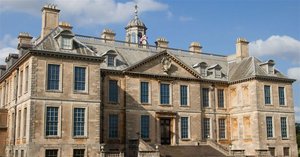
Belton House, GranthamBelton House Grantham 1 The Penitent Magdalen
National Museum in Warsaw, WarsawNational Museum in Warsaw Warsaw 1 Saint Augustine

Carlo Cignani, one signature painting per decade

Works per decade

Pick a decade to see the original that defines it.

Carlo Cignani's paintings: the gallery answers

Which Carlo Cignani painting is the most famous of all?Reveal the answer

The Judgment of Paris (1653). Isaac Blesses Jacob (1673) and Jupiter as a Child, Nursed by the Goat Amalthea (1673) come next.

How old was Carlo Cignani on completing The Judgment of Paris?Reveal the answer

25 years old: The Judgment of Paris dates from 1653, and Carlo Cignani was born in 1628.

Which are Carlo Cignani's top 10 paintings?Reveal the answer

The Judgment of Paris, Isaac Blesses Jacob, Jupiter as a Child, Nursed by the Goat Amalthea, Female Head, Birth of Adonis, Charity with Child in the Cradle, Mary with Child and Infant John, Samson and Delilah, Penitent Magdalene and Charity. The ranking above gives each one's year and museum.

How many works did Carlo Cignani create?Reveal the answer

Our catalog holds 56 works by Carlo Cignani, dated from 1653 to 1700.

Where do Carlo Cignani's most famous originals hang?Reveal the answer

Mostly in Bavarian State Painting Collections (Munich), Palazzo Ducale del Giardino (Parma) and Royal Collection (London). The museum table above lists them all.

When did Carlo Cignani create the most famous paintings?Reveal the answer

In 1670s: 14 of the 55 works on this page were made then, Isaac Blesses Jacob among them.

Which are Carlo Cignani's earliest and latest famous works?Reveal the answer

On this page, the earliest is The Judgment of Paris (1653) and the latest Saint Augustine (1700).

Which subjects did Carlo Cignani return to most?Reveal the answer

Woman (15), Drapery (13) and Man (8), across the 55 works on this page.

Which medium did Carlo Cignani work in most?Reveal the answer

Oil On Canvas, for 14 of the 55 works on this page.

Which movement is Carlo Cignani associated with?Reveal the answer

Baroque, judging by the originals on this page.

Which Carlo Cignani originals does the Bavarian State Painting Collections hold?Reveal the answer

Isaac Blesses Jacob, Jupiter as a Child, Nursed by the Goat Amalthea and Female Head: the Bavarian State Painting Collections, Munich holds 9 of the works on this page.

Carlo Cignani: the artist

A Legacy of Gentle Baroque: The Life and Art of Carlo Cignani

Carlo Cignani, born in Bologna around 1630, stands as a fascinating figure bridging the High Baroque and the emerging Rococo styles. He wasn’t a revolutionary like some of his contemporaries, but rather a masterful consolidator, the last great exponent of the Bolognese classicism that had flourished for generations. His art embodies a ‘new manner,’ as it was known – a softening of the dramatic intensity favored by earlier Baroque masters, replaced with an intimate and reflective quality that subtly influenced artists like Guido Reni and Guercino. Cignani’s path wasn't one of radical innovation, but rather of refined elegance and intellectual depth, securing his place as a significant, if sometimes overlooked, figure in 17th-century Italian painting. Details surrounding his early life remain somewhat scarce; we know he came from a noble, though modestly resourced family, and that he would later have both a son, Felice Cignani, also a painter, and a nephew, Paolo Cignani, who followed in the family tradition.

Formative Years and Artistic Development

Cignani’s artistic journey began under the tutelage of Battista Cairo, but it was his apprenticeship with Francesco Albani that truly shaped his foundational style. He absorbed Albani's meticulous technique, his vibrant use of color, and his commitment to a polished finish. However, Cignani didn’t simply mimic his master; he possessed an intellectual curiosity that led him to explore other influences. The frescoes of Correggio in the Parma Cathedral profoundly impacted his understanding of composition and chromatic harmony, while Melozzo da Forlì's mastery of perspective ignited his interest in creating illusionistic space. This synthesis of influences allowed Cignani to develop a distinctive voice – one characterized by graceful forms, balanced compositions, and a subtle emotional resonance. He established an *accademia del nudo* in Bologna, demonstrating a dedication to anatomical study and providing instruction to promising young artists, including Giuseppe Maria Crespi, who would become a celebrated painter in his own right.

Major Works and Artistic Flourishes

Cignani’s career spanned several decades, producing a diverse body of work encompassing religious scenes, mythological narratives, and portraits. The *Assumption of Saint Rose of Lima*, painted for the church in Forlì, is arguably his most celebrated achievement. This monumental fresco showcases his ability to create dramatic compositions within architectural settings, echoing Correggio’s influence while establishing his own unique style. Other notable works include the *Entry of Paul III into Bologna*, a historical depiction imbued with intellectual gravitas, and *Francis I Touching for Kings Evil*, which demonstrates his skill in portraying royal figures with dignity and sensitivity. He also excelled at ceiling paintings, as evidenced by *The Power of Love*, created in collaboration with Agostino Carracci. His *Adam and Eve* gained international recognition through exhibitions in Dresden and Copenhagen, highlighting the growing demand for his work beyond Italy. Multiple versions of *Joseph and Potiphar's Wife* exist, a testament to the enduring appeal of this biblical theme within his oeuvre.

A Lasting Influence on Bolognese Art

Carlo Cignani’s historical significance lies not only in his artistic output but also in his role as a preserver and transmitter of the Bolognese painting tradition. He represented the culmination of a school renowned for its classicism, intellectual rigor, and technical mastery. His commitment to anatomical study, evidenced by his *accademia del nudo*, helped maintain high standards of craftsmanship among aspiring artists. Beyond Crespi, he mentored Paolo Antonio Paderna and Sante Vandi, further contributing to the development of Bolognese art. His work found a home in prominent collections across Europe, including Dresden and Copenhagen, solidifying his international reputation. Today, several of his paintings are preserved in the Pinacoteca Civica in Forlì, ensuring that future generations can appreciate his artistry. Though he may not be as widely recognized as some of his Baroque contemporaries, Carlo Cignani remains a vital figure in art history – a master of gentle Baroque whose legacy continues to inspire and captivate. His later years were spent continuing to work diligently, including painting the *Aurora* at Circolo della Scranna in Forlì, and completing the *Incoronazione di Santa Rosa (Coronation of Saint Rose of Lima)* for the Pinacoteca Civica before his death sometime after 1719.