Portrait of Anton Romako

The 75 Most Famous Anton Romako Paintings, a Gallery Selection

Updated November 2026 · ranked by our popularity score (searches, visits and orders for each work) · 76 works by Anton Romako in our catalogue

In short

Of all the originals Anton Romako left, the most famous is Girl at a window to St. Mark's Square, feeding pigeons (1875), in the collection of the Austrian Gallery Belvedere, Vienna. Close behind it come Fisher boy on the sea beach (1875) and The Shipbuilding Engineer Josef von Romako as First Lieutenant (1851). Our catalog holds 76 works by Anton Romako; the gallery has kept the 75 the world admires most, each shown with its date, its museum and its story.

1832 – 1889, Atzgersdorf Realism Most works: Austrian Gallery Belvedere

Anton Romako's top 10 paintings: the gallery's choice

1
Girl at a window to St. Mark's Square, feeding pigeons (1875) by Anton Romako

Girl at a window to St. Mark's Square, feeding pigeons

1875 · Oil On Panel · Austrian Gallery Belvedere, Vienna

A woman leans toward the light of an open window, her hands occupied with a simple, repetitive grace. She holds a basket, a vessel for sustenance, as she offers grain to the birds gathered at the sill. Outside, the expanse of St. Mark's Square stretches toward the horizon, a pale stage for the movement of pigeons. The birds are caught in mid-motion, some hovering near her fingertips, others settling on…

2
Fisher boy on the sea beach (1875) by Anton Romako

Fisher boy on the sea beach

1875 · Oil · Austrian Gallery Belvedere, Vienna

The sun hangs heavy over the coastline, casting a warm, steady light across the sand. A young boy stands near the water's edge, his small frame anchored against the gentle movement of the tide. He holds a large umbrella, a shield against the heat of the day, while the sea laps at the shore. Nearby, several boats rest in the shallow water, some bobbing near the sand and others drifting…

4
The stubborn donkey (1856) by Anton Romako

The stubborn donkey

1856 · Oil

The stubborn donkey by Anton Romako is a 19th-century oil painting that presents a horizontal composition centered on a grey donkey. The scene depicts a moment of struggle within a rural setting, involving the animal and two men. To the left of the donkey, a man dressed in light-colored, rustic clothing and a red vest raises a stick or staff in a forceful gesture. On the right, a man wearing…

5
Off to market (1860) by Anton Romako

Off to market

1860 · Oil

In "Off to market" by Anton Romako, we find ourselves observing a quiet, singular moment from a medium shot at eye level. The composition is vertically oriented, drawing our attention to a young woman in traditional attire as she moves through a rugged landscape. She carries a basket balanced upon her head, while her arms hold stalks of grain, grounding the scene in the rhythms of rural labor. There is…

7
The Soap Bubble Blower (1871) by Anton Romako

The Soap Bubble Blower

1871 · Oil On Canvas

The Soap Bubble Blower is an oil painting by Anton Romako. Created about 1871, the work captures a singular, quiet moment. The canvas holds a vision shaped by the artist's own complex origins. Romako was born in 1832 in Atzgersdorf, Austria.

8
Angelus (1870) by Anton Romako

Angelus

1870 · Oil On Canvas

In Angelus by Anton Romako, a quiet moment of rural life unfolds beneath the heavy canopy of a large tree. Two women and a baby rest in the shade, their forms anchored to the earth. The scene is set during the soft transition of dusk or dawn, where the light begins to pull shadows from the grass. Beyond this intimate gathering, a distant landscape stretches toward the horizon, offering a…

9
The Artist's Nieces, Elisabeth and Maja (1873) by Anton Romako

The Artist's Nieces, Elisabeth and Maja

1873 · Oil On Canvas

In this intimate portrait, titled The Artist's Nieces, Elisabeth and Maja, Anton Romako turns his gaze toward the quiet presence of family. The two young girls, Elisabeth and Maja, occupy the center of the frame, their youthful features caught in a moment of stillness. Painted in 1873, the work captures the subjects with a sense of gentle observation, as if the artist has paused time to record a fleeting instance…

10
Hofrat Dr. Karl Zehden (1876) by Anton Romako

Hofrat Dr. Karl Zehden

1876 · Oil On Canvas

A three-quarter view portrait of Hofrat Dr. Karl Zehden captures a man of significant social standing through a lens of psychological depth. The subject is rendered from the chest up, positioned slightly off-center to create a sense of natural presence. Dark, curly hair and a full, reddish-brown beard frame a face illuminated by a light source from the upper left. This lighting strategy employs chiaroscuro to cast soft shadows across…

The Anton Romako selection continues, 11 to 75

11Babette Tapecierer (1874) by Anton RomakoBabette Tapecierer1874 12Elisabeth von Nast-Kolb, née Hardegg (1874) by Anton RomakoElisabeth von Nast-Kolb, née Hardegg1874 13Girl with Pearl Necklace in Her Hair (1874) by Anton RomakoGirl with Pearl Necklace in Her Hair1874 14The Animal Painter Karl Reichert (1874) by Anton RomakoThe Animal Painter Karl Reichert1874 15The Internist Professor Samuel Stern (?) (1876) by Anton RomakoThe Internist Professor Samuel Stern (?)1876 16Carnival on St. Mark's Square in Venice (1874) by Anton RomakoCarnival on St. Mark's Square in Venice1874 17Girl with a bouquet of lilacs (1873) by Anton RomakoGirl with a bouquet of lilacs1873 18Peasant Girl (1882) by Anton RomakoPeasant Girl1882 · Bavarian State Painting Collections 19Dance of Death on the Battlefield before Burning Ruins (1883) by Anton RomakoDance of Death on the Battlefield before Burning Ruins1883 20The Rose Picker (1883) by Anton RomakoThe Rose Picker1883 21Girl Picking Apples (1882) by Anton RomakoGirl Picking Apples1882 22Portrait of Isabella Reisser (1885) by Anton RomakoPortrait of Isabella Reisser1885 · Leopold Museum 23Friends (1881) by Anton RomakoFriends1881 24Lady in a Red Dress (1889) by Anton RomakoLady in a Red Dress1889 25Woman in Scarlet Dress with Newspaper and Ficus (1886) by Anton RomakoWoman in Scarlet Dress with Newspaper and Ficus1886 26Mathilde Stern, née Porges (1889) by Anton RomakoMathilde Stern, née Porges1889 27Travelers on the Via Appia (1889) by Anton RomakoTravelers on the Via Appia1889 28Girl with a frill (1875) by Anton RomakoGirl with a frill1875 · Austrian Gallery Belvedere 29Portrait of Empress Elisabeth by Anton RomakoPortrait of Empress Elisabeth 30Head of a butcher's dog (1882) by Anton RomakoHead of a butcher's dog1882 · Austrian Gallery Belvedere 31The writer Hermann Rollett at the waterfall (1885) by Anton RomakoThe writer Hermann Rollett at the waterfall1885 · Austrian Gallery Belvedere 32View of Rome from Monte Mario (1865) by Anton RomakoView of Rome from Monte Mario1865 33Peasant couple in the Campagna (1865) by Anton RomakoPeasant couple in the Campagna1865 34Gypsy Camp in the Puszta (1877) by Anton RomakoGypsy Camp in the Puszta1877 35The Gasteinertal in Fog (1877) by Anton RomakoThe Gasteinertal in Fog1877 36The Gasteinertal II (1877) by Anton RomakoThe Gasteinertal II1877 37Evening in the Prossau near Gastein (1877) by Anton RomakoEvening in the Prossau near Gastein1877 38At Lake Wolfgangsee (1877) by Anton RomakoAt Lake Wolfgangsee1877 39On the Balcony (1878) by Anton RomakoOn the Balcony1878 40Gasteinertal I (1877) by Anton RomakoGasteinertal I1877 41Wildbad Gastein in the evening (with Bengal lights) (1877) by Anton RomakoWildbad Gastein in the evening (with Bengal lights)1877 42Merry company in a gondola (1876) by Anton RomakoMerry company in a gondola1876 · Austrian Gallery Belvedere 43Tarantula dancers and mandolin players (1876) by Anton RomakoTarantula dancers and mandolin players1876 44Two Girls Gathering Ears of Corn near a Wayside Shrine (1876) by Anton RomakoTwo Girls Gathering Ears of Corn near a Wayside Shrine1876 45Prince Eugene of Savoy in the Battle of Zenta (1881) by Anton RomakoPrince Eugene of Savoy in the Battle of Zenta1881 46The Meiereiwiese in the Vorderbrühl with the Mödling Ruin (1885) by Anton RomakoThe Meiereiwiese in the Vorderbrühl with the Mödling Ruin1885 47Weilburg bei Baden (1885) by Anton RomakoWeilburg bei Baden1885 48Forest Clearing with Thistles (1885) by Anton RomakoForest Clearing with Thistles1885 49Sea Storm (1881) by Anton RomakoSea Storm1881 50Greillenstein Castle (1885) by Anton RomakoGreillenstein Castle1885 · Leopold Museum 51Portrait of Johann Strauss II (1880) by Anton RomakoPortrait of Johann Strauss II1880 52Makart salon interior, with a lady and a seated gentleman (1887) by Anton RomakoMakart salon interior, with a lady and a seated gentleman1887 53Rudolf von Habsburg at the Corpse of Přemysl Ottokar, King of Bohemia by Anton RomakoRudolf von Habsburg at the Corpse of Přemysl Ottokar, King of Bohemia 54Bust Portrait of the Niece, Käthchen Winder by Anton RomakoBust Portrait of the Niece, Käthchen Winder 55Eating Girl by Anton RomakoEating Girl 56Empress Elizabeth of Austria by Anton RomakoEmpress Elizabeth of Austria 57A study of a dog by Anton RomakoA study of a dog 58A young woman with black hair, gazing towards the sky by Anton RomakoA young woman with black hair, gazing towards the sky 59galley of the battle of Lepanto on October 7, 1571 by Anton Romakogalley of the battle of Lepanto on October 7, 1571 60Portrait of a woman by Anton RomakoPortrait of a woman 61Vienna Carnival Scene (Two cavaliers competing for a woman) by Anton RomakoVienna Carnival Scene (Two cavaliers competing for a woman) 62Don Juan de Austria ("Joannes Austriacus") by Anton RomakoDon Juan de Austria ("Joannes Austriacus") 63Hungarian Farm by Anton RomakoHungarian Farm 64Landscape with Castle by Anton RomakoLandscape with Castle 65At the waterfall by Anton RomakoAt the waterfall 66Female nude by Anton RomakoFemale nude 67Children collecting twigs by Anton RomakoChildren collecting twigsLeopold Museum 68Tegetthoff Auf Der Brücke by Anton RomakoTegetthoff Auf Der Brücke 69The Artist's Wife Sophie With Their Daughters by Anton RomakoThe Artist's Wife Sophie With Their Daughters 70A water lily pond by Anton RomakoA water lily pond 71Landscape at the lakeside by Anton RomakoLandscape at the lakeside 72A shepherd by Anton RomakoA shepherd 73Italian fishermen child by Anton RomakoItalian fishermen child 74Admiral Tegetthoff in der Seeschlacht bei Lissa II by Anton RomakoAdmiral Tegetthoff in der Seeschlacht bei Lissa II 75Portrait of a Young Man by Anton RomakoPortrait of a Young ManРезиденцгалерея Зальцбург

Anton Romako's famous paintings, period by period

The subjects that held Anton Romako's eye

The four subjects that come back most often in these originals, each with its finest example.

The museums that keep Anton Romako's originals

The 4 museums that hold the most of the paintings on this page.

Museum City Works by Anton Romako Paintings from this list
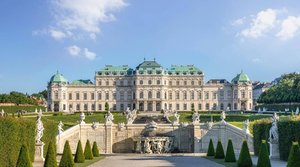
Austrian Gallery Belvedere, ViennaAustrian Gallery Belvedere Vienna 6 Girl at a window to St. Mark's Square, feeding pigeons, Fisher boy on the sea beach, Girl with a frill
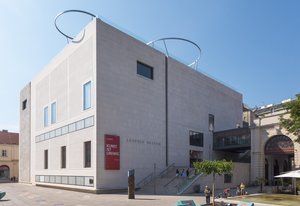
Leopold Museum, ViennaLeopold Museum Vienna 3 Portrait of Isabella Reisser, Greillenstein Castle, Children collecting twigs
Bavarian State Painting Collections, MunichBavarian State Painting Collections Munich 1 Peasant Girl
Резиденцгалерея Зальцбург, SalzburgРезиденцгалерея Зальцбург Salzburg 1 Portrait of a Young Man

Anton Romako decade by decade: the original that defines each

Works per decade

Pick a decade to see the original that defines it.

Collectors' questions about Anton Romako's paintings

Which work is Anton Romako most famous for?Reveal the answer

Girl at a window to St. Mark's Square, feeding pigeons (1875), Austrian Gallery Belvedere, Vienna. Fisher boy on the sea beach (1875) and The Shipbuilding Engineer Josef von Romako as First Lieutenant (1851) come next.

What age was Anton Romako when Girl at a window to St. Mark's Square, feeding pigeons was made?Reveal the answer

43 years old: Girl at a window to St. Mark's Square, feeding pigeons dates from 1875, and Anton Romako was born in 1832.

What are the ten most famous Anton Romako paintings?Reveal the answer

Girl at a window to St. Mark's Square, feeding pigeons, Fisher boy on the sea beach, The Shipbuilding Engineer Josef von Romako as First Lieutenant, The stubborn donkey, Off to market, The Sculptor Reinhold Begas with His Wife Margarethe, The Soap Bubble Blower, Angelus, The Artist's Nieces, Elisabeth and Maja and Hofrat Dr. Karl Zehden. The ranking above gives each one's year and museum.

How many paintings did Anton Romako leave?Reveal the answer

Our catalog holds 76 works by Anton Romako, dated from 1851 to 1889.

In which museums do Anton Romako's masterpieces hang?Reveal the answer

Mostly in Austrian Gallery Belvedere (Vienna), Leopold Museum (Vienna) and Bavarian State Painting Collections (Munich). The museum table above lists them all.

In which years did Anton Romako paint the most famous works?Reveal the answer

In 1870s: 25 of the 75 works on this page were made then, Girl at a window to St. Mark's Square, feeding pigeons among them.

What are the first and the last famous originals of Anton Romako?Reveal the answer

On this page, the earliest is The Shipbuilding Engineer Josef von Romako as First Lieutenant (1851) and the latest Lady in a Red Dress (1889).

Which subjects did Anton Romako choose most often?Reveal the answer

Woman (15), Man (7) and Portrait (5), across the 75 works on this page.

Which technique did Anton Romako use most?Reveal the answer

Oil On Canvas, for 19 of the 75 works on this page.

To which art movement does Anton Romako belong?Reveal the answer

Realism, judging by the originals on this page.

Which Anton Romako works hang at the Austrian Gallery Belvedere?Reveal the answer

Girl at a window to St. Mark's Square, feeding pigeons, Fisher boy on the sea beach and Girl with a frill: the Austrian Gallery Belvedere, Vienna holds 6 of the works on this page.

Anton Romako: life and work

A Bohemian Soul Amidst Viennese Grandeur

The life of Anton Romako was a tapestry woven from threads of social complexity and artistic restlessness. Born in 1834 in Atzgersdorf, the artist entered the world under circumstances that would forever color his perception of identity and belonging. As the illegitimate son of Josef Lepper, a factory owner, and Elisabeth Maria Anna Romako, a Czech housemaid, his early years were marked by a profound sense of being an outsider. This inherent tension between his humble origins and the burgeoning grandeur of the Viennese Ringstraße era became a driving force behind his creative spirit, fueling a lifelong quest to capture the psychological depth beneath the surface of imperial splendor.

Romako’s journey through the halls of artistic tradition was anything but linear. His initial foray into the Academy of Fine Arts Vienna proved to be a period of significant friction; the conservative dictates of Ferdinand Georg Waldmüller, who famously dismissed the young student as talentless, acted not as a deterrent but as a powerful catalyst. This early rejection propelled Romako toward the broader horizons of Munich and eventually into the sun-drenched landscapes of Italy. Immersing himself in the legacies of Titian and Raphael, he began to synthesize a style that moved away from rigid academicism toward something far more emotive and fluid.

The Evolution of Technique and Vision

The true metamorphosis of Romako’s hand can be traced to his private tutelage under Carl Rähl. It was through Rähl that the artist discovered the power of the loose brushstroke and the subtle modulation of tone, techniques that allowed him to breathe life into the atmosphere itself. This influence anchored his landscapes in the spirit of the Barbizon School, where he sought to capture the sublime, melancholic beauty of the Austrian countryside through atmospheric perspective rather than mere topographical accuracy.

As his technical mastery grew, Romako transitioned from the quietude of nature to the dramatic theater of human history and character. His work began to reflect a fascination with the psychological weight of his subjects, particularly in his portraiture and historical compositions. He possessed a rare ability to depict not just the physical likeness of the Viennese elite, but the underlying tensions and fleeting emotions of an era on the brink of transformation. His paintings often serve as windows into the soul, where the interplay of light and shadow mirrors the internal conflicts of his subjects.

Legacy and Artistic Significance

Though he navigated a complex social landscape, Romako’s contribution to 19th-century art remains indelible. He stood as a bridge between the traditionalist past and the burgeoning modernism that would soon redefine European painting. His ability to blend the historical gravity of his subjects with an expressive, almost proto-expressionist technique allowed him to capture the very essence of the Ringstraße era—a period of immense outward growth masking deep internal shifts.

Today, the significance of Anton Romako lies in his role as a trailblazer who refused to be confined by the labels imposed upon him. His oeuvre stands as a testament to the power of artistic resilience, proving that even from the margins of society, one can create a vision that commands the center of the art world. Through his portraits and historical scenes, he left behind a profound record of a vanished era, rendered with a sensitivity that continues to captivate the modern eye.