Portrait of Alphonse Legros

Alphonse Legros Paintings: The 65 Most Famous, Through a Gallery's Eye

Updated November 2026 · ranked by our popularity score (searches, visits and orders for each work) · 73 works by Alphonse Legros in our catalogue

In short

To the gallery's eye, Alphonse Legros's most famous painting is Women in Prayer (1888), whose original hangs in the Tate Gallery, London. Portrait of Edouard Manet (1863) and L'Angelus (1859) complete the trio every eye recognises. Of the 73 works by Alphonse Legros in our catalog, the gallery presents the 65 most famous below, each original with its year, its museum and what makes it unique.

1837 – 1911, Dijon Contemporary realism Most works: National Gallery of Art

The gallery's top 10 Alphonse Legros paintings

1
Women in Prayer (1888) by Alphonse Legros

Women in Prayer

1888 · Oil On Canvas · Tate Gallery, London

Alphonse Legros's “Women in Prayer” isn’t merely a depiction of a religious scene; it’s an invitation to contemplate the quiet power of devotion. Painted in 1888, this oil on canvas transports us to a dimly lit interior space – likely a church or chapel – where nine women are immersed in prayer. The work immediately establishes a mood of solemnity and introspection, achieved through Legros's masterful manipulation of light, tone,…

2
Portrait of Edouard Manet (1863) by Alphonse Legros

Portrait of Edouard Manet

1863 · Oil On Canvas · Petit Palais, Paris

In this 1863 portrait, we find ourselves in a quiet, intimate space with Edouard Manet. He sits in a wooden armchair, his body relaxed yet his posture suggesting a deep, internal contemplation. There is a certain gravity to his presence, a weight that comes from the way he rests his head against his hand, lost in thought. The composition is deliberate, placing him slightly off-center to create a sense of…

3
L'Angelus (1859) by Alphonse Legros

L'Angelus

1859 · Oil

In 1859, Alphonse Legros painted L'Angelus, a work that captures a quiet pause in the rhythm of labor. The scene focuses on a group of peasants caught in a moment of prayer. They exist within the heavy, still air of their daily lives, their bodies bowed in a shared act of devotion. This depiction of the working class avoids the grand or the theatrical, choosing instead to find weight in…

4
The Lectern (1865) by Alphonse Legros

The Lectern

1865 · Oil · Petit Palais, Paris

The Lectern is an oil painting by Alphonse Legros, created about 1865. The work depicts four male figures dressed in religious attire during a moment of liturgical solemnity. The scene captures a religious ceremony, likely a Mass or a formal reading, within a quiet and focused setting. The composition centers on the interaction between the clerics as they participate in the ritual.

5
The Baptism (1869) by Alphonse Legros

The Baptism

1869 · Oil On Canvas

The Baptism is an oil painting on canvas by Alphonse Legros. Created about 1869, the work depicts a scene within a dimly lit, gothic-style church. Three women are positioned around an infant, with the central figure holding the baby. To the left, a statue of a saint is visible against the architectural backdrop. The setting is defined by arches and columns that frame the figures.

6
Le Repas des Pauvres (1877) by Alphonse Legros

Le Repas des Pauvres

1877 · Oil

In the quiet, shadowed corners of a dimly lit interior, three men gather for a meal. This is Le Repas des Pauvres, a work by Alphonse Legros. The scene unfolds around a rectangular table, where the simple presence of bowls and single glasses speaks to a life of profound modesty. There is a heavy, somber weight to the air as the figures occupy their shallow space, their worn clothing and…

7
The Geography Lesson (1874) by Alphonse Legros

The Geography Lesson

1874 · Oil On Canvas · Wallraf-Richartz-Museum, Cologne

In The Geography Lesson, Alphonse Legros captures a quiet moment of instruction. The scene is set within a classroom where a female teacher gestures toward a large terrestrial globe. Around her, six young girls gather in a tight semi-circle. They lean inward, their gazes fixed upon the sphere. This shared focus creates a sense of stillness. The air in the room feels heavy with the weight of learning.

8
Portrait of a Woman (1880) by Alphonse Legros

Portrait of a Woman

1880 · Oil On Canvas · Petit Palais, Paris

The Portrait of a Woman by Alphonse Legros captures a single female figure in a moment of quietude. This profile portrait, rendered in oil, presents the subject looking toward the left edge of the frame. The artist, Alphonse Legros, focuses on the contours of the face and the texture of the hair, creating a sense of stillness. It is a study of a person caught in a private, contemplative gaze.

9
The Reverend Robert Burn (1880) by Alphonse Legros

The Reverend Robert Burn

1880 · Oil On Canvas · Fitzwilliam College, Cambridge

Alphonse Legros' "The Reverend Robert Burn," painted in 1880, is more than just a portrait; it’s a carefully constructed tableau of Victorian sensibilities and the quiet contemplation of a man steeped in faith. This oil-on-canvas work, currently residing within The Fitzwilliam Museum’s collection, offers a glimpse into a bygone era – an era defined by meticulous detail, restrained emotion, and a profound respect for tradition. Legros, a French-British artist who…

10
Cupid and Psyche (1867) by Alphonse Legros

Cupid and Psyche

1867 · Oil On Canvas · Tate Gallery, London

Cupid and Psyche, an 1867 oil on canvas, is a history painting by Alphonse Legros. The work draws its narrative from the classical traditions of Greek mythology and Ancient Roman literature. It captures a specific moment of intimacy between the two mythological figures, set within a serene outdoor environment.

Alphonse Legros paintings, ranked 11 to 65

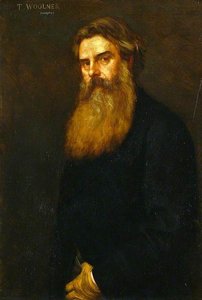
11Interior with an Organist and a Procession (1865) by Alphonse LegrosInterior with an Organist and a Procession1865 · The Ashmolean Museum of Art And Archaeology 12William Cosens Way (1833–1905) (1862) by Alphonse LegrosWilliam Cosens Way (1833–1905)1862 13Rehearsing the Service (1870) by Alphonse LegrosRehearsing the Service1870 · Tate Gallery 14The Pilgrimage (1871) by Alphonse LegrosThe Pilgrimage1871 15Sir Edward Burne Jones (1833–1898), ARA (1869) by Alphonse LegrosSir Edward Burne Jones (1833–1898), ARA1869 16The Communion (1865) by Alphonse LegrosThe Communion1865 17The Sermon (1871) by Alphonse LegrosThe Sermon1871 · Scottish National Gallery 18Centaur Woman (1911) by Alphonse LegrosCentaur Woman1911 19Portrait of a Woman (1875) by Alphonse LegrosPortrait of a Woman1875 · National Gallery of Art 20The Tinker (1874) by Alphonse LegrosThe Tinker1874 21Tired Wanderer (1878) by Alphonse LegrosTired Wanderer1878 22Blessing the Sea (1872) by Alphonse LegrosBlessing the Sea1872 23Portrait of Léon Gambetta (1875) by Alphonse LegrosPortrait of Léon Gambetta1875 24Head of a Man Looking Upwards and Sideways (1877) by Alphonse LegrosHead of a Man Looking Upwards and Sideways1877 25Thomas Carlyle (1795–1881), Historian and Essayist (1877) by Alphonse LegrosThomas Carlyle (1795–1881), Historian and Essayist1877 · Scottish National Portrait Gallery 26Study of a Head (1878) by Alphonse LegrosStudy of a Head1878 · Walker Art Gallery 27Saint Jerome (1881) by Alphonse LegrosSaint Jerome1881 · Manchester Art Gallery 28John Gray (1883) by Alphonse LegrosJohn Gray1883 29Alexander Walker, LLD (1880) by Alphonse LegrosAlexander Walker, LLD1880 30Head of an Old Man (1881) by Alphonse LegrosHead of an Old Man1881 · Manchester Art Gallery 31J. Dove Wilson (1833–1908), LLD (1882) by Alphonse LegrosJ. Dove Wilson (1833–1908), LLD1882 32Sir Edward Coley Burne Jones (1833–1898) (1879) by Alphonse LegrosSir Edward Coley Burne Jones (1833–1898)1879 33Portrait of a Lady (1879) by Alphonse LegrosPortrait of a Lady1879 · Sunderland Museum - Winter Gardens 34Robert Browning (1812–1889) (1879) by Alphonse LegrosRobert Browning (1812–1889)1879 35Thomas Dixon (1831–1880) (1879) by Alphonse LegrosThomas Dixon (1831–1880)1879 · Sunderland Museum - Winter Gardens 36Professor John Marshall (1818–1891), FRS, Surgeon (1879) by Alphonse LegrosProfessor John Marshall (1818–1891), FRS, Surgeon1879 37Thomas Huxley (1825–1895), FRS (1880) by Alphonse LegrosThomas Huxley (1825–1895), FRS1880 38George Wallis (1811–1891), FSA, Keeper of the Art Collections in the South Kensington Museum (1863–1891) (1891) by Alphonse LegrosGeorge Wallis (1811–1891), FSA, Keeper of the Art Collections in the South Kensington Museum (1863–1891)1891 39An Approaching Storm (1897) by Alphonse LegrosAn Approaching Storm1897 40Head of a Man with Upturned Eyes by Alphonse LegrosHead of a Man with Upturned EyesNational Gallery of Art 41The Confession by Alphonse LegrosThe Confession 42Thomas Woolner by Alphonse LegrosThomas Woolner 43Le Calvaire by Alphonse LegrosLe CalvaireMusée d'Orsay 44Le Christ mort by Alphonse LegrosLe Christ mort 45Study of a Head by Alphonse LegrosStudy of a Head 46Léon Gambetta by Alphonse LegrosLéon GambettaMusée d'Orsay 47UNE AMENDE HONORABLE by Alphonse LegrosUNE AMENDE HONORABLEMusée d'Orsay 48Charles G. Milnes Gaskell, Chairman of the County Council of the West Riding of Yorkshire (1893–1910) by Alphonse LegrosCharles G. Milnes Gaskell, Chairman of the County Council of the West Riding of Yorkshire (1893–1910)Wakefield County Hall 49Landscape with a Stream and Hills (1882) by Alphonse LegrosLandscape with a Stream and Hills1882 · Victoria and Albert Museum 50Landscape with a Road over a Hill (1885) by Alphonse LegrosLandscape with a Road over a Hill1885 · Victoria and Albert Museum 51Interior of a Church with kneeling Figures (1865) by Alphonse LegrosInterior of a Church with kneeling Figures1865 · Ashmolean Museum 52Interior with an Organist and a Procession (1865) by Alphonse LegrosInterior with an Organist and a Procession1865 · Ashmolean Museum 53A May Service for Young Women (1868) by Alphonse LegrosA May Service for Young Women1868 · Victoria and Albert Museum 54Hilly Landscape (1876) by Alphonse LegrosHilly Landscape1876 · Victoria and Albert Museum 55Portrait of an Old Man by Alphonse LegrosPortrait of an Old ManNational Gallery of Art 56Memory Copy of Holbein's Erasmus by Alphonse LegrosMemory Copy of Holbein's ErasmusNational Gallery of Art 57Landscape by Alphonse LegrosLandscape 58John Bolton, Kendal Town Clerk by Alphonse LegrosJohn Bolton, Kendal Town Clerk 59Thomas Woolner by Alphonse LegrosThomas Woolner 60Portrait of a Gentleman by Alphonse LegrosPortrait of a Gentleman 61John Polson, Esq by Alphonse LegrosJohn Polson, EsqPaisley Art Institute Collection 62Portrait of a Gentleman by Alphonse LegrosPortrait of a Gentleman 63John Bolton, Kendal Town Clerk (1832–1874) by Alphonse LegrosJohn Bolton, Kendal Town Clerk (1832–1874)Kendal Town Hall 64Interior with an Organist and three Figures by Alphonse LegrosInterior with an Organist and three FiguresThe Ashmolean Museum of Art And Archaeology 65The Tinker by Alphonse LegrosThe Tinker

Alphonse Legros's famous paintings, period by period

The subjects that held Alphonse Legros's eye

The four subjects that come back most often in these originals, each with its finest example.

The museums that keep Alphonse Legros's originals

The 8 museums that hold the most of the paintings on this page.

Museum City Works by Alphonse Legros Paintings from this list
National Gallery of Art, WashingtonNational Gallery of Art Washington 4 Portrait of a Woman, Head of a Man with Upturned Eyes, Portrait of an Old Man
Victoria and Albert Museum, LondonVictoria and Albert Museum London 4 Landscape with a Stream and Hills, Landscape with a Road over a Hill, A May Service for Young Women
Tate Gallery, LondonTate Gallery London 3 Women in Prayer, Cupid and Psyche, Rehearsing the Service
Petit Palais, ParisPetit Palais Paris 3 Portrait of Edouard Manet, The Lectern, Portrait of a Woman
Musée d'Orsay, ParisMusée d'Orsay Paris 3 Le Calvaire, Léon Gambetta, UNE AMENDE HONORABLE
The Ashmolean Museum of Art And Archaeology, OxfordThe Ashmolean Museum of Art And Archaeology Oxford 2 Interior with an Organist and a Procession, Interior with an Organist and three Figures
Manchester Art Gallery, ManchesterManchester Art Gallery Manchester 2 Saint Jerome, Head of an Old Man
Sunderland Museum - Winter Gardens, SunderlandSunderland Museum - Winter Gardens Sunderland 2 Portrait of a Lady, Thomas Dixon (1831–1880)

Alphonse Legros, one signature painting per decade

Works per decade

Pick a decade to see the original that defines it.

Alphonse Legros's paintings: the gallery answers

Which Alphonse Legros painting is the most famous of all?Reveal the answer

Women in Prayer (1888), Tate Gallery, London. Portrait of Edouard Manet (1863) and L'Angelus (1859) come next.

How old was Alphonse Legros on completing Women in Prayer?Reveal the answer

51 years old: Women in Prayer dates from 1888, and Alphonse Legros was born in 1837.

Which are Alphonse Legros's top 10 paintings?Reveal the answer

Women in Prayer, Portrait of Edouard Manet, L'Angelus, The Lectern, The Baptism, Le Repas des Pauvres, The Geography Lesson, Portrait of a Woman, The Reverend Robert Burn and Cupid and Psyche. The ranking above gives each one's year and museum.

How many works did Alphonse Legros create?Reveal the answer

Our catalog holds 73 works by Alphonse Legros, dated from 1859 to 1911.

Where do Alphonse Legros's most famous originals hang?Reveal the answer

Mostly in National Gallery of Art (Washington), Victoria and Albert Museum (London) and Tate Gallery (London). The museum table above lists them all.

When did Alphonse Legros create the most famous paintings?Reveal the answer

In 1870s: 19 of the 65 works on this page were made then, Le Repas des Pauvres among them.

Which are Alphonse Legros's earliest and latest famous works?Reveal the answer

On this page, the earliest is L'Angelus (1859) and the latest Centaur Woman (1911).

Which subjects did Alphonse Legros return to most?Reveal the answer

Landscape (5), Portrait (4) and Church interior (4), across the 65 works on this page.

Which medium did Alphonse Legros work in most?Reveal the answer

Oil On Canvas, for 12 of the 65 works on this page.

Which movement is Alphonse Legros associated with?Reveal the answer

Contemporary realism, judging by the originals on this page.

Which Alphonse Legros originals does the National Gallery of Art hold?Reveal the answer

Portrait of a Woman, Head of a Man with Upturned Eyes and Portrait of an Old Man: the National Gallery of Art, Washington holds 4 of the works on this page.

Alphonse Legros: the artist

A Life Bridging Nations: The Artistic Journey of Alphonse Legros

Alphonse Legros, born in Dijon, France, in 1837, was an artist whose life and work embodied a fascinating intersection of artistic movements and national identities. His path wasn’t one of immediate acclaim but rather a gradual unfolding of talent nurtured by dedicated study and a willingness to embrace evolving aesthetic ideals. From humble beginnings as the son of an accountant in Véronnes, young Alphonse found early inspiration in the rural landscapes surrounding his family, scenes that would later permeate much of his artistic output. His initial training began at the Dijon art school, apprenticed to a house decorator, a grounding experience that instilled a practical understanding of materials and form. This was followed by a period as a journeyman wall-painter in Lyon, honing his skills while contributing to larger decorative projects. These formative years weren’t merely about technical proficiency; they were about absorbing the world around him – the textures of rural life, the play of light on stone, the dignity of everyday labor—elements that would become hallmarks of his mature style.

From Realism to Etching Revival: Artistic Development and Influences

Legros’s arrival in Paris in 1851 marked a turning point. He immersed himself in the vibrant artistic milieu, studying with Charles-Antoine Cambon, a scene painter, and attending the prestigious drawing school of Lecoq de Boisbaudran, where he encountered fellow artists like Auguste Rodin and Jules Dalou. This period saw his first forays into the Salon system, gaining recognition for portraits that caught the eye of influential figures like Champfleury, who championed the Realist movement led by Gustave Courbet. Legros’s early work, such as *L'Angelus* (1859), demonstrated a commitment to depicting scenes from everyday life with honesty and emotional depth. However, it was his exploration of etching that truly set him apart. He essentially taught himself this technique, captivated by its potential for capturing subtle nuances of tone and texture. This dedication would eventually lead him to become a pivotal figure in the British etching revival. In 1863, encouraged by James McNeill Whistler, Legros relocated to England, a decision that profoundly shaped his career. He quickly established himself as an influential teacher, first at the South Kensington School of Art and later as Slade Professor at University College London, nurturing generations of artists in the art of etching.

A Master of Multiple Mediums: Painting, Sculpture, and Medals

While Legros is often celebrated for his etchings, to define him solely by this medium would be a disservice to his multifaceted talent. He was equally adept as a painter and sculptor, and also created notable medals. His paintings frequently depicted scenes of religious devotion—interior church views with kneeling figures, capturing the quiet intensity of faith—and portraits that revealed a keen psychological insight into his subjects. These works are characterized by a restrained palette, meticulous detail, and a sense of solemnity. He wasn’t interested in grand narratives or flamboyant displays; instead, he focused on the intimate moments of human experience. His sculptural work, though less prolific than his paintings and etchings, demonstrated a similar commitment to realism and emotional depth. Furthermore, Legros's skill extended to the art of medal-making, producing pieces that were admired for their craftsmanship and artistic merit. He approached each medium with a dedication to technical mastery and a desire to convey profound meaning.

Legacy and Historical Significance

Alphonse Legros died in Watford in 1911, leaving behind a rich legacy as both an artist and educator. His influence on the British art scene was considerable, particularly through his teaching at the Slade School of Art, where he instilled a rigorous approach to drawing and etching in countless students. He championed traditional artistic values—the importance of draftsmanship, careful observation, and technical skill—while also embracing new ideas and techniques. Legros’s work stands as a testament to the power of quiet contemplation and the enduring appeal of Realist aesthetics. His paintings and etchings can be found in prominent museums such as the Ashmolean Museum in Oxford and the Tate Gallery in London, ensuring that his artistic vision continues to inspire and captivate audiences today. He represents a bridge between French and British art traditions, embodying a commitment to both technical excellence and emotional honesty—qualities that continue to resonate with viewers and artists alike. His dedication to fostering artistic talent cemented his place as a pivotal figure in the development of modern British art.