Storytelling is the social and cultural activity of sharing stories, sometimes with improvisation, theatrics, or embellishment. Every culture has its own narratives, which are shared as a means of entertainment, education, cultural preservation, or i...
Before the first written word emerged, humanity found a way to anchor memory through the visual. The earliest human languages likely relied on signs and symbols, creating a foundation where an image could hold the weight of a shared truth. In the deep past, rock art served as more than mere decoration; it was a method of storytelling, helping early groups remember hunts, migrations, or spiritual encounters. These ancient marks were the first threads in a long history of using sight to communicate what speech alone could not capture.
This impulse to encode meaning remains unchanged, even as our media shifts from stone to screen. Today, we see this continuity in how contemporary artists use symbols to address political or social shifts. Just as an ancient hunter might have left a mark to signify a successful season, modern creators utilize coded references to speak of identity and change. The medium evolves, yet the fundamental human need to leave a visual trace of our existence remains a constant, driving force in all creative expression.
Luminous Chronicles: Captively the Fleeting Narrative of Light
Impressionist photography is a term occasionally used to describe certain pictorialist photographs from the late 19th and early 20th centuries that emphasize mood, atmosphere, and subjective vision over sharp detail and realism. While not directly al...
In the late nineteenth century, a revolution occurred that changed how we perceive the passage of time on canvas. The Impressionists moved away from the heavy, controlled shadows of the studio to embrace the unpredictable light of the outdoors. They did not seek to document a static object, but rather the way light breathes upon it. When we look at a work like Pierre-Auguste Renoir’s 1915 depiction of the White House, or his more intimate studies of flowers, we see an attempt to capture a single, transient moment before the sun shifts its position.
This focus on the ephemeral finds a profound parallel in the development of photography. Early practitioners of what was termed photographic Impressionism, such as George Davison, utilized soft focus and blurred details to replicate the dreamlike quality of memory. By deliberately reducing sharpness, these photographers sought to evoke mood and atmosphere rather than provide a literal record. Both the painter’s brushstroke and the photographer’s lens serve the same purpose: to honor the fleeting beauty of a moment that is already passing even as we witness it.
The Poetry of the Mundane: Finding Epic Stories in Everyday Life
The Painting's Details Camille Pissarro 's Entering the Village of Voisins is a beautiful oil on canvas painting, measuring 46 x 55 cm. Created in 1872, it is now housed at the Musée d'Orsay in Paris, France. This piece exemplifies Pissarro's skill i...
There is a quiet dignity found in the depiction of ordinary existence, where the grandest stories are often hidden in the simplest scenes. During the Victorian era, narrative painting focused heavily on the beauty of everyday life, finding drama in the domestic and the rural. Artists like Camille Pissarro mastered this, presenting village scenes without artifice or grandeur. In his work Entering the Village of Voisins, a simple dirt street and a resting bench become stages for the quiet rhythms of rural life, inviting the viewer to find importance in the unremarkable.
This reverence for the everyday is echoed in the modern oral tradition, where the power of the anecdote can transform a simple event into a lasting legacy. Storytellers like Matthew Dicks demonstrate that the mechanics of enchantment lie not in grand spectacles, and yet, in the honest exploration of human connection. Much like Pissarro’s landscapes, these narratives use the small, the personal, and the observed to illuminate the profound complexities of our shared condition. The scale of the event matters less than the truth of the emotion it carries.
Architectural Echoes: Museums as Vessels of Human Experience
The Transformation of the Gare d’Orsay The structure on the banks of the Seine began its life not as a sanctuary for paint and sculpture, but as a bustling terminal for the Chemin de Fer de Paris à Orléans. Built between 1898 and 1900 for the Exposit...
The spaces we build to house art often become part of the narrative itself, acting as physical bridges between different eras. The Musée d'Orsay, for instance, began its life as a bustling railway terminal, a product of the industrial age designed for movement and commerce. Through a thoughtful reconfiguration, it was transformed into a sanctuary for Impressionist and Post-Impressionist works. The very bones of the station—the ironwork and vast glass ceilings—now provide a structured environment where the shifting textures of light and color can be explored.
This dialogue between structure and content is also evident in institutions like The Barnes Foundation in Philadelphia. Conceived as a living laboratory for the eyes, the Foundation emphasizes experiential learning, encouraging a rhythmic dialogue between the viewer and the canvas. Here, the arrangement of works by Renoir, Cézanne, and Matisse creates a curated narrative that challenges the observer to see the hidden threads connecting disparate styles. The architecture does not merely contain the art; it facilitates a deeper, more intimate way of looking.
A visual narrative (also visual storytelling) is a story told primarily through the use of visual media. This can be images in the mind, digital, and traditional media. The story may be told using still photography, illustration, or film, and can be ...
As we move further into an era defined by digital permanence, the value of the tactile and the hand-made continues to resonate. We live in a world of rapid consumption, yet there is a profound solace in returning to works that celebrate the textured, the layered, and the physical. Whether it is the thick impasto of a Van Gogh or the deliberate, visible brushstrokes of an oil reproduction on cotton canvas, these textures remind us of the human hand behind the vision.
This continuity is perhaps most evident in how we now use technology to reimagine history. We can use digital tools to transform a modern photograph into a work that reflects the light-drenched style of Monet or the geometric vigor of a Cubist master. While the tools are new, the objective remains the same as it was for the first cave painters: to find a way to bridge our current reality with a deeper, more expressive form of truth. The canvas may change, but the desire to tell our story through sight remains eternal.
Explore the fascinating world of visual translation! Discover how stories are told through art, from ancient masterpieces to contemporary creations. Expert insights for collectors & enthusiasts.
Explore the profound emotional depth of Impressionist and Post-Impressionist masterpieces. From Renoir's tranquil landscapes to Van Gogh's vibrant soul, discover how these legendary artists captured the essence of contemplation through light, color, and texture.
Journey through Impressionism's golden age! Explore 10 masterpieces by Monet, Renoir & Degas that redefined art. Discover the stories behind these iconic paintings and find museum-quality reproductions to elevate your home decor on OriginalUniqueArt.com.

 Storytelling
 Impressionist photography
 Entering the Village of Voisins
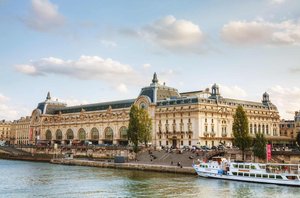 Musée d'Orsay