The Enduring Power of Storytelling: From Cave Paintings to Contemporary Art
Narrative art is art that tells a story, either as a moment in an ongoing story or as a sequence of events unfolding over time. Some of the earliest evidence of human art suggests that people told stories with pictures. Although there are some common...
From the ochre handprints pressed onto the walls of Lascaux, whispering tales of ancient hunts and rituals, to the sprawling canvases of contemporary artists grappling with the complexities of modern life, humanity has always been driven by an innate need to narrate. This impulse isn’t merely about recounting events; it's about imbuing experience with meaning, preserving memory, and forging connections across time. The earliest forms of visual storytelling weren’t sophisticated in a technical sense – rudimentary figures captured the essence of movement and form – yet they possessed an undeniable power to communicate. These images served as mnemonic devices, communal records, and perhaps even spiritual conduits. As civilizations rose and fell, so too did the methods of narrative expression evolve. Egyptian hieroglyphs meticulously documented pharaonic reigns and religious beliefs, while Greek vase paintings brought myths and legends to life with elegant simplicity. The common thread uniting these diverse traditions is a fundamental desire to transform fleeting moments into enduring visual legacies.
Translation as Interpretation: Bridging the Gap Between Word and Image
 Wikipedia: Translation
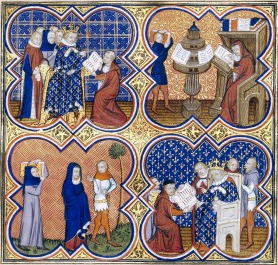
Translation is the communication of the meaning of a source-language text by means of an equivalent target-language text. The English language draws a terminological distinction (which does not exist in every language) between translating (a written ...
But what happens when the story originates not in the realm of the visual, but within the intricate structures of language? How do we translate the nuances of prose, poetry, or even a fleeting thought into the tangible form of an image? The very act of translation—derived from the Latin *translatio*, meaning “to bring across”—is fraught with challenges. It’s not simply about substituting words; it's about conveying intent, capturing emotional resonance, and respecting cultural context. Consider the ancient Greek distinction between metaphrase (literal translation) and paraphrase (rephrasing). While a word-for-word rendering might preserve surface details, it often fails to capture the spirit of the original text. A truly effective translation requires a deep understanding of both source and target languages, as well as an ability to navigate subtle ambiguities and cultural differences. This principle extends seamlessly into the realm of art. When an artist attempts to visualize a literary work, they must make choices—selecting key moments, emphasizing certain themes, and interpreting characters in their own unique style. The resulting artwork isn’t merely an illustration; it's a re-imagining, a new iteration born from the interplay between text and visual expression.
Narrative in Transformation: How Modern Artists Reimagine Visual Storytelling
The 20th century witnessed a radical shift in narrative art, fueled by technological advancements and evolving artistic sensibilities. The rise of comic strips and graphic novels introduced a sequential panel format that democratized storytelling, making it accessible to wider audiences. Pop Art artists like Roy Lichtenstein boldly appropriated imagery from popular culture—comic book panels, advertising slogans—transforming everyday scenes into iconic works of art. This act of appropriation can be seen as a form of visual translation, recontextualizing familiar narratives within the fine art world and prompting viewers to question notions of originality and authorship. Simultaneously, Surrealist artists like Salvador Dalí delved into the subconscious mind, creating dreamlike landscapes populated with bizarre imagery and symbolic figures. These works often eschewed traditional narrative structures in favor of fragmented memories and associative connections. More recently, the advent of digital media has opened up entirely new possibilities for storytelling. Video games, with their interactive narratives and immersive environments, represent a particularly compelling example, placing the viewer directly within the unfolding drama.
Reproductions & Reinterpretations: Authenticity, Agency, and the Value of Copies
The creation of reproductions—copies of original artworks—has been an integral part of artistic practice for centuries. From apprentices meticulously copying masterworks to modern-day prints and paintings, the desire to preserve and disseminate art has always driven this process. However, the advent of digital technology has dramatically increased the accessibility of reproductions, raising fundamental questions about authenticity and value. While some view reproductions as mere imitations lacking the originality of the source work, others see them as valuable tools for education, appreciation, and personal connection. At OriginalUniqueArt.com, we offer both hand-painted reproductions created by skilled artists and museum-quality prints, acknowledging the distinct qualities associated with each approach. Our hand-painted reproductions strive to capture the nuances of brushwork, texture, and color, while our prints prioritize accuracy and affordability. Beyond simple replication, however, lies the potential for reinterpretation. Transforming a personal photograph into a custom painting—styled in the manner of Van Gogh or Monet—imbues the artwork with new meaning and emotional resonance, transforming it from a mere copy into a unique expression of individual identity.
The Artist's Intent vs. The Viewer's Eye: Decoding Meaning in Art
Perhaps one of the most enduring debates in art history revolves around the question of authorial intent. Can we definitively know what an artist intended to convey with their work? And even if we could, should that intention dictate our interpretation? Some scholars argue that understanding the artist’s mindset is paramount, claiming that meaning resides solely within the creator’s vision. Others contend that interpretations are inherently subjective and shaped by individual experiences, cultural contexts, and personal biases. The concept of ‘Multi Factorial Apperception’ suggests that a comprehensive understanding requires considering a wide range of variables—historical context, social influences, psychological factors—rather than relying on a single authorial voice. Even when artists explicitly state their intentions, viewers may still derive different meanings from their work, enriching the artwork with new layers of significance. The interplay between light and shadow, for example, can evoke a multitude of emotions depending on the viewer’s perspective. Ultimately, the act of interpretation is a collaborative process—a dialogue between artist, artwork, and audience.
Light, Shadow, and Symbolism: Crafting Atmosphere and Emotion in Narrative Art
Beyond subject matter and composition, the skillful manipulation of light and shadow plays a crucial role in shaping our perception of visual narratives. Artists throughout history have employed techniques like chiaroscuro—the dramatic contrast between light and dark—to create a sense of mystery, intrigue, and emotional depth. The use of warm, golden tones can evoke feelings of comfort and nostalgia, while cool, muted colors often convey melancholy or isolation. Consider the works of Peter Graham Li, whose masterful impasto technique captures the interplay of light on surfaces with breathtaking realism. In narrative art, light can also be used symbolically to highlight important figures or events—a spotlight drawing attention to a central character, shadows concealing hidden dangers or foreshadowing future conflicts. The subtle nuances of color and tone can further enhance the emotional impact of a scene, guiding the viewer’s eye and prompting deeper contemplation. Ultimately, it is through these carefully considered artistic choices that artists transform mere images into compelling visual stories—legacies that endure across generations.