A Life Shaped by Light and Water The story of Oscar-Claude Monet begins in the streets of Paris, though his heart was often found wandering the salt-misted air of Le Havre. As a young boy, he moved to Normandy, where his father initially hoped he wou...
Before the world recognized the name Monet, there was a fundamental shift in how an artist approached the canvas. This change did not begin with a radical manifesto but with a simple instruction to look closely at the sky. For a young Claude Monet, growing up in the salt-misted air of Le Havre, the path toward revolution was paved by Eugène Boudin. It was Boudin who introduced the young man to the practice of painting en plein air, or outdoors, teaching him to set an easel directly within the unpredictable elements of nature. This method required a departure from the controlled, dark environments of the studio to embrace the immediate, often harsh, reality of the weather.
This transition finds a historical echo in the works of the British painter John Constable. While Monet would later refine this into a study of light, Constable had pioneered the practice of painting nature in a realistic way much earlier, driven by a desire to capture the true character of the English landscape. Both artists shared an obsession with the atmospheric truth of their surroundings. By moving the easel into the wind and rain, Monet was able to move beyond mere representation. He began to document the fleeting transitions of light that occur in a heartbeat, a pursuit made possible by the 1841 invention of the collapsible metal paint tube, which allowed for unprecedented portability.
The foundation laid by Boudin ensured that Monet’s work would never be static. His early interest in the changing conditions of the landscape, learned from mentors like Boudin and later refined through the perspective of Johan Barthold Jongkind, turned the act of painting into a pursuit of optical truth. He sought to replace local color with the way light actually hits an object, a technique that would eventually dismantle the rigid boundaries of academic tradition.
Defying the Salon: The Emergence of Independent Exhibition Culture
--- title: Impressionism: Art and Modernity - The Metropolitan Museum of Art author: Margaret Samu url: https://www.metmuseum.org/essays/impressionism-art-and-modernity hostname: metmuseum.org description: In addition to their radical technique, the ...
The mid-nineteenth century art world was governed by the strict, often suffocating, standards of the official Paris Salon. This institution favored historical, mythological, and religious themes, executed with a polished, photographic finish that left little room for individual sensation. In 1874, a group of rebels—including Monet, Renoir, Degas, and Cézanne—decided to bypass this gatekeeper entirely. They formed the Société anonyme des artistes peintres, sculpteurs, graveurs, etc., organizing their own independent exhibitions to present a vision of modern life that the Academy refused to acknowledge.
This rebellion mirrors the earlier spirit of the Macchiaioli in Italy, who also broke from antiquated academic conventions to paint outdoors and capture natural light and shade. Just as the Italian group sought a new way to represent their surroundings, Monet’s circle sought to document the contemporary world through ordinary subject matter and unusual visual angles. The term "Impressionism" itself was born from this friction; it originated as a derisive label used by critics to mock the unfinished, sketch-like appearance of works such as Impression, Sunrise.
Rather than retreating from this criticism, Monet embraced the identity of the Impressionist. He utilized the very techniques that were mocked—the visible, spontaneous brushstrokes and the lack of traditional contour—to define a style centered on subjective sensation. The movement eventually moved away from the heavy, dark grounds of the past, opting instead for light-colored primers that added a new brightness to the canvas. This era of independence proved that art could exist outside the shadow of state-sanctioned institutions, finding its true voice in the streets and gardens of France.
The Mechanics of Light: Color Theory and the Broken Brushstroke
The Magpie (French: La Pie) is an oil-on-canvas landscape painting by the French Impressionist Claude Monet, created during the winter of 1868–1869 near the commune of Étretat in Normandy. Monet's patron, Louis Joachim Gaudibert, helped arrange a hou...
To understand the technical revolution of Monet is to understand the science of perception. The Impressionists rejected the academic habit of blending colors smoothly on the palette to create a seamless gradient. Instead, they employed a method known as broken color, applying short, rhythmic, and often unmixed strokes of pure pigment side-by-side. This technique relies on the viewer's eye to perform the blending, creating an effect of intense color vibration and a shimmering quality that mimics the way light refracts through the atmosphere.
This approach finds its roots in the scientific theories of the era, specifically the work of Michel Eugène Chevreul regarding the law of simultaneous contrast. Monet applied these principles by rendering shadows and highlights in color rather than using neutral whites, grays, or blacks. In his winter landscapes, such as The Magpie, one can observe blue shadows cast upon freshly fallen snow, a direct observation of how light and shadow interact in nature. By replacing local color with optical color, Monet achieved a sense of movement and vitality that traditional methods could not replicate.
This technical precision allowed for the depiction of the ephemeral. In works like Mouth of the Seine at Honfleur, the use of juxtaposed patches of color captures the dynamism of sailboats swaying under the influence of the wind. The texture of the paint itself—the visible, sometimes nervous and intense brushwork—adds a tactile depth to the canvas. This method does not merely show a scene; it recreates the sensory experience of seeing it, making the light feel as though it is actively dancing across the surface of the work.
Temporal Landscapes: The Innovation of Series Painting
Introduction Close your eyes for a moment and imagine the soft, rhythmic dance of sunlight upon a lily pond, or the way a morning mist clings to the haystacks in Normandy, blurring the lines between reality and dream. To step into the world of Claude...
One of Monet’s most profound contributions to the history of art was his development of series paintings. Rather than treating a single canvas as a finished, isolated event, Monet began to approach certain subjects as ongoing investigations. By painting the same subject—such as haystacks or the Rouen Cathedral—at different times of day and under varying weather conditions, he was able to explore how light and atmosphere fundamentally alter our perception of form.
This concept of temporal exploration echoes the earlier interest in "effects" seen in the works of Gustave Courbet, who painted effets de neige (snow effects) with a focus on the changing appearance of the landscape. However, Monet took this further by creating a cohesive narrative of change. His series of 25 haystacks from 1890–1891 serves as a masterclass in documenting atmospheric conditions over time. Each painting is a different chapter in a study of how a single object can be transformed by the passage of hours and seasons.
Through these series, Monet moved closer to an almost abstract understanding of light. The subject itself—the haystack, the bridge, or the cathedral—becomes secondary to the atmosphere that envelops it. This dedication to the transient moment allowed him to capture the very breath of a scene, ensuring that the painting was not just a record of a place, but a record of a specific, unrepeatable moment in time.
The Legacy of Giverny: Atmospheric Dissolution and Late Mastery
Blanche Hoschedé Monet: A Silent Companion to Impressionism Within the luminous and often turbulent tapestry of the Impressionist movement, certain names shine with an undeniable brilliance, while others exist in a soft, peripheral glow. Blanche Hosc...
In his final decades, residing in the lush gardens of Giverny, Monet’s work underwent a profound transformation. The boundaries between subject and environment began to dissolve. His late works, particularly the monumental Water Lilies (Nymphéas), moved toward an all-over composition where there is no horizon line to anchor the eye. The canvas becomes an immersive pool of organic shapes, where the reflections of sky and clouds on the water's surface merge into a single, fluid experience.
This late period reflects a spiritual connection to the seasonal cycles of his garden, a theme also explored by his student and step-daughter, Blanche Hoschedé-Monet. Like her mentor, Blanche learned to navigate the complexities of color and light, documenting the soul of the garden with a sensitive eye. In Monet's hands, however, the late works reached a level of near-abstraction, where the heavy, textured brushstrokes create a swirling vortex of color that invites deep contemplation.
The legacy of this period is found in the way Monet taught us to find beauty in the ephemeral. His ability to transform a simple garden pond into a symphony of light and movement remains one of the most significant achievements in art history. Even today, as we look upon his works in institutions like the Musée Marmottan Monet, we are reminded that while the moment may pass, the impression of it can be made eternal through the power of paint.
***
At OriginalUniqueArt.com, we celebrate this enduring legacy by offering meticulously hand-painted oil reproductions of these historical treasures. Our artists, trained in the highest academic traditions, use the same techniques of broken color and textured brushwork to bring the light of Monet into your own home. Whether you seek a large-scale mural of the Water Lilies or a custom portrait reimagined in an Impressionist style, our studio is dedicated to preserving the soul of the masters.
Explore the revolutionary impact of Claude Monet and the Impressionists. Discover how their mastery of light, color, and plein air techniques shattered academic traditions to redefine modern art forever.
Journey through 10 iconic Impressionist landscapes by Monet, Renoir & Degas. Explore the history, techniques & emotions behind these masterpieces. Find museum-quality reproductions for your home at OriginalUniqueArt.com – where art comes to life! Discover all masterpieces on OriginalUniqueArt.com
Explore the revolutionary vision of Claude Monet. Discover how his iconic series, from Haystacks to Water Lilies, captured the fleeting essence of light and transformed art history forever. An in-depth guide for art historians and collectors.
Journey through Impressionism's golden age! Explore 10 masterpieces by Monet, Renoir & Degas that redefined art. Discover the stories behind these iconic paintings and find museum-quality reproductions to elevate your home decor on OriginalUniqueArt.com.

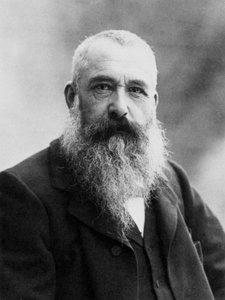 Claude Monet
 The Magpie (Monet)
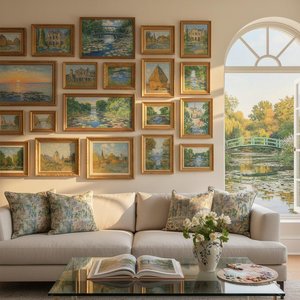 Mastering Light: The 25 Most Iconic Claude Monet Paintings
 Blanche Hoschedé-Monet