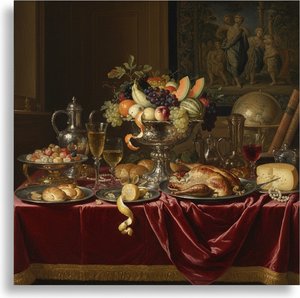
The Essence of Vanitas: A Meditation on Transience and the Baroque Soul
To gaze upon a 17th-century Vanitas painting is to enter into a silent, profound dialogue with time itself. This specific genre of still life, which flourished during the Dutch Golden Age, serves as much more than a mere display of technical virtuosity; it is a visual sermon, a contemplative meditation on the fleeting nature of human existence. The very term Vanitas—derived from the biblical Ecclesiastes, "Vanity of vanities; all is vanity"—encapsulates the core philosophy of these works. It invites the viewer to pause amidst the distractions of worldly success and confront the inevitable truth: that all earthly pleasures, no matter how opulent, are subject to the relentless erosion of time.
In the heart of the Baroque era, art was rarely just about aesthetic pleasure; it was an instrument of moral instruction. The Vanitas movement utilized the hyper-realistic depiction of objects to create a tension between the tangible and the ephemeral. When we observe the rich textures of silk, the luster of silver, or the delicate petals of a blooming rose, we are being lured into a sense of permanence that the artist is simultaneously working to dismantle. This duality creates a hauntingly beautiful experience, where the viewer is caught between an appreciation for the beauty of the material world and a somber recognition of its ultimate decay.
A Lexicon of Mortality: Decoding the Symbolism of Skulls, Hourglasses, and Decay
The power of Vanitas art lies in its sophisticated semiotics—a carefully curated language of symbols that speaks directly to the soul. Every object placed upon a draped table by masters such as Edwaert Collier or Jan Jansz. Treck carries a heavy weight of meaning. The most iconic and visceral of these is, of course, the skull. As a memento mori—a reminder of death—the skull serves as the ultimate equalizer, stripping away titles, wealth, and beauty to reveal the shared destiny of all mankind. It is the anchor of the composition, grounding the more delicate symbols in a stark, undeniable reality.
Surrounding this central emblem is a constellation of other symbolic actors. An hourglass, with its rhythmic descent of sand, represents the unstoppable progression of time, while a guttering candle, its flame flickering toward extinction, mirrors the fragility of human life. We often encounter musical instruments, such as lutes or flutes, which symbolize the ephemeral nature of sound; once a note is played, it vanishes into the ether, much like a single breath in the span of eternity. Even the presence of books, globes, and scientific instruments—symbols of human knowledge and worldly achievement—serves to remind us that even the greatest intellectual pursuits cannot grant immortality. Through this intricate lexicon, the artist transforms a simple arrangement of objects into a complex theological and philosophical treatise.
The Golden Age of Reflection: Dutch Masterpieces and the Art of Still Life
During the Dutch Golden Age, the rise of a prosperous merchant class provided a unique canvas for these reflections. Unlike the religious iconography prevalent in Catholic Europe, Dutch Vanitas paintings often focused on the tension between newfound wealth and traditional piety. Artists like Pieter van Roestraten utilized the era's immense prosperity to create works that were paradoxically both celebratory and cautionary. In his sweeping compositions, one might find exquisite glassware and fine linens, yet these are frequently juxtaposed with elements of rot or wilting flora, creating a masterful balance between the splendor of the present and the shadow of the future.
The brilliance of this period lies in its ability to elevate the mundane to the monumental. The meticulous detail found in Jan Jansz. Treck’s work allows us to see the microscopic textures of a decaying fruit or the subtle condensation on a silver goblet, forcing an intimacy between the viewer and the subject. This era of art history did not merely document objects; it documented the human condition. By capturing the precise moment when beauty begins its descent into decay, these masters provided a way for their contemporaries to navigate the complexities of living in a world of unprecedented material abundance while maintaining a spiritual connection to the eternal.
Light, Shadow, and Substance: The Technical Mastery of Chiaroscuro in Vanitas Painting
The emotional resonance of Vanitas art is inseparable from the technical mastery of light and shadow, specifically the technique known as chiaroscuro. To achieve the dramatic tension required for such a heavy subject, painters employed extreme contrasts between deep, velvety shadows and brilliant, focused highlights. This manipulation of light does more than create three-dimensional form; it directs the viewer's gaze and dictates the emotional rhythm of the piece. A single beam of light hitting a polished skull or a translucent glass vessel creates a sense of divine presence amidst the darkness, suggesting that even in the face of mortality, there is a luminous truth to be found.
The application of paint itself was a vital component of this atmospheric storytelling. The use of multiple glazes allowed artists to build up depth and luminosity, particularly in the depiction of liquids, metals, and organic textures. This layering process creates a "living" quality in the artwork, where light seems to penetrate the surface rather than merely reflecting off it. When we observe the heavy, tactile brushstrokes of a well-executed Baroque reproduction, we are witnessing the artist's attempt to replicate this physical depth, ensuring that the interplay of light and shadow continues to provoke thought and emotion centuries after the original pigment has dried.
Vanitas in the Modern Interior: Integrating Historical Depth into Contemporary Spaces
In our contemporary era, characterized by rapid technological change and a constant stream of digital distractions, the themes of Vanitas art remain strikingly relevant. Bringing these historical masterpieces into a modern home is not merely an act of decoration, but an intentional choice to surround oneself with intellectual depth and contemplative beauty. A well-placed Vanitas reproduction can serve as a profound focal point in a room, offering a moment of stillness and reflection amidst the chaos of modern life.
Integrating such powerful imagery requires a sophisticated approach to interior design. Whether through a large-scale oil painting that commands a gallery wall or a series of multi-panel prints that wrap around a contemporary architectural feature, these works add a layer of "soul" to a space. They bridge the gap between the past and the present, inviting guests to engage in conversation about history, philosophy, and the enduring mysteries of existence. By honoring the textures, shadows, and profound symbolism of the Old Masters, we ensure that the wisdom of the Baroque era continues to resonate within the sanctuaries of our modern lives.
At OriginalUniqueArt.com, we are dedicated to preserving this legacy of human creativity. Our mission is to make the profound beauty of the Old Masters accessible to collectors worldwide through meticulously handcrafted oil reproductions and museum-quality prints. From custom commissions that transform personal memories into historical masterpieces to large-format murals that recreate the grandeur of classical ceilings, our artists—all holders of prestigious Fine Arts degrees—work with unparalleled passion to ensure every brushstroke honors the spirit of the original. Whether you are seeking a bespoke oil painting or a high-fidelity Giclée print, OriginalUniqueArt provides a bridge to the timeless elegance of art history.