The Rise of Botanical Fascination: Victorian Society & the Natural World
Botany, also called phytology or plant science, is the branch of natural science and biology that studies plants, especially their anatomy, taxonomy, and ecology. A botanist or plant scientist is a scientist who specialises in this field. "Plant" and...
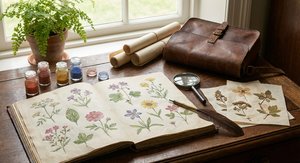
The Victorian era, a period often characterized by its rigid social codes and industrial expansion, paradoxically witnessed an extraordinary flourishing of interest in the natural world. This wasn’t merely a superficial fascination with beauty; it was deeply interwoven with scientific inquiry, imperial ambition, and a burgeoning middle class eager to cultivate refined tastes. The rapid advancements in botany during this time – driven by explorers cataloging flora from across the globe – fueled a desire to understand and document plant life with unprecedented accuracy. This coincided with a growing accessibility of gardens and greenhouses, transforming botanical pursuits from the realm of the aristocracy into a popular pastime for families seeking intellectual stimulation and aesthetic pleasure. The very air seemed charged with a curiosity about origins, classifications, and the delicate intricacies hidden within each petal and leaf.
Precision Meets Beauty: The Interplay of Science and Art in Victorian Illustration
 The Precision of Perception: Scientific Illustration as Art & Epistemology
Explore the fascinating history of scientific illustration – where art meets accuracy. Discover key artists like Karl Blossfeldt & Maud H. Purdy, and delve into its profound epistemological roots. OriginalUniqueArt offers museum-quality reproductions.
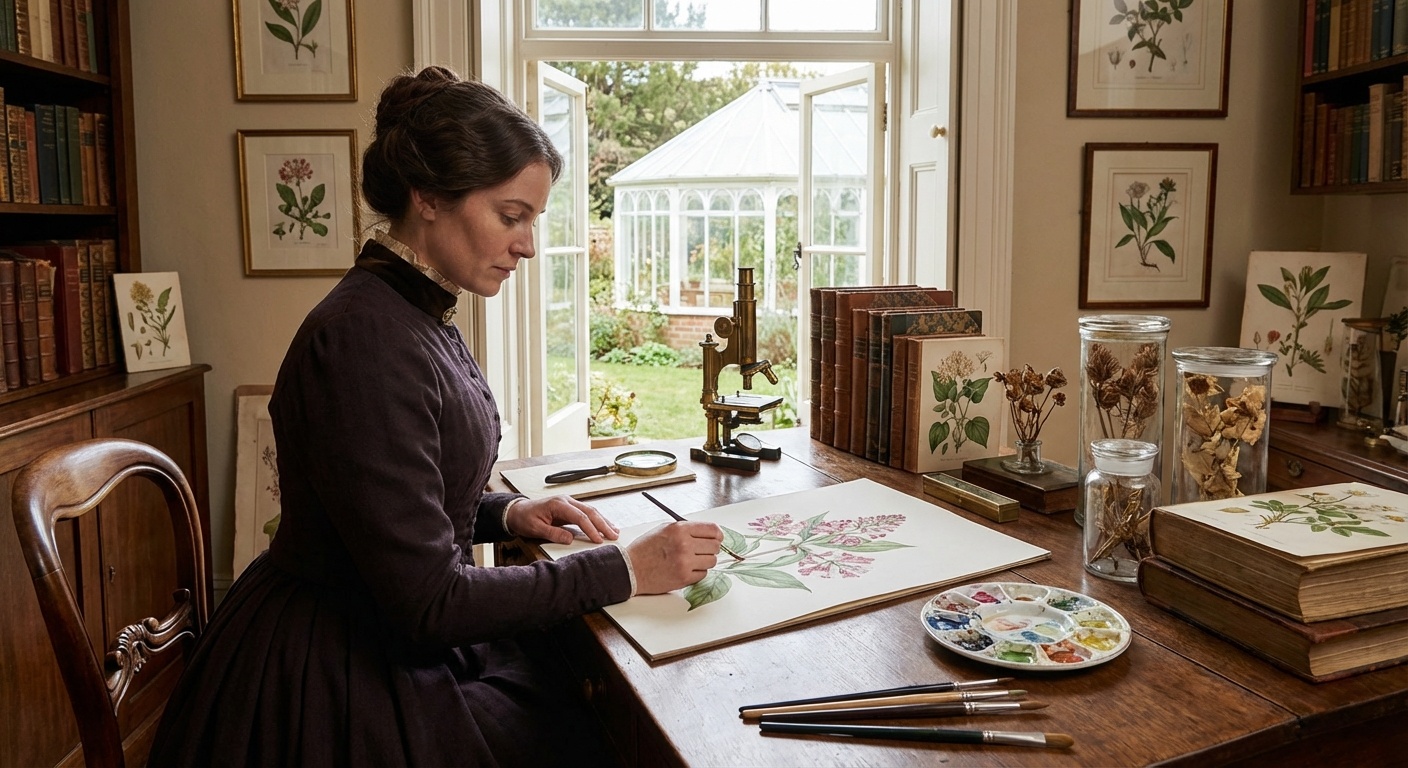
The Victorian botanical artist wasn’t simply recreating what they saw; they were acting as visual translators between the scientific community and a wider public. Accuracy was paramount, demanding meticulous observation and painstaking detail. Yet, these illustrations transcended mere technical representation. They possessed an inherent artistic quality – a sensitivity to form, color, and composition that elevated them beyond functional diagrams. The best artists understood not only the botanical structure of a plant but also how to capture its essence, its vitality, on paper or canvas. This fusion of science and art is perhaps most strikingly evident in the work of John Gould, whose depictions of birds – often accompanied by detailed renderings of their floral habitats – are celebrated for both their ornithological precision and breathtaking aesthetic appeal. The demand for accurate yet beautiful illustrations led to innovations in printing techniques like chromolithography, allowing for mass production of vibrant, high-quality images that further democratized access to botanical knowledge.
Key Figures in Victorian Botanical Art: Gould, Muckley, and Beyond
 John Gould: A Life Immersed in Avian Illustration – Biodiversity, Scientific Precision, and Artistic Legacy
Explore the life & legacy of John Gould, pioneering ornithologist & artist. Discover his stunning bird illustrations, the impact of chromolithography, and investment opportunities for collectors. Learn more now!
John Gould stands as a towering figure, revolutionizing bird illustration through his large-format folios. His meticulous work, often employing assistants for the background foliage while he focused on the birds themselves, established a new standard of scientific accuracy combined with artistic flair. However, the field was rich with other talents. Louis Fairfax Muckley, though less widely known today, exemplifies the dedication to naturalistic detail that characterized many Victorian artists. His paintings showcase an exquisite precision in rendering insects and plants, often depicting them against subtly textured backgrounds. Beyond these prominent names, a wealth of lesser-known artists contributed significantly, working diligently to document regional flora and fauna. Many women artists also found success – though often uncredited or published under male pseudonyms – contributing significantly to the field despite societal constraints.
Techniques and Materials: Chromolithography, Watercolour, and Paper
 Wikipedia: Illustration
An illustration is a decoration, interpretation, or visual explanation of a text, concept, or process, designed for integration in print and digitally published media, such as posters, flyers, magazines, books, teaching materials, animations, video g...
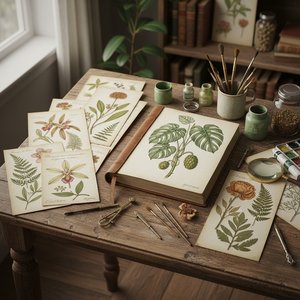
Watercolour remained the dominant medium for botanical illustration throughout much of the Victorian period. Its versatility allowed artists to capture subtle gradations of color and delicate textures with remarkable fidelity. However, the advent of chromolithography in the mid-19th century dramatically altered the landscape. This printing process – involving multiple lithographic stones, each inked with a different color – enabled the production of large-scale, richly colored prints that were far more affordable than hand-painted originals. While initially met with skepticism by some purists, chromolithography quickly gained popularity, making botanical illustrations accessible to a wider audience and fueling the demand for accurate source paintings. The quality of paper also played a crucial role; artists favored smooth, heavy-weight papers capable of supporting delicate washes of watercolor without buckling or bleeding. The choice of pigments – often derived from natural sources – further contributed to the vibrancy and longevity of these artworks.
Aestheticism's Influence: Elevating Botanical Painting to High Art
Aestheticism (also known as the aesthetic movement) was an art movement in the late 19th century that valued the appearance of literature, music, fonts, and the arts over their functions. According to Aestheticism, art should be produced to be beauti...
As the Victorian era progressed, a growing movement known as Aestheticism challenged traditional notions of art’s purpose. Rejecting didactic or moralizing themes, Aestheticism championed “art for art’s sake,” emphasizing beauty and sensory experience above all else. This philosophy profoundly influenced botanical painting, encouraging artists to focus on the purely aesthetic qualities of their subjects – the interplay of light and shadow, the delicate curves of petals, the harmonious arrangement of forms. Botanical illustrations were no longer simply seen as scientific records; they were celebrated as works of art in their own right, worthy of display in elegant homes and galleries. This shift is reflected in the increasingly refined compositions and sophisticated color palettes found in late Victorian botanical paintings.
Collecting Victorian Botanical Prints Today: Value, Rarity & Investment
Today, Victorian botanical prints remain highly sought after by collectors for their beauty, historical significance, and enduring appeal. Original John Gould folios command substantial prices, but a wealth of other artists offer compelling options for those starting or expanding a collection. Factors influencing value include the artist’s reputation, the rarity of the print, its condition, and the presence of original hand-coloring. Prints from limited editions or those featuring particularly rare plant species are especially prized. Beyond their aesthetic qualities, Victorian botanical prints offer a tangible connection to a fascinating period in history – a time when science, art, and exploration converged to create some of the most beautiful and enduring images of the natural world. OriginalUniqueArt offers museum-quality reproductions of these masterpieces, allowing you to bring the elegance and scientific precision of Victorian botanical art into your home.