



Introduction: The Enduring Power of Formal Analysis
For the seasoned collector, the allure of a work extends far beyond its subject matter—beyond the narrative depicted or the artist’s biographical details. It resides in something more fundamental, a captivating interplay of form and substance that resonates on a deeply intuitive level. This is where formal analysis enters the realm of appreciation, offering a framework for understanding not simply *what* we see, but *how* we see it, and why certain compositions possess an enduring power that transcends time and cultural boundaries. It’s a practice rooted in observation, a meticulous dissection of visual elements – line, shape, color, texture, space – to unlock the underlying principles governing aesthetic experience. To truly connect with art is to move beyond recognition and into a realm of nuanced perception, appreciating the artist's deliberate choices and their impact on our emotional response.
The Historical Roots of Aesthetic Theory: From Kant to the Avant-Garde
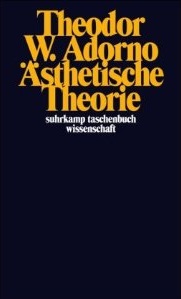 Wikipedia: Aesthetic Theory
Aesthetic Theory (German: Ästhetische Theorie) is a book by the German philosopher Theodor Adorno, which was culled from drafts written between 1956 and 1969 and ultimately published posthumously in 1970. Although anchored by the philosophical study...
The seeds of formal analysis were sown long before the advent of modern art. Immanuel Kant’s concept of “disinterested pleasure” in the 18th century laid a crucial foundation, positing that aesthetic judgement arises not from practical concerns or personal desires, but from a purely subjective experience of form. This idea liberated art from its traditional role as mere representation, paving the way for an increased focus on the artwork itself. The 19th century witnessed a growing emphasis on artistic autonomy, fueled by movements like Realism and Impressionism, which challenged academic conventions and prioritized capturing fleeting moments and subjective perceptions. Artists began to experiment with brushwork, color palettes, and compositional techniques, pushing the boundaries of visual expression. The phrase *l’art pour l’art* – art for art's sake – became a rallying cry, signifying a rejection of moral or didactic purposes in favor of pure aesthetic contemplation. This spirit culminated in Post-Impressionism, particularly in the work of Paul Cézanne, whose systematic exploration of form and structure would profoundly influence 20th-century artists.
Clive Bell and 'Significant Form': A Cornerstone of Modernist Aesthetics
The early 20th century saw a formalization—pun intended—of these ideas with the writings of British art critic Clive Bell. In his seminal work, *Art* (1913), Bell introduced the concept of “significant form,” arguing that all great works of art possess an inherent quality capable of evoking aesthetic emotion. This wasn’t simply about beauty in a conventional sense; it was about a unique arrangement of forms that created a particular visual rhythm and resonance. Bell believed this form could be detected through direct sensation, independent of subject matter or historical context. He used examples ranging from African sculpture to paintings by Cézanne to illustrate his point, emphasizing the importance of abstraction and simplification in achieving aesthetic purity. While often criticized for its elitism and subjective nature—what constitutes “significant” form is open to interpretation—Bell’s theory provided a powerful framework for understanding the revolutionary developments taking place in modern art. His emphasis on visual structure helped legitimize abstract movements like Cubism and Futurism, shifting the focus from representation to pure aesthetic experience.
Beyond Visual Elements: Context, Interpretation & Moderate Formalism
In art history, formalism is the study of art by analyzing and comparing form and style. Its discussion also includes the way objects are made and their purely visual or material aspects. In painting, formalism emphasizes compositional elements such ...
The dominance of formalism throughout much of the 20th century wasn’t without its detractors. Critics argued that focusing solely on form neglected the crucial role of context—the historical, social, and cultural forces shaping an artwork's creation and reception. Arthur Danto famously challenged the very notion of a purely formal definition of art, arguing that meaning is not inherent in the object itself but is constructed through discourse and interpretation. Kendall Walton further complicated matters by emphasizing the “rules” governing our perception of art, suggesting that our understanding is shaped by conventions and expectations. However, to completely dismiss formalism would be to overlook its enduring value as a tool for visual analysis. Contemporary aesthetic theory has moved towards a more nuanced position—a ‘Moderate Formalism’—acknowledging the importance of context while still recognizing the power of formal qualities to evoke emotion and meaning. This approach seeks to integrate historical understanding with close visual observation, appreciating how form *interacts* with content rather than existing in isolation.
Aesthetic Judgement Beyond Art: Nature, Design & Universal Principles
The principles of aesthetic judgement aren’t confined to the realm of traditional art forms. We experience aesthetic pleasure when encountering natural beauty—the graceful curve of a wave, the intricate patterns of a leaf, the dramatic interplay of light and shadow in a landscape. Similarly, well-designed objects – from architecture to furniture – possess qualities that evoke a sense of harmony and balance. Nick Zangwill’s work on Aesthetic Formalism extends these principles beyond art, arguing that aesthetic properties are accessible through direct sensation regardless of context. He posits that certain formal arrangements—symmetry, complexity, novelty—are inherently pleasing to the human eye, suggesting a biological basis for aesthetic preference. This doesn't imply a universal standard of beauty, but rather an underlying set of perceptual mechanisms that shape our responses to visual stimuli. Understanding these principles allows us to appreciate not only masterpieces in museums but also the subtle elegance of everyday objects and the breathtaking beauty of the natural world.
Cultivating Your Eye: Applying Formal Analysis to Build a Meaningful Collection
For the discerning collector, formal analysis is more than just an academic exercise; it’s a vital skill for building a truly meaningful collection. By learning to identify and appreciate the underlying principles governing aesthetic experience, you can move beyond fleeting trends and acquire works that resonate on a deeper level. Consider the interplay of line, color, and composition in a painting—how does the artist use these elements to create a sense of movement, depth, or emotion? Examine the texture and form of a sculpture—does it convey a feeling of weight, lightness, or dynamism? At OriginalUniqueArt, we believe that art should be accessible to everyone. We offer meticulously crafted reproductions of masterpieces, allowing you to experience the beauty and power of these works firsthand. Explore our extensive collection, experiment with different styles and techniques, and cultivate your own unique aesthetic sensibility. Whether you’re seeking a classic landscape, an abstract composition, or a custom reproduction of a cherished photograph, OriginalUniqueArt provides the tools and resources to build a collection that reflects your personal taste and passion. Start your journey today with our free art consultation service (/en/orders/art-consultation/) or explore our range of custom paintings from photos (/en/orders/custom-reproduction/).