The Foundations of Color Perception: From Optics to Early Theories
Visual perception is the ability to detect light and use it to form an image of the surrounding environment. Photodetection without image formation is classified as light sensing. In most vertebrates, visual perception can be enabled by photopic visi...
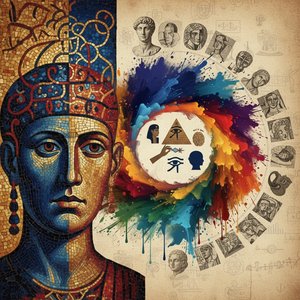
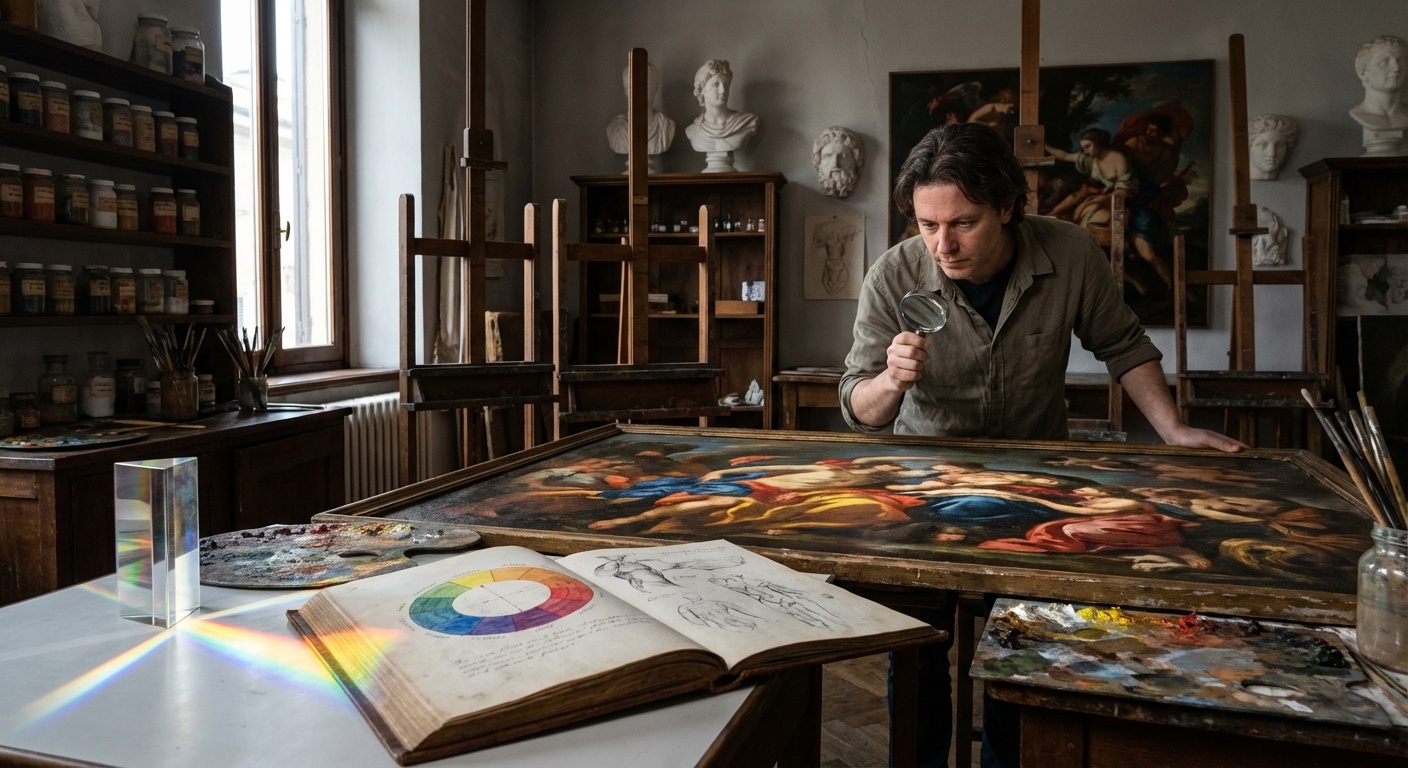
Before the brushstrokes of Monet or the calculated dots of Seurat, lay a burgeoning understanding of color itself – not merely as a visual phenomenon, but as an intrinsic component of human perception. The earliest explorations were rooted in optics, with thinkers like Isaac Newton demonstrating that white light could be refracted into a spectrum of colors through a prism. This revelation moved color from the realm of philosophical speculation to scientific inquiry. However, it was the subsequent attempts to *explain* what we experienced when encountering these hues that truly laid the groundwork for the psychological study of color. Ancient civilizations, notably the Egyptians and Chinese, intuitively grasped color’s power, employing specific shades in healing practices and symbolic rituals long before any formal theory existed. These early applications suggest an inherent recognition of color's ability to influence mood and even physical well-being – a concept that would be revisited centuries later.
Goethe, Chevreul & Jung: Pioneering Psychological Approaches to Color
 Wikipedia: Color psychology
Color psychology is the study of colors and hues as a determinant of human behavior. Color influences perceptions that are not obvious, such as the taste of food. Colors have qualities that may cause certain emotions in people. How color influences i...
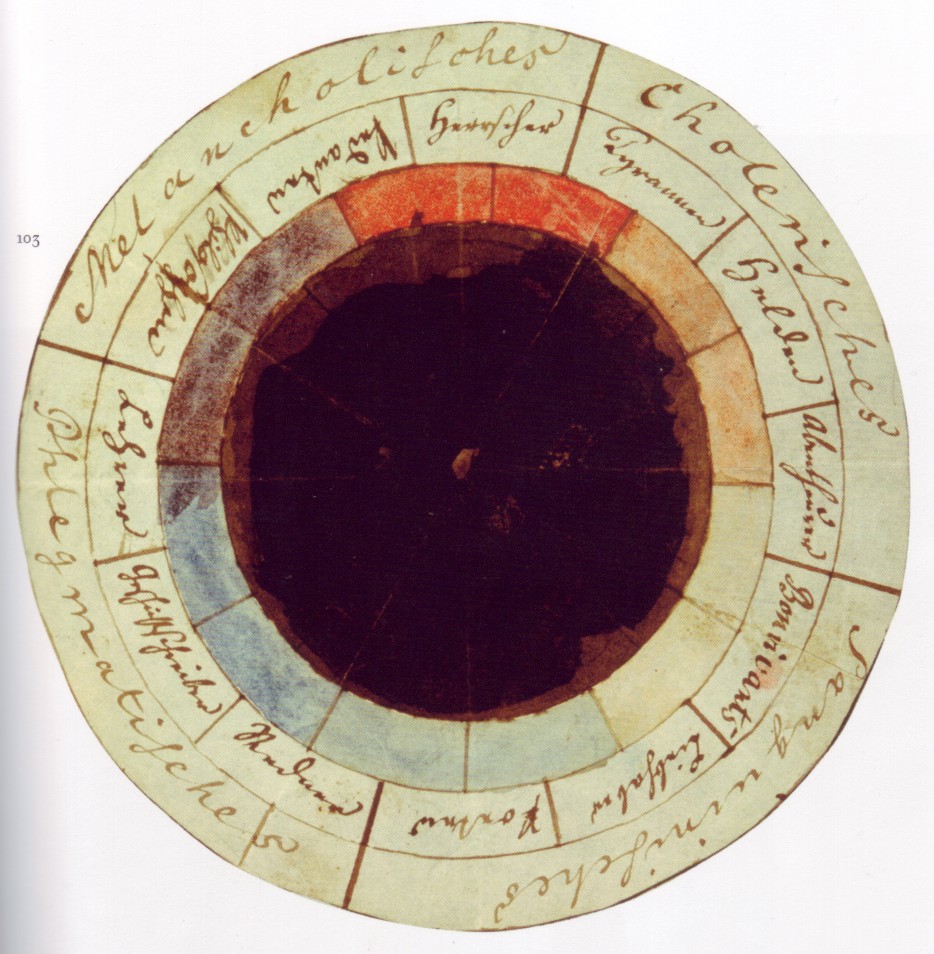
The 19th century witnessed a shift from purely optical analysis towards understanding the subjective experience of color. Johann Wolfgang von Goethe’s Theory of Colors (1810), though scientifically flawed by modern standards, was profoundly influential in its emphasis on the emotional and physiological effects of color. Goethe posited that color arose not simply from light refraction but from the interplay between light and darkness, a dynamic he associated with human perception. Later, Michel Eugène Chevreul’s work on simultaneous contrast – initially focused on tapestry weaving to prevent fading – revealed how colors influence each other when placed in proximity. His observations had a significant impact on artists seeking to maximize visual intensity. Perhaps most profoundly, Carl Jung delved into the archetypal symbolism of color, viewing hues as expressions of universal psychological patterns embedded within the collective unconscious. He saw gold, for instance, representing the apex of spiritual intuition and transformation, drawing connections to alchemical traditions. These thinkers moved beyond simply *seeing* color to understanding its profound resonance within the human psyche.
Impressionism's Embrace of Light and Transient Color Effects
Impressionism was a 19th-century art movement characterized by visible brush strokes, open composition, emphasis on accurate depiction of light in its changing qualities (often accentuating the effects of the passage of time), ordinary subject matter...
The Impressionist movement irrevocably altered the course of art history by prioritizing the fleeting effects of light and atmosphere. Artists like Claude Monet weren’t interested in depicting objects with photographic accuracy; instead, they sought to capture the *impression* of a moment – the way light danced on water, the shifting hues of a sunset. This required a radical departure from traditional techniques, embracing visible brushstrokes and an open composition that emphasized the immediacy of perception. Monet’s Impression, soleil levant (1872), famously derided by critics as unfinished, became emblematic of the movement's focus on capturing transient color effects. The broken colors applied directly to the canvas weren’t blended but allowed to mix optically in the viewer’s eye, creating a vibrant and dynamic surface that mirrored the ever-changing qualities of light. This wasn’t merely about aesthetics; it was an attempt to represent how we actually *see* – not as fixed forms, but as constantly shifting patterns of color and light.
Neo-Impressionism & Scientific Color Theory: Seurat’s Pointillist Revolution
While Impressionism embraced a subjective experience of light, Neo-Impressionism sought to apply scientific principles to the study of color. Georges Seurat, driven by an understanding of Chevreul's theories and the emerging field of chromatics, developed pointillism – a technique involving the meticulous application of tiny dots of pure color that blended optically when viewed from a distance. His masterpiece, A Sunday on La Grande Jatte (1884-1886), exemplifies this approach. Seurat wasn’t simply applying colors randomly; he carefully calculated their placement based on principles of simultaneous contrast and complementary hues to maximize luminosity and visual impact. This was a deliberate attempt to create a more scientifically rigorous form of painting, one that harnessed the power of color perception to achieve a heightened sense of realism – albeit a realism rooted in optical science rather than direct observation. Works like Study for 'Le Chahut' demonstrate his meticulous planning and exploration of color relationships.
Color as Emotion: Exploring the Cultural and Individual Significance of Hue
Beyond scientific analysis, color carries profound emotional weight, shaped by both cultural associations and individual experiences. Warm colors – reds, oranges, yellows – are often associated with energy, passion, and excitement, while cooler colors – blues, greens, violets – evoke feelings of calm, tranquility, and introspection. However, these associations aren’t universal. The color red, for example, signifies good fortune in Chinese culture but can represent danger or warning in the West. Furthermore, individual preferences play a significant role; personal memories and experiences can imbue specific hues with unique emotional resonance. Vincent van Gogh's The Exercise of Prisoners (after Gustav Dore) powerfully illustrates how color can be used to convey psychological states – the somber tones reflecting the harsh realities of confinement. The choice of palette isn’t arbitrary but a deliberate attempt to evoke empathy and understanding in the viewer.
The Enduring Legacy: Modern Applications and Contemporary Interpretations of Color in Art
The exploration of color continues to captivate artists today, building upon the foundations laid by earlier movements. From the abstract expressionism of Mark Rothko, who used vast fields of color to evoke profound emotional responses, to contemporary artists experimenting with digital palettes and immersive installations, color remains a central element of artistic expression. Understanding the psychological impact of color is no longer solely the domain of art historians or psychologists; it’s a vital tool for designers, marketers, and even therapists. At OriginalUniqueArt.com, we celebrate this enduring legacy by offering high-quality reproductions of masterpieces that showcase the power and beauty of color. Whether you're drawn to the vibrant energy of Impressionism or the calculated precision of Neo-Impressionism, exploring these artworks allows us to connect with the artists’ vision and experience the world in a richer, more nuanced way. From custom paintings based on your favorite hues to expert art consultation, we invite you to discover the transformative power of color for yourself.