Early Life & Academic Foundations: A Legacy of Artistic Skill
 Wikipedia: François Flameng
François Léopold Flameng (6 December 1856 – 28 February 1923) was a notable French painter during the last quarter of the 19th century and the first quarter of the 20th. He was the son of Léopold Flameng, a celebrated printmaker, and received a first...
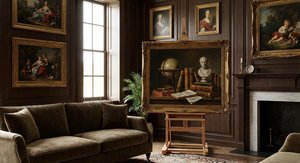
François Léopold Flameng, born in Paris in 1856, inherited a rich artistic lineage from his father, Léopold Flameng, a renowned printmaker. This familial foundation proved pivotal to his early development, providing not merely encouragement but a rigorous initial training that instilled within him a deep respect for craft and technique. While many aspiring artists of the era sought radical departures from established norms, Flameng’s beginnings were steeped in tradition – a grounding that would later inform his unique ability to synthesize academic precision with emerging Impressionistic sensibilities. He entered the prestigious École Nationale Supérieure des Beaux-Arts, where Alexandre Cabanel became his primary instructor. Cabanel, a master of idealized form and narrative painting, imparted a commitment to meticulous detail and compositional balance. Even in his youth, Flameng demonstrated exceptional talent, undertaking reproductions of works by celebrated artists like Manet, Sisley, and Monet for the esteemed Durand-Ruel gallery – an early indication of his versatility and keen observational skills.
Flameng's Salon Success & Portraiture of Belle Époque Society
 François Flameng
François Flameng (1856-1923): French painter of Belle Époque portraits, historical scenes & poignant WWI art. Legion d'Honneur recipient & Salon artist.
The Paris Salon was the crucible in which artistic reputations were forged during the 19th century, and François Flameng quickly established himself as a prominent figure within its hallowed halls. His debut in 1875 with “The Lectern” signaled the arrival of a skilled painter capable of capturing both technical brilliance and emotional resonance. However, it was his portraits that truly defined his early success. Flameng became *the* portraitist of Belle Époque society, sought after by members of the French aristocracy, burgeoning industrialists, and even international royalty. He possessed an uncanny ability to convey not just physical likeness but also the inner character and social standing of his sitters. Queen Alexandra of Great Britain graced with a portrait that now adorns Buckingham Palace’s White Drawing Room, stands as testament to his skill in capturing regal dignity. His studio became a hub for prominent figures, attracting friends like John Singer Sargent and Paul Helleu, further solidifying his position within the artistic elite.
Beyond Portraits: Landscapes, Historical Scenes & the Nuances of Realism
 A Mountain Village In The Caucasus
Explore 'A Mountain Village In The Caucasus' by François Flameng – a stunning oil landscape painting of a remote mountain village. Admire its realism & muted tones.
While celebrated for his portraits, to define Flameng solely by this genre would be a disservice to the breadth of his talent. He possessed a remarkable capacity for diverse subject matter, venturing into landscapes and historical scenes with equal mastery. His landscapes, such as “A Mountain Village in the Caucasus,” reveal a keen eye for atmospheric perspective and a subtle use of muted tones that evoke a sense of tranquility and remoteness. These works demonstrate a shift towards a more naturalistic approach, foreshadowing his later engagement with Impressionistic principles. Flameng’s historical paintings, often depicting scenes from France's past, were characterized by meticulous research and dramatic compositions. He didn’t merely recreate events; he sought to imbue them with emotional weight and narrative depth, capturing the spirit of an era. His commitment to realism wasn’t simply about accurate representation but about conveying a sense of authenticity and lived experience.
A Witness to War: Flameng’s Poignant Depictions of World War I
 Evening Falls At The Camp
François Flameng (1856-1923) was a celebrated French painter renowned for his history paintings, portraits of nobility, and poignant depictions of World War I. A respected professor at the Academy of Fine Arts and recipient of the Legion d'Honneur,
The outbreak of World War I profoundly impacted Flameng, transforming his artistic focus. Appointed as one of the first Army Painters in 1914, he traveled directly to the front lines, sketching scenes of conflict and human suffering with a raw immediacy that was unprecedented for its time. These weren’t idealized depictions of heroism; they were unflinching portrayals of the brutal realities of trench warfare – the exhaustion, the devastation, and the quiet courage of ordinary soldiers. His paintings from this period are particularly poignant, capturing the emotional toll of war on both individuals and the landscape itself. The loss of his son in action in 1915 undoubtedly deepened his commitment to documenting the conflict with honesty and sensitivity. He donated many of these works to the Musée de l’Armée, creating a lasting visual record of a generation's sacrifice.
Flameng’s Artistic Style: Balancing Tradition and Modernity
François Flameng's artistic style represents a fascinating synthesis of academic tradition and emerging Impressionistic tendencies. He never fully abandoned the meticulous techniques he learned at the École des Beaux-Arts – his compositions remained carefully structured, and his attention to detail was unwavering. However, he increasingly embraced a looser brushstroke, a more vibrant palette, and a greater emphasis on capturing fleeting moments of light and atmosphere. This is particularly evident in works like “Evening Falls At The Camp,” where the warm tones and subtle gradations of color create a sense of intimacy and emotional depth. He wasn’t a radical innovator like Monet or Renoir; rather, he skillfully integrated Impressionistic elements into his existing academic framework, creating a style that was both refined and emotionally resonant. His ability to balance these seemingly opposing forces is what sets him apart as a unique voice within the French painting landscape.
Legacy and Influence: Flameng's Place in French Painting History
François Flameng’s career spanned a period of significant artistic change, and his work reflects this dynamic era. A respected professor at the Academy of Fine Arts and recipient of the Legion d'Honneur, he played an important role in shaping the next generation of painters. While perhaps not as widely recognized today as some of his Impressionistic contemporaries, Flameng’s contributions to French painting are undeniable. His portraits offer a captivating glimpse into Belle Époque society, his landscapes demonstrate a keen eye for natural beauty, and his war paintings serve as powerful reminders of human resilience in the face of adversity. He bridged the gap between academic realism and modernism, leaving behind a legacy of technical skill, emotional depth, and artistic versatility. His works continue to captivate audiences with their elegance, nuance, and enduring power.