The Rise of Academic Painting: A World Defined by the École des Beaux-Arts
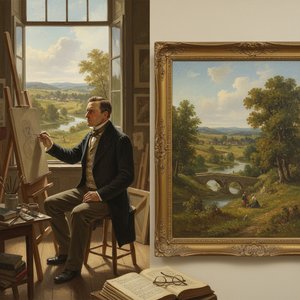
The mid-19th century art world was, for many aspiring artists, a landscape dominated by an imposing authority: the Académie des Beaux-Arts in France. To understand Alexandre Cabanel is to understand this system—a meticulously structured hierarchy that dictated not only *what* constituted good art but also *how* it should be created and presented. Established after the merging of royal institutions in 1795, the Académie held a near monopoly on artistic success for over a century. Its influence permeated every level of training, exhibition, and patronage. The École des Beaux-Arts served as its primary workshop, demanding rigorous adherence to classical principles and historical precedent. Entry was fiercely competitive, and even more so, securing approval from the Academy’s exacting standards was essential for any artist hoping to achieve recognition. This wasn't merely about technical skill; it was about mastering a specific visual language—one steeped in mythology, history, and idealized forms. The annual Paris Salon, controlled by the Académie, became the ultimate proving ground. Acceptance meant access to wealthy collectors and commissions, while rejection could effectively halt a career before it began. Beyond the Salon lay another coveted prize: the Prix de Rome, a scholarship offering five years of study at the Villa Medici in Rome—a transformative opportunity for artistic refinement and networking. This environment, though restrictive, fostered an extraordinary level of technical proficiency, and within its constraints, artists like Cabanel found ways to express remarkable creativity.
Cabanel's Early Life & Training: From Montpellier to Parisian Success
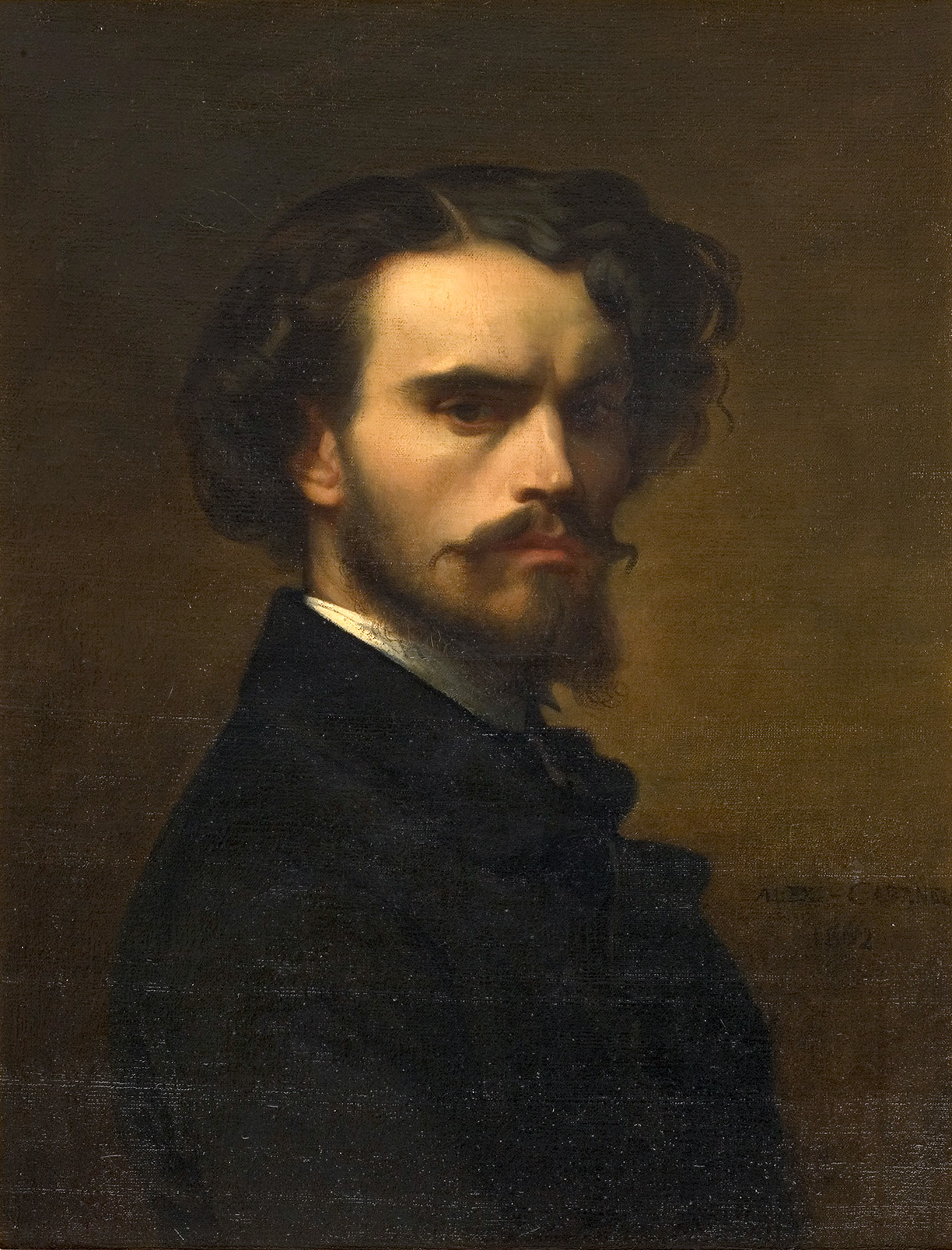 Wikipedia: Alexandre Cabanel
Alexandre Cabanel (French: [kabanɛl]; 28 September 1823 – 23 January 1889) was a French painter. He painted historical, classical and religious subjects in the academic style. He was also well known as a portrait painter. He was Napoleon III's prefer...
Born in 1823 in the provincial city of Montpellier, Alexandre Cabanel’s artistic journey began early. The son of a carpenter, he displayed precocious talent, beginning formal training at age ten with Charles Matet at the local School of Fine Arts. His aptitude was so striking that he soon found himself teaching classes—a testament to his innate understanding of drawing and composition. A scholarship in 1839 propelled him to Paris, where he entered the studio of François-Édouard Picot, a respected academic painter who had also benefited from the Academy’s patronage. Picot's atelier functioned as a rigorous preparation ground for the Prix de Rome competition. Students were systematically drilled in figure drawing and historical painting techniques, participating in monthly competitions judged by silver medals awarded by Picot himself. This environment instilled in Cabanel not only technical mastery but also an acute awareness of the Academy’s expectations. He absorbed the themes and styles favored by academic art—grand narratives from classical literature and mythology, meticulously rendered figures, and a polished finish that emphasized idealized beauty. After two initial attempts, Cabanel finally won the Prix de Rome in 1845 at the age of twenty-two, securing his place within the elite circle of artists destined for success.
Mastering Myth and History: Key Themes in Cabanel’s Oeuvre
Academic art, academicism, or academism, is a style of painting and sculpture produced under the influence of European academies of art. This method extended its influence throughout the Western world over several centuries, from its origins in Italy...
Cabanel's artistic output was characterized by a masterful command of historical, classical, and religious subjects. He didn’t simply *depict* these themes; he imbued them with a palpable sensuality and dramatic intensity. Early works like “Albaydé” (1848), inspired by Victor Hugo’s “Les Orientales,” reveal his fascination with exotic narratives and romanticized depictions of the East. However, it was his historical paintings that truly established his reputation. He approached these subjects with meticulous research and a keen eye for detail, recreating scenes from ancient Rome and biblical stories with impressive accuracy. Yet, Cabanel wasn’t merely a historian; he infused his works with emotional depth and psychological nuance. His figures weren't static representations but rather embodiments of passion, longing, and tragedy. This ability to combine historical fidelity with dramatic expression was central to his appeal. But perhaps his most iconic work—and the one that cemented his place in art history—is “The Birth of Venus” (1863). The painting depicts a breathtakingly beautiful Venus emerging from the sea, her form luminous and idealized. It’s a celebration of feminine beauty, rendered with exquisite detail and a delicate color palette. This work perfectly encapsulates Cabanel's ability to blend classical mythology with his own unique artistic sensibility.
The Salon Star: Public Reception, Napoleon III’s Patronage & Critical Debate
The Salon, or sometimes Paris Salon (French: Salon de Paris [salɔ̃ d(ə) paʁi]), beginning in 1667, was the official art exhibition of the Académie des Beaux-Arts in Paris. Between 1748 and 1890 it was arguably the greatest annual or biennial art even...
“The Birth of Venus” catapulted Cabanel to stardom at the 1863 Paris Salon. The painting was an immediate sensation, captivating audiences with its sheer beauty and technical brilliance. It wasn't long before Napoleon III himself purchased it for his personal collection—a testament to Cabanel’s growing prestige. He became the Emperor’s preferred painter, a position that secured him numerous commissions and solidified his status as one of “the three most successful artists of the Second Empire,” alongside Gérôme and Meissonier. However, this success wasn't without its critics. While the public adored Cabanel’s paintings, some writers and art critics questioned their artistic merit. Émile Zola, a champion of Realism, dismissed his work as overly sentimental and lacking in genuine emotion. Joris-Karl Huysmans, another prominent critic, found his style too conventional and idealized. These criticisms reflected the growing tension between academic painting and emerging modern movements like Realism and Impressionism. Cabanel’s paintings represented a traditional approach—one that emphasized technical skill, historical accuracy, and idealized forms—while these new artists sought to capture the realities of contemporary life with greater honesty and immediacy. Despite this criticism, Cabanel remained immensely popular throughout his career, consistently exhibiting at the Salon and attracting a devoted following.
Beyond Technique: Sensuality, Idealism & the Lasting Legacy of Alexandre Cabanel
Alexandre Cabanel’s enduring appeal lies not simply in his technical virtuosity but also in his ability to evoke emotion and capture the essence of beauty. His paintings are imbued with a palpable sensuality—a celebration of the human form that transcends mere representation. He wasn't interested in depicting reality as it was; he sought to create an idealized vision, one that embodied grace, harmony, and perfection. This pursuit of idealism, combined with his meticulous attention to detail and dramatic use of light and color, resulted in works that continue to captivate audiences today. Cabanel’s influence extended far beyond his own paintings. As a professor at the École des Beaux-Arts, he trained generations of artists, instilling in them the principles of academic painting and shaping the character of French art during the Belle Époque. His refusal to embrace the emerging Impressionist movement—along with William-Adolphe Bouguereau—led to the establishment of the Salon des Refusés, a pivotal moment in the history of modern art. Though his style eventually fell out of favor, Cabanel’s legacy remains significant. He represents a high point of academic painting—a testament to the power of tradition, skill, and the enduring allure of beauty. At OriginalUniqueArt, we offer exquisite reproductions of Cabanel's masterpieces, allowing you to experience the captivating world of this remarkable artist firsthand. Explore our collection today and discover the timeless elegance of Alexandre Cabanel.