

The Rise of Academic Art: From Guilds to the French Académie
Academic art, academicism, or academism, is a style of painting and sculpture produced under the influence of European academies of art. This method extended its influence throughout the Western world over several centuries, from its origins in Italy...
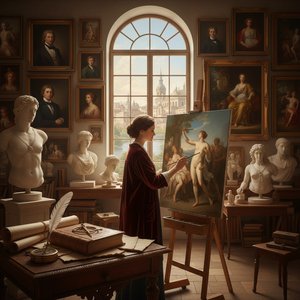
For centuries, the creation of art existed within a framework largely defined by guilds – associations of craftsmen bound by tradition and practical skill. These medieval structures prioritized functionality and apprenticeship over individual expression. However, the Renaissance witnessed a shift, a burgeoning recognition of artists not merely as skilled laborers but as intellectuals possessing unique creative vision. This evolution culminated in the establishment of formal academies, most notably the Académie Royale de Peinture et de Sculpture in France under Louis XIV in 1648. The Académie wasn’t simply a school; it was an attempt to codify artistic excellence, to elevate painting and sculpture to the status of liberal arts, and to distinguish them from the more commonplace trades. This marked a pivotal moment – the birth of ‘Academic art,’ a style that would dominate Western aesthetics for nearly three centuries.
The Académie’s influence extended far beyond its Parisian walls. It established a hierarchy of genres, with history painting—depicting biblical, mythological, or historical narratives—occupying the highest echelon. Portraiture and genre scenes followed, while landscapes and still lifes were considered less significant. This ranking wasn't arbitrary; it reflected a belief in art’s didactic purpose – its ability to instruct and inspire through noble subjects. The emphasis was on drawing as the foundation of all artistic skill, with students meticulously copying classical sculptures and Old Master paintings before progressing to life studies. This rigorous training aimed not just at technical proficiency but also at cultivating a shared aesthetic vocabulary and moral sensibility.
Core Principles & Techniques: Mastering Form, Color, and Composition
Academic painting was characterized by an unwavering commitment to realism – though perhaps not in the way we understand it today. It wasn’t about capturing fleeting moments or everyday life; rather, it sought to achieve an *idealized* representation of reality, informed by classical principles of beauty and proportion. Artists painstakingly studied anatomy, perspective, and chiaroscuro—the dramatic interplay of light and shadow—to create illusions of depth and volume. Brushstrokes were deliberately concealed, the surface smoothed to a polished finish that emphasized form over texture.
Color palettes tended towards rich, saturated hues, often employing glazing techniques to build up layers of luminosity and depth. Composition was paramount, guided by principles of balance, harmony, and clarity. Artists meticulously planned their canvases, using preliminary sketches and studies to ensure a coherent and impactful arrangement. The goal wasn’t simply to depict a scene but to create a compelling narrative that resonated with viewers on an emotional and intellectual level. Consider the works of William-Adolphe Bouguereau, whose paintings exemplify this mastery of technique – his figures are rendered with breathtaking realism and grace, embodying classical ideals of beauty.
The Salon System: Exhibition, Patronage, and Artistic Validation
The Salon, or sometimes Paris Salon (French: Salon de Paris [salɔ̃ d(ə) paʁi]), beginning in 1667, was the official art exhibition of the Académie des Beaux-Arts in Paris. Between 1748 and 1890 it was arguably the greatest annual or biennial art even...
Central to the success of Academic art was the *Salon*, the official art exhibition of the Académie des Beaux-Arts in Paris. Beginning in 1667, it quickly became the most important annual or biennial art event in the Western world. Acceptance into the Salon was a mark of prestige, a validation of an artist’s skill and status. The jury, composed of established academicians, wielded immense power, determining which works would be displayed and effectively shaping public taste.
The Salon wasn't merely an exhibition; it was a social event, a gathering place for artists, critics, patrons, and the elite. It provided opportunities for networking, commissions, and critical acclaim. Artists vied for attention, hoping to secure favorable reviews and attract wealthy collectors. The Salon system fostered a competitive environment but also reinforced the Académie’s authority, solidifying its control over artistic production and dissemination. Paintings like Jean-Georges Béraud's “The Salon of the Countess Potocka” offer a fascinating glimpse into this world – capturing the formality and power dynamics inherent in 19th-century French society.
History Painting as High Art: Narrative, Morality, and National Identity
As previously mentioned, history painting held the highest position within the Academic hierarchy. This wasn’t simply about depicting historical events; it was about conveying moral lessons, celebrating national virtues, and inspiring patriotic sentiment. Artists drew inspiration from classical mythology, biblical stories, and significant moments in French history, often imbuing their works with allegorical meaning.
The emphasis on narrative demanded a sophisticated understanding of composition, symbolism, and dramatic effect. Artists meticulously researched historical details to ensure accuracy but also employed artistic license to enhance the emotional impact of their scenes. Paintings were intended to be grand in scale and ambitious in scope, reflecting the importance of the subject matter. Joseph Franque’s “Napoléon Before the Battle of Moscow” exemplifies this – a powerful depiction of leadership and determination designed to evoke national pride.
Challenges to Academic Authority: Realism, Impressionism, and the Avant-Garde
Realism, Realistic, or Realists may refer to: == In the arts == Realism (arts), the general attempt to depict subjects truthfully in different forms of the arts Arts movements related to realism include: == In philosophy == Philosophical realism ...
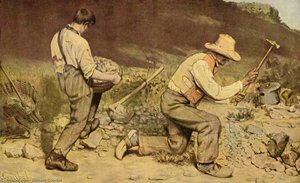
By the mid-19th century, cracks began to appear in the foundations of Academic art. A growing dissatisfaction with its idealized representations and conservative standards led to the emergence of new movements, most notably Realism. Artists like Gustave Courbet rejected the conventions of history painting, choosing instead to depict everyday life and the realities of working-class society. His “Woman with a Parrot” is a striking example – a bold and unapologetic portrayal of female sensuality that challenged prevailing notions of beauty.
The rise of Impressionism further disrupted the established order. Artists like Monet, Renoir, and Degas abandoned the studio in favor of painting *en plein air*, capturing fleeting moments of light and color. Their loose brushwork and unconventional compositions were initially met with scorn by the Académie jury, leading to the formation of independent exhibitions. These movements weren’t simply about stylistic innovation; they represented a fundamental shift in artistic values – a rejection of tradition in favor of individual expression and subjective experience.
Legacy & Influence: The Enduring Impact of Academic Traditions
Despite its eventual decline, Academic art left an indelible mark on the development of Western painting. Its emphasis on technique, composition, and anatomical accuracy continues to influence artists today. The rigorous training methods established by the Académie provided a foundation for generations of painters, shaping their understanding of form, color, and perspective.
Even as movements like Impressionism gained prominence, many artists continued to incorporate elements of Academic tradition into their work. The legacy can be seen in the works of Hugues Merle, whose sentimental scenes rivaled those of Bouguereau in popularity, or Édouard Joseph Dantan’s meticulously rendered studio scenes. At WikiOO.org, we celebrate this rich artistic heritage by offering high-quality reproductions of Academic masterpieces, allowing you to experience the beauty and skill of these remarkable artists firsthand. Explore our collection today and discover the enduring power of Academic painting.